

Dapu Bio Leverages Droplet Microfluidics to Lead a Billion-Dollar Market

DPBIO
Microfluidic chip, instrument, and reagent developer
Recently,Core Technology: Droplet MicrofluidicsofThunderBio Innovation Limited(hereinafter referred to as “ThunderBio Innovation Limited”) announced a new round of financing. This round of financing was led byLBP Medicine Technology Co., Ltd.(hereinafter referred to as “Anbiping”)Strategic Investment, amounting to tens of millions of RMB.Probe Capitalas the exclusive financial advisor.
Meanwhile, LBP Medicine will establish a deep strategic partnership with ThunderBio Innovation Limited in the field of digital PCR. The two parties will engage in in-depth collaboration on the research and development, production, and sales promotion of digital PCR-related products, leveraging their respective strengths. This partnership also highlights ThunderBio’s advantages as a platform enterprise specializing in droplet microfluidics technology, providing comprehensive solutions for biopharmaceuticals and clinical diagnostics, thereby deeply empowering the industry.

ThunderBio Innovation Limited was incubated at the Hong Kong University of Science and Technology and co-founded in 2018 by a team of PhD holders who returned to China from overseas.With R&D centers in Shenzhen, Jiaxing, and Hong Kong, our team of nearly 100 researchers is supported by an integrated production base for microfluidic chips, instruments, and reagents.
Since its founding three years ago, ThunderBio Innovation Limited has secured cumulative financing amounting to hundreds of millions of yuan.
By integrating talent from the fields of biology, chemistry, computer science, optics, and automation, ThunderBio Innovation Limited is committed to building industrial-grade solutions for biopharmaceuticals and clinical diagnostics based on microfluidics technology. It is precisely this philosophy that has led ThunderBio Innovation Limited to place greater emphasis on multi-platform R&D deployment during its early startup phase.
Currently, the commercialized product lines of ThunderBio Innovation Limited include three major technology platforms: high-throughput screening, single-cell sequencing, and digital PCR.Leveraging droplet microfluidics as the foundational technology, we integrate cross-domain applications across our affiliated platforms and explore product portfolio strategies within the contexts of biopharmaceuticals and clinical diagnostics.
In the 1990s, microfluidics technology was widely applied in biological, chemical, and medical research due to its precise sample handling and ability to accelerate biochemical reactions. Microfluidics refers to a technology that manipulates fluids at the micrometer scale. This technology can miniaturize basic laboratory functions, such as those in chemistry and biology, onto a chip measuring just a few square centimeters, hence it is also known as "Lab on a Chip."
Compared with traditional detection technologies, microfluidic technology integrates basic biochemical operations such as sample reaction, preparation, separation, and detection onto a small chip. A network of microchannels forms the backbone of the microfluidic system, enabling controlled fluid flow. This approach not only replicates the functions of conventional biochemical laboratories on a smaller scale but also reduces reagent consumption for analysis and detection, accelerates reaction rates, improves reaction efficiency, and enhances experimental controllability.
In recent years, with the accumulation of expertise in traditional microfluidics, droplet microfluidics—a technology that utilizes two immiscible liquid phases to generate discrete microdroplets for experimental operations—has rapidly developed. Microdroplets, also known as “microreactors,” enable biochemical reactions to be conducted within volumes ranging from nanoliters to picoliters.
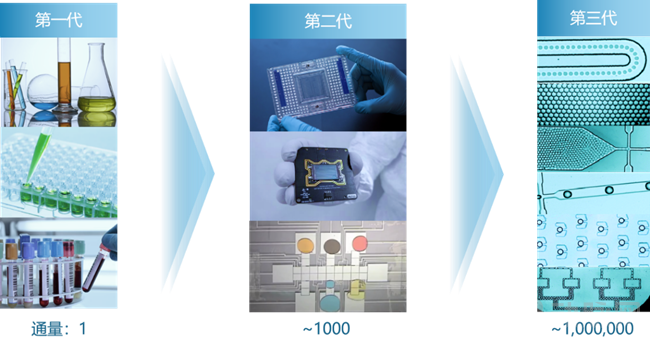
By integrating microfluidics with microdroplet technology, droplet microfluidics not only enhances detection sensitivity but also significantly increases reaction throughput, achieving a scale-up from 1 to 1×10⁷revolution, providing a novel platform for bioassays and new drug development. Droplet microfluidics technology offers numerous technical advantages, including minute volume, rapid generation speed, high throughput, uniform size, closed system, and excellent monodispersity.
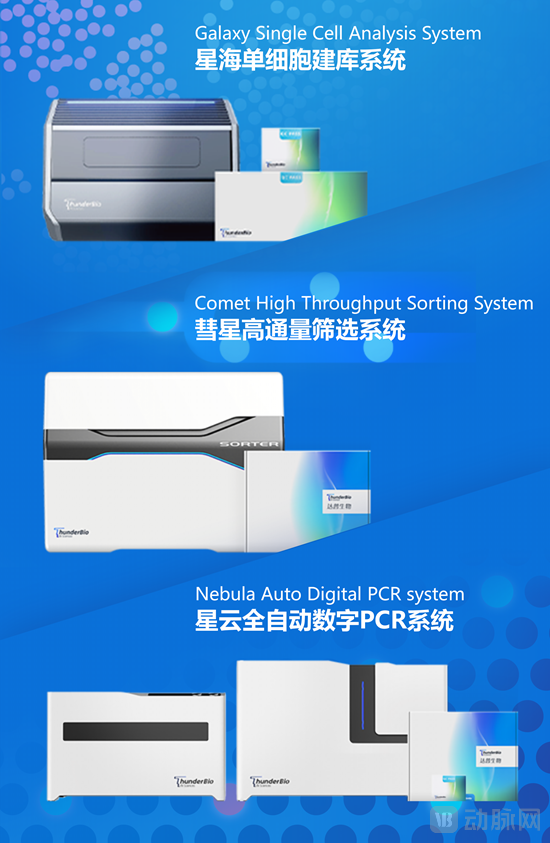
Based on its established foundational technologies, ThunderBio Innovation Limited has developed three industrial-grade technology platforms.
Compared with the clinical and research layouts of peer companies, ThunderBio Innovation Limited’s products cover nearly all application scenarios of droplet microfluidics technology across the entire biotechnology industry. From a strategic perspective, ThunderBio Innovation Limited places greater emphasis on the industrial applications of its products.
1Single-Cell High-Throughput Screening System
The system operates by analyzing the fluorescent signals of microdroplets to identify genomic or proteomic information of cells encapsulated within them, as well as molecular information secreted by the cells. Subsequently, it isolates specific functional cell populations through dielectrophoresis.Single-run capacity of 1*107Micro-droplet Sorting at Scale. This system has broad applications in areas such as monoclonal antibody screening and cell therapy target optimization, significantly shortening the screening process.
2Single-Cell Sequencing Library Preparation System
ThunderBio Innovation Limited’s independently developed Xinghai Single-Cell Library Preparation Platform, based on patented pressure-insensitive droplet generation and hydrogel-encoded microbead technologies, enables rapid construction of single-cell sequencing libraries. Its principle isBy encoding each microdroplet, the nucleic acid sequences on the barcoded microspheres are incorporated into the cDNA sequences when cells lyse within the microdroplets., by directly adding molecular barcodes to the genome of each cell, gene information can be assigned back to individual cells based on the barcode information during sequencing data analysis, thereby achieving gene information analysis at single-cell resolution.
3Digital PCR System
In the production or quality control of cell and gene therapies, biosimilars, and vaccine products, current pharmacopoeias worldwide primarily specify four methods for detecting residual DNA in formulations: hybridization, threshold, fluorescent dye binding, and PCR. Due to its exceptional sensitivity, specificity, and accuracy, digital PCR (dPCR) provides a more precise and reliable analytical tool for process development and finished product quality control in the biopharmaceutical industry, and has gradually become the preferred detection method for manufacturers of biological products.
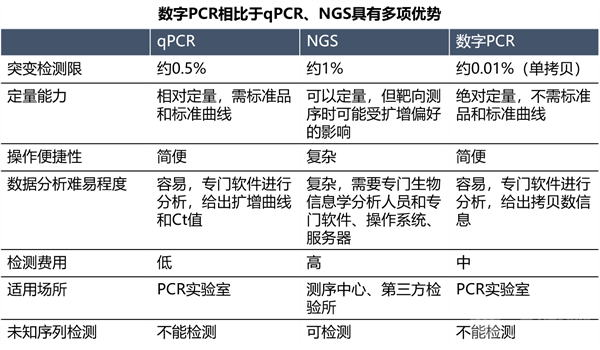
ThunderBio Innovation Limited's independently developedThird-Generation Digital PCR Technology, compared with real-time quantitative PCR, it hasHigher precision, sensitivity, and anti-interference capability, with accurate quantification of nucleic acid molecules, making it particularly suitable for the detection of samples with complex matrices., such as the detection of residual DNA in the production and quality control processes of biologics.
Xu Xiaonan, Founder of ThunderBio Innovation LimitedIn the interview, it was stated: “ThunderBio Innovation Limited has been committed to advancing the application of droplet microfluidics in clinical medicine and biopharmaceuticals. This collaboration with Libo Diagnostics not only strengthens the implementation of clinical services but also enables both parties to jointly establish a comprehensive closed-loop system spanning from detection to companion diagnostics, thereby truly integrating precision medicine into clinical practice.”
From IT to BT, “the informatization application of bio-information technology” is receiving increasing attention from governments worldwide. Biotechnology has become a key priority for countries around the globe to develop competitively, which further demands that domestic innovative enterprises firmly master core technologies under their own control.
The National Development and Reform Commission (NDRC) released the “14th Five-Year Plan for Bioeconomy Development,” proposing to advance cutting-edge biotechnological innovation and strengthen the development of upstream life science tools. Upstream solutions in the life sciences sector not only offer substantial market potential but also represent a strategic area for national industrial transformation, currently at a critical stage of development driven by historic opportunities.
After three years of development, ThunderBio Innovation Limited has initially identified its business direction for B2B clients, primarily serving industrial customers such as leading pharmaceutical companies, CRO/CDMO firms, and genetic testing companies.
Leveraging its strengths in microfluidics technology, ThunderBio Innovation Limited is committed to establishing itself as a comprehensive solutions provider integrating precision medicine, life sciences, and biopharmaceutical R&D.In the future, continuous technological innovation will empower breakthroughs in industry innovation and productivity transformation.
About ThunderBio Innovation Limited
ThunderBio Innovation Limited, incubated at the Hong Kong University of Science and Technology, was co-founded in 2018 by a team of PhD holders who returned to China from overseas. The company has established R&D centers in Shenzhen, Jiaxing, and Hong Kong, with an R&D team of nearly 100 members, and operates an integrated production facility for microfluidic chips, instruments, and reagents. ThunderBio focuses on applying droplet microfluidics technology to the fields of precision medicine and biopharmaceuticals, striving to become a comprehensive solution provider integrating the R&D and manufacturing of microfluidic chips, instruments, and reagents. The company’s independently developed technological platforms include digital PCR systems and single-cell omics and high-throughput screening systems, which are applied in areas such as cancer research, early cancer screening, targeted therapy, non-invasive prenatal testing (NIPT), quantitative viral detection, and high-throughput drug and antibody screening.
About LBP Medicine
LBP Diagnostics was established in 2005, focusing on products and services for cancer screening and precision diagnosis, with its primary application departments being hospital pathology departments. The company has built four major product lines: liquid-based cytology (LBP), polymerase chain reaction (PCR), immunohistochemistry (IHC), and fluorescence in situ hybridization (FISH), comprehensively covering clinical needs across different diagnostic levels, from cellular morphology to protein expression and genetic testing. As of the first half of 2022, LBP Diagnostics had developed more than 580 diagnostic and screening products applicable to the screening and diagnosis of various types of tumors, making it one of the companies with the most diverse technological platforms and product portfolios in China’s cancer screening and diagnostics industry. While focusing on its core business, LBP Diagnostics fully leverages its existing technological and market channel advantages to actively expand into multi-tiered products and integrated solutions, including pathology AI, companion diagnostics, and pathology capability building.