

Shortage of Grassroots Dentists Fuels Rise of Dental Vocational Education: Zhou Rui Education Files IPO
CareCapital Invested in a Vocational Education Enterprise for Dentistry.
Investment firms and enterprises focused on the oral care sector are undoubtedly familiar with CareCapital. As an investment firm specializing in the global end-to-end oral care industry chain, CareCapital not only holds controlling stakes in well-known Chinese oral care companies such as Angelalign, Aidite, and Yuyi Ganlan, but has also established its own information technology team to provide digital solutions for numerous oral healthcare service providers.
To date, CareCapital has empowered more than 50 companies across the entire dental industry chain, deeply engaging in the development of the upstream, midstream, and downstream segments.
Yet little seems to be known about the portfolio company—Zhourui Education—or even the broader sector of vocational education in dentistry. Following the disclosure of its June financing news, some media outlets published articles describing it as a company with a valuation that could reach RMB 500 million, suggesting that vocational education in dentistry had become a hot investment trend.
Is the truth really as the rumors suggest? In an interview, Zhou Rui, founder of Beijing Zhourui Education Technology Co., Ltd., joked with a laugh: “The moment we saw the news, we were all stunned. Did we really underestimate our market capitalization?”
When VCBeat reached out to CareCapital for comment on this matter, the response was negative. “The valuation figure is not what matters. CareCapital holds a distinct perspective on corporate value. Rather than focusing solely on commercial valuation, we place greater emphasis on whether a company can generate social value that surpasses its commercial worth. In this regard, Zhourui Education efficiently delivers foundational knowledge and skills training in dentistry to a broader base of grassroots practitioners, meaning its social value has far exceeded its commercial value.”
After the laughter, Zhou Rui led VCBeat to investigate the matter.
The growth rate of the dentist workforce “fails to keep pace with” the growth rate of demand for dental medical services.
On one hand, driven by the intensifying aging of society, rising household consumption levels, heightened awareness of oral health, supportive national policies, and increasing total healthcare expenditure, the market for dental medical services has experienced rapid growth in recent years.
First, oral health issues are prevalent among Chinese residents. According to the Fourth National Oral Health Epidemiological Survey Report, the prevalence of dental caries is generally high across all age groups in China, while the rate of periodontal health is generally low. Notably, the periodontal health rate among individuals aged 55–64 is only 5%, indicating poor periodontal health status among middle-aged and elderly populations. The intensifying aging society undoubtedly equates to an expansion in potential demand for oral healthcare services, thereby indirectly driving the development of the oral healthcare services market.
Secondly, the rapid development of the oral healthcare services market in recent years cannot be separated from a key term—consumption upgrading. Behind consumption upgrading lies, naturally, the rise in national economic levels and per capita consumer expenditure. As economic strength improves, people are no longer solely concerned with basic subsistence but have begun to pursue a better quality of life. A better life, in turn, is inherently linked to health and physical appearance. Oral health issues are not only closely related to systemic health problems such as diabetes and cardiovascular diseases but also have a significant impact on facial aesthetics. This has driven the rapid growth of clear aligner orthodontics and dental implants in recent years.
Finally, in recent years, the state has successively introduced relevant policies to promote the development of the oral healthcare service industry, particularly private dental hospitals. A case in point is the Healthy Oral Cavity Action Plan (2019–2025) issued by the National Health Commission in 2019. The plan stipulates that by 2025, a supportive social environment for oral health will be basically established, with substantial improvements in population-level oral health literacy and the adoption rate of healthy behaviors, ensuring that oral health services cover the entire population across all life stages.
Moreover, according to LeadLeo Research Institute, China's total health expenditure increased year by year from 2016 to 2020. The dental medical services sector remains a hotspot in the capital market, with continuous capital injection further fueling the rapid expansion of private dental hospitals.
On the other hand, the shortage of dentists has long been a perennial issue in the oral healthcare services industry.
According to relevant reports from LeadLeo Research Institute, although the number of licensed physicians in specialized dental hospitals and the number of licensed dentists in China showed an overall upward trend from 2016 to 2020, the total headcount remained less than optimistic. Notably, the growth rate of licensed physicians in specialized dental hospitals in 2020 was only 8.7%, a fraction of the 18.8% recorded in 2017.
Moreover, in 2020, China had only 157 dentists per million people, whereas this figure stood at approximately 810 in developed or moderately developed European countries and 608 in the United States.
By comparison, China still faces a significant shortage of dentists. The professionalism of dentists and their track record of successful cases constitute one of the core competitive advantages of dental healthcare service providers, playing a vital role in the development of these institutions and the industry as a whole.
Unfortunately, domestic dental education resources are scarce and unevenly distributed.
According to the 2020 edition of the China Stomatology Yearbook, there were 65 medical schools in China with undergraduate programs in stomatology and 95 vocational colleges offering stomatology majors in 2020. The geographic distribution was uneven: some provinces had no vocational colleges specializing in stomatology, while others had more than six such institutions.
Amidst the backdrop of scarce and unevenly distributed teaching resources, coupled with the decade-long training cycle for dentists, China produces approximately 10,000 graduates in stomatology annually (according to data from the Ministry of Education), while the annual number of outpatient and emergency visits requiring dental treatment increases by approximately 10 million.
As a complementary resource to professional education, dental vocational education occupies a unique niche. Furthermore, there is robust demand for continuing medical education among dentists, coupled with a strong willingness to pay for such learning opportunities. Consequently, the prospects for dental vocational education are broad and poised for significant growth.
However, vocational education in dentistry is ultimately a broad and comprehensive field. Where should one begin to truly address the critical pain points and unmet needs in domestic dental medical training?
Zhourui Education will hold its solution in reserve for now. Let us first turn our attention to the period preceding the company’s official establishment, as this experience directly shaped Zhourui Education’s entry point into the market.
In 2008, Zhou Rui shared his all-ceramic restoration cases on a well-known online forum for dentists at the time. Little did he know then that this would mark the beginning of his dedicated career in dental vocational education.
The shared post received a positive response, and soon after, Zhou Rui received a message from the website manager: “Would you be willing to host an offline salon on all-ceramic restoration?”
The applause and recognition garnered by this salon inspired Zhou Rui and the website to launch an all-ceramic restoration training course, which reached full enrollment on the very first day of recruitment.
Subsequently, session after session, city after city, Zhou Rui, as a lecturer, has traveled to nearly every part of China. “In my memory, there are only two provincial capitals I have not visited: Xining and Lhasa.” With each lecture he delivered, Zhou Rui received considerable recognition from his attendees.
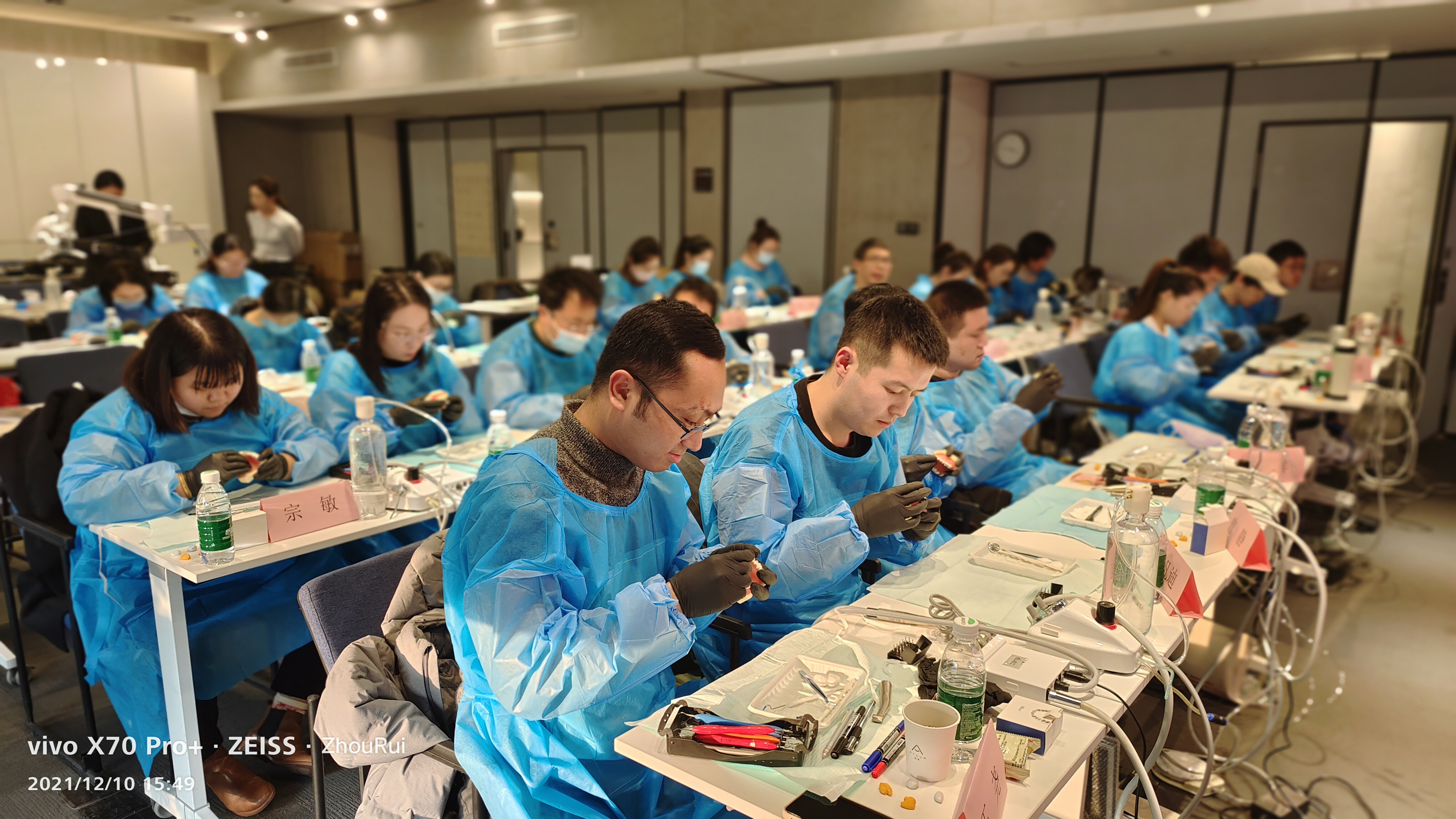
Throughout this process, Zhou Rui became firmly committed to pursuing a career in dental education. “Frankly speaking, at that time, both my business partner and I held stable positions at hospitals and enjoyed substantial incomes. In contrast, vocational dental education required significant investments of time and energy, while its financial returns were uncertain. Consequently, I began to contemplate and wrestle with my future career path. After much internal deliberation, however, I remained determined to redefine the landscape of dental training in China.”
With a resolute heart, everything seemed to be moving in a positive direction. Yet doubts came flooding in.
“Do you have evidence-based support? You teach using technical experience from abroad and skills developed through clinical exploration. Can your approach withstand scrutiny by authoritative bodies?”
Amidst the skepticism, Zhou Rui felt immense pressure and fell into a state of uncertainty. He decided to take a break and attended a dental medicine exhibition held in Cologne, Germany.
It was at this exhibition that Zhou Rui saw a turning point.
On the bookshelves of dentists worldwide, one will invariably find titles from Quintessence Publishing Group. Founded in 1949, this publishing house specializes exclusively in the field of dentistry and has published hundreds of dental monographs globally to date. Some of its most renowned works have even been translated into more than ten languages.
At that exhibition, Jingcui Group was holding a book signing event for its new release. After browsing through the book, Zhou Rui conceived an idea that would later become the cornerstone of Zhourui Education’s business operations.
Can these books be translated into Chinese and published in China? If so, the teaching content will not only keep pace with international frontiers but also carry authoritative endorsement.
After careful consideration, Zhou Rui returned to China to prepare for the relevant matters and secured the domestic publishing rights for Jingcui Books. This is also why Zhou Rui has been frequently posting updates about the new edition of the book on his social media.
It is worth noting that the works selected and published by Zhourui Education exhibit three distinct characteristics: authority, cutting-edge relevance, and foundational focus. These publications not only originate from authoritative publishing institutions and cover advanced dental theories and clinical practice guidelines, but also place significant emphasis on “fundamentals,” which accurately encapsulates the primary training orientation of Zhourui Education.
In Zhou Rui’s view, he hopes to help grassroots dentists solidify their foundational knowledge and skills.。Because this constitutes the foundation for dentists to refine their technical skills, it is precisely what primary-care dental practitioners need most to significantly enhance and improve their capabilities. Furthermore, from a commercial perspective, training in fundamental dental knowledge and techniques targets a broader audience, thereby offering a larger potential market space.
"Therefore, my criteria for selecting books differ from those of others. The books I choose must provide a thorough explanation of specific knowledge points in the field of dentistry, contribute to the advancement of China's dental industry, and focus on foundational topics."
Perhaps it is precisely because Zhourui Education focuses on vocational training in foundational dental knowledge and techniques that its mission aligns perfectly with that of CareCapital, which is dedicated to promoting the development of China’s primary dental care market and enhancing the professional capabilities of grassroots dentists.
However, Zhou Rui’s definition and understanding of the grassroots market differ from the conventional approach that categorizes it based on city tiers.
“What is meant by the grassroots market? In conventional understanding, fourth- and fifth-tier cities and county towns might be considered grassroots markets. However, in my view, if one’s fundamental skills are not solid, even dentists practicing in first- and second-tier cities are merely grassroots dentists,” stated Zhou Rui. “Therefore, from an educational perspective, there is currently no precise definition distinguishing ‘grassroots’ from ‘non-grassroots.’ Nevertheless, Zhourui Education remains steadfastly committed to serving what we define as grassroots dentists.”
Indeed, a comprehensive and effective training system cannot rely solely on theoretical frameworks. Zhourui Education has also made significant efforts to integrate these theoretical frameworks and transform them into digestible knowledge points.
During the translation of his earlier works, Zhou Rui began organizing the content using a dentist’s logical framework and further refined it into concise, well-structured course PowerPoint slides to facilitate comprehension by dentists in China. “In this way, we not only had a theoretical blueprint, but after our round of further refinement, the material also better aligned with the cognitive patterns of Chinese stomatologists. Therefore, I attempted to introduce this program into China’s training market.”
However, given the inherent capacity limitations of offline training, Beijing Zhourui Education Technology Co., Ltd., having consolidated its strength in the offline training market, began to strategically position itself in the online education sector in advance, thereby establishing a closed-loop ecosystem integrating both online and offline operations.
More encouragingly, Zhourui Education’s online platform currently receives over 1.5 million visits annually, with more than 200,000 registered members. This figure is particularly notable given that the total number of registered dentists in China stands at only 221,000 (source: National Health Commission, 2020 data on practicing dentists, excluding dental assistants).
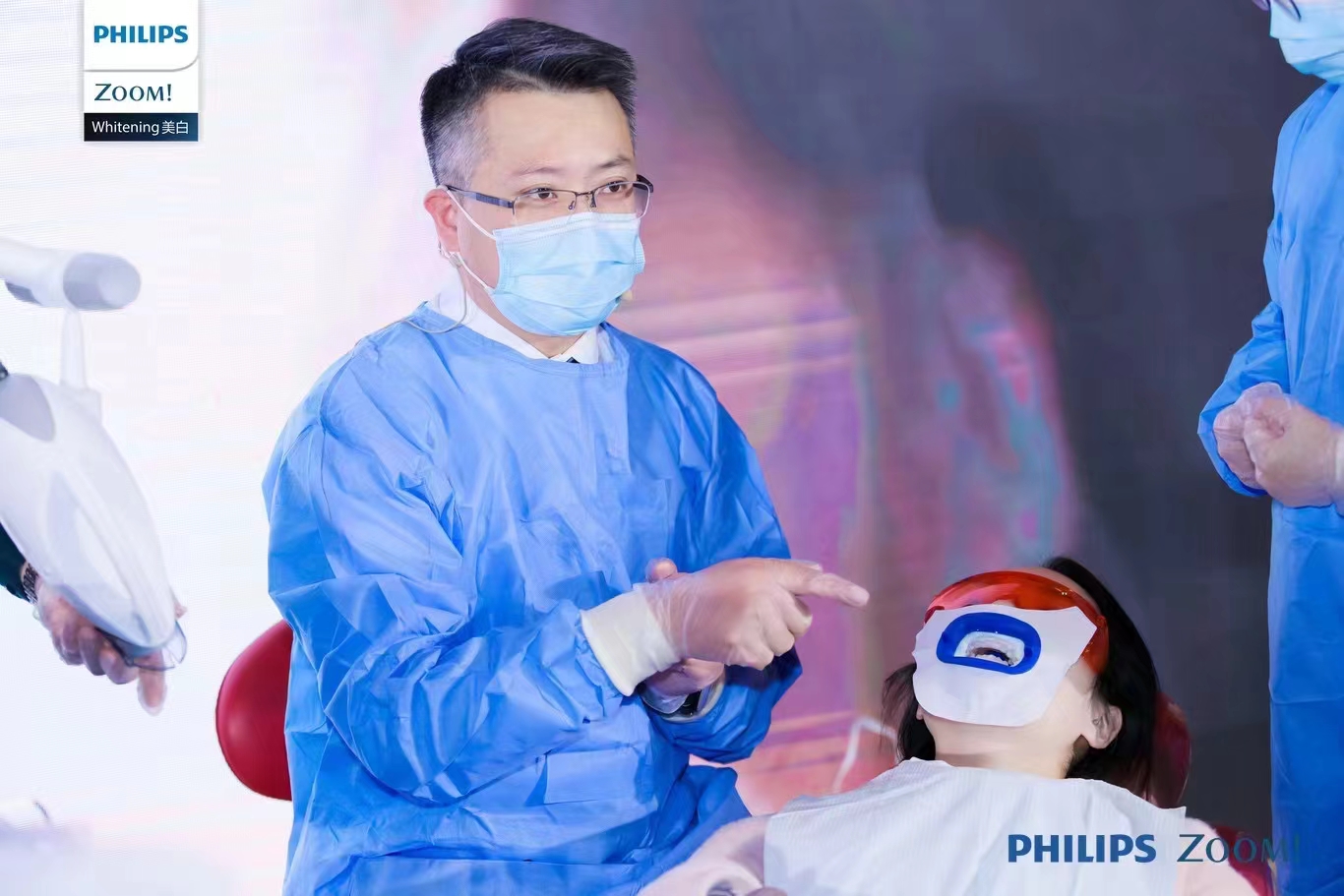
Yet, alongside these encouraging achievements, Zhou Rui harbored subtle concerns. “Teaching is my strength, but I lack expertise in building and operating online platforms.” As these worries weighed on him, CareCapital stepped forward with its dedicated informatics team. Their support not only alleviated Zhou Rui’s concerns but also deepened his appreciation for the strong alignment between the two companies’ philosophies and strategic visions.
“During my discussions with CareCapital, I found clear and precise answers to all my questions. The addition of Beijing Zhourui Education Technology Co., Ltd. also aligns perfectly with CareCapital’s strategy, so we reached an agreement almost instantly,” Zhou Rui remarked with considerable emotion.
In the future, the collaboration between the two parties will certainly extend beyond informatization construction to include strategic investment, content creation, and operations. Regarding strategic investment, Zhourui plans to establish a new division dedicated to the interpretation of medical literature, focusing on translating and analyzing classic international publications. Consequently, investments centered around this division will become one of Zhourui Education’s key strategic initiatives. Furthermore, Zhourui will invest in an IT team to develop its own proprietary mobile application.
Zhourui Education took its initial shape in 2015 and was formally established in 2017. Its development path has not been particularly turbulent, yet it consistently reflects one key strategy: proactive planning.
Take the online education platform as an example. Beijing Zhourui Education Technology Co., Ltd. did not establish its online education platform to “jump on the bandwagon” amid the recent surge in live streaming; rather, it began its online strategic layout in 2018, just one year after its official establishment.
It is evident that this rationale mirrors the “pure” temperament of the founder. To uphold this purity and strive for excellence in education, Zhou Rui will face numerous challenges ahead, such as identifying a cohort of instructors who share his commitment to meticulously refining course quality.