Charting the Course: Blue Book on Chinese Pharma Going Global Unveiled to Accelerate Internationalization

BD China
Medical Device R&D Manufacturer, Distributor
Recently, the “China Pharmaceutical Enterprises’ Globalization Insights Exclusive Seminar” and the launch event for the Blue Paper *Setting Sail: A Blueprint for Chinese Pharmaceuticals Going Global*, jointly organized by BD and Boston Consulting Group, were held in Hangzhou.
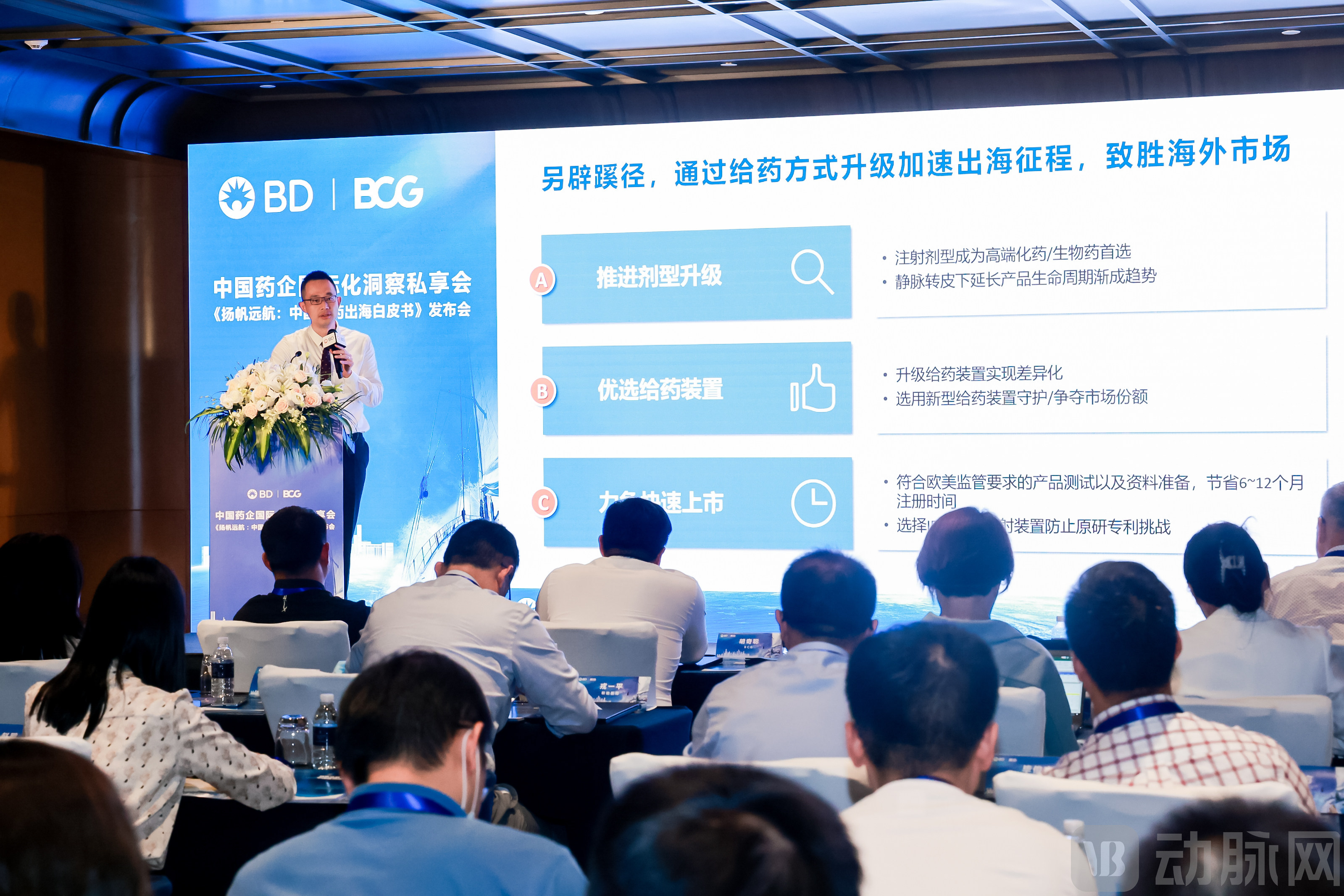
Exclusive Salon On-site
This exclusive gathering brought together more than 30 representative Chinese pharmaceutical companies expanding globally, including Hengrui Medicine, Junshi Biosciences, Hepalink, Jianyou BioScience, Fosun Pharma, 3SBio, and Huadong Medicine, as well as leading industry experts from global pharmaceutical packaging and drug delivery device companies, healthcare consulting firms, investment institutions, and regulatory review agencies. Against the backdrop of profound changes in both domestic and international environments, participants engaged in in-depth discussions on how to sustain the strong momentum of innovation and expansion seen since the early 21st century and continue to advance the internationalization of China’s pharmaceutical industry.
Furthermore, the widely watched within the industry"Setting Sail: The Blue Book on the Global Expansion of China's Pharmaceutical Industry"(hereinafter referred to as the “Blue Book”) was also prominently launched at the exclusive seminar. The Blue Book, jointly released by BD China and Boston Consulting Group, is based on interviews and surveys with executives from dozens of Chinese pharmaceutical companies, combined with industry data analysis and case studies from both domestic and international markets.An In-Depth Exploration of the Globalization of China's Pharmaceutical Industry. It provides an in-depth analysis of the numerous challenges currently facing Chinese pharmaceutical companies in their global expansion efforts and offers corresponding recommendations to help these enterprises accelerate their internationalization process.
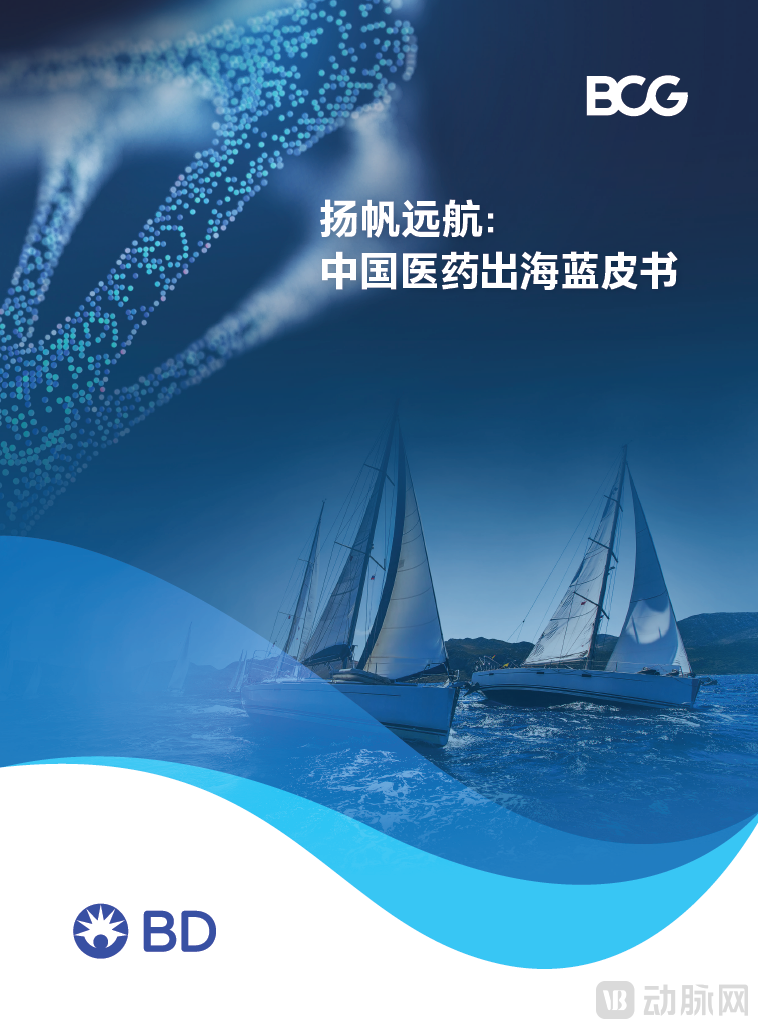
"Setting Sail: Blue Book on the Global Expansion of China's Pharmaceutical Industry" Released
Current Status of Chinese Pharmaceutical Companies Going Global
The International Performance of China's Innovative Drugs
In recent years, a growing number of domestic innovative pharmaceutical companies have sought to expand their international market presence through cross-border licensing deals. The model has gradually shifted from license-in to license-out, with both the number of transactions and deal values reaching new highs. According to incomplete statistics, 40 domestic drug projects were licensed out overseas in 2021, 16 of which involved transaction amounts exceeding USD 100 million.
The Blue Book states that oncology is currently the most fiercely contested area in the overseas clinical pipelines of Chinese innovative drugs, accounting for approximately 65% of such pipelines. With a larger proportion in early-stage clinical trials, the weight of this therapeutic area is expected to continue expanding. Developed markets, including Europe, the United States, Japan, and South Korea, are the primary regions for innovative drugs, representing nearly 80% of the global market.
Furthermore, Chinese pharmaceutical companies are highly enthusiastic about expanding their innovative drugs into overseas markets, with multiple products currently under FDA approval or review, including small molecules, antibodies, recombinant proteins, and cell therapies. However, recent challenges faced by several domestically developed innovative drugs at the FDA indicate thatOverseas regulatory authorities impose stricter requirements on clinical data quality, as well as the design and execution of global clinical trials.
These challenges do not mean that overseas markets are closing their doors to Chinese pharmaceuticals; on the contrary, they have positively spurred Chinese pharmaceutical companies to establish global multi-center clinical trials and improve the quality of clinical trial design and data. Multi-center clinical trials that include adequate patient samples from the United States or other countries are more likely to gain approval from overseas regulatory authorities such as the FDA. Enhancing the quality of clinical trial design and data is particularly crucial for products targeting popular therapeutic areas; it is essential to define standard-of-care treatments or alternative study methodologies to demonstrate clinical benefit. These aspects have now become key areas of focus and development for Chinese pharmaceutical companies.
Performance of Chinese Generic Drugs in Overseas Markets
As early as the early 21st century, generic drugs became the vanguard products for Chinese pharmaceutical companies expanding overseas, helping them break into international markets. Data from the Blue Book shows that after 2010, the number of Abbreviated New Drug Applications (ANDAs) approved annually for generic drugs in the United States grew rapidly, with nearly 100 products approved in 2020 alone.
The explosive growth in ANDA approvals is closely linked to the implementation of the Generic Drug Consistency Evaluation (GQCE). Since 2016, the continuous advancement of generic drug consistency evaluation has improved the quality standards and industry benchmarks for generic drugs in China, thereby promoting greater consolidation within the generic pharmaceutical industry.
Prior to this period, from 2005 to 2015, Chinese pharmaceutical companies primarily exported generic drug formulations. The Asian and African markets, with their relatively lenient pharmaceutical regulations and low entry barriers, were the preferred destinations for Chinese formulations seeking to expand internationally. In the subsequent years, the proportion of differentiated generic drug exports continued to rise, while growth accelerated in regulated healthcare markets such as Europe, the United States, and Japan. By 2021, Europe had surpassed Asia to become the largest overseas market for Chinese pharmaceutical exports.
In overseas markets that emphasize innovation and differentiation, particularly in Europe and the United States, improved new drugs with modified formulations but unchanged molecular structures represent one of the pathways for generics to break through into novel therapeutics.In the past two years, multiple products have successfully launched in overseas markets. With a robust early-stage clinical pipeline, pharmaceutical companies are highly enthusiastic about expanding globally. For instance, Luye Pharma’s risperidone extended-release microspheres for injection, indicated for the treatment of schizophrenia and bipolar disorder, has submitted a New Drug Application (NDA) in the United States via the 505(b)(2) pathway and is currently under regulatory review.
Core Challenges for Chinese Pharmaceutical Companies Going Global
The accelerated expansion of domestic pharmaceutical companies into international markets signifies that China’s pharmaceutical prowess is gradually gaining recognition overseas. However, it is undeniable that the journey of Chinese pharmaceutical companies going global still faces numerous challenges.
“The path to global expansion is open, albeit with high barriers. Critical considerations include product selection, target markets, clinical development strategies, meeting market demands, and the careful selection of partners.”Dr. Hu Qicong, Managing Director and Global Partner at Boston Consulting Group (BCG)stated at the private sharing session.
Products and Pipeline with Differentiated Competitiveness
The Blue Book analysis points out that the primary challenge currently facing Chinese pharmaceutical companies in their global expansion isThe product lacks differentiated competitiveness.For instance, in the field of innovative drugs, although many pipelines are currently in the late stages of FDA application, most products are “Me-too” drugs with serious target homogenization and low differentiation. In contrast, developing “Me-better” and “First-in-Class” drugs imposes extremely high demands on a company’s capabilities and resources.
For generic drugs,Mr. Lu Liang, Vice President of BD China Pharmaceutical Systems BusinessAt a private sharing session, it was noted: “Originator pharmaceutical companies build patent moats through various means, including even the drug delivery devices, creating significant barriers for the overseas launch of generic drugs.” This clearly indicates that the difficulty of overseas registration, submission, and approval for generic drugs is continuously increasing. Furthermore, if generic drugs lack optimized designs such as formulation improvements and upgrades to delivery devices, they cannot further enhance medication convenience and compliance based on the originator products. Once their approval progress is hindered and they fail to reach the market quickly, these products will fall into a passive position, with their future market performance remaining uncertain.
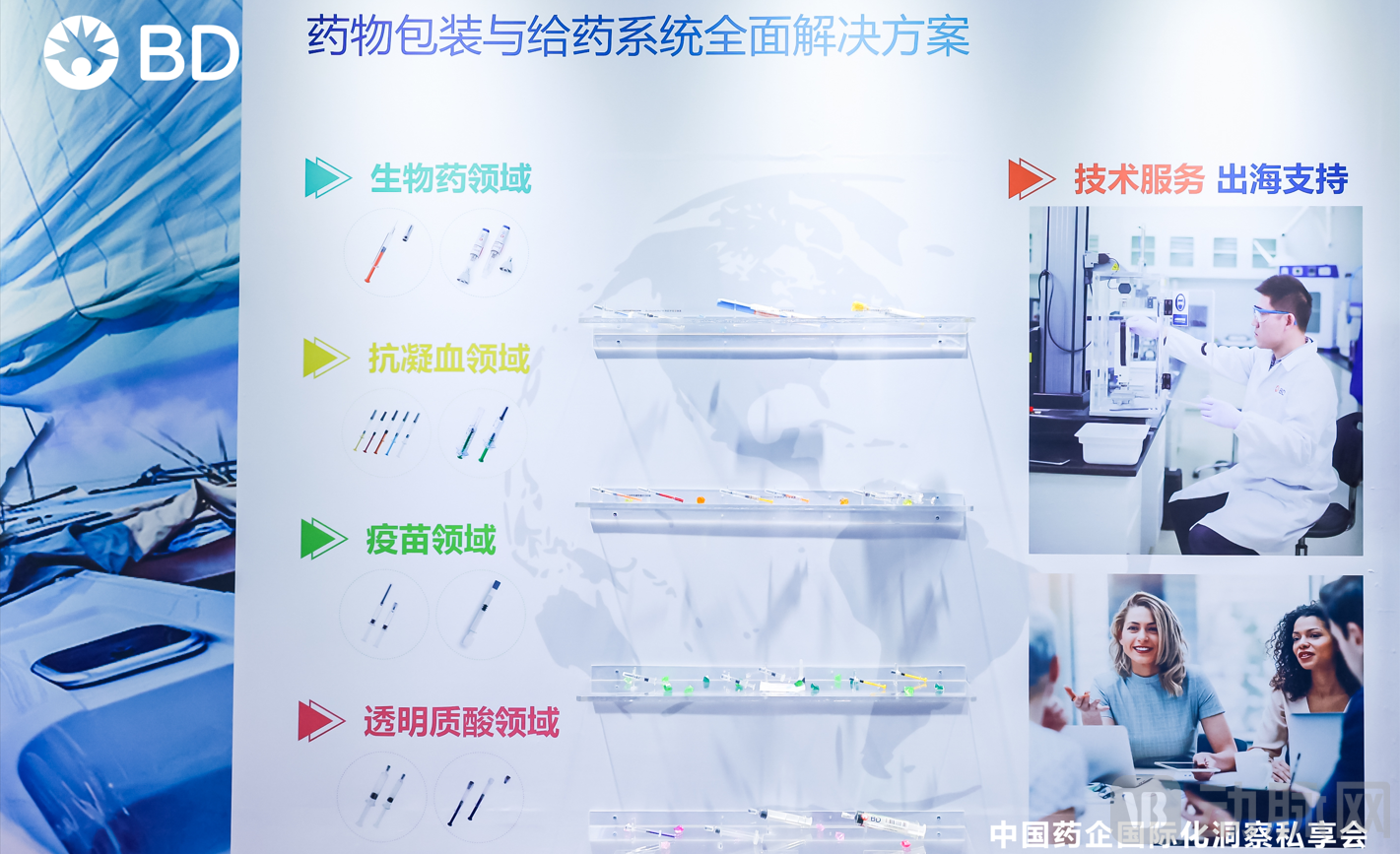
BD Offers Comprehensive Solutions for Drug Packaging and Delivery Systems
Suitable Overseas Commercialization Models and Professional Partners
Mr. Li Yue, Director of Business Development at Nanjing King-Friend Biochemical Pharmaceutical Co., Ltd.At a private sharing session, the unique aspects of commercialization in the U.S. market were discussed. “The U.S. generics market operates on a commercial procurement model. The correct approach to entering this market is for pharmaceutical companies to build a sufficiently large ‘product basket’ that includes certain representative drugs and use it as leverage in negotiations. In contrast, negotiating procurement for individual drugs only leads to continuous price reductions.”
It is evident that the challenges Chinese pharmaceutical companies face in overseas commercialization should not be underestimated. At this stage, many Chinese enterprises still lack extensive experience in international commercialization and have an inadequate understanding of the business environment, regulations, and operational logic of global markets. How to equate “high-quality products” with “strong sales performance” remains a critical issue for Chinese pharmaceutical companies to address through dedicated research.
In addition, from the perspective of innovative pharmaceutical companies, transitioning pharmaceutical companies, and traditional pharmaceutical companies, theirRespectiveCorporate strategies, technology platforms, target markets, and resource allocation vary.Therefore, challenges such as commercialization faced when expanding overseasThe challenges are also not identical.
“The Blue Book” shows that the international markets for Chinese pharmaceutical companies are still dominated by Europe and the United States, while Asian markets such as Japan, South Korea, and Southeast Asia are gradually becoming the second target for innovative and transforming pharmaceutical enterprises. Southeast Asia, South America, and Africa have become the secondary targets for traditional pharmaceutical companies.
For innovative pharmaceutical companies, strong clinical R&D capabilities and lean teams lead to a preference for out-licensing or commercialization partnerships; there is an urgent need to enhance in-house commercialization capabilities and global value chain deployment.
Pharmaceutical companies undergoing transformation have large international teams and more extensive sales experience; their greater challenges stem from current deficiencies in overseas clinical development and regulatory registration capabilities.
In contrast, traditional pharmaceutical companies, with their smaller teams and domestic focus, are better suited to adopting commercial collaboration models to achieve overseas sales of active pharmaceutical ingredients (APIs) and generic drugs. In the future, they will emphasize a combination of commercial collaborations and in-house team building to strengthen control over overseas production and sales.
On the journey of venturing overseas,Secure high-quality partners, establish collaborations, and leverage their resources to efficiently enhance your own capabilitiesIt is a key indicator for assessing the global expansion capabilities of Chinese pharmaceutical companies.
The Key to Chinese Pharmaceutical Companies’ Global Expansion and Future Success
Amid the myriad challenges of global expansion, what key areas should Chinese pharmaceutical companies focus on strengthening to secure a foothold in the vast international arena? The Blue Book offers the following recommendations.
Creating Differentiated Products
To create differentiated products, one aspect isInnovative Drug Targets and Molecular Innovation— Emphasizing differentiation through target selection, molecular design, and indication portfolio strategy, advancing from “me-too” drugs to first-in-class and best-in-class therapies to build a highly competitive pipeline of assets.
On the other hand,Starting with the Upgrade of Administration Routes—Enhancing the convenience of drug administration and improving patient adherence, while simultaneously establishing health economic advantages. At a private symposium, Mr. Lu Liang pointed out that as competition in overseas markets intensifies and untapped areas for R&D become increasingly scarce, pharmaceutical companies expanding globally must urgently focus on how to efficiently enhance the clinical value and differentiated competitiveness of their products through relatively modest investments.
The aforementioned improved formulations of new drugs represent an excellent approach. This method enhances medication convenience and patient adherence, offering benefits to both physicians and patients, and constitutes a key direction for global incremental innovation. For instance, South Korea’s Celltrion developed the world-first subcutaneous formulation of Remsima (infliximab). Equipped with an autoinjector, it enables home-based administration. Compared with intravenous infusion, which requires several hours, the autoinjector completes drug delivery within 2–5 minutes, substantially reducing the time burden on healthcare providers and patients as well as conserving medical resources, thereby significantly strengthening the product’s differentiated competitiveness. This incremental innovation also aligns with the demand for home self-injection in mature markets across Europe and the United States, and may serve as a critical strategy for Chinese pharmaceutical companies seeking to successfully penetrate developed overseas markets.

Actively establish multi-faceted collaborations, including commercialization, to leverage partner resources
In terms of global expansion strategies, pharmaceutical companies can leverage their respective resource endowments to pursue one of three approaches: forging comprehensive partnerships with global multinational pharmaceutical firms, leading distributors, and high-quality suppliers through a “partner-led” model; committing to long-term resource investment for “organic growth” by establishing independent commercial teams overseas to achieve full commercial autonomy; or utilizing ample capital for “investment-driven expansion” to directly acquire products and sales networks in foreign markets.
The “borrowing a ship to go to sea” strategy requires Chinese pharmaceutical companies to partner with entities possessing extensive overseas resources and establish deep collaborations. Multidimensional cooperation beyond commercialization may enable these companies to maximize their strengths, mitigate weaknesses, and rapidly enhance capabilities in overseas regulatory registration and filing.
The Blue Book cites the case of a prominent Indian pharmaceutical company exporting its insulin analog products to the United States. This company established strategic partnerships with entities such as Mylan and the Pharmaceutical Systems division of Becton Dickinson (BD). In terms of commercialization, it leveraged Mylan’s distribution network to enhance product access and market coverage in the U.S. Regarding regulatory submissions, it utilized Mylan’s extensive experience in communicating with U.S. regulatory authorities to help interpret, address, and respond to agency inquiries. The company also forged close collaborations with BD’s Pharmaceutical Systems division in areas including combination drug-device product supply, technical services, and regulatory compliance, thereby shortening the approval timeline and appropriately resolving patent litigations initiated by originator manufacturers. These efforts facilitated the rapid and smooth market launch of its products in the United States, making its insulin analog the first interchangeable biosimilar insulin product approved by the U.S. FDA, which may further boost its retail sales performance in the U.S. market.
It is worth noting that the aforementionedImproved New Drug Dosage Forms Place High Demands on Regulatory Submission and Registration Capabilities in Overseas Markets. Taking the regulatory submission of complex drug-device combination products as an example, in addition to pharmaceutical research data, regulatory authorities in Europe and the United States impose detailed requirements on components such as glass for pre-filled syringes, rubber, silicone oil, and drug delivery mechanical devices. Furthermore, given the variability in registration and submission processes, successful outcomes heavily rely on collaborative expertise and experience across multiple teams, including product analysis, technical testing, medical affairs, and overseas regulatory interpretation.
Collaborating with global pharmaceutical packaging and drug delivery device companies—leveraging their leading capabilities in device R&D, technical documentation management, regulatory affairs support, and experience in communicating with local regulatory authorities—to efficiently conduct combination product trials, human factors studies, and technical documentation development represents a preferred strategy for helping Chinese pharmaceutical companies improve the efficiency and success rate of product registration submissions.
Mr. Lu Liang stated at the private seminar, “Chinese pharmaceutical companies are entering a new stage of development. Products with differentiated competitive advantages, efficient overseas regulatory registration capabilities, and strong support from partners with a global perspective will help Chinese pharmaceutical companies navigate toward deeper and more far-reaching horizons.”
The journey of global expansion is long and arduous, with heavy responsibilities ahead. We look forward to the day when Chinese pharmaceutical companies soon take center stage on the world platform, becoming an indispensable force in the global pharmaceutical arena.
About BD
Co-initiator and Co-publisher of the “Blue Book”: BD (Becton, Dickinson and Company), a global medical technology company. Its Pharmaceutical Systems segment is dedicated to providing professional products such as prefillable packaging and drug delivery devices, as well as service support including chemical laboratory testing, functional testing of drug-device combinations, regulatory consultation and technical documentation preparation, and market analysis, thereby safeguarding the global expansion of Chinese pharmaceutical enterprises.