

Behind the World's Largest Hospital with 21.878 Billion RMB Revenue: XinYi Intelligence Powers Zhengzhou University First Affiliated Hospital’s Remote Healthcare Ecosystem
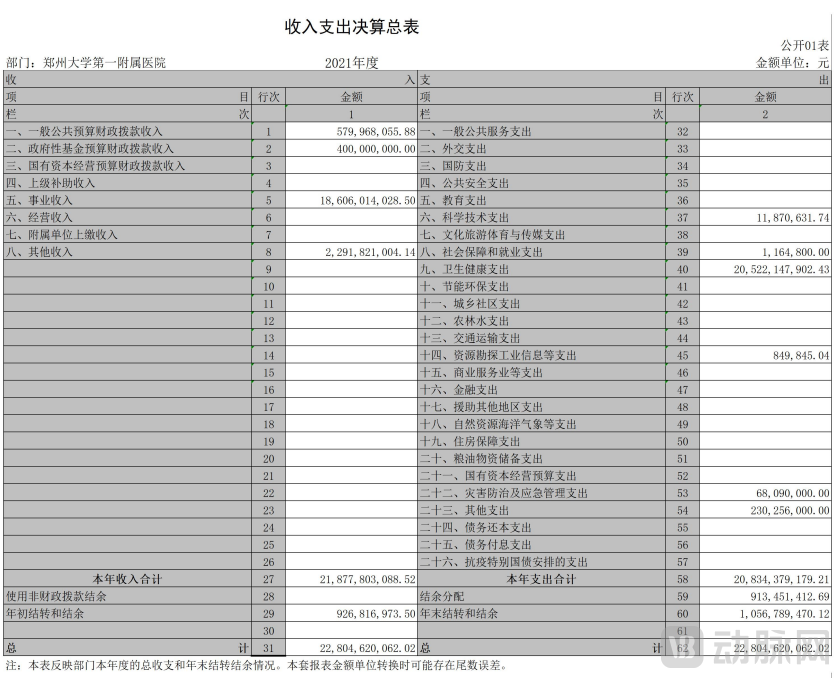
Recently, the First Affiliated Hospital of Zhengzhou University has trended on social media due to the 2021 annual final financial accounts published on its official website. The data show:
In 2021, the First Affiliated Hospital of Zhengzhou University reported a total revenue of approximately RMB 21.878 billion, comprising RMB 980 million in fiscal appropriations, RMB 18.606 billion in institutional operating revenue, and RMB 2.292 billion in other income.
According to Fudan University’s “Best Hospitals in China” ranking, the First Affiliated Hospital of Zhengzhou University ranks 19th nationwide. In the “2021 Science and Technology Evaluation Metrics (STEM) for Chinese Hospitals and Medical Schools” released by the Chinese Academy of Medical Sciences in August this year, the hospital placed 21st. With its outpatient visits, revenue, and national rankings rising year after year, the First Affiliated Hospital of Zhengzhou University is further solidifying its title as the “largest hospital in the world,” while its rapidly developing telemedicine services are providing new momentum to Henan Province.
In 2017, the National Health Commission issued the “Plan for the Establishment of National Medical Centers and National Regional Medical Centers during the 13th Five-Year Plan Period,” launching the initiative to designate National Medical Centers and National Regional Medical Centers. Henan Province is striving to build a new highland for the aggregation of high-quality medical resources, relying on the First Affiliated Hospital of Zhengzhou University to establish a National Medical Center, with Xinyi responsible for its construction.

The National Medical Center is an integrated telemedicine service platform that combines multiple functions, including emergency command, remote consultation, remote specialist diagnosis, remote education and training, data transmission, appointment registration, two-way referral, and digital resource sharing. It enables data interaction among networked institutions and regional coordination of medical services, providing comprehensive support for the routine and large-scale delivery of telemedicine services.
Leveraging Henan Province’s telemedicine system, the project has established a five-tier telemedicine organizational framework featuring coordinated operations across “provincial center – municipal sub-center – county central station – grassroots workstation – grassroots service point.” It has achieved full coverage of telemedicine services in Henan Province, enabling interconnectivity and collaborative support among more than 300 hospitals within the province. Domestically, it has established telemedicine collaborations with over 70 hospitals in provinces and municipalities including Xinjiang, Shanxi, Sichuan, Hebei, Tianjin, Shandong, Hunan, Hubei, and Fujian. Additionally, it has facilitated cross-border telemedicine connectivity with selected hospitals in Zambia, Africa, thereby promoting equitable access to high-quality medical resources for the benefit of the public.
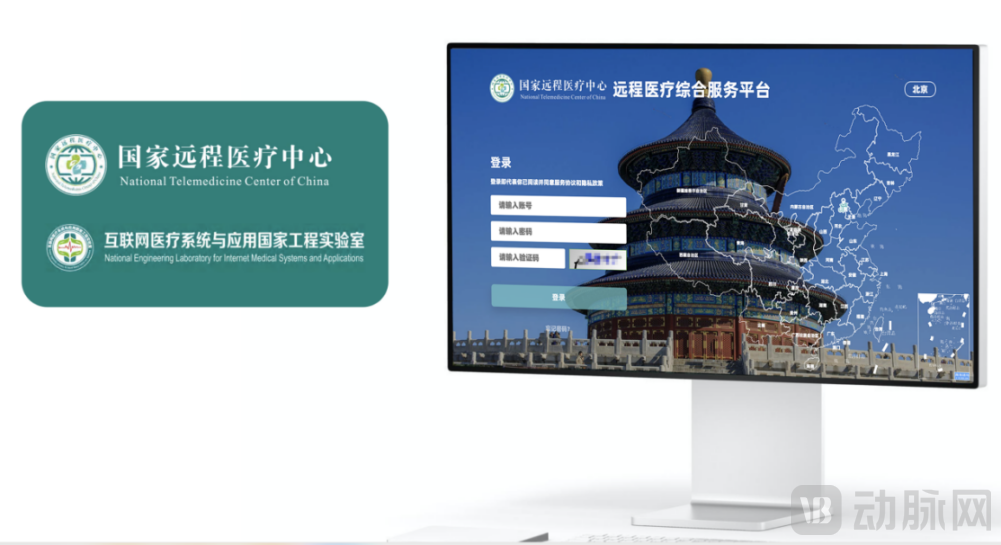
Furthermore, Xinyi also serves the First Affiliated Hospital of Zhengzhou University, joining forces to support the development of a national-level scientific and technological platform in China’s internet healthcare sector—the National Engineering Laboratory for Internet Healthcare Systems and Applications. It assists in the research, development, and testing of internet-based software systems, as well as big data analysis and applications in healthcare, holding significant strategic value for the growth of the “Internet+” general health industry.
As is well known, the First Affiliated Hospital of Zhengzhou University handles an enormous volume of remote consultation data. Therefore, the platform’s primary objective is to help physicians process clinical tasks more rapidly and enhance work efficiency. By continuously refining each functional module based on the principles of convenience, ease of use, and practicality, the platform enables healthcare professionals to focus on their core responsibilities. The system’s list-view interface facilitates convenient and personalized operations, while intelligent robotic assistants support triage processes, significantly alleviating the substantial daily workload borne by physicians.
Meanwhile, the platform also features embedded remote control capabilities. Once a remote consultation request is approved, specialists can directly access patient information, eliminating the need for primary care hospitals to upload cumbersome laboratory and diagnostic data. This not only effectively reduces the data burden on the servers of central hospitals but also saves precious time in the treatment of critically ill patients.
The platform also regularly delivers high-quality remote education courses, creating customized, region-specific, and high-frequency engaging teaching cases for physicians. Through real-time remote consultations, with approximately 5–10 live sessions per week, primary-care physicians are immersed in XinYi’s unique medical education and training model, leading to continuous improvement in diagnostic and therapeutic quality.
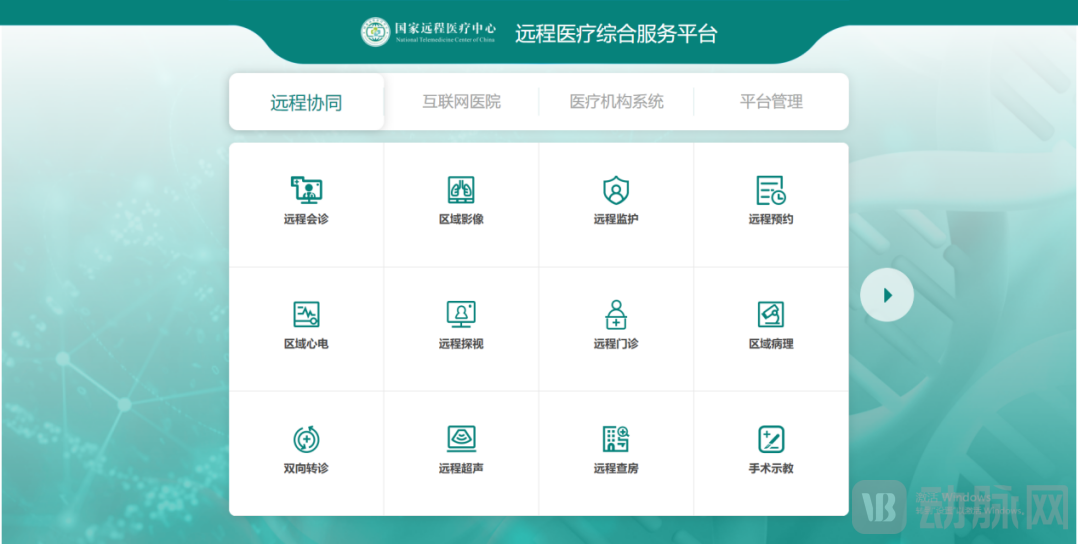
● AI-Powered Full-Fidelity Simulation:
Enables real-time, one-on-one face-to-face interactions; provides an integrated view with customizable drag-and-drop functionality for experts at the upper level. Embedded within the platform, it facilitates remote control and barrier-free access to patients' full lifecycle information.
● 360-Degree Routine Remote Teaching:
Real-World Cases + Disciplinary Education + Research Medical Record Data: Creating Immersive Learning Scenarios
● Excellent User Experience:
More Comprehensive, More Convenient, More Thoughtful
● Direct Patient Access Post-Consultation:
Data analysis is conducted in real time, with follow-ups reaching patients directly at the grassroots level; interface integration is initiated and optimized to increase departmental diagnosis and treatment volume; AI-driven precise analysis enables automatic early warnings and reminders.

To date, the center conducts over 20,000 comprehensive telemedicine consultations annually, performs more than 300,000 specialized remote diagnostic cases in electrocardiography, pathology, and medical imaging, and delivers over 260 sessions of remote education, training more than 350,000 participants. Its service scale is far ahead of others in China.
In terms of departmental structure, the clinical medicine program at The First Affiliated Hospital of Zhengzhou University is a national “Double First-Class” discipline and a leading discipline in Henan Province. Its esophageal cancer prevention and treatment program is a distinctive discipline of Henan Province, and the hospital serves as a core unit of the National Clinical Research Center for Kidney Diseases. The hospital hosts 20 national key clinical specialty construction projects and 27 key disciplines of Henan Province. These distinctive disciplines in key fields are gradually emerging as new “highlands” of high-quality medical care in Henan Province.
In the era of “Internet Plus,” the tiered diagnosis and treatment model is a crucial measure to address the difficulty of accessing medical care and achieve equalization of medical services. On September 26, the National Health Commission announced that during the 14th Five-Year Plan period, it will support the establishment of approximately 120 provincial-level regional medical centers across various regions, promoting the extension of high-quality medical resources closer to the public. These provincial-level regional medical centers will focus on key diseases and specialties, and facilitate the expansion and balanced distribution of high-quality medical resources by encouraging hospitals in provincial capitals and major cities to transfer resources to areas with weaker healthcare infrastructure.
The “World’s Largest Hospital”—The First Affiliated Hospital of Zhengzhou University boasts prominent strengths in its key disciplines, with metrics such as daily outpatient volume, revenue, comprehensive ranking, and scientific and technological impact consistently rising year after year. Bolstered by the prestige of hosting the National Telemedicine Center and the National Engineering Laboratory for Internet Healthcare Systems and Applications, it is gradually becoming a benchmark for tiered diagnosis and treatment and regional medical centers across China to emulate.
The Path to a Healthy Henan Is Within Reach. As a service provider for the National Telemedicine Center, Xinyi will leverage its decade-plus accumulation of data and operational experience to continuously support the innovative application of intelligent medical scenarios at the First Affiliated Hospital of Zhengzhou University. It will actively advance the development of regional health information infrastructure and the application of smart healthcare big data, steadily enhancing the level of information management and IT support capabilities in the healthcare sector. By effectively integrating medical information resources, it aims to achieve efficient coordination of high-quality medical resources and refine medical management, thereby improving healthcare accessibility. This will further strengthen local health service delivery, comprehensive regulatory oversight, and health information services, meeting the public’s diverse and multi-tiered demands for medical care.