

Why Global MedTech Giants Can't Outcompete These 'Hidden Champions': Insights from Upstream Market Dominance

Invibio
--
Hidden Champions in the Medical Device Industry Are Gradually Emerging.
The centralized procurement of artificial joints has revealed that CeramTec, the leader in ceramic artificial joints, is the true winner. The listing of MicroPort EP has highlighted that Northern Digital Inc. (NDI), the supplier relied upon in the electrophysiology field, is even more critical than Johnson & Johnson. In the centralized procurement for spinal products, core components such as screw-rod and screw-plate systems, along with PEEK material for interbody fusion cages, are similarly dominated by the imported brand Invibio.
Although these hidden champions are not widely known, they often capture more than 50%–90% of the market share, with some powerful hidden champions even being the sole suppliers in their respective fields.
Not only are domestic companies heavily reliant on these “hidden champions” for core components or services, but global giants such as Johnson & Johnson, Stryker, Abbott, and Boston Scientific also depend on their supply. In many cases, these companies even define industry standards.
As most hidden champions dominate market supply and wield strong bargaining power, Chinese companies still face very stringent conditions when procuring raw materials from certain foreign suppliers. With the current changes in the medical device industry ecosystem, coupled with healthcare cost containment measures and an evolving global competitive landscape, the importance of maintaining autonomy within the industrial chain has become increasingly prominent, drawing greater attention to these upstream hidden champions.
Who Are the Hidden Champions in the More Obscure Upstream Segments of the Industry? How Have These Companies Come to Dominate the Global Medical Device Supply Chain? VCBeat (WeChat ID: vcbeat) Has Compiled an Overview.
How to Define Hidden Champions?
The concept of “Hidden Champions” was proposed by German management scholar Hermann Simon. It is defined as companies with annual sales not exceeding €5 billion, whose brands rank among the top three globally in a specific niche market. These enterprises are typically low-profile, often serving highly specialized markets and remaining largely unknown to the general public.
The book Hidden Champions: Pioneers of Globalization also mentions numerous healthcare companies, such as Dräger, a manufacturer of ventilators; Fresenius, a manufacturer of hemodialysis products; Brainlab, a provider of surgical navigation software; Otto Bock, a prosthetics and orthotics company; and International SOS, a Singapore-based enterprise offering medical assistance services. While these companies are household names in the healthcare industry, the more obscure hidden champions are those that rank among the top—or even first—in highly specialized niche segments upstream in the supply chain.
These companies are relatively obscure yet wield strong dominance in their respective niche sectors. In terms of industrial chain distribution, they are predominantly located in the upstream segment.
There are hidden champions in the upstream sectors of medical imaging, orthopedics, dentistry, endoscopy, and surgical instruments.
In the field of medical imaging diagnostics, major global imaging companies cannot bypass Varex Imaging Group, a supplier of X-ray tubes.Varex, spun off from Varian, supplies critical components to medical imaging companies, including X-ray tubes, flat-panel detectors, high-voltage cables, ionization chambers, and software for digital image signal acquisition and post-processing. In the flat-panel detector market, the U.S.-based industry leader Varex holds a market share of over 30%.
In orthopedics, there are still no qualified domestic suppliers for materials such as medical-grade ceramics, PEEK, cobalt-chromium-molybdenum alloys, and ultra-high-molecular-weight polyethylene. The market is dominated by a few overseas companies, which has also given rise to multiple hidden champions in these niche segments.
CeramTec, the German supplier of ceramic artificial joints, is a veritable hidden champion.. As a provider of ceramic components for artificial hip joints, CeramTec is the sole supplier of ceramic joint components to major global artificial joint manufacturers, including Johnson & Johnson, Zimmer Biomet, Stryker, Weigao, and Chunli. Driven by its ceramic artificial hip joint business, CeramTec generates annual revenues exceeding hundreds of millions of euros.
In addition to ceramic raw materials, medical-grade PEEK (polyether ether ketone) is also supplied exclusively by overseas vendors.Implant-grade PEEK materials are used in orthopedic implant consumables such as interbody fusion cages, ligament repair anchors, joint interface screws, and neurosurgical repair patches (e.g., artificial skull and maxillofacial bones).
There are few suppliers of PEEK materials, and Invibio is a hidden champion among them. Invibio entered the Chinese market in 2005, and has established deep collaborations with several listed companies in the orthopedic sector, including Double Medical, Weigao, and Kangtuo Medical.
Although there are multiple suppliers of medical-grade PEEK materials besides Invibio, including Solvay in the United States and Evonik in Germany, Invibio remains the dominant global supplier, accounting for more than half of the worldwide supply.
Like Stryker, Invibio’s customers span the entire industry, with domestic clients including Double Medical, Weigao, and Kangtuo Medical. Invibio has implanted approximately 15 million devices worldwide.
Hidden champions often cultivate deep expertise in vertical industries, but this does not mean they are confined to a single vertical track; some hidden champions can simultaneously dominate two major tracks.
In the upstream segment of the supply chains for both vascular intervention and surgical robotics, Northern Digital Inc. (NDI), a Canadian company with over forty years of history, spans these two major sectors.
NDI’s core business is 3D optical measurement and electromagnetic measurement, both of which play a critical role in navigated surgical robotics and electrophysiology procedures.
The magnetic coil localization units required by global electrophysiology manufacturers and the sensors needed for electrophysiology catheters are sourced from NDI. In the field of electromagnetic measurement, NDI holds a 90% market share, and well-known electrophysiology device manufacturers both domestically and internationally procure from it.
In the field of surgical robots, optical tracking cameras for localization and navigation robots are also largely monopolized by NDI. In localization and navigation robots, the optical tracking system performs real-time position monitoring; if a localization error occurs, it guides the robotic arm to automatically track and adjust. In the field of localization and navigation technology, the precision and stability of optical tracking cameras during long-term use impose high requirements on component quality and manufacturing processes.
Both Tinavi and Boyilai’s surgical navigation systems and surgical robots require the procurement of optical trackers from NDI. The high-priced medical surgical navigation systems generate hundreds of millions of dollars in annual revenue for NDI. Constrained by these high costs, only a few companies or medical institutions in China can afford NDI’s equipment, which also contributes to the elevated prices of related devices.
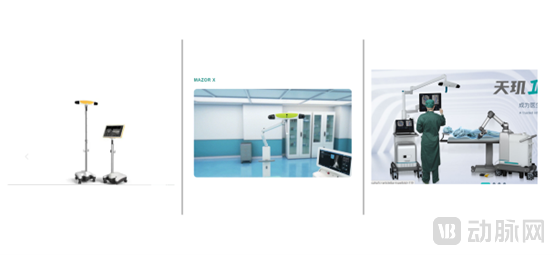
Applications of NDI's Optical Tracking Systems Across Various Products
Hidden champions are not exclusively hardware companies; software service providers can also be indispensable hidden champions. Take Prowess, a U.S.-based radiotherapy software planning company, as an example. Founded in 2002 and headquartered in California, Prowess is a provider of software systems in the field of radiation therapy, having delivered customized software solutions to companies such as Siemens, Shinva Medical, and Neusoft Medical. Like other hidden champions, Prowess holds a significant market share and has established a notable brand presence in China.
Even in seemingly niche segments, fast-growing “hidden champions” can be found. One example is Axonics, a neuromodulation company that develops sacral nerve stimulation devices to help treat conditions such as overactive bladder and fecal incontinence, thereby improving the quality of life for individuals with urinary and bowel dysfunction. Axonics went public on the Nasdaq in 2018 and currently has a market capitalization of $3.6 billion.
Among companies providing R&D services to medical device manufacturers, there are also “hidden champions,” such as Helbling Technik. These firms offer design services during the R&D phase, tailored to the specific needs of medical device development. Their areas of expertise include surgical robots, endoscopes, and neurostimulation, serving leading companies in the surgical robotics sector.
Although hidden champions are typically low-profile, this does not mean they generate low profits. Hidden champions at the top of the industry chain possess strong bargaining power over downstream players. In the healthcare sector, hidden champions often achieve high revenues with relatively few employees.
CeramTec’s medical products business, which specializes in artificial ceramic hip joints, generated €230.2 million in revenue in fiscal year 2020. Invibio, a small healthcare company based in Pennsylvania with only 69 employees, reported annual revenue of $339 million. In 2019, Kangtuo Medical alone purchased RMB 9.5214 million worth of raw materials from Invibio in China.
These hidden champions also typically dominate their vertical niche markets for over a decade. What have these hidden champions done right to sustain long-term success and become industry leaders in a single niche segment?
First, deeply cultivate vertical industries to establish a formidable moat.Invisible champions in the healthcare industry do not boast the broad business scope of giants, but they hold irreplaceable positions in their respective niche markets. The core competitiveness of upstream invisible champion enterprises remains their R&D and innovation capabilities; by addressing root-cause industry challenges as a strategic barrier, they have established profound technological moats.
Second is the adherence to long-termism. The long-cycle, slow-paced nature of the healthcare industry has also resulted in the average age of its hidden champions exceeding 30 years.. Some overseas hidden champions have histories dating back several decades. Take Germany, for example: the Black Forest region is home to more than 400 medical technology companies. The Black Forest has long been renowned for manufacturing high-precision mechanical clocks and watches, and most of these companies originally started out by producing traditional precision machinery. The clock and watch industry is regarded as the key that ushered in the modern industrial era, and many of these German medical technology companies directly evolved from former clock and watch manufacturers.
Meanwhile, for downstream enterprises, core raw materials determine product quality. To ensure stable and consistent supply, they often lock in suppliers, thereby creating barriers for new entrants.
Third, achieving win-win cooperation with customers.Although most hidden champions are leaders in their niche sectors and wield absolute dominance over upstream products, when collaborating with downstream partners, the majority of these companies provide not only products but also services. Upstream enterprises often assist their clients in optimizing product research and development.
“The Invisible Champions” once predicted the pioneers under globalization. For China’s medical device industry ecosystem, the significance of invisible champion enterprises lies not only in exploring global markets but also in ensuring supply chain stability and security.
As China’s medical device industry continues to develop, domestic “hidden champions” are beginning to emerge.
In the field of ceramic artificial hip joints, Ansung Technology is also developing ceramic artificial joints in China. Ansung Technology has mastered the production technologies for two types of ceramic materials: zirconia and alumina.
In the field of PEEK materials, Guangzhou Jusheng Medical Technology Co., Ltd., a medical material R&D enterprise, has developed the first domestically produced implant-grade PEEK material. Although other domestic companies have previously claimed to launch medical-grade PEEK, most of these products are of general medical grade, suitable only for low-risk applications involving contact with the body surface, and do not meet the standards for long-term implantable medical use.
In the high-precision visual positioning sensor industry where NDI operates, domestic companies in China are also striving to achieve breakthroughs by benchmarking against NDI. Camsense, a company based in Shenzhen, is dedicated to high-precision positioning; however, its products have not yet been applied in the medical field. For the sensors required by NDI’s electrophysiology catheters, there are already alternative suppliers available within China.
An industry insider stated that the lack of "hidden champions" in China is partly due to insufficient technological accumulation, and partly because Chinese companies currently tend to integrate the entire industrial chain on their own, managing the supply chain from end to end; as a result, a sound business model has yet to take shape overall.
In a tropical rainforest ecosystem, in addition to towering trees, there are abundant vines and epiphytes interwoven among the high canopy. Within China’s robust medical device industry, a cohort of leading enterprises has emerged and rapidly established a strong presence in the global market. Beneath the sunlight filtered through these towering trees, more hidden champions in specialized vertical sectors are poised to emerge.
Reference: Breaking a 30-Year Monopoly! The First Domestically Produced Implant-Grade PEEK Material Has Arrived — MedDevice Home
"Hidden Champions"