

BaiKangXin Builds China's First Fully Automated Production Line for At-Home Nucleic Acid Test Kits, Setting a New Benchmark in Cost Reduction with Microfluidic Chip Technology
Home-based testing has long been a highly anticipated market.
Home-based testing enables procedures that were previously confined to professional medical institutions to be conducted in the home environment. Users no longer need to visit healthcare facilities, thereby avoiding lengthy queues and overcoming environmental constraints. They can complete the entire process—including sample collection, testing, and report retrieval—at home, offering significant advantages in terms of convenience, privacy, and speed.
The development of home-based testing is closely linked to the COVID-19 pandemic. During the outbreak, regulatory authorities in countries such as the United States (FDA) and China approved multiple home-use COVID-19 test kits. On March 11, 2022, the National Health Commission released the “Notice on Issuing the Trial Implementation Plan for the Application of SARS-CoV-2 Antigen Testing,” which stated that community residents with self-testing needs could purchase antigen test kits through retail pharmacies, online sales platforms, and other channels for self-administered testing. This policy fully unlocked the home-based COVID-19 testing market, laying a solid foundation for the rapid growth of home diagnostics.
In general,The pandemic has propelled the home-testing market forward by a significant leap, with technological advancements and accelerated market education driving breakthroughs. The home-testing market has become a critical battleground for Chinese in vitro diagnostic (IVD) companies amid intensifying domestic competition.
The sensitivity of antigen testing has not yet reached the gold standard of nucleic acid testing, so home-based nucleic acid testing is receiving increasing attention. Among them,Baicare has taken a leading position in the home-based nucleic acid testing business.Currently, Baicare has established China’s first large-scale, fully automated production line for home-use nucleic acid testing kits, breaking through bottlenecks in production capacity and cost. Its daily production capacity is expected to reach 3 million tests in the future. The company has also completed multiple rounds of financing, with investors including Sinopharm Capital, Yinglian Capital, Qianlong Capital, LYFE Capital, Jifeng Capital, Xianfeng Capital, Niejing Capital, and Guangzhou Institute of Respiratory Health Pharmaceutical Co., Ltd.
Initially, the home testing market was primarily dominated by routine tests such as blood glucose monitoring and blood pressure monitoring. As the sector has evolved, infectious disease testing and early cancer screening have gradually been implemented in home settings, with related technologies becoming increasingly diverse.
Nucleic acid testing and antigen testing are currently the most widely discussed home-based diagnostic technologies. Antigen tests offer rapid results and involve lower technical complexity; numerous COVID-19 antigen home test kits have already been approved both domestically and internationally, leading to gradual market saturation. Moreover, antigen testing faces challenges such as limited accuracy and concerns regarding data authenticity.
Compared with antigen testing, nucleic acid testing offers higher accuracy and is considered the “gold standard” for COVID-19 detection. Furthermore, nucleic acid testing has diverse applications in home settings; beyond COVID-19 testing, nucleic acid technologies hold significant promise across various at-home testing scenarios, including cancer screening, women’s health, infectious diseases, and chronic disease management.
Simply put, in terms of accuracy, the breadth of detectable items, and technical barriers,Nucleic Acid Technology Has a Higher Ceiling in the Home Testing Market, offering more advantages and better enabling enterprises to establish a moat in the home testing market.
From 2020 to 2021, the U.S. FDA successively approved three rapid at-home nucleic acid tests for COVID-19. Overseas companies are accelerating their expansion into the home nucleic acid testing market, giving rise to several notable players such as Cue Health, Detect, and Lucira Health. Home nucleic acid testing products are now readily available on supermarket shelves in the United States. In contrast, China’s home nucleic acid testing market has few relevant companies and a limited product offering, leaving significant untapped potential that warrants in-depth development.
Notably, in the wake of the COVID-19 pandemic, home-based nucleic acid testing technologies have continued to advance, and market awareness has risen rapidly. Technology and market recognition are no longer the core factors limiting industry development; rather, it is the aspects that have not yet received sufficient attentionProduction Capacity and Cost, is the key to determining the future direction of the home nucleic acid testing industry.
It is foreseeable that, amid the surge in home-based testing, companies that can first break through the constraints of production capacity and cost for home nucleic acid testing will gain a competitive edge.
As early as 2014, Beijing Baicare Biotechnology Co., Ltd. recognized the vast potential of the home testing market. However, given the challenges associated with market education and commercialization, the company initially chose to establish a strong presence in clinical medical settings. It launched multiple integrated nucleic acid testing devices and pathogen test kits designed for clinical use, all of which obtained Class III medical device certifications and achieved large-scale mass production and sales.
During the 2020 pandemic, demand-driven expansion of the home testing market prompted the company to promptly enter this sector. In the field of home-based nucleic acid testing, Baicare has achieved comprehensive market coverage. The company’s proprietary microfluidic chip technology integrates the entire complex nucleic acid testing process onto a single small chip, automating the full analytical workflow. This provides a solid foundation for developing medical devices that are compact, cost-effective, require minimal sample volumes, offer rapid turnaround times, and are easy to operate.
The company's COVID-19 nucleic acid home self-test product, developed based on microfluidic chip technology, includesGeneClick Nucleic Acid Amplification Analyzer and Novel Coronavirus Nucleic Acid Detection Kit, enabling earlier pathogen detection with results in 30 minutes, rivaling professional PCR laboratories for greater accuracy and convenience. Furthermore, the company has expanded into emerging home-testing markets, including gynecological health, pediatric diseases, HIV, tuberculosis infection, and pet diagnostics.
Baicare willHospital Outpatient Departments, Community Health Service Centers, Village and Town Clinics, Chain Pharmacies, Householdsprovide comprehensive health services to the public and patients in diverse scenarios.
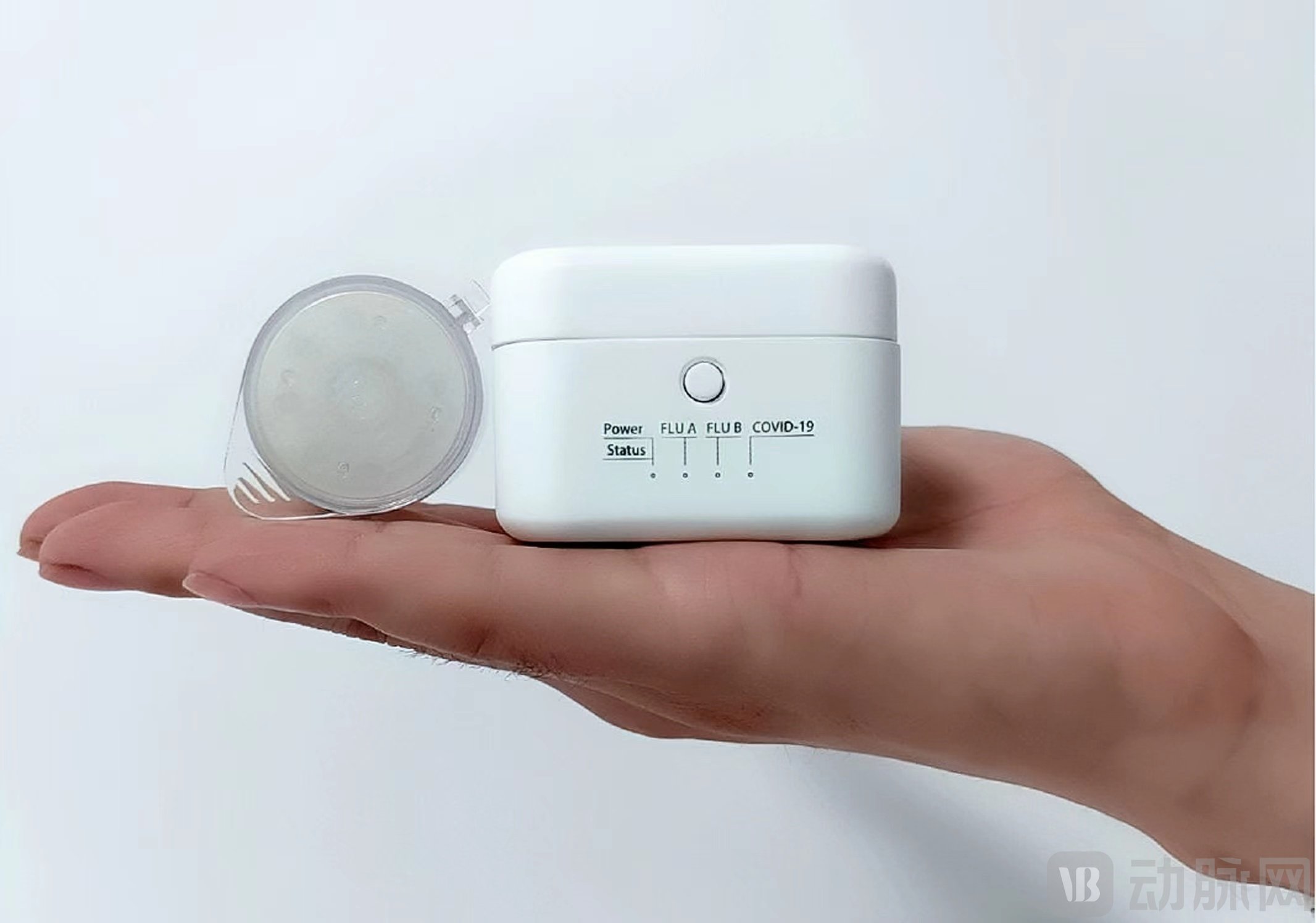
GeneClick Home Nucleic Acid Testing Product
However, at present, home-based nucleic acid testing in China remains in its early stages of development and has not yet achieved widespread adoption. This is primarily because China’s large population requires substantial production capacity to ensure broad coverage, posing a significant challenge to manufacturing capabilities. In addition, affordability is a key determinant of whether home-based tests can be widely adopted; many emerging home-testing products currently cost thousands of yuan, underscoring an urgent need to reduce costs.
Baicare is positioned for large-scale, fully automated production lines,The first large-scale automated production line for home-use nucleic acid testing in China, and even globally, has been established.It is expected that daily production capacity will reach 3 million tests, with a significant reduction in costs and health data updates available within one hour. This breakthrough overcomes bottlenecks in production capacity and cost, paving the way for large-scale implementation of home-based nucleic acid testing.
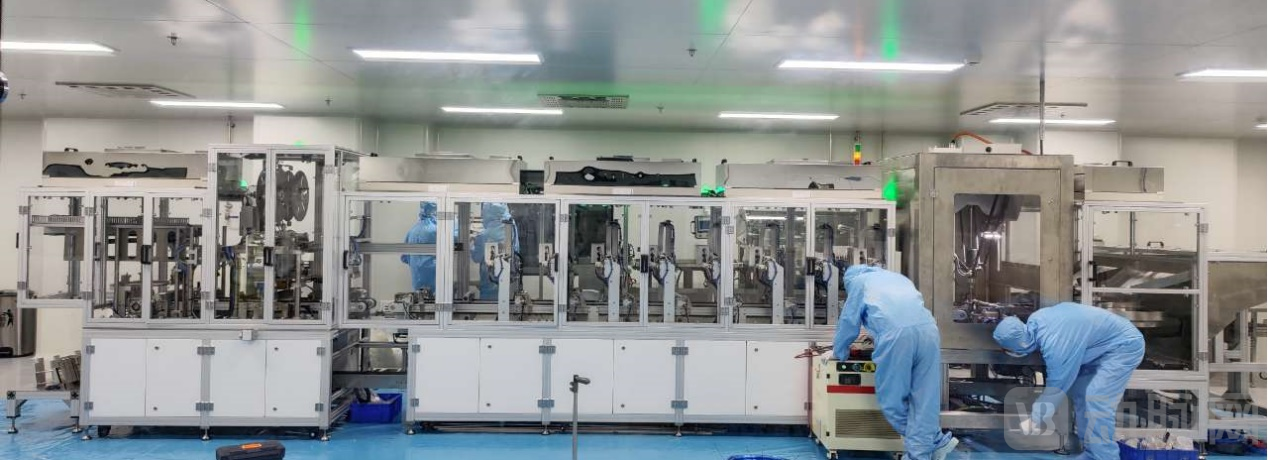
Automated Production Line for Microfluidic Chip Kits
The Home Testing Market Accelerates Toward a Qualitative Leap
Baicare is a domesticA Leading Enterprise in Microfluidic Chip Technology and Integrated Molecular Products, The core team has accumulated over a decade of expertise in the field of microfluidics, offering a series of fully automated, integrated microfluidic nucleic acid all-in-one systems with the industry’s widest range of detection targets. In addition to its home-based nucleic acid testing business, the company has strategically expanded its offerings for inpatients and outpatient/emergency patients, establishing a comprehensive point-of-care testing (POCT) solution for nucleic acids based on microfluidic technology, thereby facilitating the integration of precision diagnosis and treatment.

Achieving Comprehensive Coverage for Diverse Scenarios and Needs
For inpatients, the company provides rapid detection of moderate to severe viral and bacterial infections, including drug-resistant strains, achieving fully automated, integrated, rapid, and accurate testing. The iChip-400 Nucleic Acid Analysis System has obtained regulatory approval and been adopted by nearly 50 top-tier hospitals. The Onestart microfluidic chip all-in-one system also received its registration certificate in 2021. For outpatient and emergency patients, the company offers rapid detection of mild to moderate viral and bacterial infections, including drug-resistant strains, with equipment that is simple, convenient, and cost-effective.
In the future,Home and community nucleic acid testing services will be a new strategic focus for Baicare.
COVID-19 has rapidly brought home testing into the spotlight, leading to a swift increase in companies entering the field. Beyond COVID-19 testing, some enterprises are beginning to explore the deployment of additional tests in home settings. Recently, the FDA approved the first at-home self-test for kidney function, signaling that the global market for home-based diagnostics will continue to accelerate.
Home-based testing will be a crucial tool for disease prevention and health management in China’s next phase. Key issues warranting industry reflection include how to deliver precise and effective science education to consumers, how to establish a comprehensive closed-loop service system post-testing, the formulation of usage protocols and detailed guidelines for home testing products, and whether professional medical institutions will recognize self-test results obtained at home.
Next, Baicare will prioritize home and community settings as the company’s key focus.Leverage home- and community-based products as core entry points to shift diagnostic scenarios upstream.Meanwhile, the company has introduced talent and operational models from the tech-consumer sector and will engage in extensive collaborations with internet companies and platforms to establish an omnichannel promotional closed-loop system, thereby accelerating the qualitative leap in the home-based nucleic acid testing market.