

Allvas® Vascular Interventional Surgical Robot Completes Single-Center Clinical Trial, Validating Software Performance and Mechanical Design
AOPENG INTELLIGENCE
Developer and Manufacturer of Endovascular Interventional Surgical Robots
The vascular interventional surgical robotics sector achieves another breakthrough.
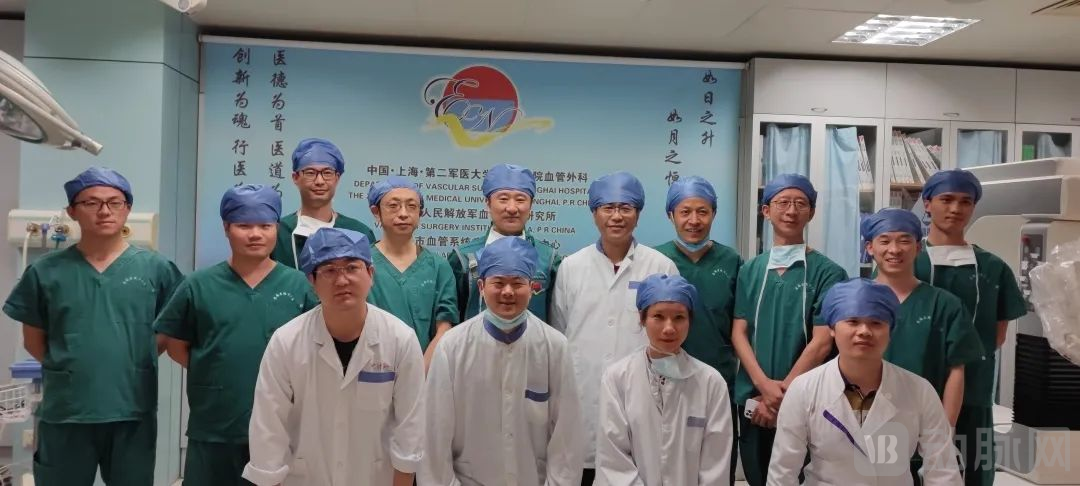
In April this year, Professor Lu Qingsheng’s team from the Department of Vascular Surgery at Changhai Hospital (the First Affiliated Hospital of Naval Medical University) completed a single-center clinical trial of the Aopeng Allvas® vascular interventional surgical robot, marking the beginning of a new chapter as this novel general-purpose endovascular interventional surgical robot enters multi-center clinical trials.
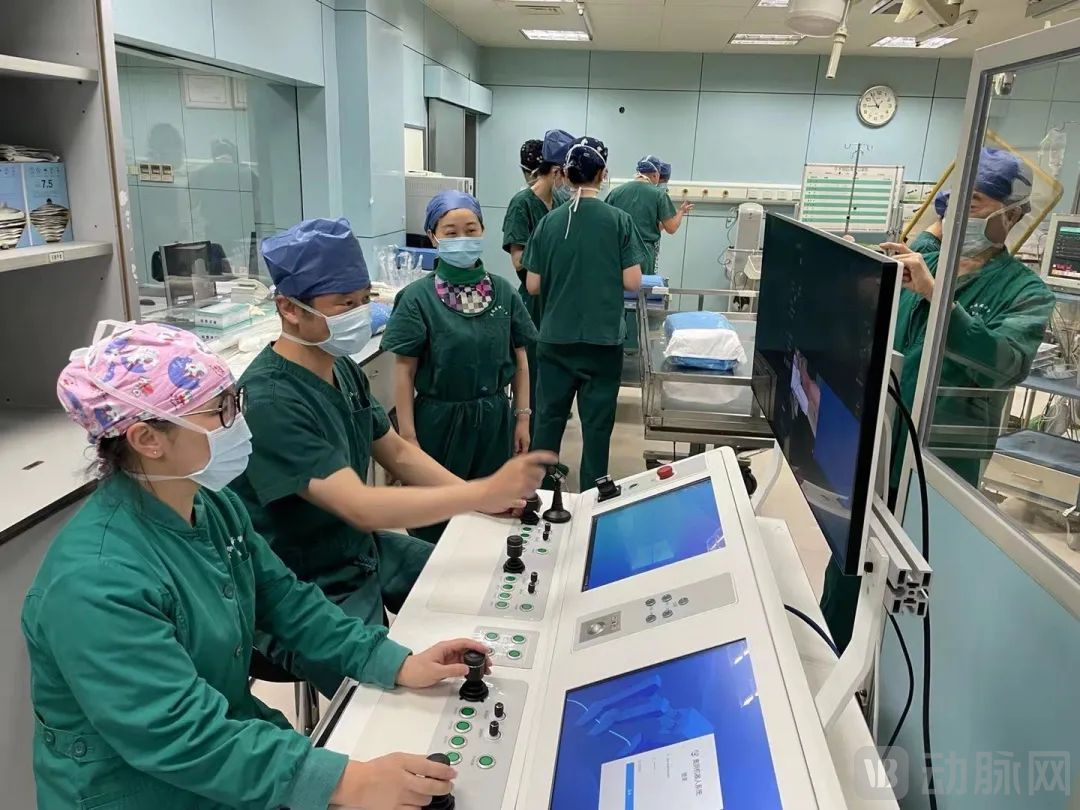
The project implementation involved a feasibility study in 11 human patients covering various conditions, including lower extremity artery disease, thoracoabdominal aortic disease, and coronary artery disease. In this clinical trial, the Aopeng Allvas® vascular interventional surgical robot faced challenges such as complex vascular anatomy among enrolled patients, with vessel diameters ranging from 2.27 mm (coronary arteries) to 56 mm (aorta), severe stenosis of target vessels (stenosis severity ranging from 90% to 99%), and variable vessel lengths (ranging from 13.23 mm for coronary arteries to 400 mm for femoral arteries).
During the procedure, Professor Lu Qingsheng’s team leveraged the 3D navigation system provided by the Aopeng Allvas® Vascular Interventional Surgical Robot. By integrating digital subtraction angiography (DSA) with preoperative CT imaging, they precisely assessed the target stent and its positioning. The team then utilized the Aopeng Allvas® Vascular Interventional Surgical Robot to control the advancement, retraction, and rotation of interventional consumables (guidewires and catheters), as well as to implant various models of stents or balloons, thereby successfully completing the interventional procedure.
The results demonstrated that the Aopeng Allvas® vascular interventional surgical robot successfully completed all procedures, with no unplanned conversions to manual operation and no device-related adverse events observed. During the 3- to 6-month follow-up period, no serious adverse events occurred in any of the patients.
It is reported that this single-center clinical trial marks a new milestone for Shanghai Aopeng Medical Technology Co., Ltd. (hereinafter referred to as “Aopeng Medical”), following the completion of animal experiments with the Aopeng ALLVAS® Vascular Interventional Surgical Robot in April 2021. In those experiments, stents were successfully implanted in multiple sites—including the thoracic aorta, mesenteric artery, renal artery, left iliac artery, and coronary artery—in 12 animals. Subsequent angiography and postoperative pathological examinations revealed no significant abnormal pathological changes, such as vascular injury, thrombosis, inflammation, hemorrhage, or spasm.
This Clinical TrialKey verification ofThe versatility of the Aopeng Allvas® vascular interventional surgical robot, along with the superiority of its mechanical structure. Meanwhile, breakthroughs in key nodes of the robot’s automatic navigation technology indicate that the realization of remote automated vascular interventional surgery with this system is imminent.。
Due to the inherent complexity of vascular interventional procedures, there are extremely high requirements for precision, stability, and safety in surgical manipulation. The high threshold of this technique makes it difficult for both tertiary hospitals in major cities and grassroots medical institutions with relatively scarce resources to meet the substantial and rapidly growing demand for interventional therapy. Furthermore, as this procedure requires physicians to wear lead aprons and remain exposed to high-dose radiation for extended periods, the already strained medical workforce is continuing to shrink.
Fortunately, the overall development of the vascular interventional surgical robotics sector has been quite promising in the past two years.
On the policy front, the implementation of supportive industrial policies, such as the “14th Five-Year Plan for the Medical Equipment Industry” and the “Opinions on Leveraging High-Quality Development of Public Hospitals,” has promoted the application and performance enhancement of high-radiation therapeutic devices, including robotic systems for interventional radiology. On the capital front, substantial investment has flowed into this sector (since 2021, there have been approximately 15 financing events in China, with a cumulative amount of around RMB 1.5 billion), helping innovative technology companies like Shanghai Aopeng Medical Technology Co., Ltd. overcome key technical challenges in vascular interventional surgical robots and achieve positive development.
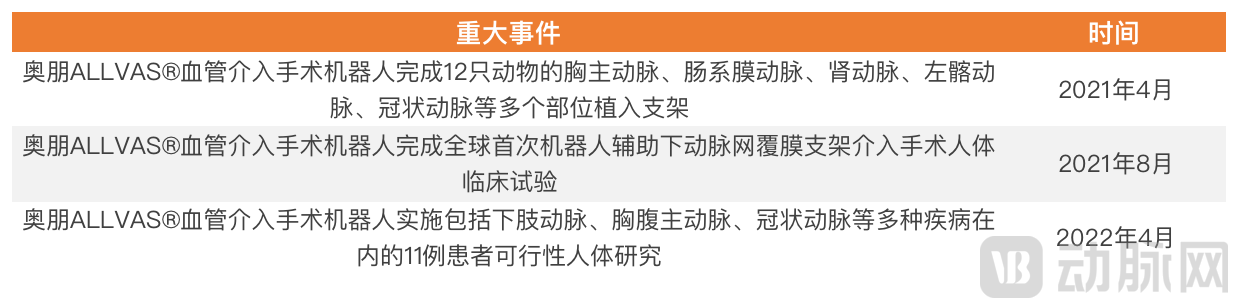
Milestone Events of Aopeng Medical's Vascular Interventional Robot
At the project’s inception, Aopeng Medical established a strategic objective: “to address unmet clinical needs and liberate physicians from radiation exposure and lead-apron–related injuries through a fully automated, integrated endovascular intervention operating room, thereby standardizing all vascular interventional procedures.” Through close medical-engineering collaboration, this objective is being achieved in three phases.Specifically, highly automated operation of endovascular interventional devices, automated assistance for endovascular interventional procedures, and adaptive automation through improvement of endovascular interventional devices.
Aopeng Medical believes that vascular interventional surgical robots can address the pain points of traditional vascular interventional surgery from three aspects:
First, the surgeon performs surgical maneuvers via teleoperation of the surgical robot, thereby avoiding radiation exposure to the physician.
Second, interventional surgical robots must achieve fine and precise manipulation to improve surgical quality;
Finally, during the robotic surgical procedure, optimal parameters such as advancement speed, force, and frequency must be selected to standardize the surgeon’s operations and achieve the best therapeutic outcomes.
Therefore, the Aopeng Allvas® vascular surgery robot adopts a teleoperated design to prevent hand tremors, enhance operational stability, and enable precise execution of delicate procedures.
Unlike most surgical robots that use rollers or similar structures to deliver guidewires and catheters,The Allvas® Vascular Interventional Surgical Robot, with its unique mechanical structure, enables more efficient and precise delivery and rotation of vascular interventional consumables such as guidewires, catheters, and stents. It further mitigates errors caused by manual operation, including hand tremors, sudden jumps, and displacement, thereby enhancing surgical precision.
Its open architecture enables the Aopeng ALLVAS® vascular interventional surgical robot to efficiently perform complex procedural steps throughout the entire process, such as guidewire and catheter insertion and stent deployment, thereby further enhancing procedural fluency while reducing operative time.Moreover, the Aopeng ALLVAS® vascular interventional surgical robot enables physicians to perform procedures outside the catheterization laboratory, minimizing radiation exposure to the lowest possible level and sparing vascular interventionalists from the dual hazards of ionizing radiation and the physical burden of lead protective apparel.
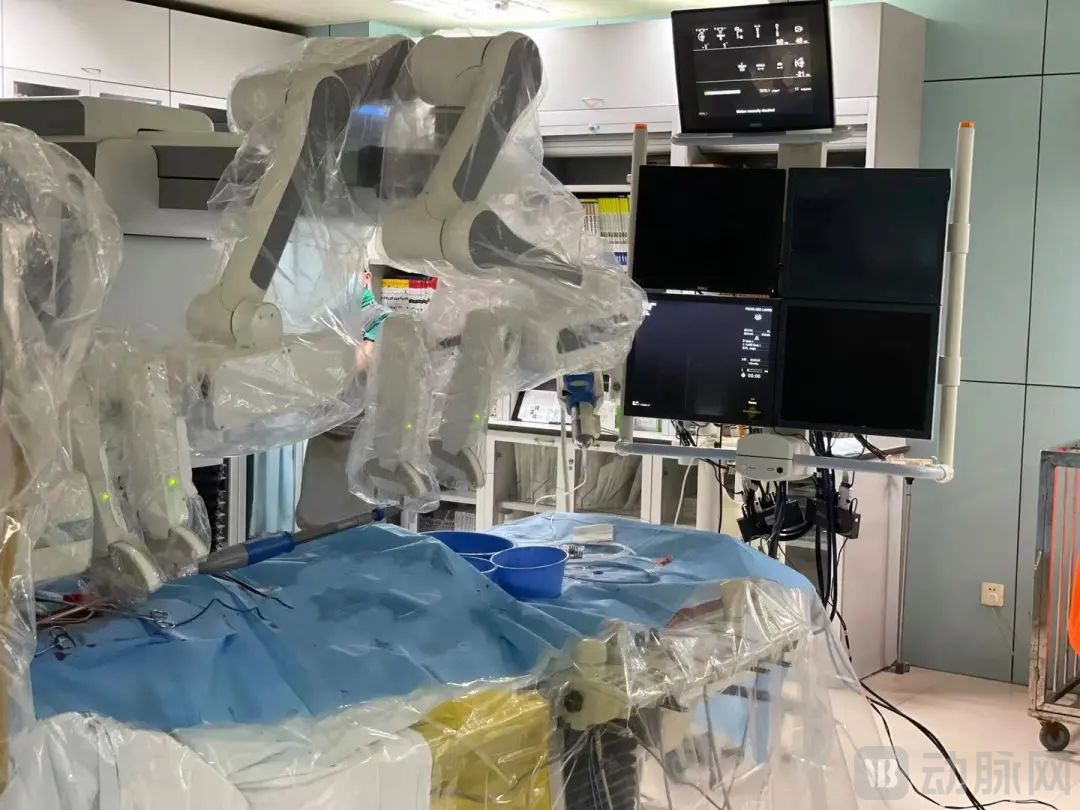
Specifically, the surgical robot adopts a novel bionic architecture design.Typically, surgical robots can only perform a single step in interventional procedures, with most maneuvers still requiring physicians to operate under fluoroscopic guidance, resulting in relatively limited functionality.Aopeng Medical has designed a novel bionic architecture featuring dual robotic arms and four manipulators, enabling the surgical robot system to achieve higher degrees of freedom and richer functionality.
General-purpose robotic arms are compatible with the operation of the vast majority of currently available high-value consumables. The robotic arm equipped in this system is specially designed, capable of manipulating guidewires, catheters, and stents of various types and different diameters. Meanwhile,The robotic arm can also mimic the surgeon’s operative techniques, performing grasping, pushing, twisting, and combinations of various movements, thereby providing a more versatile operational mode for clinical applications.
The coordinated operation of the manipulator and robotic arm assists clinicians in performing a range of procedures, from simple guidewire and catheter insertion to complex wire-catheter coordination.It fully covers the entire surgical workflow, providing surgeons with greater flexibility. It addresses the limitations of foreign robotic systems in terms of clinical versatility, applicability, and functionality.
The founding team of Aopeng Medical boasts a strong integration of medicine and engineering, along with nearly a decade of forward-looking basic technology research and reserves, giving the Aopeng ALLVAS® vascular interventional surgical robot advantages in mechanical structure design and other aspects. However, according to the Aopeng Medical team,To truly enable robots to optimize parameters such as advancement speed, force, and frequency during surgical procedures, thereby standardizing surgeon operations and achieving optimal therapeutic outcomes, system software is an indispensable and highly clinically valuable component of vascular interventional surgical robot systems, in addition to hardware.
Aopeng Medical is simultaneously building an in-house software team to research endovascular navigation and automated endovascular intervention, while actively engaging with leading domestic software companies to exchange insights and learn from their algorithmic expertise.By integrating robotics, artificial intelligence (AI), and other advanced technologies, it is possible to achieve AI-based disease assessment, AI-driven surgical planning, and semi-automated or fully automated robotic surgery, thereby enabling remote and precise interventional procedures for cardiovascular and cerebrovascular diseases.
Currently, this surgical robot integrates a 3D navigation system to assist surgeons in accurately assessing the length and position of the target stent. It provides precise preoperative planning and an intuitive visual operation system. Visual feedback technology is employed to compensate for the lack of haptic feedback.To provide physicians with more precise and detailed interventional imaging information, thereby enhancing surgical precision, reducing procedural difficulty, and addressing the imbalance in medical resource distribution.
The fusion of DSA (digital subtraction angiography) with preoperative CT images provides virtual reality 3D imaging, path planning, and navigation for endovascular interventional procedures.
Aopeng Medical has created a closed-loop system by integrating preoperative planning with intraoperative navigation systems.This involves enabling computers to interpret structured information and generate decision-making bases, thereby allowing surgeons to perform procedures via surgical robotic systems while endowing these robots with intelligent and automated capabilities. In the future, Aopeng Medical will achieve its ultimate goal through a three-phase strategy.
It is reported that its robotic automatic navigation technology has already achieved a key breakthrough, and animal experiments for truly remote automated vascular interventional surgery are about to commence.
According to the "Report on Cardiovascular Health and Diseases in China," the number of people suffering from cardiovascular and cerebrovascular diseases in China has reached 330 million, a figure that is expected to rise further as population aging intensifies. The primary challenge in treating these conditions lies in the vast patient population and the frequent acute onset of symptoms. Tier-3 Grade-A hospitals in urban areas are often unable to meet the substantial and rapidly growing demand for interventional therapies, while primary healthcare institutions frequently lack the diagnostic and treatment capabilities due to the high technical threshold of these procedures and insufficient medical resources.
Therefore, leveraging vascular interventional surgical robots to overcome geographical barriers and ensure universal access to standardized, high-quality care holds significant social value in addressing unmet clinical needs.
However, the vascular interventional surgical robot itself is a comprehensive solution. Prior to its development, it required not only an understanding of surgical procedures but also careful consideration of how to address clinical needs through the integration of medicine and engineering. Meanwhile, key areas such as the visual system, force feedback system, image clarity, and system robustness all demand in-depth exploration and research by developers.
Only through breakthroughs in robotic mechanical design and intelligent technologies can physician experience and surgical data be quantified and standardized, thereby reducing variability among surgeons. Furthermore, this approach shortens the learning curve for interventional physicians, facilitating their rapid professional development. This will further promote the widespread adoption of interventional procedures across hospitals at all levels, ultimately reducing societal healthcare costs.
Aopeng Medical made such a plan from the very beginning. Judging from its current development and technological roadmap, the significance of the company’s efforts in advancing vascular interventional surgical robots is becoming increasingly clear.