

Successful Holding of the Closed-Door Seminar on Digital Therapeutics and Mental Health
The “2022 Digital Therapeutics Industry China Tour (Phase IV) – Closed-Door Seminar on Digital Therapeutics and Mental Health,” co-hosted by the China Association for Promotion of Rehabilitation Technology Translation and Development (hereinafter referred to as “CAPRTTD”) and Chunyu Doctors, was successfully held on September 28, 2022.
Nowadays, mental health issues have become a serious problem plaguing the lives of contemporary people. As a novel medical approach and digital health solution, digital therapeutics possess many inherent advantages in addressing mental health challenges.
The conference invited guests including hospital presidents, clinical experts, leaders in the digital therapeutics industry, and investors, who shared insights and engaged in discussions centered on the overarching theme of applying digital therapeutics in the field of mental health. The event attracted registration from dozens of companies involved in digital therapeutics.
Co-organizers of this conference include Sanofi (China) Investment Co., Ltd., Taizhou Tigermed Jietong Pharmaceutical Technology Co., Ltd., Wuxi Qiyi Medical Technology Co., Ltd., Guyitang (Hunan) Health Technology Co., Ltd., Hangzhou Xuzhishi Technology Co., Ltd., Beijing Special Medical Interconnected Biotechnology Co., Ltd., and Shanghai Fangxin Technology Co., Ltd. Supporting organizations include Chengdu Xingkang Medical Technology Co., Ltd., Hangzhou Xinjing Technology Co., Ltd., Aiyun Digital Medical Technology (Beijing) Co., Ltd., Shanghai Tehuofen Intelligent Technology Co., Ltd., Wangli Technology (Beijing) Co., Ltd., and Hainan Joint Medical Research and Trial Development Co., Ltd. Media supporters include Healthbound, VCBeat, and EO Healthcare.

At the symposium, guests from all sectors engaged in extensive discussions and exchanges.
At the outset of the conference, Wang Jianxiang, Deputy Secretary-General of the China Health Promotion Association (CHPA) and Chairman of the Digital Therapeutics Committee, and Zhou Yan, Vice President of Chunyu Doctors, delivered opening remarks on behalf of the organizers. In his address, Mr. Wang pointed out that the detection rate of mental disorders in China continues to rise, while there remains a significant shortage of professional healthcare providers. Therefore, there is an urgent need for innovative approaches to ensure patients receive timely psychological counseling, management, and treatment. Digital therapeutics offer the advantages of remote accessibility, convenience, and personalized interventions, which can effectively improve patients’ behaviors and lifestyles. The Digital Therapeutics Committee of CHPA is committed to collaborating with all stakeholders to jointly explore and promote the application of digital therapeutics in the field of mental health.

Address by Wang Jianxiang, Deputy Secretary-General of Zhongkangcu and Chairman of the Digital Therapeutics Committee
In his address, Zhou Yan stated that over the past decade, Chunyu Doctor has witnessed the vigorous development and success of the digital health industry. However, there remains a lack of effective digital solutions in certain areas of long-term chronic disease management, particularly in mental health. Chunyu Doctor hopes to pool collective wisdom with all stakeholders to jointly explore advancements in digital therapeutics, whether at the level of policy, business models, or the translation of industry-academia-research collaborations.

Address by Zhou Yan, Vice President of Chunyu Doctor
During the keynote session, Lv Zeping, Vice President of the China Association for the Promotion of Rehabilitation Aids and Assistive Devices and Director of the Affiliated Rehabilitation Hospital of the National Research Center for Rehabilitation Technical Aids, shared insights on dementia and digital therapeutics. Director Lv introduced that population aging is the most direct factor contributing to the increasing burden of dementia, with Alzheimer’s disease having become the fifth leading cause of death in China. The primary theoretical foundations for digital therapeutic interventions in cognitive impairment include neural plasticity, structural plasticity, and functional plasticity of the brain. By leveraging multimedia formats such as images, audio-visual materials, text, and dynamic interactive programs, rich multi-domain cognitive training modules can be constructed. These modules, guided by scientific training protocols, effectively activate specific neural network regions in the brain, thereby enabling non-invasive, personalized, and precise cognitive rehabilitation for individuals with cognitive impairments. With advancements in technologies such as artificial intelligence (AI) and wearable devices, digital therapeutics are poised to provide greater support for early disease screening and long-term patient care.

Address by Lü Zeping, President of the Affiliated Rehabilitation Hospital of the National Research Center for Rehabilitation Technical Aids
Dr. Yuan Yanbo, Chief Physician in the Department of Psychiatry at Peking University Sixth Hospital, shared his insights on the application of digital therapeutics in psychiatry. As a frontline psychiatrist with 25 years of experience, Dr. Yuan has extensive expertise in the diagnosis, treatment, rehabilitation, and prevention of mental disorders. He elaborated on the broad potential for digital therapeutics across these four key areas. Particularly in rehabilitation, the current prevailing concept emphasizes shifting the rehabilitation window earlier and integrating treatment with rehabilitation. This approach provides fertile ground for the application of digital therapeutics in psychiatric rehabilitation. With the advancement of internet-based healthcare and computing power, digital therapeutics have reached a pivotal growth stage, and their adoption in psychiatry is becoming an inevitable trend.

Yuan Yanbo, Chief Physician of the Department of Psychiatry at Peking University Sixth Hospital, Delivers Speech
Gao Liqun, Secretary-General of the Speech and Hearing Rehabilitation Professional Committee under the China Health Care Association and Dean of the School of Language Rehabilitation at Beijing Language and Culture University, introduced the application of speech-language therapy in the fields of mental health and cognition. Beijing Language and Culture University, in collaboration with Northwestern University in the United States, is conducting a research project on the neurological rehabilitation of language disorders associated with aphasia in China. Currently, digital tools for the assessment and intervention of language disorders, developed based on this research, have been implemented in multiple hospitals. In addition to effectively assessing and intervening in post-stroke aphasia, these tools are widely used for the early assessment and screening of cognitive impairments and mental disorders, as well as for evaluating the efficacy of language interventions in patients with cognitive and mental conditions.

Gao Liqun, Dean of the School of Language Rehabilitation at Beijing Language and Culture University, Delivers Remarks
Fan Xiaodong, Deputy Director of the Digital Therapeutics Committee under China Health Promotion Association and former Executive Deputy Director of the Center for Medical Device Evaluation at the National Medical Products Administration, also shared his insights and reflections on the application of digital therapeutics in the field of mental health, drawing from his own professional experience.

Speech by Fan Xiaodong, Former Executive Deputy Director of the Center for Medical Device Evaluation, National Medical Products Administration
During the innovative case-sharing session, Li Hong, Chief Operating Officer of Hangzhou Xu Zhishi Technology Co., Ltd., introduced the company’s digital therapeutic for cognitive rehabilitation based on XR+AI technology. Current treatment protocols for Mild Cognitive Impairment (MCI) and Alzheimer’s Disease (AD) face several pain points, such as rudimentary self-screening tools, conflation of therapies with disease conditions, and delayed interventions. Digital therapeutics can effectively address these challenges, with their efficacy supported by clinical research. They have broad application scenarios across departments including psychiatry and psychology, neurology, rehabilitation, surgery, anesthesiology, oncology, and obstetrics and gynecology. At the same conference, Li Hong also presented Xu Zhishi Technology’s Hela Metaverse Hospital research initiative.

Li Hong, Chief Operating Officer of Hangzhou Xuzhishi Technology Co., Ltd., delivered a speech
Cao Qun, Chairman and General Manager of Hangzhou Xinjing Technology Co., Ltd., presented the company’s highlights and product roadmap. Xinjing Technology specializes in VR-based digital therapeutics for psychiatric and psychological conditions. The company’s two core products, targeting sleep disorders and pediatric attention deficits, are on the verge of obtaining medical device registration certificates, with their efficacy and safety supported by a series of real-world studies. Its products are marketed to both hospitals (B-end) and households (C-end), providing comprehensive, full-cycle mental health services for the entire population.
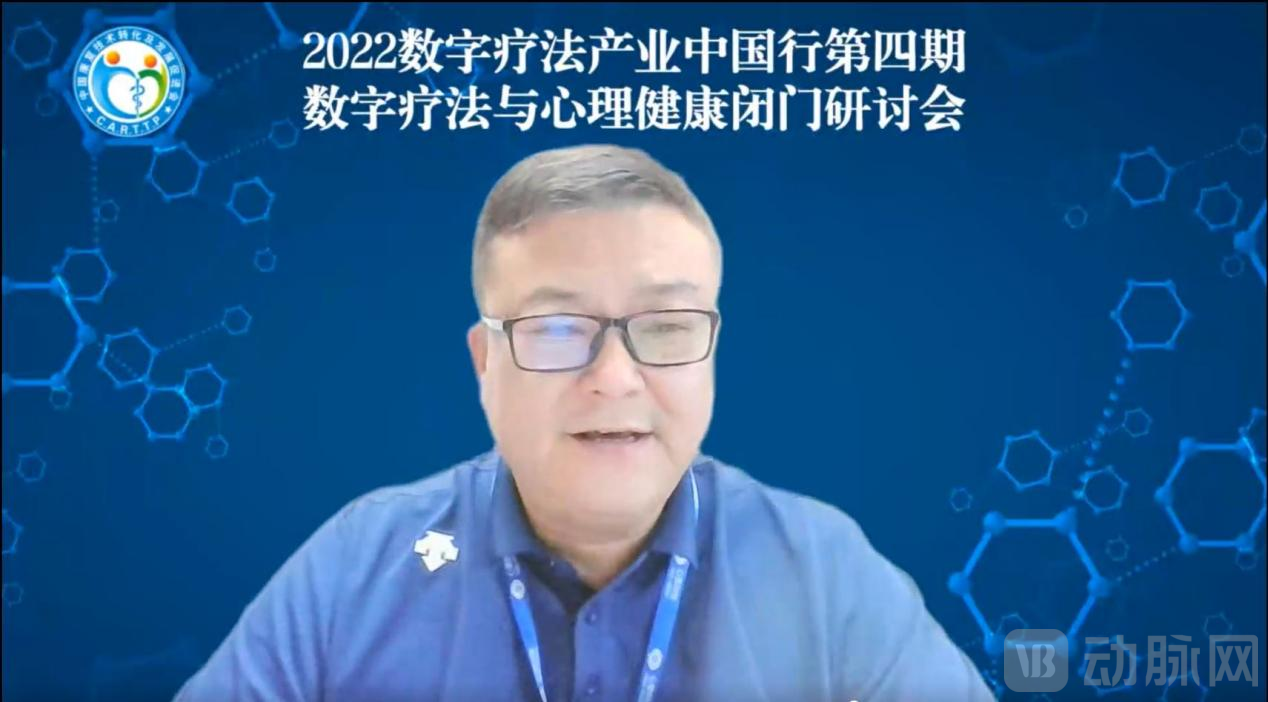
Cao Qun, Chairman and General Manager of Hangzhou Xinjing Technology Co., Ltd., Delivers Remarks
Chen Lu, Partner and Director of Strategic Operations at Wangli Technology (Beijing) Co., Ltd., introduced the company’s product pipeline and highlighted case studies on cognitive impairment. Wangli Zhikang, an app launched by Wangli Technology, is China’s first digital therapeutic product in the field of psychiatric and neurological treatment. It has obtained medical device registration certification and is indicated for the intervention and treatment of Mild Cognitive Impairment (MCI), aiming to improve cognitive function and slow the progression of cognitive decline. Wangli Zhikang offers advantages such as personalized treatment, convenience, safety, and efficacy, which are not typically associated with conventional pharmacological therapies.

Chen Lu, Partner and Director of Strategic Operations at Wangli Technology (Beijing) Co., Ltd., Delivers Remarks
During the conference summary session, Song Wuchen, President-elect and Executive Secretary-General of the China Health Promotion Association (CHPA), introduced that the CHPA Digital Therapeutics Professional Committee is the second specialized global industry organization for digital therapeutics established after the Digital Therapeutics Alliance (DTA), and the first such professional organization in China. Currently, the Chinese government is vigorously promoting the development of the digital industry. Benefiting from this momentum, Chinese digital therapeutics companies are poised to achieve "overtaking on a bend" in this sector. The CHPA calls on stakeholders from government, industry, academia, research, and application sectors to pool their strengths through the association’s platform, establish Chinese industry standards, collaborate to build a national technical framework, and drive the healthy growth and surpassing advancement of the digital therapeutics industry—from standards and technology to products.

Song Wuchen, Vice President and Executive Secretary-General of Zhongkangcu, Delivers Remarks
Wang Yuxiao, CEO of Chunyu Doctors, stated that Chunyu Doctors is a user-centric internet platform whose value and mission lie in connecting excellent suppliers to provide practical solutions for patients’ suffering. In the future, under the guidance of China Health Promotion Association (CHPA), both parties will continue to advance the digital therapeutics industry incubation plan through their collaboration, supporting the growth of digital therapeutics companies and the industry as a whole.

Speech by Wang Yuxiao, CEO of Chunyu Doctor
This closed-door seminar is part of the “Qingxin Initiative,” a public welfare campaign on mental health jointly launched by Sinohealth Promotion and Chunyu Doctor. The “Qingxin Initiative” aims to promote mental well-being through science popularization, online outreach, and off-Lower bodyand other forms, calling on the public to pay attention to their own mental health issues.

After the seminar, attendees from various sectors gathered for a group photo.