

West China Doctor-Led Startup Xinban MedTech Files IPO for AI-Powered, Integrated Digital Hypertension Management Platform
According to the “Report on Cardiovascular Health and Diseases in China 2021,” there are currently 330 million patients with cardiovascular diseases in China, and two out of every five deaths are attributed to cardiovascular diseases, making it the leading cause of death among residents.
In China, there are approximately 400 million known patients with hypertension, yet the blood pressure control rate stands at only 17%. Moreover, 73% of intracerebral hemorrhages, 77% of cerebral infarctions, and 50% of myocardial infarctions are associated with hypertension. ThereforeHypertension prevention and control are of paramount importance, offering substantial value.
The Internet and medical wearable devices have brought new opportunities for home blood pressure management. However, existing Internet-based cardiovascular hypertension software primarily focuses on blood pressure statistics, offering limited functionality and lacking professional medical applications centered on disease management.
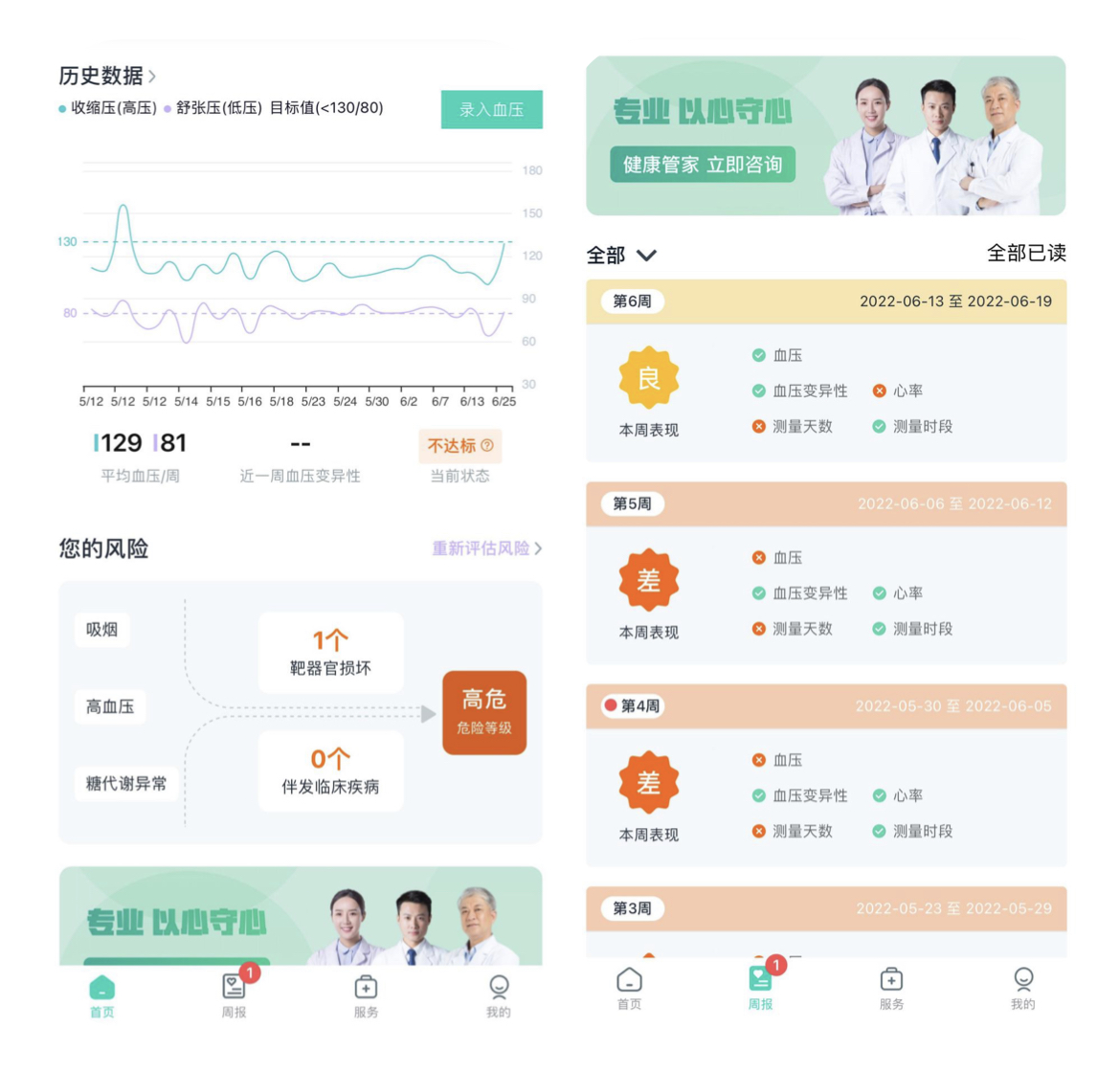
In response, the West China Hospital PhD team founded Xinban Medical Services, aiming to build an AI-based remote intelligent management platform for hypertension. By leveraging data collected from wearable devices and integrating comprehensive, multimodal disease information from both in-hospital and out-of-hospital settings, the platform enables efficient, full-course remote management of hypertension that is personalized, precise, and digital, thereby creating an innovative model of digital therapeutics for hypertension.
All core founding team members of Xinban Medical Services graduated from the Department of Cardiovascular Medicine at West China School of Medicine, Sichuan University.
Among them,Dr. He Jiyun serves as the Medical Team Leader in the Department of Cardiology at Chengdu First People's Hospital., with 15 years of clinical experience in cardiology, specializing in the diagnosis and treatment of hypertension, heart failure, coronary artery disease, and other conditions; Dr. Shi Di previously served at Chengdu First People's Hospital and has 10 years of clinical experience in cardiology, specializing in the diagnosis and treatment of hypertension, heart failure, coronary artery disease, and other conditions.Chen Xi previously worked at Chengdu First People's Hospital., with nearly 10 years of extensive clinical experience in cardiovascular medicine, specializing in the translation of medical-engineering integration, medical big data, and information processing.
The other co-founders are also former cardiologists with a profound understanding of the clinical pain points in hypertension management.The pathogenesis of hypertension is complex, exhibits significant individual variability, and changes dynamically throughout the patient’s life course. High-quality management poses substantial challenges and requires deep patient engagement; however, patients commonly harbor numerous misconceptions and knowledge gaps while lacking professional support.
For example, it is widely believed that a blood pressure target of <140/90 mmHg is the standard for control. However, individualized blood pressure targets actually vary depending on the patient’s cardiovascular disease risk level and comorbidities. This nuance is not well understood not only by patients but also by many primary care physicians. Similar issues exist in the management of dyslipidemia, hyperglycemia, hyperuricemia, and other conditions.
In fact, each individual’s risk level, treatment goals, follow-up intervals, medication regimens, and other factors are personalized, necessitating more precise, individualized intervention strategies.
Therefore, Xinban Medical Services integrates professional clinical guidelines into intelligent tools and combines them with wearable hardware such as Huawei’s blood pressure watch to provide a comprehensive, digital, and personalized precision medicine navigation solution for patients with chronic diseases such as cardiovascular disease, diabetes, and hyperuricemia. This solution includes risk stratification, treatment goal assessment, examination recommendations, disease guidance, and medication alerts, thereby helping users achieve comprehensive prevention and control of cardiovascular diseases and risk factors, with hypertension management at the core.
“This is aUser-Centricalgorithmic framework that stratifies users by risk level based on individual patient conditions, enabling them to gain a comprehensive understanding of their personal risks; this is also aIntelligentizationalgorithmic framework, in which solution generation, metric tracking, performance evaluation, and intervention mechanisms are all automatically executed by the system; this is also aPrecision Navigation System“All push notifications received by users consist entirely of specific, personalized, and precise actionable recommendations covering examinations, medical consultations, medication administration, and dosage adjustments. As a result, patients can identify gaps in adherence in real time and make targeted improvements, significantly enhancing their awareness and compliance,” introduced Dr. He Jiyun.
Dr. Shi Di, Co-founder of Xinban Medical ServicesAccording to VCBeat, research indicates that for every 10 mmHg reduction in systolic blood pressure or every 5 mmHg reduction in diastolic blood pressure, the overall risk of mortality decreases by an average of 10–15%; the risks of stroke, coronary heart disease, and heart failure are reduced by 35%, 20%, and 40%, respectively.
Analysis of a large patient cohort using the Xinban Medical Service System for over 26 weeks revealed the following: In the normal blood pressure group, blood pressure remained largely stable with a slight decrease. In the high-normal blood pressure group, systolic blood pressure decreased by an average of 14.2 mmHg and diastolic blood pressure by an average of 4.9 mmHg after 26 weeks. In the Grade 1 hypertension group, systolic blood pressure decreased by an average of 25.9 mmHg and diastolic blood pressure by an average of 12.1 mmHg after 26 weeks. In the Grade 2 hypertension group, systolic blood pressure decreased by an average of 35.3 mmHg and diastolic blood pressure by an average of 17.5 mmHg after 26 weeks. The Xinban Medical Service System demonstrated significant improvements in patient awareness and adherence.
Chen Xi, Co-founder of Xinban Medical Services, introduced: “We have established a comprehensive closed-loop intelligent algorithm system, and the precision navigation capabilities of our platform have been validated through retrospective analysis of user data. However, this is merely a solid foundation; the story has just begun. In China, nearly 1.5 million patients undergoing coronary stent procedures annually require proactive, personalized, full-course postoperative management. Our intelligent system can significantly reduce postoperative management costs, enabling hospitals to manage discharged postoperative patients with high efficiency at a low cost.”
“We can also leverage intelligent and structured presentation of patient data to help hospitals and physicians achieve efficient remote management and smart, precise proactive interventions for patients with general hypertension, thereby enhancing patient adherence. Xinban Medical Services is not merely a digital therapeutics company; our proprietary blood pressure wearable hardware enables an integrated software-hardware solution. The hardware will also diversify our revenue streams and broaden our customer acquisition channels,” added Chen Xi.
Furthermore, Xinban Medical’s modules for exercise risk monitoring, exercise prescription benchmarking, prescription optimization, and efficacy assessment, integrated with wearable devices for continuous blood pressure monitoring, will significantly promote the adoption of cardiac exercise rehabilitation solutions and provide more professional support to patients. Currently, the Xinban Medical intelligent system has been deployed in collaboration with multiple Grade A tertiary hospitals, and academic partnerships have been established with institutions such as West China Hospital.
The core founding team of Xinban Medical Services believes that the market for chronic cardiovascular disease management is vast. The era of medical big data, driven by increased patient engagement, will open new frontiers in the diagnosis, treatment, and research of cardiovascular diseases. As demand grows among patients, hospitals, and physicians for specialized intelligent decision support systems, the golden age for digital therapeutics companies like Xinban Medical Services is just beginning.