

Genokon and GeneDock Forge Strategic Partnership to Advance Clinical Digitalization in Medical Genetics
The pace of consolidation in the healthcare industry is undoubtedly accelerating further.
Recently, Xiamen Genokon Medical Technology Co., Ltd. (Genokon, hereinafter referred to as "Genokon") and Beijing GeneDock Technology Co., Ltd. (GeneDock, hereinafter referred to as "GeneDock") announced the establishment of a long-term, in-depth strategic partnership. It is reported thatDoubleThe parties will engage in in-depth collaboration in the clinical application of medical genetics, including digital panoramic studies of the natural history of rare diseases and genetic screening for neonatal hereditary diseases combined with digital management.
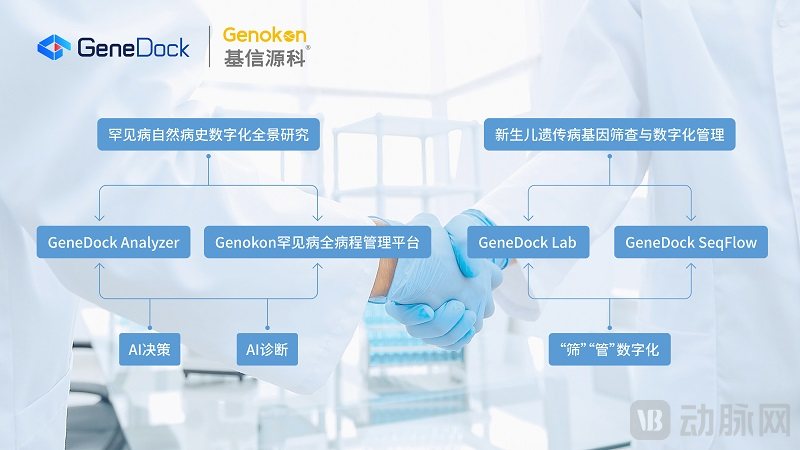
In fact, this collaboration is not merely a partnership between two companies. For the entire industry, it signifiesDigital health services have expanded into the vertical domains of screening, diagnosis, and therapeutic management of human hereditary diseases, ushering in a new era of digitalization in the clinical application of medical genetics.
Attention to patients with rare diseases is increasingly on the rise.
In May 2018, with the official release of the first national catalog of rare diseases, the prevention and treatment of rare diseases entered a new phase. In recent years, policy initiatives such as priority review and the acceptance of overseas clinical trial data have further removed barriers to the market approval of orphan drugs. China has gradually established a comprehensive system for rare diseases, encompassing disease management, clinical testing, data collection, therapeutic interventions, and the research and development of related pharmaceuticals.
For the more than 20 million patients with rare diseases, this is undoubtedly good news. However,Patients with rare diseases continue to face numerous bottlenecks in the diagnosis and treatment process.
From the perspective of disease diagnosisCurrently, the average time to diagnose a rare disease is 5–8 years. Disease testing is a crucial step in the diagnosis and treatment of rare diseases. As most rare diseases are genetic disorders, genetic sequencing is often required for detection. However, as Dr. Li Xiarong, CEO of Judao Technology, pointed out, “Research data from Europe and the United States indicate that there are approximately 270 million rare disease patients worldwide. Based on China’s population proportion, there should theoretically be 30–40 million rare disease patients in China. Yet, the number of actually diagnosed patients is at least an order of magnitude lower, numerically underscoring the urgent need to improve the current diagnostic rate for rare diseases in China and highlighting the significant potential for growth.”
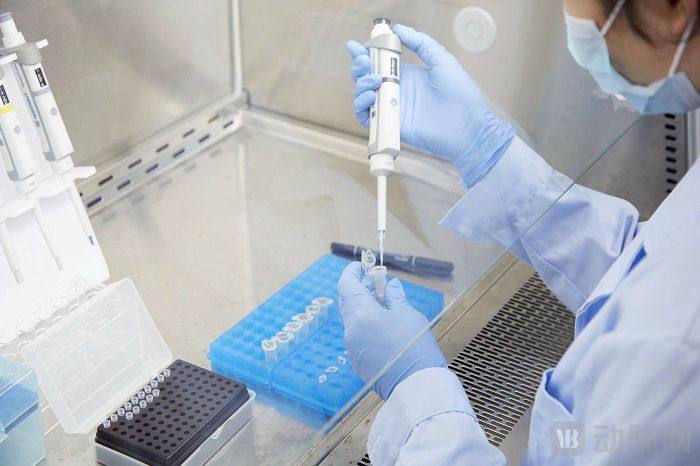
Genokon Laboratory Testing Scenarios
In reality, there are two major challenges in the diagnosis of rare diseases. Yao Xun, CEO of Genokon, pointed out that one issue is that some genetic testing programs are primarily targeted at symptomatic patients to help confirm their diagnoses. However, the complex pathogenic mechanisms of rare diseases—such as novel genes and new types of variants—pose fresh challenges to genetic diagnostic technologies. The other issue is that better identification of potential patients is essential to achieving early diagnosis and treatment. Disease screening for children aged 0–6 years across China can more effectively address this problem, based on the Administrative Measures for the Prevention and Control of Birth Defects in Newborns and the expert consensus on national child health management. For the nearly ten million newborns added each year, genetic screening undoubtedly represents a vast market. However, the challenge lies in the fact that an effective screening network has yet to be established.
From the perspective of disease treatment, the development of diagnostic and therapeutic technologies for rare diseases lags far behind that for common diseases. Of the more than 7,000 rare diseases worldwide, approximately 80% are caused by genetic factors, and fewer than 10% have approved treatments. Moreover, most of these treatments are prohibitively expensive. Among the 121 rare diseases included in China’s first national list of rare diseases, only 58 have available therapies in the country.
As Yao Xun, CEO of Genokon, further noted, the inherent difficulty in diagnosing rare diseases may also contribute to the scarcity of treatment options (as unclear disease pathogenesis poses challenges to drug development). For instance, the lack of foundational natural history data studies and the low prevalence of rare disease diagnosis and treatment at the primary care level—where some physicians may rarely encounter patients with the same rare disease throughout their entire careers—have resulted in a low number of diagnosed patients, which in turn has further slowed down the research and development of corresponding therapeutic drugs.
Overall,The prolonged diagnostic timeline, high misdiagnosis rate, and the lack of access to improved subsequent treatment services even after a confirmed diagnosis constitute the most significant pain points currently faced by patients with rare diseases.
Previously, companies such as Genokon, which started with genetic screening tests, and Judao Technology, which began by building a “digital platform for full-cycle diagnosis, treatment, and drug R&D for rare diseases,” have all attempted to empower patients or physicians by focusing on single points or individual links in the care continuum.
To better assist patients,The in-depth collaboration between Genokon and Judao Technology will jointly delve into the digital panoramic research of rare disease natural history. By accumulating and mining big data from genomics and clinical disciplines, this partnership aims to facilitate research on genotype-phenotype correlations, pathogenesis, and gene therapy drug targets for rare diseases. Through digital means, it seeks to address issues such as information asymmetry and fragmented post-diagnostic services in the traditional processes of disease diagnosis and treatment.
Genokon, one of the collaborating parties, has filled an industry gap in the field of rapid genetic screening for hereditary diseases by launching China’s first newborn disease screening service priced at around RMB 100, covering more than 200 high-incidence severe conditions. More importantly, in the process of providing genetic screening services for hereditary diseases, Genokon has gradually established a screening network that reaches grassroots levels.
The other partner, Judao Technology, is positioned to be hospital-centric and focused on enhancing diagnostic efficiency, leveraging data systems to bridge clinical diagnosis and treatment, medical research, and drug development for rare diseases. In its previous development, Judao Technology has collaborated with more than 30 leading hospitals to jointly establish a rare disease clinical decision support system, horizontally replicating and expanding rare disease diagnostic capabilities across multiple regions.
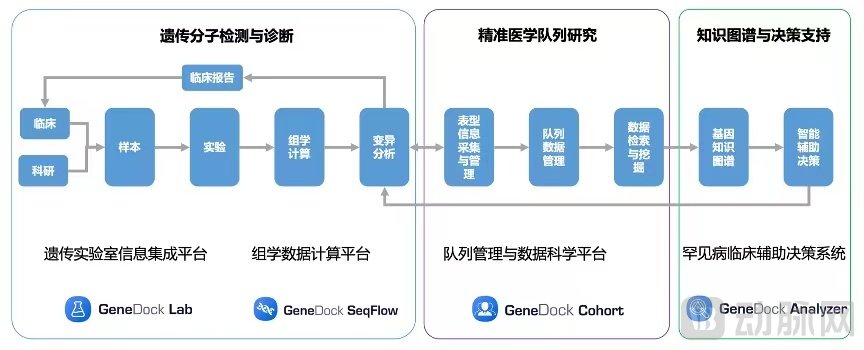
Judaotech Product Logic Diagram
Complementary strategic positioning ultimately brought together two companies dedicated to genetic diseases. It is reported that the founders of Judao Technology and Genokon are both alumni of Xiamen No. 1 High School and established contact early on.The two parties have joined forces to establish a strategic partnership, primarily driven by the recognition of “the substantial unmet clinical needs of a large population of patients with rare diseases, as well as the demand for digitalized decision-making in the diagnosis and treatment of genetic disorders, necessitating the realization of a new paradigm of precision medicine powered by ‘data + algorithms + computing power.’”
It is foreseeable that, following the establishment of this collaboration, both parties will genuinely benefit the diagnosis and treatment of patients with rare diseases from the following two major dimensions:
First, a Chinese rare disease patient registry should be gradually established to enable more precise diagnostic and therapeutic technologies for rare diseases based on this database.
Currently, China still relies heavily on foreign databases and knowledge bases for the clinical diagnosis of rare diseases. However, data from East Asian populations account for less than 10% of publicly available foreign databases. For the Chinese population, there are significant discrepancies between the types and frequencies of genetic variants in these foreign public databases and those actually observed in Chinese individuals, which further complicates the clinical diagnosis and treatment of rare diseases in China.
However, with the establishment of the partnership between Genokon and Judao Technology, Judao Technology will gain access to Genokon’s latest and most cutting-edge de-identified data for expansion. Through data interoperability, combined with Judao Technology’s digital medical genetics system and data science platform, this collaboration will significantly increase the scale and practical clinical utility of the rare disease database. Furthermore, this data capability will support and assist researchers in China’s rare disease field in conducting analytical statistics based on large-scale datasets at the foundational research level, leading to new scientific discoveries and ultimately enhancing the clinical diagnosis and treatment of rare disease patients in China.
Secondly, in the realm of rare disease screening, diagnosis, and treatment, the establishment of a one-stop solution will effectively transform the previous situation where patients had no access to care due to gaps in primary healthcare services.
Historically, patients with rare diseases often sought support from high-level clinical services only after exhibiting overt clinical symptoms. The significant advancements in genetic testing technologies have improved the diagnostic efficiency for rare diseases; in particular, the clinical application of high-throughput sequencing has shortened the time to confirmed diagnosis. However, ensuring the accessibility of genetic testing technologies for patients at the primary care level and those in the early stages of disease remains a current challenge.
Genokon recognized early on that patients include not only those with overt clinical symptoms but also those at potential risk. To address this, it is necessary to establish a nationwide network for screening, diagnosis, and treatment, aiming to achieve screening at the county and town levels, diagnosis at the prefecture-level city level, and treatment in provincial capitals and first-tier cities, thereby enabling early screening, early diagnosis, and early treatment. Targeting these two groups, Genokon has focused on genetic screening for major hereditary diseases in newborns and genetic testing for diagnosed patients, extending its reach to grassroots patients through its own medical service network.
From screening and testing to accurate diagnosis, clinicians must integrate diverse and complex data sets to generate clinical evidence for comprehensive analysis and judgment. Therefore, Judao Technology is dedicated to developing the Rare Disease Clinical Decision Support System (GeneDock Analyzer), aiming to empower clinicians to achieve accurate and timely diagnoses with greater efficiency. Diagnosis serves as the starting point of medical care; subsequently, patients seek healthcare providers, therapeutic technologies, medications, and rehabilitation services for disease management, while also requiring ongoing monitoring of their disease progression.
The collaboration between Genokon and Judao Technology signifies the formation of a comprehensive digital management service model that covers the entire patient journey, from disease screening, diagnosis, and treatment to disease course management. By integrating research-to-clinical applications for rare diseases with an integrated screening-diagnosis-treatment service model, an ecosystem closed-loop network is ultimately established.Both parties will accelerate independent R&D, introduction, or generic production of rare disease drugs and expand their coverage to further address accessibility issues. Aligned with their shared vision of being “patient-centric,” their goal is to make the diagnosis and treatment of rare diseases as convenient and effective as that of common diseases.
Why Has Collaboration Between Two Companies in the Genetic Disease Sector Become So Critical for Industry Development? It May Be Closely Tied to Interconnectivity in Tiered Diagnosis and Treatment and the Construction of a Digital Closed-Loop Ecosystem Aligning with Industry Trends.
From the Perspective of Tiered Diagnosis and TreatmentCurrently, physicians at China’s leading hospitals possess extensive experience in diagnosing and treating rare diseases. Through genetic testing and clinical decision support systems, they are well-equipped to provide medical assistance to patients seeking care. However, a challenge remains in “early detection and identification of patients at the primary care level”—specifically, how patients in grassroots healthcare settings can determine whether their condition is genetic and whether they need to travel long distances to top-tier hospitals for diagnosis and treatment. Therefore, it is essential to strengthen this critical link in healthcare services by promoting genetic screening, testing, and digital capabilities at the primary care level, thereby assisting patients in the early stages of disease or those already symptomatic in grassroots communities. In the future,The collaboration between Genokon and Judao Technology will work in tandem with leading hospitals and primary care institutions to jointly establish a digital tiered diagnosis and treatment system for rare diseases, further enhancing the overall efficiency of rare disease diagnosis and management.
From an industry trend perspective, digitalization will significantly advance interoperability and drive cost reduction and efficiency improvement.From in-hospital patient intake, clinical information management, sample management, and testing management, to genetic testing and data processing at central laboratories or independent clinical laboratories, followed by comprehensive analysis of clinical data and reporting to form diagnostic conclusions and treatment plans, as well as post-diagnosis and prognostic patient follow-up studies, digitalization can establish interoperability and collaboration mechanisms. This enables more appropriate and efficient solutions, truly shortening the patient’s diagnostic and treatment journey, alleviating psychological, time, and financial burdens, and delivering tangible benefits to patients.
As first-tier service providers in the industry, Judao Technology and Genokon have established collaborations targeting various stages of genetic disease management, delivering full-cycle solutions and an integrated service model that holds promise for transforming the current landscape of the entire industry.
It is foreseeable that, as the industry accelerates its development, we will increasingly witness collaboration among companies in the genetic disease sector and the integration of digital technologies. This complementary synergy will enhance the efficiency and capabilities of the entire industry, ushering in a new era of precision medicine for rare diseases.
About Genokon

Xiamen Genokon Medical Technology Co., Ltd. (abbreviated as: Jixinyuanke Genokon), established in 2015 and headquartered in Xiamen, is a national high-tech enterprise dedicated to the clinical application of high-throughput gene sequencing technology. With core competencies in big data analysis of genomics and specialized genetic counseling, the company focuses on genetic screening for pediatric hereditary diseases and gene-assisted diagnosis. It operates a third-party medical laboratory under its umbrella, participated in the formulation of China’s first industry consensus on the full-process standards for NGS-based genetic testing of clinical hereditary diseases, and has repeatedly achieved perfect scores in external quality assessments (EQA) organized by the National Center for Clinical Laboratories of the National Health Commission, covering high-throughput sequencing for hereditary diseases, whole-exome sequencing, interpretation of genetic variants, and precision medication.
About GeneDock

Beijing Judo Technology Co., Ltd. (GeneDock), established in 2014 and headquartered in Beijing, adheres to the mission of “Computing for Life, Making Healthcare Accessible.” GeneDock has developed a diverse product portfolio, including the omics data computing platform SeqFlow, the molecular diagnostic information integration platform Lab, the medical genetic data science platform Cohort, and the clinical genetic auxiliary analysis and decision-making system Analyzer. These offerings provide more efficient data technologies and professional platform-level solutions for the field of medical genetics, meeting the integrated needs of the entire clinical research lifecycle and advancing both medical research progress and equitable clinical applications. GeneDock’s products currently serve dozens of leading domestic medical and research institutions, including the Chinese Center for Disease Control and Prevention, West China Hospital, Xinhua Hospital, Beijing Children’s Hospital, Ruijin Hospital, Fudan University Obstetrics & Gynecology Hospital, Shanghai International Peace Maternity and Child Health Hospital, West China School of Stomatology, PLA General Hospital, and Southwest Hospital in Chongqing.