

Lost and Found: Is China's Scientific Research Commercialization Truly Ready?

Sinovation Ventures
Technology-Focused Venture Capital Firm
Unknowingly, the Orange Fruit Bureau has been in operation for nearly a year. Looking back on this period, we have interviewed more than 100 researchers, clinicians, and investors, as well as numerous entrepreneurial partners who collaborate with scientists. Through these interviews and exchanges, we have observed certain phenomena in the translation of scientific research achievements, acquired substantial new knowledge, and gained many insights. Today, we would like to share some of the insights derived from these interviews conducted over the past year.
Let me start by introducing myself. Long-time readers of VCBeat may already be familiar with me. I initially served as an editor covering biotechnology at VCBeat for nearly three years. During that period, I had the privilege of witnessing the development and rise of China’s biotechnology sector, including the IPOs of companies such as BGI Genomics, Berry Genomics, and Innovent Biologics, as well as the surge of innovative companies shifting their listings from the U.S. stock market to the Hong Kong Stock Exchange following the opening of the latter to such issuers. Subsequently, through a series of fortuitous circumstances, I spent two years working on the front lines of scientific and technological achievement commercialization, engaging directly with researchers from universities and research institutes and gaining insight into their work. This experience allowed me to move beyond my previous peripheral understanding and engage more authentically with scientific research and its translation into practical applications, instilling in me a profound sense of awe and mission. At the same time, while promoting the commercialization of research outcomes, I have come to increasingly recognize that relying solely on universities and research institutions is far from sufficient. This endeavor is not a conventional nine-to-five job, but rather a cause demanding deep commitment. It can only unleash new vitality when integrated with industry, venture capital, and policy support.
At Orange Fruit Bureau, we are also eager to harness the power of words and data, driven by our conviction and passion for translating scientific achievements into practical applications. We aim to contribute to this endeavor and document the stories and legends that emerge from it. Therefore, I would now like to share my personal reflections and observations.
Generally speaking, critical commentary tends to attract more attention, but this approach deviates significantly from the editorial style of Chengguo Bureau. The author prefers a realistic and narrative-driven tone. Drawing on previous experience interacting with researchers, the author would like to first address some common misconceptions held by the public about the scientific research community.
If, in 2022, someone still told you that “researchers are all conducting impractical studies,” trust me, this person likely had little interaction with the research community.
First, we acknowledge that some ideas from researchers are difficult to implement in the industry. This “difficulty” is reflected in aspects such as the R&D cycle, market demand, and price accessibility. The primary cause of this “difficulty” lies largely in researchers’ lack of business acumen. Note that it is a “lack” rather than an “absence.”
Among the researchers I have interacted with, nearly all engage in industry-academia-research collaborations with various enterprises. Such collaborations include commissioned projects, contracted R&D, product promotion, clinical trials, and technical advisory roles; in some cases, scientists even provide direct technical support behind the scenes for these companies. Regardless of whether the collaboration is oriented toward commercialization of results or technological cooperation, researchers inevitably interact with the industry sector during this process and are by no means ignorant of the industrial landscape and market dynamics.
Secondly, in addition to basic research, the vast majority of researchers also conduct explorations at the application level based on these foundational studies. In any research institute, one can find popular applied research corresponding to hot industries within that specific research direction. Admittedly, due to variations in research capabilities, funding, and other factors, the degree of innovation in these applied studies will inevitably differ.
Finally, although many companies in the industry are currently driven primarily by R&D, it is important to emphasize the distinction between R&D and innovation-driven research. This difference can be understood through the contrast between “trial” and “experiment.” The author does not deny the R&D capabilities of innovative enterprises; however, commercial logic dictates that their R&D efforts aim to realize a specific product or optimize an existing one. Since most companies self-fund their R&D expenditures, they are unable to make the deep, targeted investments characteristic of scientific research projects designed to solve specific problems.
Therefore, it is evident that a significant portion of R&D efforts by pharmaceutical and biotechnology companies in the market focuses on developing potential drugs or diagnostic and therapeutic solutions for specific candidate drugs or targets. But where do these candidate drugs and potential targets originate? Undoubtedly, they come from their upstream research institutions.
Although the commercialization of research achievements has become a focal point of intense public debate, Orange Bureau still wishes to emphasize that scientific research does not derive its value solely from commercialization. The primary mission of researchers remains conducting scientific research. The success of a researcher has never been defined merely by the volume of technology transfers completed, the revenue generated, or the amount of funding secured by their founded companies.
In my earlier years, I had the opportunity to interact with a professor who had been deeply engaged in his field of research for over two decades and was actively promoting the commercialization of his findings. In his own words, “These are the things I have accomplished over the past 20-plus years.” At the time we met, he was actively applying for government subsidies from local authorities, hoping to leverage governmental support to advance clinical trials for his products. However, this process did not go smoothly.
Based on my limited understanding, I am not in a position to evaluate the merits of this project or its market potential. However, one thing is clear: with the support of this professor, the income of impoverished households in a local poverty-stricken area has increased significantly.
Another seemingly plausible but inappropriate assertion is that “China’s industrial development lags behind that of developed countries by several decades, a disparity attributable to differences in scientific research capabilities.”
First, it must be acknowledged that there are certain gaps between China and developed countries in terms of both industrial development and scientific research capabilities. However, these gaps are not entirely correlated. The disparity in industry is more reflected in overall innovation capacity and the level of internationalization, driven by complex and multifaceted factors such as research quality, duration of development and infrastructure building, regulatory approval processes, talent availability, and market environment. In contrast, the differences in research capabilities are more closely tied to factors at the scientific research level itself.
Secondly, it must be clarified that competition exists within both the industry sector and the scientific research community. Just as the industry benchmarks itself against international standards, the scientific research community also competes by benchmarking against international research achievements. Therefore, there is no direct correlation between disparities in the industrial sector and differences in academic research standards.
So, are the differences in the industrial sector completely irrelevant to the scientific research community? Not entirely. As mentioned earlier, scientific research output is actually the upstream of industrial research. Compared with the well-established and mature technology transfer systems in the United States and the United Kingdom, China’s rate of converting scientific achievements into practical applications still needs improvement. The relatively lagging development of the industry itself, coupled with insufficient output of scientific research results, may lead to a lack of sustained momentum for industrial growth.
This disparity is more pronounced in the fields of chemical drugs and biologics; however, as the industry approaches international standards and a large number of outstanding top-tier global researchers emerge from the scientific community, this gap is narrowing. In emerging hotspots such as cell therapy and gene therapy, both the industry and the research community are closing in on international benchmarks.
So, what exactly is the crux of the issue with the commercialization of scientific and technological achievements in China?
In the “Scientists as Entrepreneurs” series of roundtable discussions previously organized by Orange Bureau, we covered topics such as founding partners, capital, and institutional frameworks. However, through exchanges with numerous guests and interviewees, we have found that the shortage of co-founders and imperfect institutional mechanisms may be only superficial causes; the root cause lies in the development of cultural norms and the ecosystem for translating scientific achievements into practical applications.
· Research personnel lead project decision-making
Although most of the researchers we interviewed expressed a desire to find partners with industry familiarity and operational management experience to jointly promote the industrialization of their achievements, some researchers still prefer to remain the decision-makers for their projects.
Most researchers involved in translating scientific achievements into commercial applications are principal investigators (PIs) of their laboratories. They are accustomed to playing a dominant role in research projects and wielding decisive authority. In the current cultural context, it is also customary for project initiators to serve as leaders and decision-makers. Consequently, it seems taken for granted that researchers who lead scientific projects should naturally become the founders and decision-makers of the resulting enterprises.
In my interviews and research, many respondents highlighted a phenomenon: in mature technology transfer ecosystems such as those in Silicon Valley and Boston, it has become a consensus among industry, investment, and scientific communities that researchers should not be seated at the negotiation table or serve as decision-makers.
When researchers seek to commercialize their findings, they typically first approach familiar investors or industry professionals for evaluation and collaboration. If investors wish to establish a deep partnership and alignment with a particular researcher, they will not only invest in the project but also assist the researcher in identifying reliable co-founders with extensive industry experience.
Within the entire ecosystem of translational research, collaboration between scientific researchers and seasoned industry professionals has become the norm. In some startups, researchers participate merely as advisors. While echoes of this model can be seen in China, more often than not, researchers still dominate the overall direction. Even in certain projects where researchers appoint their students as co-founders or CEOs to engage in commercialization efforts, decision-making processes frequently revert to the dynamics typical of an academic laboratory setting.
· Threshold Settings for Conversion
Furthermore, another common phenomenon is the transformation of highly innovative technologies into low-barrier products. This is more likely to occur in regions with incomplete industrial support systems.
In fact, during the process of translating scientific achievements into commercial outcomes, some researchers are more conservative than we might expect, placing significant emphasis on the input-output ratio of the R&D process. However, the research outputs held by these scientists are primarily based on applied research, which must first be transformed into product prototypes before undergoing gradual productization and standardized production. In other words, compared with typical corporate projects, technology transfer ventures involve an additional stage of converting technology into product prototypes (a stage that does not necessarily entail corporate-style operations).
In sectors such as healthcare enterprises and drug development, productization research alone is a lengthy process. When the preceding translational phase is included, the R&D cycle becomes even more protracted. Consequently, most companies adopt the strategy of selecting products with relatively lower barriers to entry to generate cash flow from certain offerings first. For instance, some medical device R&D firms initially push several Class II devices to market, and then leverage the resulting cash flow to further advance higher-barrier products through the approval process.
This is a strategy commonly adopted by companies with high technological barriers during the R&D process, and it represents a rational choice in the commercialization of research achievements. However, in the commercialization of certain projects, this threshold may be set too low.
For example, whether for pharmaceuticals or medical devices, products must complete corresponding clinical trials, meet the review standards of regulatory authorities, and obtain approval before they can be marketed. Compared with health supplements, daily chemical products, and fast-moving consumer goods, serious medical products have longer development cycles and require more thorough preparation.
To generate cash flow as quickly as possible and support subsequent product R&D, certain technologies are initially commercialized into select health supplements, daily chemical products, and fast-moving consumer goods (FMCG). Although the barrier to market entry in these sectors is lower, researchers often overlook a critical point: this low threshold applies to everyone. Competition in these industries extends beyond the product itself to include marketing and distribution channels—capabilities that technology transfer teams typically lack. Moreover, the rigorous and professional language style favored by researchers is not advantageous in marketing contexts.
Furthermore, during the production process, production capacity and unit price often exhibit an exponential relationship. An increase in production capacity can lead to a decrease in the unit price of the product. Conversely, when product capacity has not reached a certain scale, the cost per unit remains higher. The lack of marketing capabilities, coupled with the high unit price of the product, makes market adoption more challenging.
Approximately two years ago, the author engaged with a daily chemical brand founded by scientific researchers, which specializes in natural fragrances. The project demonstrated advantages in both extraction technology and raw materials, while also delivering an excellent user experience. In terms of sales channels, the brand operates offline experience stores as well as an online flagship store. Regarding pricing, the unit price of most products is comparable to that of domestic brands, although some products are priced similarly to international brands.
Over several months of observation, sales at its online flagship store have been underwhelming. Meanwhile, nearly all of its offline experience stores are located in popular tourist destinations at the source regions of the raw materials, with products primarily sold as tourist souvenirs.
Accordingly, the author conducted a brief market survey based on the company’s flagship products and further identified comparable brands in the marketplace. One brand stood out with slightly higher sales volume and greater brand awareness. Moreover, although this top-selling brand does not benefit from a country-of-origin advantage, its price is nearly half that of products offered by brands founded by scientific researchers.
In this context, the company continues to invest in the research and development of new product lines. Most of these products incorporate locally sourced agricultural specialties, aiming to address the issue of unsold inventory for local farmers while providing consumers with a novel experience of natural fragrances.
However, sales remain a challenge, with unsold agricultural products ultimately becoming stagnant deep-processed goods. The company’s flagship fragrance line features locally distinctive products, yet these remain little known even within the local community, gaining recognition primarily among alumni networks. That said, most of those familiar with the products hold them in high regard.
A significant number of technology transfer enterprises face this situation. By leveraging innovative technologies, they have developed distinctive, high-quality products in low-barrier sectors; however, due to constraints in production capacity, unit pricing, and marketing capabilities, they have failed to achieve commensurate market share and brand recognition. Therefore, under the strategy of prioritizing “low barriers,” it may be worth reconsidering just how low these entry barriers should be.
Only with a virtuous-cycle ecosystem can the work of translating achievements into practical applications enter a virtuous cycle.
Based on our research into Boston, Silicon Valley, and the UK’s “Golden Triangle,” a virtuous cycle of translational ecosystems typically comprises five key components: universities and research institutions, government, venture capital firms, large enterprises, and innovative startups. Anchored by universities and research institutions, the various stakeholders within the ecosystem are closely linked through interest-based mechanisms, ultimately forming a collaborative and symbiotic innovation ecosystem.
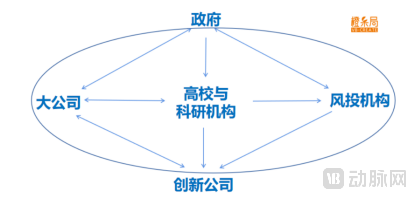
Based on this model, let us analyze the current ecosystem for technology transfer and commercialization in China.
· Universities and Research Institutions
According to data recently released by the Ministry of Education, as of May 2022, there were a total of 3,013 higher education institutions in China (excluding the Hong Kong Special Administrative Region, the Macao Special Administrative Region, and Taiwan), including 1,270 undergraduate universities. Among these undergraduate universities, 849 are public institutions. There are 147 universities included in the “Double First-Class” initiative, of which 115 were previously part of the Project 211, and 39 were included in both Project 985 and Project 211.
In the 2021 Top 10 Global Research Institutions list released by FierceBiotech, four Chinese research institutions were included. The Chinese Academy of Sciences (CAS), China’s highest academic institution in the natural sciences, comprises 11 branch academies, more than 100 research institutes, and over 130 national key laboratories and engineering centers. Disciplines such as physics, chemistry, materials science, mathematics, environment and ecology, and earth sciences have reached an advanced global standing.
As Professor Shi Yigong stated, China boasts a large number of outstanding, world-class researchers. Many of them have even earned tenured professorships abroad, yet they have resolutely chosen to return and serve their country.
At the level of institutional transformation. Since the Ministry of Education issued the “Notice on Further Promoting the Implementation of Policies Related to the Transformation of Scientific and Technological Achievements in Universities,” nearly all universities and research institutions have formally placed the promotion of achievement transformation on their agendas. Major universities and research institutions are not only actively exploring pilot programs and policies to facilitate achievement transformation but also streamlining processes and procedures by establishing holding platforms, among other measures, thereby promoting the smooth progress of achievement transformation with greater efficiency and flexibility.
Of course, many institutions are still in the exploratory phase; however, interviews and research conducted by VCBeat indicate that they are all actively exploring or learning.
· At the government level
Within the ecosystem for translating scientific and technological achievements into practical applications, the government’s role is primarily manifested in two aspects: long-term policy support, and the cultivation of an innovation-friendly atmosphere alongside the development of urban spaces.
Policy support encompasses multiple dimensions, such as guidance and backing for technological innovation and talent development. Local governments across China have maintained continuous efforts in fostering industrial innovation. Each region has implemented corresponding talent policies and innovation mentorship programs, with Suzhou standing out as a representative example.
However, economic development and industrial support infrastructure vary across different regions in China. In some areas where such supporting systems are not yet fully established, policies are not entirely aligned with technology transfer projects. For instance, certain regions struggle to accommodate innovative projects characterized by long R&D cycles and high risks. From the perspective of local economies, there is a greater demand for enterprises with production capacity that can generate tax revenue and create jobs.
However, most products from technology transfer enterprises are still at the engineering prototype or proof-of-concept prototype stage, or merely exist as rudimentary product concepts requiring further optimization. Similarly, companies in the R&D phase may not be able to create many job opportunities.
In these regions, policies are skewed toward manufacturing enterprises; for researchers based in these areas, it is difficult to secure local policy advantages.
·Venture Capital Firms
According to statistics from VCBeat, there were a total of 121 early-stage investment and financing events in China’s healthcare sector in the first half of 2022. Among these 121 startups, 76% of the founders had scientific backgrounds. As market enthusiasm continues to surge, an increasing number of scientists and professors are stepping out of the “ivory tower,” either voluntarily or out of necessity, to launch ventures. Investment firms, while expressing both admiration and skepticism, are nonetheless placing aggressive bets on these enterprises one after another.
“Early-stage investment is often technology-driven, with R&D capability serving as the core competitive advantage; scientists embody these core technologies and possess inherent capabilities for original innovation,” remarked a seasoned investor in the industry.
Just as venture capital firms once rushed to bet on tracks such as PD-1/PD-L1 inhibitors and cell therapies, they are now turning their attention to laboratories. Some investment managers have spent more than half a year traveling across China to build relationships with leading experts at various research institutes, aiming to secure early-stage equity when these experts decide to launch startups. Meanwhile, senior executives at investment firms are immersing themselves in universities and research institutions, seeking out principal investigators (PIs) in sectors they view as promising.
Furthermore, seasoned venture capital leaders with years of experience in the healthcare investment sector have noted that, when incubating and investing in biomedicine, they draw on the successful models of prominent VC firms such as Flagship Pioneering, Third Rock, and Arch, while adapting their strategies to local conditions in China.
Undoubtedly, the translation of technology into industrial applications has gained significant attention from the investment sector in recent years and is regarded as one of the core competitive advantages for hard-tech investment firms.
On the other hand, investment in the commercialization of domestic scientific and technological achievements is still in its early stages. Investors are required to possess both technical expertise and industry insight, making this cross-disciplinary field highly challenging with significant entry barriers. For most investors, the process of translating technologies from concept to initial application (from 0 to 1) remains an unfamiliar domain, characterized by a scarcity of established methodologies. Consequently, aspects such as team incubation models, management systems, product definition, and commercialization metrics all require fresh exploration.
Furthermore, due to the scarcity of professional managers in China, investors must devote significantly more time and energy both before and after investing in a project, sometimes even assuming the role of co-founders. These outcomes are unpredictable; from the investors’ perspective, their increased effort is accompanied by greater uncertainty.
· Large Companies
From Boston’s development trajectory, it is precisely the clustering of major pharmaceutical companies that has made it the “Jerusalem” of the life sciences sector, laying the foundation for the growth of its venture capital industry.
Within the ecosystem for translating scientific and technological achievements, large corporations provide opportunities and platforms for realizing the value of innovative outcomes. They can transform research findings into products through patent assignments, engage in deep collaborations with researchers via incubation programs, and participate in the translation process through investment activities. Hot investment sectors in the life sciences, such as PD-1 inhibitors, CAR-T therapies, and gene therapy, have made the transition from the laboratory to industrial application largely thanks to the incubation and involvement of major pharmaceutical companies.
So, are major companies in China engaging in such initiatives? The answer is undoubtedly yes. As early as 2016, Jiangsu Hengrui Medicine established a joint laboratory with China Pharmaceutical University; CStone Pharmaceuticals and the Medical College of Soochow University jointly set up a research center to carry out strategic cooperation across multiple dimensions, including collaborative research projects, talent development, and innovation-driven growth in the pharmaceutical industry.
However, most of these collaborations are still in their early stages. On the one hand, domestic pharmaceutical innovation companies have only recently emerged and are currently in the process of transitioning from “Biotech” to “Big Pharma,” or are considering whether to make such a transition. On the other hand, these partnerships have just begun, and no blockbuster products or therapeutic areas have yet emerged through this collaborative model.
Everything remains in a state of exploration and forward progress.
·Innovative Companies
A healthy ecosystem not only attracts large corporations but also draws in and nurtures a cohort of innovative companies to establish their presence locally. The clustering and success of these innovative firms signify the formation of a closed-loop innovation ecosystem. While the success of one or two individuals may be accidental, the success of a group is inextricably linked to the local ecosystem.
In the nascent wave of commercializing scientific and technological achievements in China, we have already witnessed some startups stand out. Some have secured over RMB 1 billion in financing within just a year of establishment, while others have risen to the top tier in their respective niche sectors. Although China has not yet developed innovation clusters as densely concentrated as those in Boston or Silicon Valley, this initial progress is a promising start.
From the perspective of the culture, ecosystem, and environment surrounding the translation of scientific and technological achievements into practical applications, it is not difficult to observe that all aspects of this process are still in the stages of construction and initial development. This is indeed the case.
During interviews and research conducted by VCBeat, the author frequently encounters both positive and negative perspectives. Overall, however, stakeholders across the entire ecosystem are actively exploring and striving for progress. It must be acknowledged that China’s technology transfer efforts require further optimization and adjustment in terms of institutional frameworks, cultural norms, and environmental conditions, necessitating the adoption of successful practices from both domestic and international sources.
Researchers, investors, and entrepreneurial partners engaged in the commercialization of scientific and technological achievements may currently face a variety of challenges. However, throughout history, numerous opportunities have emerged from adversity; overcoming difficulties seems to be an inherent resilience ingrained in the Chinese character. If one focuses solely on the obstacles, progress becomes nearly impossible; yet by shifting focus to what can be done, all possibilities may open up.
To conclude, let us quote Professor Xu Xiaonian:“Wind must be created by oneself.”
”