

Empatica Files for IPO: Pioneering Neurological Wearables from the World’s First FDA-Approved Seizure Detection Device

Empatica
Wearable Device Developer
In the era of digitally driven healthcare, wearable devices, as one of the primary data interfaces, are receiving increasing attention.
Wearable devices refer to mobile smart devices that can be worn directly on the body or integrated into clothing and accessories to record human physiological data. Currently, wearable devices on the market are categorized into two types: one is consumer-grade health hardware, such as mobile otoscopes, health bands, intelligent sleep systems, and skin sensors; the other is professional-grade medical hardware, such as intelligent detectors, non-invasive glucose monitors, blood pressure monitors, glucometers, and lipid profile analyzers.
As China’s population ages and the proportion of elderly individuals continues to rise, the burden of chronic diseases is intensifying, leading to growing healthcare demands among middle-aged and older adults. Most professional-grade medical hardware focuses on two key areas: health management for the elderly and chronic disease management. However, beyond these,Empatica Finds New Focus: Monitoring and Management of Neurological Disorders。
According to research by the National Center for Neurological Disorders, ChinaAt least 27,500 people per yearFive neurological autoimmune diseases, including multiple sclerosis, neuromyelitis optica spectrum disorders, acute disseminated encephalomyelitis, myasthenia gravis, and Guillain-Barré syndrome, see an average of 75 new diagnoses per day. By monitoring the onset characteristics of neurological diseases, effective disease management is expected to be achieved.
According to statistics, the market size of China’s wearable medical devices grew from RMB 1.2 billion in 2015 to RMB 12.2 billion in 2020, demonstrating strong growth momentum, and is projected to exceed RMB 20 billion by 2023. In the global wearable device market, financing for wearable devices reached a historical peak in 2021, attracting digital giants such as Apple, Fitbit, Samsung, and Huawei to enter the field.
In the highly competitive wearable device market, how can companies identify their product positioning to stand out? Empatica answers this question from the perspective of neurological disorders.
Founder of the IEEE Wearable Information Technology Committee Leads Startup Venture
Empatica, founded in 2011 and headquartered in Massachusetts, USA, with a branch in Milan, Italy, is a provider of wearable medical devices focused on the neurological field. It monitors and manages human health conditions through technologies such as wearable devices and sensors. In August 2022, Empatica secured $25.949 million in funding, bringing its total funding to $33.7 million to date.
Matteo LaiYesEmpatica’s Co-founder and CEO holds a Master’s degree in Innovation Management from Alta Scuola Politecnica (ASP), an elite joint program offered by Politecnico di Milano and Politecnico di Torino. As co-founder, Simone Tognetti also serves as Chief Technology Officer; he holds a Master’s degree in Computer Science from Politecnico di Milano.
Professor Rosalind Picard is the Co-founder and Chief Scientific Officer of Empatica, as well as the founder and director of the MIT Media Lab, which has pioneered disruptive technologies in wearable and affective computing and tangible interfaces.PicardThe professor authored the book *Affective Computing* and is the originator of the concept of “affective computing.”,StillCo-founded the IEEE Wearable Information Technology Committee, helping to pioneer the field of wearable computing and holding multiple patents for wearable devices utilizing affective computing technology.
Affective computing refers to computation that is related to, arises from, or influences emotions. By applying this technology, computers are endowed with the ability to recognize, understand, express, and adapt to human emotions, thereby establishing a harmonious human-computer interaction environment and enabling computers to achieve higher, more comprehensive intelligence. In the field of neurological disorders, the clinical manifestations of various diseases are linked to emotional expressions; sensors are utilized to monitor comprehensive physiological parameters of the human body,Analysis using algorithms such as affective computing can effectively monitor and manage neurological disorders.。
By integrating this technological algorithm, Empatica has developed a series of wearable device companion products, includingThe World’s First Smartwatch for Neurological Seizure Detection: embrace2, such as the embracePlus comprehensive smartwatch for health monitoring, the Empatica Aria smartwatch for COVID-19 monitoring, and the E4 medical-grade smartwatch.
The World's First FDA-Approved Smartwatch for Epilepsy: embrace2
Epilepsy is a chronic, non-communicable brain disorder that affects people of all ages and is one of the most common neurological diseases. Surveys show thatThere are approximately 50 million people with epilepsy worldwide, with an estimated 5 million new diagnoses each year.. Epilepsy refers toTwo or more timesof unprovoked seizures, which present with transient symptoms including loss of consciousness or awareness, as well as disturbances in motor function, sensation (including visual, auditory, and gustatory modalities), emotion, or other cognitive functions.
In the diagnosis of epilepsy, a complete medical history and detailed description of seizure episodes are crucial, as they constitute the sole basis for diagnosing epilepsy.. However, in real-world practice, patients with epilepsy lack systematic records of seizure activity; even self-reported logs are often incomplete, frequently requiring physicians to conduct prolonged observation before confirming a diagnosis.Furthermore, epileptic seizures are generally unpredictable, leaving patients vulnerable to unnoticed dangers during episodes, which may lead to Sudden Unexpected Death in Epilepsy (SUDEP). Consequently, the management of epilepsy requires significant additional human resources and time.
embrace2 is the world’s first smartwatch for detecting epileptic seizures, FDA-cleared for use in children aged 6 and older as well as adults, and CE-marked under European medical device regulations. embrace2 can detect possible convulsive seizures and immediately alert caregivers, providing round-the-clock protection to help people with epilepsy receive assistance when they need it most.
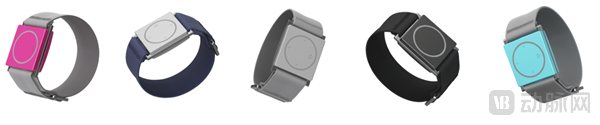
embrace2 Source: Empatica Official Website
The Embrace2 is equipped with four biosensors, including electrodermal activity, temperature, accelerometer, and gyroscope sensors. Additionally, two companion applications, the Alert App and Mate, have been designed for use with the device.
Whenever Embrace2 detects a possible tonic-clonic seizure, the Alert App places a phone call to caregivers, broadcasting a message that includes GPS location information to facilitate rapid assistance. Mate is a life-assistance application specifically designed for epilepsy patients; it automatically records each seizure event and analyzes daily rest, physical activity, and medication adherence.
Currently, Empatica has partnered with companies such as Eisai and NEC Japan to jointly promote the use of Embrace2.
embracePlus for Neurological and Chronic Disease Management
embracePlus is a wearable medical device designed for the management of neurological disorders and chronic diseases, equipped with a proprietary PPG (photoplethysmography) sensor capable of detecting respiratory rate, SpO2, and other parameters.EmbracePlus was developed in collaboration with NASA, the U.S. Department of Health and Human Services (HHS), and the U.S. Army Medical Research and Development Command (USAMRDC), and it features the highest number of sensors among all wrist-worn devices.。
Currently, embracePlus has secured a research grant from the Translational Research Institute for Space Health (TRISH) to continue its development, aiming to address the challenge of safeguarding human health during long-duration deep space missions.
Neurological disorders, including Alzheimer’s disease, Parkinson’s disease, multiple sclerosis, epilepsy, stroke, brain injury, and neuroinfectious diseases, affect nearly one-sixth of the global population; however, conducting research outside hospital settings remains highly challenging.
According to the survey,In clinical trials, 89% of participants did not fully adhere to medical instructions, 30% dropped out prematurely, and 26% of trial costs were allocated to data monitoring and retention.Therefore, for researchers, using a wearable device capable of automatically recording physiological status enables real-time monitoring of treatment progress, improves trial adherence, and predicts adverse events, thereby advancing the field of neurology.
Furthermore, embracePlus can be applied to the monitoring of various vital signs, effectively enabling the management of chronic diseases. In addition to the user-facing end, Empatica has developed a data analytics platformEmpaticaCareOn the provider side, the platform leverages remote AI-powered medical-grade wearable devices such as embracePlus to manage chronic and infectious diseases, enabling physicians to simultaneously oversee hundreds of patients, thereby increasing hospital and intensive care unit capacity and reducing community transmission of infectious diseases.
 Empatica Health Monitoring Platform Source: Empatica Official Website
Meanwhile, building on embracePlus, Empatica has also developed aDecentralized Experimental PlatformPaired with the medical-grade E4 smartwatch, this platform and device are capable of collecting and providing researchers with valid medical data to facilitate experimental studies. Currently, Empatica has supported numerous international trials, including the Horizon 2020 Sleep Revolution R&D project, the ART-CRAMA project initiated by TimesPAN, and Sunovion Pharmaceuticals’ Phase IV clinical trial of an antiepileptic drug.Playing a role in over 1,000 experiments。
Empatica Aria for Monitoring Respiratory Infections and COVID-19
Early detection and testing are particularly crucial for the control of novel coronavirus and respiratory tract infections. Only by achieving early risk mitigation can the spread of infectious diseases be effectively contained.Empatica Aria is currently the only wearable system with an app and an online dashboard.Users wear the EmbracePlus to collect health data, and the Aria algorithm is used to detect disease risk. When a high risk is detected, the app can send alerts to users or caregivers, enabling early prevention of viral spread.
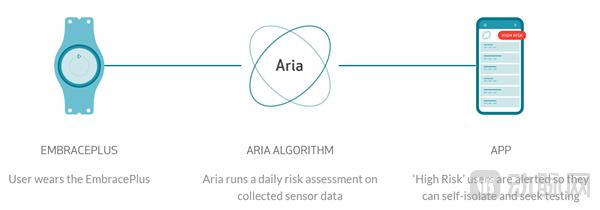 Empatica Aria Operating System Source: Empatica Official Website
As early as 2018, Empatica received funding from the Disruptive and Revolutionary Innovation Ventures (DRIVe) office, a division of the U.S. Biomedical Advanced Research and Development Authority (BARDA), to develop an algorithm for the early detection of respiratory infections.
With the outbreak of the novel coronavirus, preventing early respiratory infections has become a key priority for major government agencies. Subsequently, Empatica was selected by government entities such as the U.S. Army’s Medical Research and Development Command (MRDC) to collaborate on the development of an early-detection wearable device for COVID-19. This selection was driven not only by its success in developing the first FDA-cleared wearable device for epilepsy but also by its capability to detect digital biomarkers.
Digital biomarkers refer to objective, quantifiable, and clinically interpretable standards derived from human-generated “signals” through digital means, used to detect, interpret, or predict disease trajectories. Empatica leverages medical-grade wearable devices to enable remote measurements and generate comprehensive physiological data reports, thereby creating a holistic patient view that facilitates deeper understanding and improved care for chronic and infectious diseases.
Currently, Empatica has collaborated with professional institutions such as Harvard University and Duke University to identify digital biomarkers across various fields, which have obtained clinical certification.
For epilepsy, Empatica detects GTCS (generalized tonic-clonic seizures) through electrodermal activity and motion self-detection, which is related to PGES (Comprehensive EEG Suppression Phenomenon) associated with it, PGES is an important biomarker for SUDEP.
By deeply measuring physiological signals associated with activity, rest, and mood response changes correlated with Hamilton Depression Rating Scale (HDRS) scores, triggers can be identified to provide accurate depression prediction.
Utilize the sleep-detection algorithm (ACT-S1) of embracePlus to identify user sleep activities, quantitatively analyze users' physical health status, and assess exercise risks.
For SARS-CoV-2, infection triggers a series of invisible yet digitizable biomarkers, which constitute a critical component in the development of Empatica’s Aria algorithm.
In the validation study, Empatica Aria was able to detect patients potentially infected with H1N1 influenza, rhinovirus, or SARS-CoV-2 with a sensitivity of 0.94.