

Exclusive Interview with Dr. Sun Hui of CAS: Full Mastery of Core Technologies and Tooling Processes Paves Way for Domestic Femtosecond Laser Surgery Systems
In the just-concluded September, fromDr. Sun Hui, Academy of Opto-Electronics, Chinese Academy of SciencesAt the “Orange Growth Plan – Ophthalmology Special Session” project roadshow hosted by VCBeat, as the “Femtosecond Laser-Assisted Corneal Refractive Surgery Equipment"The team representative delivered a project presentation."
In his presentation, two points particularly caught my attention. One isTo Achieve Localization of Femtosecond Laser Surgical Systems, the other is the teamFully Mastered the Core Technologies of the System, and a proof-of-concept prototype has already been completed. Naturally, it has also attracted significant attention from investors. It is reported that after the roadshow, more than ten investors reached out to Dr. Sun Hui. During the interview, Dr. Sun Hui also told me, “Another investor is scheduled to speak with me tomorrow.”
This also heightened my anticipation for our subsequent conversations and inspired me to write this article. Below is a curated and edited version of the interview transcript, offering readers insight into Dr. Sun Hui’s journey in localizing femtosecond laser surgical systems in China.
Mentored by Tibor Juhasz, mastering technical principles and tooling procedures
During his eight years of study and work in the United States, Sun Hui gained a comprehensive understanding of femtosecond lasers at both the scientific research and production technology levels.
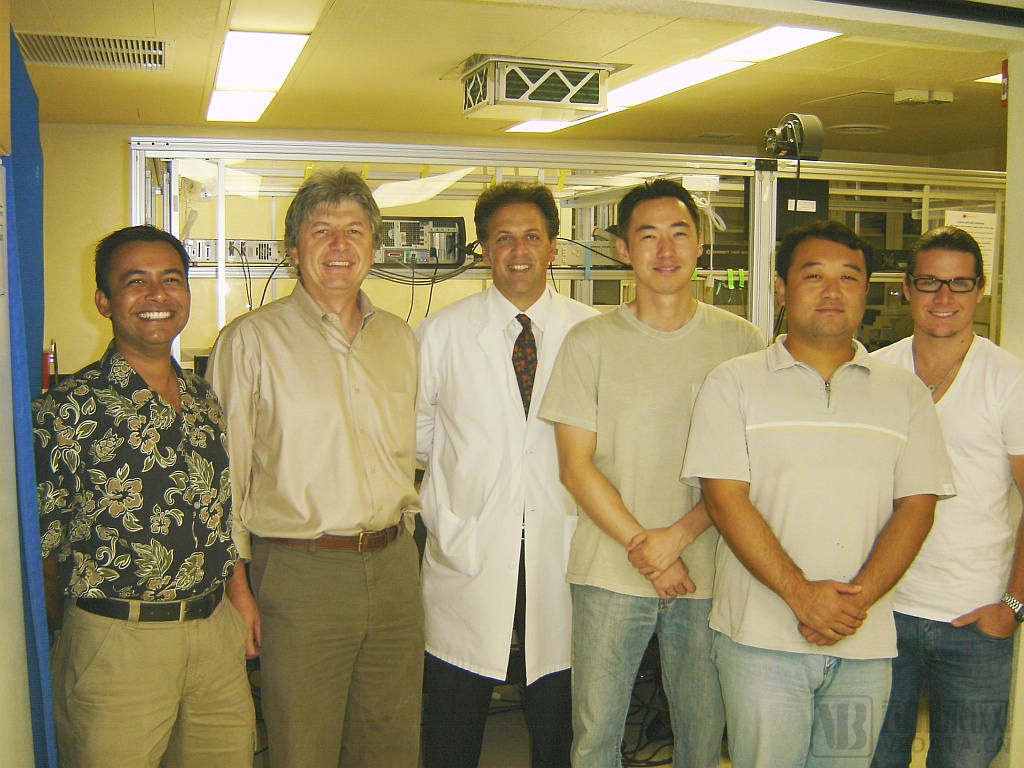
Figure: Dr. Hui Sun (fifth from left) and Professor Tibor Juhasz (second from left) in a group photo
In 2006, Sun Hui traveled abroad to join the research group of Professor Tibor Juhasz (inventor of femtosecond laser surgical equipment) at the University of California, Irvine. During his postdoctoral fellowship, he was exposed to and gradually mastered the technical principles of femtosecond lasers, namelyPrinciples of All-Solid-State Chirped Pulse Amplification Femtosecond Lasers。
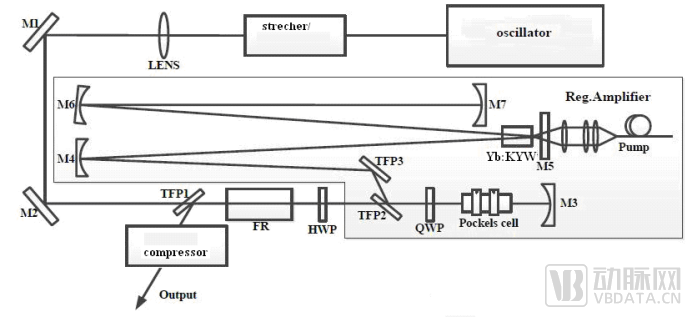
Fig.: All-solid-state chirped pulse amplification femtosecond laser system
Specifically, an oscillator generates short pulses, which are then stretched by a factor of 1,000 to 100,000 using a pair of gratings (or other devices), thereby reducing the peak power by the same order of magnitude. The stretched pulses subsequently pass through a conventional amplifier to increase their energy by a factor of 1,000 to 100,000. Finally, the amplified high-energy pulses are recompressed to their initial pulse width via another pair of gratings.
Achieving non-invasive and painless outcomes in ophthalmic surgery with this technology imposes extremely stringent requirements on laser equipment, encompassing 11 key technical specifications, including pulse width, wavelength, average power, and functional stability. Furthermore, the computer-controlled delivery mechanism for positioning and the scanning control system are also critical determinants of surgical success. These systems must enable precise cutting of a corneal flap with a controllable thickness of 100 micrometers, maintaining a precision error within 20 micrometers.
In fact, as early as the 1990s, Professor Juhasz achieved significant commercial success with femtosecond laser surgical equipment and became a co-founder of two ophthalmic companies, IntraLase and LenSX, the latter of which was acquired by Alcon in 2010.
It was precisely this acquisition that enabled Sun Hui to enter in 2011AlconServing as an Optical Engineer. “During my first two years at Alcon, I worked on the production line manufacturing femtosecond laser surgical systems; in my third year, I transitioned to an R&D role, where I contributed to improving the R&D manuals.” Thanks to this experience, Sun Hui gained a thorough understanding of the tooling processes and underlying principles involved in the production of femtosecond laser surgical systems by leading global ophthalmic companies.
Through extensive research and work on the applications of femtosecond lasers, Sun Hui pioneered the use of laser-induced plasma and second-harmonic generation signals to detect the interaction processes between femtosecond lasers and matter. In 2013, Sun returned to China and joined the Academy of Opto-Electronics, Chinese Academy of Sciences. He has since established experimental research capabilities for studying pulsed laser–matter interactions and assembled a high-caliber scientific research team specializing in laser application technologies.
In terms of technological research and production, Sun Hui spoke confidently, “Benchmarked against imported foreign equipment, our developed device offers identical parameters and surgical outcomes."It is understood that the surgical equipment developed by Sun Hui can also achieve a total surgery time of 5-15 seconds, with no significant pain during the procedure and no need for hospital observation."
Broad Market, Yet Domestic Production Remains in Its Early Stages
Currently, the femtosecond laser surgery market in China is experiencing strong growth momentum.
Focusing solely on the niche segment of myopia correction surgery, data from Aier Eye Hospital shows that the number of eyes undergoing myopia surgery at its hospitals in China reached 250,000, 340,000, 430,000, and 530,000 in 2018, 2019, 2020, and 2021, respectively. Industry insiders predict that over the next five years, China’s refractive surgery (myopia surgery) market will maintain a rapid growth rate with a compound annual growth rate (CAGR) of approximately 24.0%, reaching a market size of more than RMB 30 billion by 2025.
In fact, the rapid growth of the myopia surgery market in China is primarily driven by its large patient base, with approximately one-third of the population suffering from myopia of varying degrees. Additionally, as economic conditions continue to improve and people place greater emphasis on quality of life, there has been a significant increase in corneal refractive surgeries nationwide.
This has inevitably spurred substantial demand among hospitals for femtosecond laser surgical systems. It is reported that femtosecond laser surgical systems account for 50% of the total ophthalmic medical device market in China. However, at present, nearly all Grade A tertiary hospitals across China rely on imported equipment from abroad. In both domestic and international markets, the femtosecond laser surgical system sector is monopolized by Zeiss and Alcon.
What are the challenges in achieving domestic production of femtosecond laser surgical systems, and how does Sun Hui plan to break through?
Regarding the predicament of domestic production, Sun Hui believes, “The optical path alignment in the technology is so precise that such equipment can only be manufactured manually, and the core technology has always been held by a few experts abroad. As a result, China has been unable to independently develop localized applications for this type of equipment during the nearly 20 years since its introduction.”
In reality, femtosecond laser surgical systems rely not only on the laser source but also on graphics software, beam delivery systems, and focusing parameters. In particular, the scanning methods have already been patented by foreign companies, creating a significant barrier to domestic production in China.
How, then, do Chinese researchers develop and manufacture femtosecond laser surgical systems with independent intellectual property rights?
Relying primarily on the advantages of domestic production, Sun Hui revealed that the main reason for the high price of imported equipment is its heavy reliance on manual labor in manufacturing, which makes automation difficult. With low global output, each company typically produces only one unit per day.
In contrast, China not only boasts robust capabilities in computer software design and system integration, as well as top-tier talent proficient in advanced femtosecond laser technology, but also possesses a comprehensive industrial manufacturing system and low labor costs. Our products have achieved a 90% overall cost reduction compared to similar foreign products, ensuring that domestically produced versions will inevitably hold strong competitiveness in the international market.
Based on this, Sun Hui’s team will conduct in-depth research focusing on three innovative aspects:
The first point isDevelopment of Femtosecond Solid-State Laser Surgical Equipment with Independent Intellectual Property Rights. The project has currently secured eight invention patents, including one U.S. invention patent and seven Chinese invention patents. By implementing technological improvements with independent intellectual property rights, the team has achieved more precise surgical outcomes while facilitating a smoother translation process.
The second point isSpecializing in Technical Issues in Automation Engineering, achieving precise coordinate control for the femtosecond laser alignment and scanning control system, including corneal thickness measurement and the establishment of a precision CNC positioning system tailored to specific application requirements.
The third point isEstablishing a Mathematical Model of the Interaction Between Femtosecond Lasers and Biological Tissues, complete wavefront-guided corneal surgery without excimer lasers, provide directional guidance for the overall experiment, and promote this model on a broader scale.
There are currently no domestically marketed femtosecond laser surgical devices in China. This blue-ocean market is poised for imminent takeoff, and Sun Hui has seized this opportunity, strategically positioning his team and technology for future development.
Over a dozen investment banks have been engaged, with plans to complete the development of engineering prototypes in the future.
Following the “Chengguo Program – Ophthalmology Special Session” roadshow, Sun Hui stated that more than ten investment institutions had reached out to him, including several publicly listed companies. Judging by the enthusiasm shown by investors, Sun Hui’s team and their project are undoubtedly a “dark horse.” The project has already completed the fabrication of a proof-of-concept prototype and successfully performed corneal flap creation on ex vivo porcine eyes.
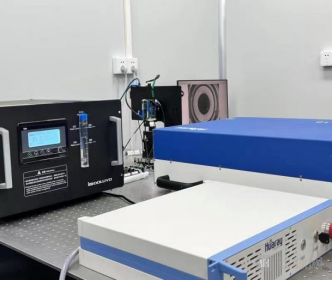
Figure: Prototype
Immediately afterward, the team prepared to take the next step. Sun Hui revealed, “Our next step is to complete the fabrication of the engineering prototype.”
At this stage, there are two specific R&D tasks: the first is to transform the proof-of-concept prototype into a form suitable for operating room equipment and install specialized tools to adjust the light beam, enabling the laser to focus on the patient’s cornea; the second is to conduct in vivo animal experiments using the engineering prototype, such as experiments on live monkeys.
If the monkey eye experiments prove successful, the team will use these results as a foundation to apply for clinical trials. After accumulating sufficient clinical data, they will then apply for a Class III medical device certification from the National Medical Products Administration (NMPA), ultimately achieving product commercialization.
“But there is still a long way to go,” said Sun Hui. “Femtosecond laser surgical systems are typical hardware projects, so my primary focus remains on securing national research grants. We rely on funding from these research projects to support the R&D of our equipment. This process requires time, capital, and dedicated personnel.”
At present, the project is still in its early stages. Therefore, the team hopes to identify capable investors who can provide financial and resource support, collaborate on applications for national or local government projects, and achieve industrialization while conducting high-quality scientific research."Writing Papers on the Land of Our Motherland"”。