

Third Pole Therapeutics Files Prospectus to Advance Home-Based Inhaled Nitric Oxide Therapy Platform

National Institute of Health
National Institutes of Health

Avenue Venture Opportunities Fund
Venture Capital Firms

Saturn Partners
An Investment Institution Focused on Early-Stage Innovative Enterprises

Third Pole Therapeutics
Developer of Cardiopulmonary Therapy Equipment
In February 2022, U.S. gas therapy company Third Pole Therapeutics announced the completion of a new $25 million funding round to support clinical trials of its small wearable device, eNOfit.
To date, the company has raised $53.8 million across four funding rounds, with investors including JLABS (Johnson & Johnson), Avenue Capital Group, and Saturn Partners. Prior to this, Third Pole Therapeutics received multiple grants from institutions such as the National Heart, Lung, and Blood Institute (NHLBI) to serve as startup capital.
Report data shows that the global market size for inhaled nitric oxide (NO) therapy was RMB 6 billion in 2019 and is projected to reach RMB 10.6 billion by 2026, with a compound annual growth rate (CAGR) of 8.33%.Since its establishment in 2014, Third Pole Therapeutics has specialized in the development of cardiopulmonary therapies.
Dr. Warren Zapol, the founder, invented inhaled nitric oxide (iNO) therapy in 1990 for the treatment of hypoxic respiratory failure in newborns, thereby creating a $600 million iNO industry that has benefited countless patients and practitioners.
Each year, approximately 100,000 infants worldwide develop persistent pulmonary hypertension of the newborn (PPHN). In infants with PPHN, blood fails to circulate normally through the lungs, impeding adequate oxygen delivery to the heart, brain, and other major organs, which can be life-threatening in severe cases. Beyond neonates, hundreds of thousands of pediatric and adult patients also experience elevated pulmonary pressure, inflammation, and poor oxygenation during and after cardiac surgery.
In the early 1990s, researchers discovered that respiratory failure caused by pulmonary hypertension in premature infants could be treated by delivering nitric oxide to the lungs. Studies have demonstrated that, compared with other therapies such as extracorporeal membrane oxygenation (ECMO), inhaled nitric oxide (iNO) relaxes pulmonary vasculature, avoids systemic hypotension, and reduces the risks of hemorrhage and stroke. In December 1999, the U.S. Food and Drug Administration (FDA) approved inhaled nitric oxide (iNO) for the treatment of hypoxic respiratory failure (HRF) in term or near-term infants.
Over the past two decades, inhaled nitric oxide (iNO) has served as a therapeutic remedy for hundreds of thousands of patients with respiratory failure in Europe and the United States, particularly infants suffering from persistent pulmonary hypertension of the newborn (PPHN). However, despite the proven efficacy of iNO in treating PPHN, patients face significant barriers to accessing this therapy, primarily due to limitations in delivery systems.
The high cost of transporting compressed gas cylinders limits the supply of iNO in many regions., as these markets lack the infrastructure for transporting, maintaining, returning, and refilling gaseous drug canisters. Due to their large volume, compressed gas cylinders also increase the difficulty of transporting patients within hospitals.
Additionally,iNO is usually one of the most expensive therapies in the neonatal intensive care unit.. In the United States, the cost of a five-day treatment for persistent pulmonary hypertension of the newborn (PPHN) is approximately $14,000 (equivalent to RMB 100,600), which is unaffordable for many families.
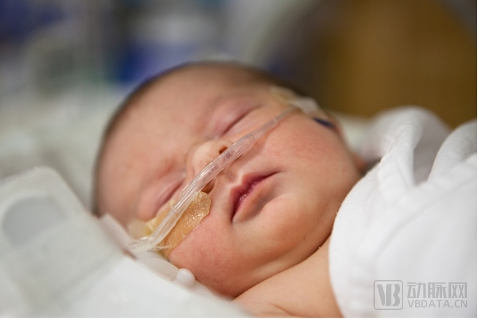
Infant with Nasal Cannula
Image source: NIH official website
In 2014, Dr. Warren Zapol and his son David Zapol led the establishment of Third Pole Therapeutics, with the goal of developing therapies to serve the next generation of the cardiopulmonary market.
After years of testing and development, the Third Pole team has developed a device that generates and delivers pure nitric oxide on demand in real time and continuously by drawing in ambient air through technologies such as iridium spark electrodes, calcium hydroxide scrubbers, and filtration.Designed for bedside and portable therapeutic applications.This technology can be integrated with standard ventilators, inhalers, or implantable devices to enable the use of iNO for pulmonary hypertension and other conditions in entirely new ways.
Third Pole’s platform comprises eNOfit, a miniaturized wearable device for home and travel use, and eNOcare, a lightweight, portable in-hospital device. Both generate inhaled nitric oxide (iNO) through the combination of electricity and air, thereby eliminating the hazards associated with compressed gas storage, reducing patients’ reliance on high-flow supplemental oxygen, and lowering the risk of heart failure by alleviating pulmonary hypertension.
Meanwhile,Lightweight mobile devices enable patients to receive treatment at home or even while traveling.thereby enhancing their mobility. These benefits will help patients achieve a higher quality of life, reduce the need for intensive care, and extend their lifespan.
Third Pole’s technology has already been licensed by Massachusetts General Hospital (MGH), and its two multifunctional platforms have secured numerous patents. Upon launch, they are poised to rapidly capture the entire market currently dominated by traditional tank-based systems and expand into the treatment of interstitial lung disease (ILD), chronic obstructive pulmonary disease (COPD), cystic fibrosis, and certain lethal viral and bacterial infections.
For developed countries, more economical and portable technologies enable Third Pole Therapeutics’ productsCapableFor use in medical institutions at all levels.For example, if newborns born in community hospitals can receive immediate iNO therapy, it will not lead to delays or transfers, and prevent escalation to ECMO treatment. Data shows that infants eligible for ECMO are more likely to respond to iNO if treatment begins more than 24 hours after birth. Furthermore, this technology, which can be deployed in community hospitals, allows parents to stay with their infants, a factor equally critical for the child’s recovery and development.
For developing countries, Third Pole Therapeutics’ products have further promoted iNO therapy, as the storage tanks causeHigh transportation costs will no longer exist.In addition, Third Pole’s convenient technology can extend iNO to the outpatient market, enabling patients with COPD or other cardiopulmonary diseases to use it at home.
Clinical trials for the eNOfit mobile device commenced in 2022, with FDA approval submission potentially occurring by the end of 2023. Additionally, Third Pole is on the verge of completing the development of eNOcare. Given the extensive recognition eNOcare has garnered from cardiopulmonary critical care centers worldwide, Third Pole believes that eNOcare offers superior safety and efficacy compared to alternative products, and thus anticipates a rapid expansion of its market share shortly after launch.
Dr. Warren M. Zapol, founder of Third Pole Therapeutics, graduated from the Massachusetts Institute of Technology and the University of Rochester School of Medicine. He subsequently joined the U.S. National Institutes of Health (NIH) as part of the Public Health Service Commissioned Corps, where he worked in Theodor “Ted” Kolobow’s laboratory. In 1972,Kolobow’s first extracorporeal membrane oxygenation (ECMO) device successfully treated a patient with acute respiratory distress syndrome (ARDS) for the first time.
After leaving the NIH, Warren decided to pursue a career in clinical medicine and research, choosing to undergo anesthesiology training at Massachusetts General Hospital (MGH). Richard J. Kitz, then Chair of the Department of Anesthesia at MGH, tailored a residency program for Warren, helping him secure NIH funding and departmental resources so that he could devote himself fully to human ECMO research.

Warren Zapol
Image source: Third Pole official website
In the late 1980s, Warren was inspired by a weather forecast in the Los Angeles Times to hypothesize that, due to the emission of NO₂, an oxidation product of nitric oxide (NO) from automobiles, people were inevitably inhaling higher levels of NO in urban environments. He then returned to the laboratory with his team to investigate the effects of inhaling low-dose (< 80 ppm) nitric oxide (iNO). The initial experiment was conducted in sheep with pulmonary hypertension induced by intravenous infusion of a thromboxane analog. They found that iNO reduced pulmonary arterial pressure while maintaining stable systemic blood pressure in the sheep.
A series of groundbreaking studies were rapidly translated into clinical trials at MGH. Warren, together with experts from pediatrics, cardiology, and other fields, conducted iNO testing in patients with various pulmonary vascular diseases. The most significant responses were observed in critically ill neonates with pulmonary hypertension and severe hypoxemia.
In 1999, the FDA approved iNO for the treatment of term and near-term neonates with hypoxic respiratory failure. Today, iNO has become an established therapeutic modality. According to statistics,More than one million patients have received iNO therapy, which has also created a $600 million market.
As both a physician and an administrator, Warren also demonstrated remarkable foresight. He worked at Massachusetts General Hospital (MGH) for 52 years, serving as the Director of the MGH Center for Critical Care Research in Anesthesia and as a Professor of Anesthesiology at Harvard Medical School. During this period, Zapol actively developed the laboratories within the hospital’s departments of Anesthesiology, Critical Care, and Pain Medicine, recruiting and mentoring many of the world’s leading anesthesiologists. Over the course of 52 years,His laboratory has generated 26 patents and hundreds of publications.
During the last six years of his life, Warren battled lung cancer but never abandoned his research. He and his laboratory discovered a novel approach to treating nitric oxide poisoning and characterized the antimicrobial properties of inhaled nitric oxide. Meanwhile, remaining committed to his mission of saving infants worldwide, he developed a new method for generating nitric oxide from atmospheric nitrogen via electrical discharge, which ultimately led to the founding of Third Pole Therapeutics.
In 2015, Warren received funding from the Boston Biomedical Innovation Center, one of the three National Centers for Accelerating Innovation (NCAI) under the U.S. National Institutes of Health (NIH). The funds were used to support the founding of Third Pole Therapeutics and to advance its technology development.
In 2017, Third Pole Therapeutics won the Johnson & Johnson JLABS @ M2D2 QuickFire Challenge, earning the award for “Best Medical Device Addressing an Unmet Health Need.”The award enabled Third Pole Therapeutics to receive guidance from Johnson & Johnson experts and expand its team.
On March 26, 2019, Third Pole Therapeutics announced a strategic collaboration with Actelion Pharmaceuticals Ltd, a Janssen Pharmaceutical Company of Johnson & Johnson. In this collaboration,Actelion brings its global resources and expertise in pharmaceuticals and cardiopulmonary products to Third Pole, accelerating the development and commercialization of the iNO platform.
On April 15, 2021, Third Pole Therapeutics announced the completion of a $15 million debt financing with Avenue Venture Opportunities Fund. The funds will be used to support validation testing of eNOfit, the first home-use, tank-free, wearable iNO device on the market, marking a milestone for Third Pole.
On January 6, 2022, Third Pole Therapeutics announced its participation in the H.C. Wainwright BioConnect 2022 conference, as well as one-on-one virtual meetings with registered investors and pharmaceutical companies organized by J.P. Morgan’s BIO Partnering initiative. The company also scheduled attendance at the 40th Annual J.P. Morgan Healthcare Conference. During these events, Third Pole’s management provided updates on the company’s financing and the development of its small wearable devices.
In developing countries such as Kenya and China, many patients with cardiopulmonary diseases face death due to lack of access to inhaled nitric oxide. Third Pole Therapeutics is developing a second-generation home-based therapy for adults with pulmonary arterial hypertension, aiming to bring this treatment out of hospitals and into households worldwide through devices that are simple, convenient, affordable, and portable. David Zapol stated, “Although it will take time and resources for our home-based technology to reach these patients, we are confident that we will find solutions.”