

Angelexo's LiteStepper®: A Clinically-Driven Innovation in Unilateral Lower-Limb Exoskeleton Rehabilitation

ANGELEXO
R&D and Manufacturer of Intelligent Rehabilitation Robots
The Rehabilitation Exoskeleton Robot Industry Is Poised for Dramatic Change
Recently, Angel Robotics’ LiteStepper®, the world’s first single-leg exoskeleton rehabilitation robot, received registration approval and a production license from the NMPA.The product will fill the gap in the international market for single-limb lower extremity rehabilitation robots.. Given its highly significant clinical superiority, this innovative product has received unanimous endorsement from clinical experts.
Nowadays, an increasing number of patients recognize the value of rehabilitation therapy and seek treatment with rehabilitative exoskeleton robots that offer superior clinical outcomes. Taking the Rehabilitation Hospital of Zhengzhou University as an example, its four rehabilitative exoskeleton robots are in use from morning to night every day. Meanwhile, patients have expressed high satisfaction with the clinical efficacy of these rehabilitative exoskeleton robots.
From the payment perspective, rehabilitation exoskeleton robots are gradually being included in medical insurance coverage in more provinces and cities, significantly lowering the access threshold for patients. For example, in 2021, the Beijing Medical Insurance Bureau issued the "Notice on Standardizing and Adjusting the Prices of Medical Service Items Such as Physical Therapy," which included "mobile robot-assisted lower limb walking training" in Beijing's medical insurance reimbursement catalog at a price of 222 yuan per session.
Driven by three major factors—new demands, new products, and new payment models—the rehabilitation exoskeleton robot industry is undergoing dramatic changes.
Amid the rapidly evolving market for rehabilitation exoskeleton robots, VCBeat and AngelRay jointly hosted a roundtable forum titled “The Present and Future of Domestic Rehabilitation Exoskeleton Robots” on October 10, 2022. Industry experts, including Li Zhe, Deputy Director of Zhengzhou University Rehabilitation Hospital; Cao Xin, Investment Director at Shiyue Capital; and Li Luya, Founder of AngelRay, engaged in insightful discussions, offering fresh perspectives to the industry.
With market education and industry development, the core value of rehabilitation exoskeleton robots is being more widely recognized.
Li Zhe, Vice President of the Rehabilitation Hospital of Zhengzhou University, believes:From a clinical perspective, the core value of rehabilitation exoskeleton robots is to help patients stand and walk earlier, enabling them to regain normal or near-normal function.
Meanwhile, rehabilitation exoskeleton robots can help patients rebuild their confidence and strengthen their commitment to rehabilitation therapy. “Initially, patients with hemiplegia often feel deeply discouraged, believing they will remain bedridden and paralyzed for life. However, after regaining the ability to walk through training with rehabilitation exoskeleton robots, they become extremely excited, even moved to tears.”
Furthermore, the core value of rehabilitation exoskeleton robots lies in their ability to facilitate holistic training for patients. In traditional rehabilitation therapy, joints such as the hip, knee, and ankle are trained separately. In contrast, holistic training provides patients with superior motor patterns, thereby promoting the reconstruction of motor function and the neuroplasticity of brain neural functions.
Li Luya, founder of Angelai, stated: “From an industry perspective, the core value of rehabilitation exoskeleton robots lies in addressing the pain points of patients, physicians, and rehabilitation institutions.”

For patients, rehabilitation exoskeleton robots facilitate full-cycle rehabilitation, including early and even ultra-early stages, while fostering a deeper understanding of the nature of disease and recovery. For instance, in the case of hemiplegia caused by brain injury, rehabilitation therapy does not merely target the patient’s limbs but aims to restore the brain’s neural control over limb movement, emphasizing the awakening of the patient’s active participation in rehabilitation and adherence to treatment.
For physicians, rehabilitation exoskeleton robots can take over repetitive and strenuous daily tasks, reducing their physical workload and improving work efficiency. This allows them to focus on patients’ individualized rehabilitation conditions and to implement more effective rehabilitation training protocols that are difficult to execute under existing clinical pathways.
For rehabilitation medical institutions, rehabilitation exoskeleton robots can augment their medical resources, enhance service delivery capabilities, and improve rehabilitation outcomes, thereby shortening hospital stays and ultimately reducing costs while boosting institutional revenue and profitability. Furthermore, the application of rehabilitation exoskeleton robots can significantly reduce dependence on the specific capabilities of institutions and physicians, promoting standardization of care quality across multi-tiered rehabilitation treatment systems.
Cao Xin, Investment Director at October Capital, stated: “From a societal perspective, the core value of rehabilitation exoskeleton robots lies in helping patients with rehabilitative potential achieve recovery, enabling them to reintegrate into society and resume normal lives.”
Through rehabilitation training, the vast majority of hemiplegic patients can return to normal life. The emergence of rehabilitative exoskeleton robots will enable more patients to receive efficient rehabilitation therapy and resume normal work and daily life.
It is evident that clinical experts, enterprises, and investment institutions have all recognized the core value of rehabilitation exoskeleton robots. Driven by the combined efforts of policy support, capital infusion, corporate innovation, and expert guidance, the rehabilitation exoskeleton robot sector is expected to enter a phase of accelerated development.
However, while the future is bright, the path ahead is tortuous. Currently, the development of the rehabilitation exoskeleton robot industry still faces certain obstacles.
Li Zhe, Vice President of the Rehabilitation Hospital of Zhengzhou University, stated, “The most critical aspect of rehabilitation exoskeleton robots is their clinical efficacy; however, public awareness of their clinical outcomes remains limited.”
Li Luya, founder of AngelRay, expressed agreement with this view. “As innovative products, domestically developed rehabilitation exoskeleton robots began to receive regulatory approval and enter the market in 2018; however, the scarcity of real-world data studies and supporting evidence for clinical efficacy has hindered their large-scale clinical application. How to better conduct clinical research, publish high-quality academic findings, and establish industry-wide clinical expert consensus are currently key challenges facing the sector.”
From the corporate perspective, reimbursement under the national medical insurance scheme presents another significant challenge. Currently, only a few provinces and municipalities in China have included rehabilitation exoskeleton robot services in their medical insurance coverage, and broader adoption will require time. It is anticipated that as the clinical value of rehabilitation exoskeleton robots becomes more evident, an increasing number of provinces and municipalities will incorporate them into their medical insurance programs.
Cao Xin, Investment Director at Shiyue Capital, stated, “The market pricing and service models for rehabilitation exoskeleton robots are also key areas of focus. Previously, when overseas rehabilitation exoskeleton robot products entered the Chinese market, their prices reached as high as RMB 1.5 million to even RMB 2 million, making them unaffordable for many hospitals. It is essential to establish reasonable pricing for rehabilitation exoskeleton robots so that they can serve a broader patient population, ultimately benefiting both patients and society.”
To address the aforementioned pain points, Anjielai has attempted to provide the industry with a model solution.
In terms of clinical efficacy, Anjielai is strengthening market education, increasing investment in clinical research, and collaborating with clinical hospitals to conduct more academic and clinical efficacy studies. Meanwhile, Anjielai will share clinical trial data to demonstrate the tangible clinical benefits of its rehabilitation exoskeleton robots to physicians and patients.
In terms of product development, AngelRay adheres to the philosophy of “derived from clinical practice, applied back to clinical settings.” By focusing on innovation driven by clinical pain points and essential needs, AngelRay’s products are better equipped to serve patients, physicians, and healthcare institutions. For instance, the LiteStepper® single-limb exoskeleton rehabilitation robot enables active rehabilitation training, thereby enhancing therapeutic outcomes. With its personalized features, it allows the affected limb to learn the gait pattern of the healthy limb, facilitating coordinated interaction between both limbs and achieving seamless human-machine integration.
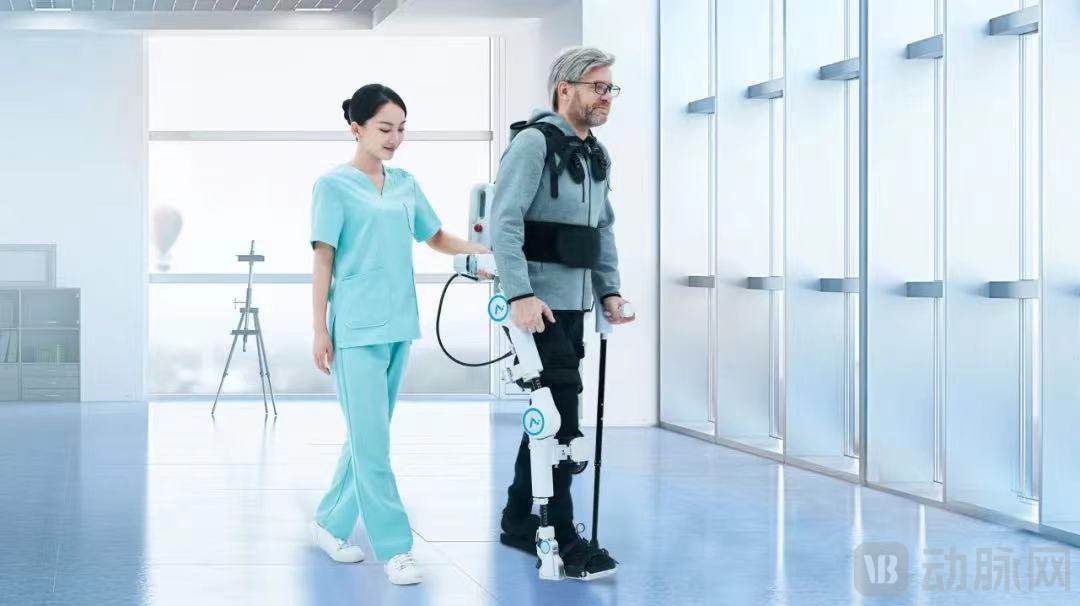
In terms of pricing, Angele has established its own manufacturing facilities and significantly reduced costs by leveraging China’s mature industrial supply chain. Compared with other products priced in the millions, Angele’s rehabilitation exoskeleton robots offer a cost advantage of one-third to one-half while ensuring high quality. As a result, rehabilitation medical institutions at all levels can procure and deploy rehabilitation exoskeleton robots at more reasonable prices, thereby extending their services to a greater number of patients in need.
Furthermore, Li Luya, founder of AngelRay, shared clinical trial data for the recently approved LiteStepper® single-limb exoskeleton rehabilitation robot at the roundtable discussion: “We have completed a multicenter, prospective, randomized, open-label, loaded, parallel-controlled, superiority clinical trial. The study enrolled 92 first-time stroke patients aged 18–75 years (regardless of gender), requiring only sitting balance (standing balance was not required), clear consciousness, and a disease duration of no more than 30 days (inclusive).”
Clinical trial results demonstrated that, after 21 days of treatment, the experimental group receiving therapy with the LiteStepper® single-lower-limb exoskeleton rehabilitation robot exhibited highly significant superiority over the control group in terms of balance ability, walking ability, activities of daily living, and walking distance.
Intuitively, after rehabilitation therapy, over 90% of patients in the experimental group were able to independently complete the 6-minute walk test, compared with only 31% in the control group.
Theoretically, most stroke patients undergo a spasticity phase. However, follow-up records three months after the trial showed that over 90% of patients in the treatment group did not develop spasticity post-treatment. This unexpected benefit is welcome news for patients, physicians, and the company alike, although the underlying clinical mechanisms warrant further in-depth investigation.
In addition, overall clinical trial results indicate that the use of the LiteStepper® single-limb exoskeleton rehabilitation robot improves rehabilitation efficiency, shortens the rehabilitation cycle, and yields superior rehabilitation outcomes.
In addition to the current state of the industry, the three experts also discussed its future.
Li Zhe, Vice President of the Rehabilitation Hospital of Zhengzhou University, stated, “The clinical application of rehabilitation exoskeleton robots has brought many encouraging changes to the rehabilitation industry. However, as clinicians, we have higher expectations and more stringent requirements for rehabilitation exoskeleton robots. From a clinical perspective, an ideal rehabilitation exoskeleton robot should possess five key characteristics.”
First, rehabilitation exoskeleton robots need to enhance their mechanical performance. Currently, the gait of rehabilitation exoskeleton robots is not smooth; it is hoped that these robots can improve their performance to achieve movement axes and overall motor functions comparable to those of humans. In this regard, Dean Li Zhe has previously communicated with Angelai, and Angelai has already begun upgrading and optimizing the relevant algorithms.
Second, rehabilitation exoskeleton robots require superior human-robot interaction. Currently, products on the market primarily assist patients in performing various movements through multiple rehabilitation modes, resulting in relatively rigid interaction. We aim for robots to more accurately and rapidly interpret patients' movement intentions and execute corresponding actions based on these intentions, ultimately fostering effective interaction between patients and the machine.
Third, rehabilitation exoskeleton robots need to better stimulate patients' latent functional capacity. For instance, while there are various methods to encourage patients to engage in active movement, robotic systems require innovative and superior approaches to more efficiently facilitate active rehabilitation and enhance functional recovery.
Fourth, rehabilitation exoskeleton robots need to be lighter and more durable. Patients using rehabilitation exoskeletons are extremely weak in terms of physical strength and mobility. Therefore, lighter products can better serve patients. To achieve lightness and durability, their batteries need to be more compact while offering longer battery life.
Fifth, rehabilitation exoskeleton robots need to achieve the integration of central and peripheral interventions. Currently, most products focus on promoting brain functional reorganization through peripheral intervention. In the future, it is hoped that robots can integrate central and peripheral interventions to aid patient recovery from both aspects. For example, combining brain-computer interfaces (BCI) with rehabilitation exoskeleton robots allows the BCI to promote the restoration of brain function from the central level, while the robot facilitates recovery from the peripheral level. The synergistic interaction between the two may enable more efficient rehabilitation.
In fact, guided by the product development philosophy of “derived from clinical practice, applied back to clinical practice,” Angeley has engaged in in-depth communication and collaboration with clinicians since its inception, innovating and developing products in response to rigid clinical needs and pain points. Consequently, the LiteStepper® single-lower-limb exoskeleton rehabilitation robot, recently approved for market entry, was developed to align with clinicians’ ideal vision for exoskeleton robotics.
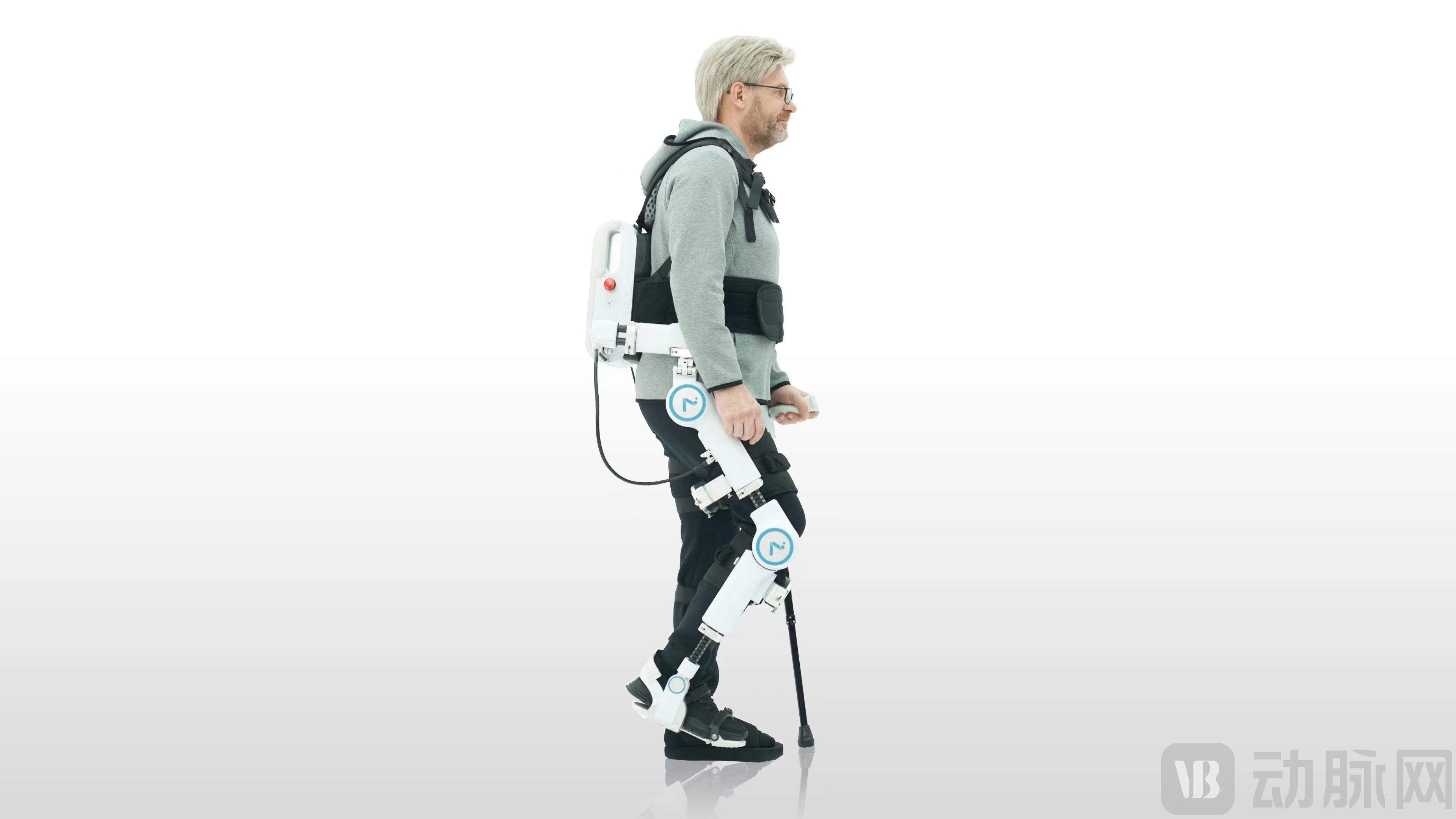
For example, by stimulating patients’ active rehabilitation awareness, the LiteStepper® single-lower-limb exoskeleton rehabilitation robot collects gait data from the voluntary movements of the patient’s unaffected side, identifies their movement intentions, and establishes an interaction pattern between the unaffected and affected sides to achieve human–machine integration. Additionally, the robot features self-learning capabilities that allow it to adjust personalized rehabilitation protocols based on limb feedback from the patient, ultimately enabling more personalized and precise human–machine interaction.
For example, leveraging AngelRay’s technologies such as rapid exoskeleton donning, patients and physicians can use the LiteStepper® single-lower-limb exoskeleton rehabilitation robot more easily and conveniently.
From the perspective of meeting the rigid clinical demands of the hemiplegic neurorehabilitation market, Anjielai’s LiteStepper® single-lower-limb exoskeleton rehabilitation robot holds a leading position in the industry. With the rapid development of the rehabilitation exoskeleton robot sector, Anjielai is expected to rapidly achieve large-scale clinical application by leveraging its product innovation advantages.