

OpenText Empowers Life Sciences with Intelligent Digital Transformation
In recent years, as the wave of digitalization has swept through China, the life sciences industry has entered a phase of rapid development. The number of innovative drugs entering clinical trials and medical devices approved for overseas markets is growing in both volume and speed. Consequently, growth across the entire life sciences sector is shifting from “high-speed” to “high-quality,” presenting both new opportunities and challenges.
How to standardize the management of diverse document information, improve file circulation efficiency, enable flexible, timely, and secure online access, and meet compliance requirements—leveraging digital technologies to gain a competitive edge has become a critical challenge for every enterprise operating in the life sciences sector.
In response to these issues,VCBeat interviewed Liu Zuowei (Leo), Sales Director for the Life Sciences Industry, and Carl Chang, Chief Solutions Consultant at OpenText, a global leader in information management services.. The two speakers shared how OpenText leverages enhanced information management and digital innovation to address the “complex challenges” in the informatization development of the life sciences industry, thereby empowering intelligent industry upgrades.
Interviewee:
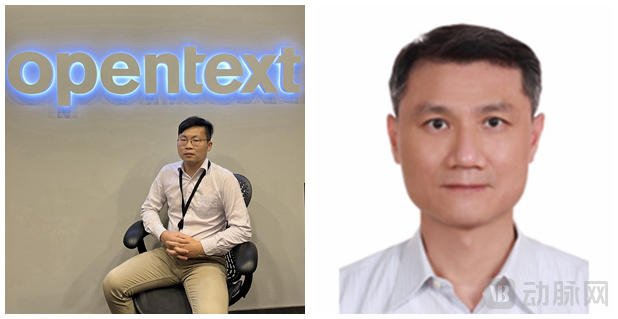 Liu Zuowei (Leo), Sales Director for the Life Sciences Industry at OpenText (left)
Carl Chang, Chief Solutions Consultant for the Life Sciences Industry at OpenText (right)
1Which companies in the life sciences sector does OpenText currently primarily serve?
As a global leader in enterprise information management software and solutions, OpenText Documentum has been dedicated to providing comprehensive solutions for the life sciences and pharmaceutical industry for nearly 30 years, covering clinical trials, research and development, quality management in manufacturing, regulatory affairs, pharmacovigilance, and general enterprise content management. Over the years, OpenText has accumulated a robust portfolio of renowned multinational and domestic pharmaceutical companies.Including companies such as Moderna, CVS, Sanofi, Ascentage Pharma, and Mingjie.
2How Is OpenText Strategizing Its Position in the Life Sciences Sector?
Throughout OpenText’s development history, following the acquisition of EMC’s Documentum products and integrating them with its own Enterprise Content Management (ECM) platform, the company has continuously invested in research and development, establishing a comprehensive presence across multiple sectors within Life Sciences, including big pharma, biotech, CDMOs, and medical devices.
After years of iterative upgrades, the new OpenText™ Documentum™ for Life Sciences boasts more distinct features, including a more user-friendly interface based on D2, as well as mobile and cloud capabilities. Leveraging extensive experience from multinational pharmaceutical companies and localized implementation cases accumulated in recent years, we are confident in better serving domestic Chinese pharmaceutical enterprises, helping them achieve digital transformation and supporting their compliant global expansion.
3Please provide an overview of the specific services and related products offered in the life sciences sector.
1. Production quality documentation management, compliant with global regulations
OpenText™ Documentum™ for Quality and Manufacturing helps life sciences companies implement unified, standardized management of pharmaceutical production documentation, enabling more effective document control for quality processes, automation of management workflows, and compliance with regulated oversight.
2. Regulatory Registration Document Management: Simplified and Compliant
OpenText™ Documentum™ for Research and Development provides pharmaceutical companies’ multinational or cross-regional regulatory registration teams with one-stop management of regulatory submission documents. By centralizing submission document management and enabling rapid creation, review, and approval workflows on a unified platform, it accelerates the regulatory registration submission process.
3. Clinical Trial Document Management: Full Retention and On-Demand Retrieval
OpenText™ Documentum™ for eTMF is a clinical trial document management platform provided by the clinical operations team, helping enterprises effectively plan, collect, and maintain necessary clinical trial documents, with the aim of improving inspection readiness efficiency and compliance in clinical trials.
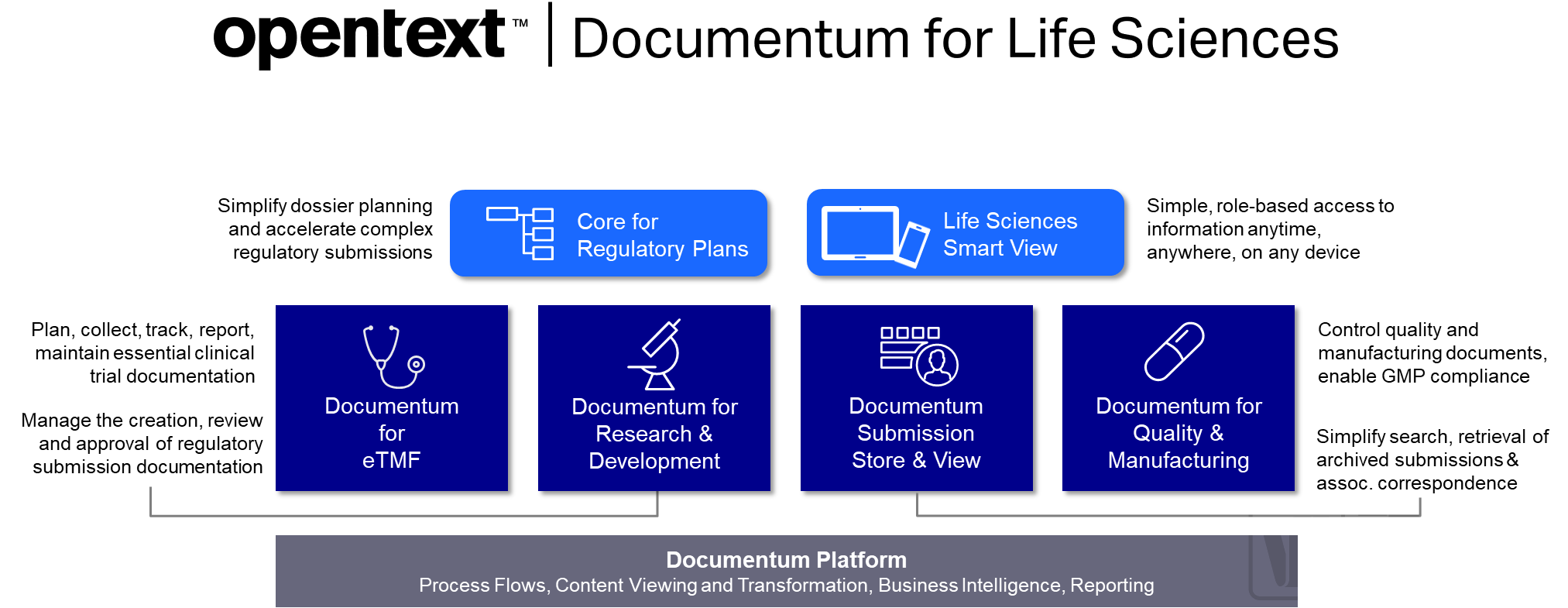
The three solutions derived from OpenText™ Documentum™ for Life Sciences can be deployed individually based on specific scenarios or implemented as an integrated, modular suite. Leveraging the interconnectivity and holistic nature of these products, OpenText can also deliver comprehensive, targeted, and configurable deployments for large corporate groups, spanning from the group level to subsidiaries, and further down to individual departments and branch factories.
4Are There Correlations Among OpenText's Various Products?
OpenText™ Documentum™ for Life Sciences features several modules built on a unified Documentum foundation, with specialized extensions tailored for clinical operations, regulatory compliance, and production quality. Although each solution is designed to address specific business processes and related challenges, Documentum provides consistent access, compliance, and security models through a unified solution layer, enabling interoperability and seamless information sharing across modules. This is critical for ensuring proper version control, maintaining comprehensive audit trails, and facilitating regulatory submissions. Deploying the full suite of modules in an integrated manner further empowers departments to systematically manage enterprise-wide quality and compliance documentation, thereby enhancing file management for manufacturing, clinical trials, and regulatory submissions.
5Could you specifically share the unique advantages that OpenText provides to enterprises in this industry?
A case in point is a well-known biotech company in China, which has multiple drug pipelines in preclinical and clinical stages. As a startup in the pharmaceutical industry, the company is submitting new drug registrations to government drug regulatory agencies in multiple countries. Previously, this pharmaceutical company used relatively traditional methods for the compilation, review, approval, and distribution of registration documents. They utilized SharePoint’s system for collaborative document editing and relied on email for document task assignment and coordination. The registration department spent a significant amount of time on document collection, tracking, format modification, manual signing, and submission and release.
Subsequently, the company standardized the management of its regulatory documents through the OpenText Documentum RIM submission platform, enabling time-saving and efficient version control and full lifecycle management. By integrating with Lorenz eCTD, it established a closed-loop system for regulatory document submissions.
Another representative case is a Chinese pharmaceutical group company with a fully integrated industry chain. As a leading enterprise in China’s pharmaceutical sector, it operates more than 30 manufacturing facilities and over 50 production bases. After decades of development, its previous reliance on paper-based documentation and manual management has introduced significant compliance risks, and its current management practices no longer meet the strategic requirements for the group’s digital transformation.
As one of the core systems within the GMP framework, the Production Quality Document Management System has been promoted by the company at the group level to encourage participation from its subsidiary pharmaceutical enterprises. Through the unified deployment of our Documentum Production Quality Document Management System, the Group can conveniently access relevant documents of target subsidiaries in compliance with permission protocols and, when necessary, participate in related quality control activities. This approach strengthens the previously loose relationship between the Group and its subsidiaries, thereby enabling the Group to fulfill its responsibilities as a Marketing Authorization Holder (MAH) with confidence.
6What positive shifts in management mindset do you believe digital solutions can drive within enterprises?
Guide enterprises to establish a proactive quality management mindset and achieve digital document management across the entire life sciences sector.
In the process of expanding in the Chinese market, OpenText has increasingly clarified that its services for domestic life sciences companies go beyond helping enterprises move away from inefficient paper-based operations; rather, they guide companies in establishing digital, compliant, and unified document management platforms while enhancing overall corporate quality management awareness.
OpenText aims to leverage this solution to exert a reverse influence on corporate management systems, thereby achieving an overall improvement in management efficiency. By influencing the ideological management of enterprises—from individuals to organizations—on both technical and business levels, it seeks to stimulate positive progress in internal systems and culture.
7What are OpenText’s development plans for the current Chinese market?
Following the implementation of policies such as the Marketing Authorization Holder (MAH) system, Chapter 18A of the Hong Kong Listing Rules, and centralized volume-based procurement, China’s life sciences industry has entered a phase of rapid growth. OpenText holds a highly optimistic view of the Chinese life sciences market. After years of dedicated engagement in the local market, OpenText has amassed a substantial base of domestic enterprise users. Currently, localized implementations of OpenText™ Documentum™ for Quality and Manufacturing, Research and Development, and eTMF modules have become highly mature, particularly in the realm of production quality.
In the near term, OpenText will intensify its expansion in the clinical and regulatory domains to serve a broader and more diverse user base. Over the next three years, OpenText will advance its “three-pronged” strategy across the entire Life Sciences industry, thereby enhancing its service capabilities and standards.
8What Are OpenText’s Advantages in the Chinese Market?
Currently, the primary competitors in the domestic market include foreign cloud-based vendors and other players that have evolved from cloud storage services. OpenText’s on-premises plus hybrid cloud deployment model is better suited for large enterprises or organizations with multinational and cross-regional teams. From the perspectives of data compliance and security, OpenText demonstrates greater respect for China’s regulations on cross-border data transfer and data security by ensuring full data ownership remains with the user. This is particularly beneficial for enterprises subject to requirements concerning human genetic resources. On-premises deployment enables these companies to more confidently undergo data audits by the National Medical Products Administration (NMPA) and the Human Genetic Resources Management Office, thereby avoiding unnecessary complications and allowing them to focus more intensively on advancing new drug R&D.
Secondly, OpenText’s out-of-the-box modular configuration capabilities enable rapid deployment and implementation as a Category 4 software solution, without requiring any custom development. This approach shortens the deployment cycle and reduces the complexity of Computer System Validation (CSV), while seamlessly integrating with existing enterprise systems and user workflows, thereby facilitating quick adoption by both IT and business departments.
Finally, OpenText’s products, honed over more than three decades, are mature solutions that have withstood scrutiny by major drug regulatory authorities and institutions both in China and abroad. They safeguard the data rights and interests of domestic customers. Our global R&D team continuously iterates and upgrades our products in response to evolving Life Sciences regulations and requirements across different countries, ensuring strict adherence to regional compliance standards. This helps enterprises mitigate compliance risks and provides digital, compliant product support for Chinese pharmaceutical companies in their global expansion efforts, including international market entry and license-out transactions.
About OpenText
OpenText, a global leader in enterprise information management software and solutions, our mission is to strengthen information management, safeguard information security, and enhance the ability of every individual and organization to gain an information advantage. OpenText offers a comprehensive portfolio of solutions spanning content services, business networks, digital experiences, security, and developer APIs.
In 2017, OpenText began applying the Documentum system to the life sciences sector, launching the standalone OpenText™ Documentum™ for Life Sciences comprehensive solution—enabling unified internal processes and seamless information sharing across the extended life sciences enterprise.
Drawing on cases accumulated from biotechnology and healthcare service clients, as well as OpenText™ Documentum™’s years of application experience with the FDA, OpenText has launched three solutions for the life sciences sector addressing quality document management, regulatory submission documents, and clinical document management: OpenText™ Documentum™ for Quality and Manufacturing, OpenText™ Documentum™ for Research and Development, and OpenText™ Documentum™ for eTMF.
Prior to introducing the OpenText™ Documentum™ for Life Sciences end-to-end solution to China, this digital information solution underwent iterative product refinement and market validation, drawing on the development trajectory of the Western pharmaceutical industry, and was rigorously tested by major drug regulatory authorities and relevant institutions both domestically and internationally.
After entering the Chinese market, this solution was optimized to address cross-border data transfer, data security, and data rights—areas that Chinese enterprises prioritize and require more urgently.
OpenText enables users to fully manage their own data on-premises, rather than migrating it to the cloud. This approach not only safeguards corporate data security but also addresses regulatory compliance issues prevalent in the life sciences sector, such as human genetic resource filing and cross-border transfer of genetic data. With this solution, enterprises can achieve localized deployment and enjoy an extremely short, out-of-the-box implementation cycle, allowing them to handle data management with ease and devote more time and resources to technological R&D.
Since its application in FDA audits in 1996, OpenText™ Documentum™ has maintained close attention to changes in life sciences regulations and requirements worldwide, with product updates and iterations driven by its global R&D team. Currently, it provides digital and compliant product support for Chinese enterprises in areas such as global product expansion and License-out transactions.