

GYENNO SCIENCE's 'RuiPing' Receives China's First Medical Device Registration Certificate for Quantitative Parkinson’s Disease Assessment System
The Current Status of Parkinson’s Disease Diagnosis and Treatment in China Has Changed with the Development of Innovative Technologies.
China currently has approximately 4 million patients with Parkinson’s disease, with a prevalence rate of up to 1.7% among the population aged 65 and above. Experts from the World Health Organization predict that the number of Parkinson’s disease patients in China will reach 8 million by 2030. As a major neurodegenerative disorder characterized by progressive worsening of symptoms, early diagnosis and treatment are crucial.
However, this is only Side A of the current situation for Parkinson’s disease patients; on the other side lie the challenges facing early diagnosis of Parkinson’s disease.
To understand the underlying reasons, we must first consider the patient perspective. Parkinson’s disease typically has an insidious onset, making it difficult for patients and their families to detect early on. Its progression is relatively slow, and clinical manifestations vary significantly among individuals. Consequently, clinical diagnosis is often confused with other movement disorders. From the healthcare provider’s perspective, in addition to the scarcity of specialized physicians, traditional diagnostic tools based on rating scales face numerous challenges regarding consistency, accuracy, and diagnostic efficiency.
If every industry deserves to be reshaped by digital technology, then the diagnosis of Parkinson’s disease is at the forefront.
On October 12, RuiPing, a wearable motion and gait quantitative assessment system independently developed by GYENNO Technologies for the quantitative analysis of motor function in movement disorders such as Parkinson’s disease within the central nervous system field, officially received the Chinese Medical Device Registration Certificate.
This is the first quantitative assessment device for Parkinson’s disease to obtain a medical device registration certificate in China, and also the first Parkinson’s disease quantitative assessment medical device in China to hold registrations from China’s NMPA, the U.S. FDA, and Europe’s CE Medical certification. The market approval of “RuiPing” is poised to usher in a new era of precision diagnosis for Parkinson’s disease, benefiting a larger number of patients with the condition.
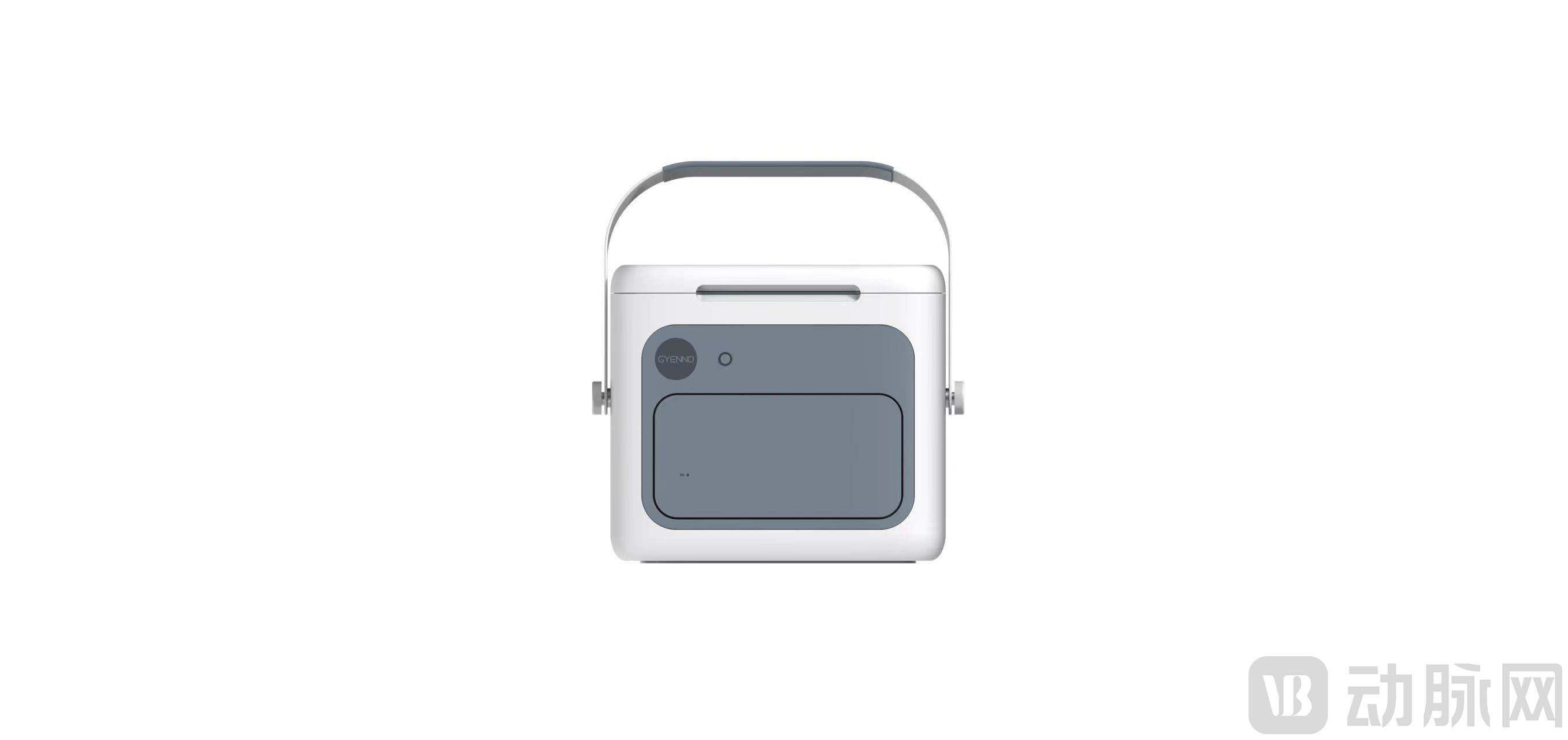
GYENNO Technologies’ Self-Developed Wearable Motion and Gait Quantitative Assessment System—RuiPing
Parkinson's disease is a common neurodegenerative disorder, clinically characterized by motor symptoms such as tremor, rigidity, bradykinesia, and postural instability, as well as non-motor symptoms including sleep disturbances, olfactory dysfunction, autonomic dysfunction, and cognitive and psychiatric impairments.
Epidemiological surveys indicate that the prevalence of Parkinson’s disease among individuals aged 60 and older in European and American countries reaches 1%, exceeding 4% in those aged 80 and older. In China, the prevalence among the population aged 65 and older is 1.7%, higher than that in European and American countries. Due to its large population base, China currently accounts for nearly half of the global total number of Parkinson’s disease patients.
As Parkinson’s disease progresses, both motor and non-motor symptoms gradually worsen, impairing patients’ activities of daily living on one hand, and imposing a substantial burden on families, society, and the healthcare system on the other.
Specifically, patients with Parkinson’s disease begin to exhibit axial symptoms from the mid-stage of the disease, including impairments in balance, posture, and gait. These primarily encompass balance disorders under both static and dynamic conditions, postural abnormalities, and various gait disturbances (such as festinating gait, freezing of gait, and propulsive gait).
Furthermore, the superimposition of bradykinesia and abnormal muscle tone further exacerbates the external manifestation of axial symptoms, significantly increasing the risk of falls in patients’ daily lives. This is one of the key factors that aggravate the disease burden and severely threaten patients’ quality of life.
In traditional clinical practice, clinicians primarily rely on patients performing a series of specific motor paradigms to subjectively assess disease severity or treatment efficacy. This semi-quantitative assessment method, which combines visual observation with clinical experience, is highly subjective, posing significant challenges to both diagnostic accuracy and consistency.
Meanwhile, the limitations of naked-eye physical assessment result in insufficient sensitivity to certain critical subtle changes. Furthermore, the substantial time commitment required from clinical experts for evaluation further strains already scarce professional medical resources. Such issues concerning consistency, accuracy, sensitivity, and efficiency make it difficult for physicians to conduct refined and objective assessments of patients’ motor and gait disorders, thereby hindering the formulation of precise, personalized treatment plans.
RuiPing, a wearable motion and gait quantitative assessment system independently developed by GYENNO Technologies Co., Ltd., provides a novel technical solution to the challenge of quantitative assessment in the aforementioned movement disorders.
RuiPing is a quantitative assessment system for Parkinson’s disease based on wearable motion-sensing technology. It utilizes ten high-precision sensors to capture real-time spatial movement and behavioral data, establishes kinematic and dynamic models, and performs spatial posture analysis and feature extraction, thereby generating comprehensive and detailed quantitative parameters for movement and gait assessment.
Meanwhile, Ruiping features a specialized gait impairment algorithm model developed in-depth for Parkinson’s disease, capable of automatically detecting the occurrence of typical gait impairments in real time and generating multidimensional quantitative assessment metrics.
Leveraging GYENNO Science’s wearable motion-sensing technology and its algorithmic models, developed through years of research, subjects need only wear a few high-precision sensors and perform specific movement paradigms to obtain accurate quantitative assessment parameters. The user experience, specially designed for clinical settings, ensures that the entire process is simple and convenient.
Compared with other gait assessment devices currently on the market, such as infrared sensors, pressure mats, digital treadmills, and single-vision (camera) systems, Ruiping not only possessesMore Comprehensive Quantitative MetricsandMore Professional Algorithm Models for Movement DisordersIn addition, it is neither constrained by venue size or lighting conditions, nor does it suffer from data loss or reduced accuracy due to subjects moving out of the capture range or exceeding a certain distance. InParameter Accuracy, Clinical Usability, Functional Stability, and System RobustnessDemonstrates significant advantages.
In December 2020, the Chinese Guidelines for the Treatment of Parkinson’s Disease (Fourth Edition), jointly released by the Parkinson’s Disease and Movement Disorders Group of the Neurology Branch of the Chinese Medical Association and the Parkinson’s Disease and Movement Disorders Group of the Neurologist Branch of the Chinese Medical Doctor Association, included for the first time content related to the application of artificial intelligence and mobile technologies in the management of Parkinson’s disease. In the chapter on “Artificial Intelligence and Mobile Technologies,” it is stated that wearable gait analysis devices “can provide objective assessment and monitoring of symptoms,facilitates accurate assessment of the patient's condition and the formulation of individualized treatment plans.”
To date, Ruiping, as a domestic innovative medical technology enterpriseFully Independent Intellectual Property Rightsinnovative products, has participated in multiple national key R&D programs, National Natural Science Foundation projects, and provincial/municipal research initiatives, with related research areas including assessment of motor symptoms, evaluation of rehabilitation outcomes, assessment of innovative therapies, and cognitive function assessment, etc.and is widely recognized by dozens of the nation’s top one-stop Parkinson’s disease centers and specialized centers, providing regular, comprehensive, and high-dimensional quantitative assessments of gait and motor function for patients with Parkinson's disease, enabling objective quantification of disease progression, severity, and medication efficacy, thereby offering critical reference for personalized clinical decision-making.
About GYENNO Science
GYENNO SCIENCE is a globally leading innovative medical technology company in the field of central nervous system (CNS) diseases. Its vision is to build a comprehensive technology platform for patients, clinical practice, and industry in the CNS field, delivering clear clinical and research value.
Since 2013, leveraging emerging technologies such as artificial intelligence, wearables, machine vision, and smartphone-based interaction, GYENNO Science has collaborated with global universities and experts to conduct in-depth interdisciplinary research and translational applications focused on central nervous system disorders. This partnership has established an innovative technological framework encompassing diagnosis, assessment, treatment, rehabilitation, decision support, and personalized management, along with derivative innovative solutions comprising novel medical devices, clinical data platforms, and chronic disease management platforms.
To date, the company’s technology ecosystem and solutions have empowered over 90% of China’s leading Parkinson’s disease centers, while assisting 40% of global originator pharmaceutical companies in exploring real-world evidence and achieving new business-driven growth.
GYENNO has led or participated in five National Key R&D Programs, one National Natural Science Foundation project, and six provincial- or ministerial-level R&D programs. It has published nearly 20 SCI-indexed papers, with more than 20 additional manuscripts under review, and holds or has applied for over 40 patents. A series of artificial intelligence, wearable, and mobile health technologies or products developed, researched, or applied by GYENNO have been incorporated into the recently released “Chinese Guidelines for the Treatment of Parkinson’s Disease (Fourth Edition).”
The Company has jointly established the “Huazhong University of Science and Technology–GYENNO Science Intelligent Digital Medical Technology Center for Neurological Disorders” with Huazhong University of Science and Technology, and has entered into a collaborative partnership for the joint training of professional degree graduate students. Meanwhile, Professor Bas Bloem, a world-renowned expert in Parkinson’s disease (Member of Academia Europaea, Fellow of the Royal College of Physicians of Edinburgh, and Member of the Royal Netherlands Academy of Arts and Sciences), serves as the Company’s Global Academic Advisor, jointly advancing global innovative technology development and multicenter research.