

International Diagnostic Criteria for Optic Neuritis Published in Lancet Neurology
The “Classification and Diagnostic Criteria for Optic Neuritis” were published online on September 27, 2022, in Lancet Neurology, a premier international journal of neurology. This represents the first international clinical classification and diagnostic criteria for optic neuritis. The establishment of these criteria will provide ophthalmologists and neurologists worldwide with standardized guidelines for the classification, diagnosis, and treatment of optic neuritis. Led by Professor Axel Petzold of University College London (UCL), the development of these criteria involved Professor Liu Ya’ou from the Department of Radiology at Beijing Tiantan Hospital, Capital Medical University, who participated throughout the process as the Chinese representative.
Optic neuritis, as the name suggests, is inflammation of the optic nerve and is a common cause of vision loss in clinical practice. Optic neuritis can occur at any age, with an average age of onset between 30 and 35 years and an annual incidence of approximately 5 per 100,000 population. Many factors can cause optic neuritis, including central nervous system immune disorders such as multiple sclerosis, neuromyelitis optica spectrum disorders, and myelin oligodendrocyte glycoprotein antibody-associated disease. Previously, there was no international consensus on the classification and diagnostic criteria for optic neuritis, which made early diagnosis of diseases presenting with optic neuritis as the initial symptom challenging and left treatment lacking an evidence base.
The clinical manifestations of optic neuritis are heterogeneous and may vary by sex, age, geographic region, and ethnicity, encompassing symptoms such as ocular pain, vision loss, and dyschromatopsia. To ensure that diagnostic criteria comprehensively capture the clinical spectrum of optic neuritis, more than 100 experts from over 60 countries documented, evaluated, and synthesized real-world symptom data from patients worldwide, thereby delineating the clinical features of optic neuritis (Figure 1A). When integrated with brain, orbital, and retinal imaging findings, as well as antibody and other biomarker data, these clinical features facilitate the diagnosis and classification of optic neuritis.
These diagnostic criteria synthesize and classify the numerous clinical syndromes that can present as optic neuritis, establishing a hierarchical classification system for optic neuritis (Figure 1B). The primary classification divides optic neuritis into two major categories: autoimmune (typically relapsing) and infectious or systemic (typically monophasic), which can guide decisions regarding immunosuppressive therapy. Secondary classification provides further diagnostic stratification based on antibody types, infectious agents, and medical history. Tertiary classification consists of individualized expert recommendations, which are expected to be incorporated into the secondary classification in future revisions.
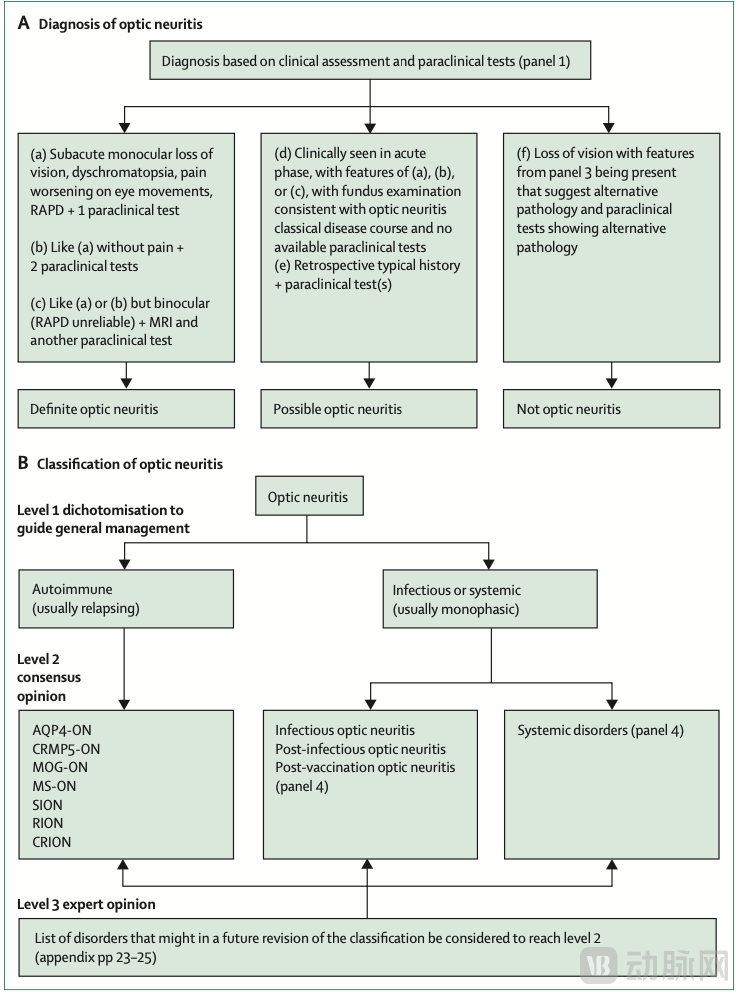
Figure 1. Diagnosis (A) and Classification (B) of Optic Neuritis
(AQP4: aquaporin-4; CRION: chronic relapsing inflammatory optic neuropathy; CRMP5: collapsin response mediator protein 5; MOG: myelin oligodendrocyte glycoprotein; MS: multiple sclerosis; ON: optic neuritis; RAPD: relative afferent pupillary defect; RION: recurrent isolated optic neuritis; SION: single isolated optic neuritis)
The application of these diagnostic criteria can reduce the misdiagnosis rate of optic neuritis, guide the selection of treatment regimens, facilitate the identification of additional immunological etiologies of optic neuritis, and ensure consistency in the global classification of optic neuritis subtypes. These diagnostic criteria will also serve as the standard for the design of future clinical trials in optic neuritis, providing guidance and a basis for drug development.
As the only Chinese scholar on the Expert Committee for the Development of Diagnostic Criteria, Professor Liu Yaou from the Department of Radiology at Beijing Tiantan Hospital contributed Chinese expertise to the formulation of these criteria. Leading his team, he has long been dedicated to imaging research on immune-mediated diseases of the central nervous system, consistently publishing a series of high-impact papers in fields such as neuromyelitis optica spectrum disorders (NMOSD) and multiple sclerosis (MS). Together with Professor Shi Fudong and Professor Zhang Xinghu from the Department of Neurology at Beijing Tiantan Hospital, he co-established the internationally renowned neuroimmunological disease imaging cohort (the CLUE cohort). The contributions of Professor Liu Yaou’s team in researching neuroimmunological diseases, including optic neuritis-related disorders, have amplified China’s voice in this field and provided significant Chinese input into the development of diagnostic standards. Looking ahead, through the relentless efforts and breakthroughs of domestic experts and scholars, it is believed that Chinese researchers will play an even greater role, potentially taking a leading position, in the formulation of international diagnostic criteria and clinical practice guidelines.