

New Directions in Medical Research Commercialization: Addressing Three Core Challenges Through 51 Policies
The revised Law of the People’s Republic of China on Progress in Science and Technology ushers in the first chapter of achievement transformation in 2022.
As a law with the nature of a basic statute in China’s science and technology sector, the Law on Progress of Science and Technology has played a significant role in promoting substantial advances in scientific and technological endeavors and in driving science and technology to serve economic and social development. Reportedly, the law was officially promulgated and implemented in 1993, underwent its first revision in 2007, and this current amendment marks its second revision. The newly revised Law on Progress of Science and Technology will come into force on January 1, 2022.
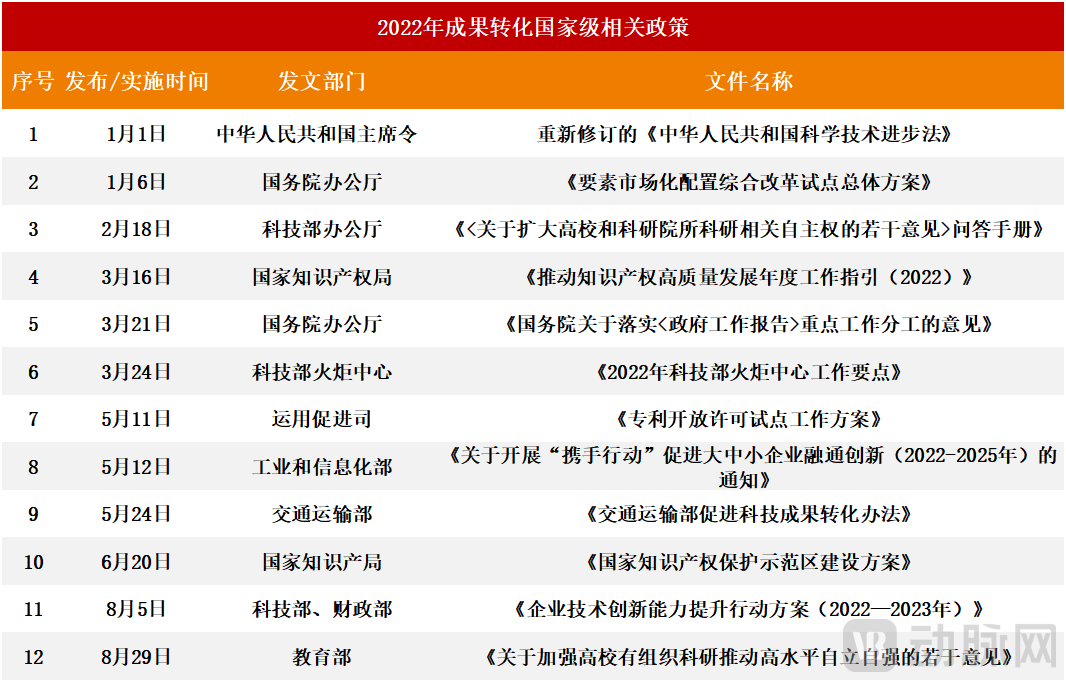
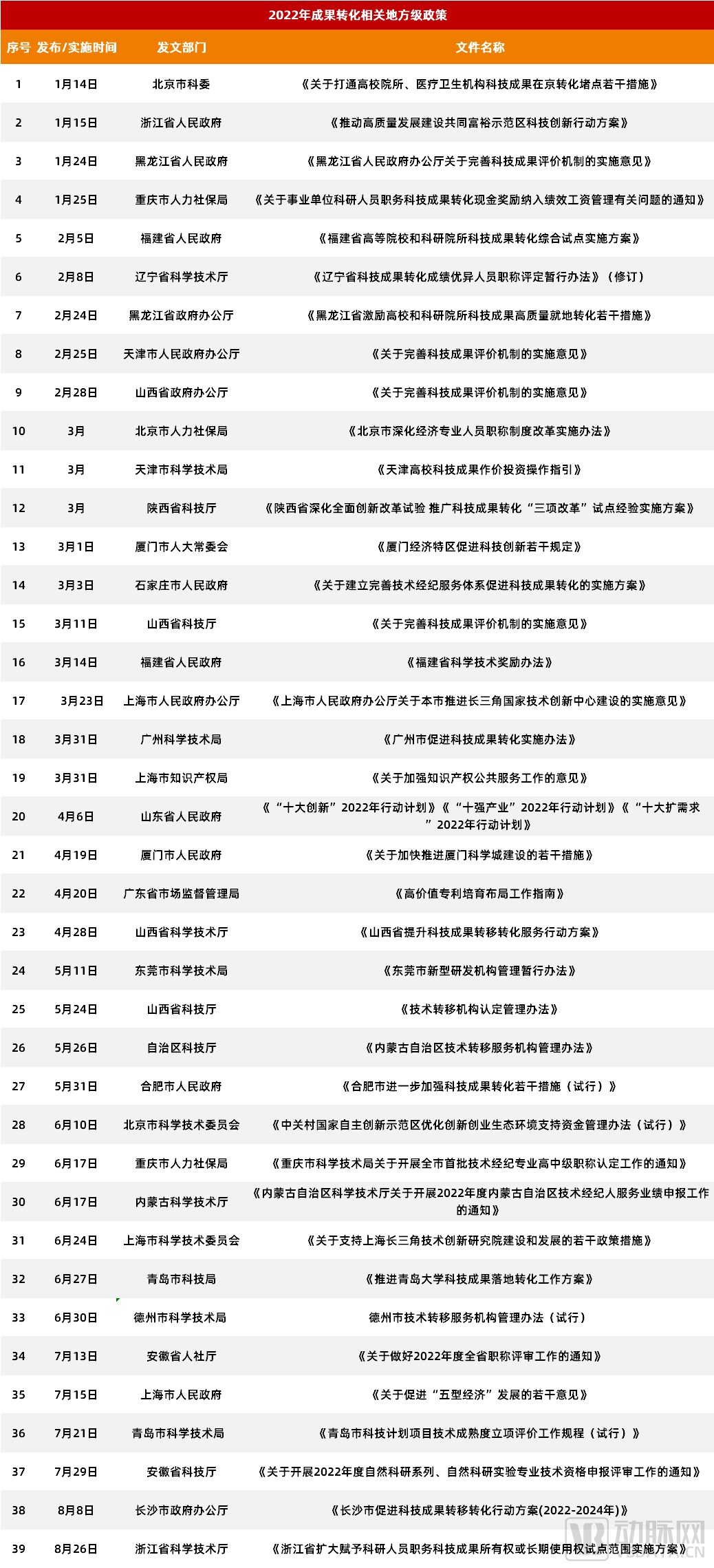
In fact, the government has introduced a series of new policies on the commercialization of scientific research achievements based on this law. According to incomplete statistics from VCBeat’s Chengguo Bureau, as of the third quarter of 2022, China had collectivelyA total of 51 policies have been issued, including 12 national policies and 39 local policies.Its core content still focuses on “Talent, Technology, and Capital"Three Core Elements.
“Funding + Professional Title Evaluation + Empowerment”: Making Targeted Efforts to Support Research Talent
Talent shortages have long been a critical bottleneck constraining China’s innovation drive, with their scarcity being particularly pronounced in high-end, cutting-edge technological fields such as healthcare.
Therefore, among the numerous policies related to scientific research and innovation, cultivating talent for technological innovation has been prioritized as a top priority. Among the 51 policies issued in 2022, 12 of them listed "talent incentives" as key content, inRevenue Distribution, Position Evaluation, and Empowerment of Scientific Research Achievementsfocus efforts on three key levels.
Issued by the Heilongjiang Provincial Government"Several Measures of Heilongjiang Province to Incentivize High-Quality Local Transformation of Scientific and Technological Achievements from Universities and Research Institutes"(hereinafter referred to as the “Measures”) serves as an example, introducing new provisions on benefit distribution and professional title evaluation for researchers in the context of achievement transformation.
First, in terms of revenue distribution,Break the Principle of Equal Distribution and Prioritize the Interests of Scientific ResearchersThe Measures state that “for job-related scientific and technological achievements at provincial-level universities and research institutes, where the achievement creators implement the transformation themselves, no less than 70% of the net proceeds from the transformation shall be awarded to the achievement creators, and no less than 10% of the net proceeds shall be awarded to those who have contributed to the transformation of scientific and technological achievements.”
Secondly, in terms of professional title evaluation,Translation of Research Achievements into Practical Applications Is Included in the Evaluation CriteriaThe Measures state that “universities and research institutes shall, in accordance with relevant regulations, establish title evaluation, position management, and performance assessment systems tailored to the characteristics of scientific and technological achievement transformation, and improve income distribution and incentive mechanisms.”
Positive Incentives for Researchers. Among the policies introduced this year, in addition to “financial grants” and “professional title evaluation,” another major trend is “"Decentralization," which means granting researchers greater autonomy over their own patentsTaking the “Implementation Plan for the Comprehensive Pilot Program on the Transformation of Scientific and Technological Achievements in Higher Education Institutions and Research Institutes in Fujian Province” as an example, the policy explicitly states that “pilot entities may confer ownership of job-related scientific and technological achievements—formed using fiscal funds or commissioned by enterprises and other social organizations and owned by the entity—to the individuals who completed such achievements.”
“Training + Title Evaluation + Income Security”: Building a Team of Technology Managers
In addition to scientists, another major obstacle hindering the translation of scientific research achievements is the shortage of technology transfer professionals. In fact, compared with high-level scientific and technological talent, professional technology transfer managers are particularly crucial in China’s innovation and commercialization markets.
This is primarily due to two reasons: first, technology managers are involved throughout the entire process of transforming scientific and technological achievements, providing commercialization guidance and linking market resource networks for such transformation; second, there is a significant shortage of professionals in science and technology brokerage in China. Although regions such as Shanghai, Jiangsu, Chongqing, Guangzhou, and Shenzhen have issued regulations in recent years to strengthen the training of technology transfer managers, several major pain points remain in building the workforce of technology managers.
Specifically, first, most existing technology managers are "latecomers" to the field,Insufficient Professional Competence; second, the industry has high entry barriers, butThe promotion pathway, however, is extremely narrow.. Technology managers must not only understand technology but also the market; however, what is inequitable is that, as a new professional group, technology managers have lacked appropriate channels for professional title advancement for a long time; thirdly, technology managersHighly Acclaimed but Poor Commercial Performance, with Relatively Low Revenue, technology transfer professionals often have to manage multiple scientific research achievements simultaneously just to make ends meet.
To address these three major pain points, the government is also focusing on technology transfer professionals’Talent Development, Professional Title Evaluation, and Income SecurityFocus efforts on three key areas.
In terms of training, the primary focus is on strengthening the professional competencies of technology transfer specialists, in“Top Ten Innovations” 2022 Action Plan, “Top Ten Strong Industries” 2022 Action Plan, “Top Ten Demand Expansion Initiatives” 2022 Action PlanAmong these three policies, it is explicitly stipulated to “strengthen the construction of national and provincial training bases for technology transfer professionals, and guide the provision of training for more than 1,000 person-times of technology brokers (managers) within the year.”
In the professional title evaluation system, Anhui Province has introduced a new category for technical brokers for the first time, enabling professional and technical personnel engaged in the efficient allocation of resource elements—such as the transfer, incubation, evaluation, operation, consulting, service, and research of scientific and technological achievements—to undergo professional title assessment.
In terms of revenue,"Notice of the Department of Science and Technology of Inner Mongolia Autonomous Region on Launching the Declaration of Service Performance for Technical Brokers in Inner Mongolia Autonomous Region for 2022"It explicitly stated that the application process for the 2022 annual service performance of technology brokers would be launched, with cash rewards provided to technology brokers. Furthermore, the Autonomous Region stipulated that if a technology broker/manager facilitates cumulative technology transfer and commercialization transactions exceeding RMB 1 million within a year, they shall receive a reward equivalent to 2% of the actual transaction amount under the technology trade contract, capped at RMB 200,000.
To build a robust team of technology transfer professionals, the primary step is to ensure their professional competencies meet standards, enabling them to play a substantive role in the commercialization of technological achievements. Secondly, it is essential to attract more talent into this field by offering clear pathways for professional title evaluation and guaranteed income.
Market Demand-Oriented Assessment of High-Value Patents
According to the "2021 China Patent Survey Report," the industrialization rate of invention patents from Chinese universities was only 3% in 2021, a relatively low figure.
The core reason behind this situation is that most patent applications are not oriented toward the industrialization of inventions and innovations. An expert from a certain university responsible for technology transfer told VCBeat that currentlyUniversity professors mostly apply for patents due to reasons such as performance evaluations, title reviews, project completion, and patent subsidies., and some university professors have even gone so far as to split a single patent into more than ten separate patents in order to secure greater subsidies. In other words, the purpose of filing patents has been misguided from the outset.
These "off-track" patents fundamentally lack the necessary conditions for industrialization, making them inherently difficult to commercialize. Even if significant obstacles are overcome and they enter the commercialization process, they will still face numerous risks. Therefore, it is particularly important to evaluate the commercialization potential of patented technologies by conducting comprehensive reviews and searches of patent projects in accordance with market demands.
In response, the Qingdao Municipal Government has successively issued“Technical Readiness Level Evaluation Procedures for the Establishment of Qingdao Science and Technology Plan Projects (Trial)” and “Work Plan for Promoting the Implementation and Transformation of Scientific and Technological Achievements at Qingdao University”, and actively identify high-value technological achievements for commercialization.
First, exercise greater caution in project initiation, “Use the evaluation results of technological readiness levels directly as a key basis for project approval in scientific and technological initiatives..” In terms of technological maturity, a higher level indicates a faster R&D process, with greater assurance in both the quality and quantity of the product. Compared to early-stage projects, it carries lower commercialization risk.
Secondly, market-oriented approaches are adopted to screen scientific research achievements. For example, Qingdao University willEstablish a Database of High-Value Scientific and Technological Achievements, conduct a comprehensive evaluation of valid existing patents and granted patents, regularly release and update packages of scientific and technological achievements by field; in addition, the Municipal Science and Technology Bureau will also commissionProfessional institutions conduct high-value assessments of results included in the achievement repository., select scientific and technological achievements that are truly convertible and capable of industrialization.
It is reported that in 2022, Qingdao University successfully transferred 14 scientific and technological achievements. Among them, the patent titled “Preparation Method of a Calcium-Containing Soluble Hemostatic Material” was evaluated across multiple dimensions, including clinical demand, product innovation, and industrialization potential. This product, which offers rapid hemostasis, can reduce alcohol consumption by 40–50% compared to existing patents. Furthermore, its use of low-concentration alcohol enhances production safety and makes it suitable for large-scale manufacturing.
Although this achievement does not involve high technical barriers, it excels by effectively addressing clinical problems and better aligning with market demands. Therefore, in the arena of translating scientific research into commercial applications, it is not only highly specialized, novel, and advanced technologies that command broad markets; small yet elegant projects that meet clinical needs can also secure a foothold.
Funding: From Fiscal Investment to the Establishment of a Fund-of-Funds
The translation of scientific and technological achievements cannot be achieved without financial support.
In fact, many research teams at universities and institutes hold high-quality early-stage original innovation projects and hope to bring them to the application market, but they often lack the favor of "bold capital."
The underlying reasons are twofold. First, early-stage innovation projects from universities and research institutes carry high risks during commercialization, leading most capital to avoid them. Additionally, some investors lack the capability to understand and identify significant early-stage original innovations. Second, scientists struggle to access capital; furthermore, they often lack the experience and bargaining power necessary for negotiations.
So, how can the commercialization of domestic scientific research outcomes in China be freed from financial constraints? Taking the Changsha Municipal Government as an example, efforts are being made in three key areas:
The first aspect is in terms of financial investment,The Government Provides Full-Chain Funding for the Transfer of Scientific and Technological Achievements, the "Action Plan for Promoting the Transfer and Transformation of Scientific and Technological Achievements in Changsha (2022-2024)" (hereinafter referred to as the "Action Plan") states that "innovation entities carrying out technical services shall be eligible for a maximum subsidy of RMB 1 million."
The second aspect concerns taxation, where the government has opened preferential channels for enterprises that locally commercialize scientific and technological achievements. The Action Plan states, “For innovation entities such as universities, research institutes in Changsha, and enterprises engaging in technology transfer, technology development, or technology licensing, upon certification and registration of the technology contract, those meeting relevant national tax policies may”Enjoy Tax Incentives。”
The third aspect is to vigorously promote lending.Risk Compensation for Knowledge-Value-Based Credit LoansAt the same time, investors are encouraged to pay attention to innovative enterprises. In this regard, the Action Plan points out two aspects: first, “comprehensively utilize measures such as the high-tech enterprise credit risk compensation fund pool and knowledge-value financing loans to support banks in providing preferential unsecured loans to enterprises. Further promote technology insurance to safeguard the transfer and commercialization of achievements by small and medium-sized technology-based enterprises.”
In addition to the above three aspects,Launch the Science and Technology Innovation Fund of FundsIt has also, to some extent, alleviated the financial challenges associated with the commercialization of scientific research outcomes.
As a fund guided by the government and operated on a market-oriented basis, the Science and Technology Innovation Fund of Funds (FoF) typically invests in sub-funds and key high-tech enterprises through methods such as establishing new funds or increasing capital. It focuses on projects with a high degree of technological innovation, convertible scientific and technological achievements, and clear prospects for industrialization.
In June this year, Beijing establishedLaunch a RMB 30 billion sci-tech innovation fund of funds, with 80% allocated to early-stage startups in the phases of original innovation and achievement commercialization., with some capital committed for periods of up to 15 years. In addition, the fund has strengthened its collaboration with universities and research institutes, jointly establishing initiatives such as the Peking University Technology Transfer Fund and the Beijing Hetang Life Sciences Original Innovation Fund to support the incubation and commercialization of high-tech achievements. It is reported that in September this year, the Peking University Technology Transfer Fund assisted Zhongbo Xin, a third-generation semiconductor company specializing in GaN-based technologies, in completing its first round of financing.
In addressing the funding challenges associated with the commercialization of scientific and technological achievements, government departments continue to rely on fiscal appropriations as the foundation, supplemented by preferential tax policies for innovative enterprises, thereby encouraging angel investors and venture capital firms to focus on early-stage projects. Furthermore, dedicated science and technology innovation fund-of-funds, with a specific emphasis on original innovation, have been established to invest in the commercialization of scientific and technological achievements, aiming to identify more high-potential early-stage projects.
Talent incentives and development, outcome evaluation, and financial support are inevitably thorny issues in the current field of achievement transformation, leading to a significant tilt in policy focus toward these areas. Beyond these, policies are also making efforts in other nuanced aspects, such as intellectual property protection, the decentralization of the “three rights” (right to use, right to dispose, and right to benefit) for universities and research institutions, and technology transactions. These more refined policies are addressing the current shortcomings in the transformation of scientific and technological achievements from various angles.