

Firefly Biotech Develops Ground-Based Simulated Microgravity Platforms for Space Medicine Research

Firefly Biotech
Developer of Microgravity Simulation Devices
The space environment is fundamentally different from that on Earth; terrestrial experience cannot be directly applied to space, as doing so would lead to unimaginable consequences. To advance into space, humanity must first conduct in-depth research into the various counterintuitive phenomena observed in microgravity environments, mastering their underlying principles to achieve breakthroughs in life sciences, materials science, and other fields.
The development of microgravity science not only facilitates the resolution of challenges in deep-space missions but also provides new domains and avenues for scientific research. The microgravity environment largely eliminates sedimentation, buoyancy-driven convection, and hydrostatic pressure gradients, playing a pivotal role in advancing fluid technology, materials science, and biotechnology.
There are four primary types of microgravity environments: drop towers, aircraft, rockets, and spacecraft. Among these,Spacecraft (space stations) operating in low Earth orbit provide the most ideal experimental environment.As early as 1973, NASA began exploring microgravity experiments. By the late 1990s, with the construction of the International Space Station (ISS), major participating countries and agencies, including NASA, the European Space Agency (ESA), and Japan’s National Space Development Agency (NASDA), had each formulated strategic plans for orbital research.
China’s microgravity experimental research commenced following the success of its manned spaceflight missions in 2003,With the launches of China’s Shenzhou-12 and Shenzhou-13 spacecraft beginning in 2021, and the official completion of China’s Tiangong Space Station in 2022, microgravity experimental research in low Earth orbit has entered a new era of rapid development.
The potential value of microgravity for biomedical and pharmaceutical research has prompted several organizations, including Amgen, Merck, and the J. Craig Venter Institute (JCVI), to conduct exploratory studies on space stations. These studies primarily aim to address biomedicalDrug Development and Regenerative Medicineproblems encountered in, covering disease areas including cancer, infectious diseases, cardiovascular diseases, and osteoporosis.
However, conducting microgravity experimental research aboard the space station requires specialized equipment and expertise. Most space medicine companies entrust their experiments to third-party experimental platforms and the space station for completion, with the third-party platforms providing experimental conditions and partial equipment before handing them over to the space station for execution. ButSpace station resources are relatively limited, and the duration of other microgravity environments falls far short of experimental requirements.
To meet the needs of most scientific research, which require both microgravity effects and sufficiently long experimental durations, simulating a microgravity environment on Earth has become a goal for countless scientists.Firefly Biotech is one such startup dedicated to providing experiments conducted in simulated microgravity environments on Earth.
Solving the Hardware and Condition Challenges of Microgravity Experiments
Firefly Biotech is an early-stage startup founded in 2020. It was selected for a program resulting from the collaboration between the University of South Australia’s Innovation and Cooperation Centre (ICC) and Venture Catalyst Space, the space-focused risk incubator of the Space Innovation Fund. This marks Australia’s first space-related initiative. Firefly Biotech has established an automated microgravity laboratory designed for biological research and provides corresponding experimental tools.
South Australia is the hub of Australia’s space industry. In 2020, the headquarters of the Australian Space Agency was established in South Australia, marking the first phase of Adelaide’s transformation into the “Houston of Australia.” The establishment of the agency’s headquarters has opened the door for Australia’s aerospace sector to tap into the US$34.5 billion global space industry.By 2030, Australia’s space economy will triple in size, reaching $12 billion.
Backed by the headquarters of the space agency, the South Australian government has continuously rolled out various initiatives to advance the state’s space sector, with multiple universities and professors joining efforts to foster innovation and entrepreneurship in fields such as biomedicine. According to reports, more than 70 companies in South Australia employ 800 industry professionals working in the space industry, including the Italian aerospace company SITAEL.
Giles Kirby is the founder and Chief Scientific Officer of Firefly Biotech, holding a Ph.D. in Regenerative Medicine from the University of Nottingham. Currently, Dr. Kirby serves as a Research Fellow at the Future Industries Institute of the University of South Australia and as a Medical Editor for the MDPI journal *Journal of Clinical Medicine*. He has invented a dressing that promotes rapid wound healing and, in collaboration with others, developed a novel process for producing environmentally friendly, low-adhesion tissue culture surfaces.
 Giles Kirby, Founder and Chief Scientific Officer of Firefly Biotech
Kirby, who has long been dedicated to researching regenerative medicine such as cell therapy, discovered during the research process thatThe future of life sciences, such as regenerative medicine, requires progressive breakthroughs in microgravity environments; however, the scarcity of experimental hardware and prohibitively high barriers have become significant challenges for biologists pursuing further research.. To address this issue and promote advancements in life sciences fields such as regenerative medicine, Kirby founded Firefly Biotech.
Australia's First Biaxial Rotator
Creating a microgravity experimental environment for supply experiments on Earth is a challenging task. Gravity levels between 10⁻³ g and 1 g (i.e., 0.001 g to 1 g) are generally referred to as microgravity. To provide biologists with an ideal experimental environment, most laboratories need to be equipped with clinostats to generate microgravity effects, simulating microgravity environments of 10⁻² g or 10⁻³ g (i.e., 0.01 g or 0.001 g). However, most clinostats currently available on the market are single-axis clinostats, which can only achieve a gravity level of 10⁻² g (0.01 g).
Firefly Biotech has pioneered the launch of a dual-axis clinostat in Australia, capable of achieving a gravity environment of 10⁻³ (0.001 g). Compared to previous single-axis clinostats, it can simulate a microgravity environment more closely resembling that of space stations.
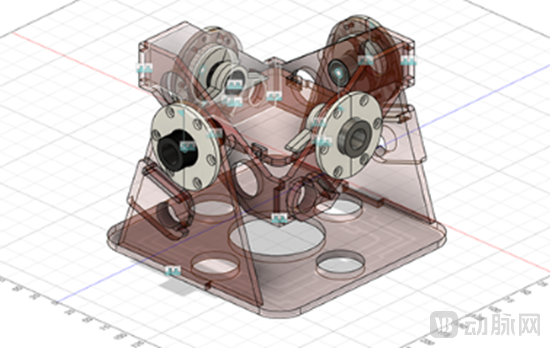 Dual-Axis Rotator Source: Firefly Biotech Official Website
Microgravity simulation devices can be applied in a wide range of biological research fields, including cell culture, cancer research, cell therapy, stem cell research, drug discovery, tissue engineering, astrobiology, protein structure analysis, and embryology.
In addition to developing the dual-axis rotating bioreactor, Firefly Biotech has also created an open-source microgravity algorithm to drive the device, integrating various experimental components to enable the detection of subtle changes in microorganisms. In the field of tissue engineering culture, Firefly combines materials chemistry with the PC2 workflow to develop customized microgravity tissue culture solutions, leveraging Industry 4.0 technologies to provide high-quality, cutting-edge medical prototype samples for healthcare experiments.
In addition to startups like Firefly Biotech, which are dedicated to developing dual-axis rotors, NASA also announced in March 2022 that it would build a dual-axis rotor to simulate the microgravity environment of the space station for biological research.
Final Thoughts
Simulating Microgravity Environments Represents a Major Breakthrough for Biology and MedicineGround-based microgravity simulation is an emerging field that has developed alongside advancements in aerospace technology, rapidly becoming a key area of focus for major spacefaring nations such as the United States, Japan, and Canada. Compared with digital simulations and theoretical assessments, experimental data obtained through microgravity simulation offer greater authenticity and reliability, providing irreplaceable advantages.
There are two primary principles for simulating microgravity: the kinematic method and the force balance method. Currently, ground-based simulations of microgravity environments mainly rely on the kinematic method. This approach involves moving an object according to specific patterns, such that the gravitational force acting on the object is almost entirely used to counteract inertial or centrifugal forces, thereby eliminating the effects of gravity. Gyroscopes utilize this method.
Additionally, there is another approach to creating experimental environments using the parabolic flight method. Spun out of the University of Zurich, Nova Space Biotechnology leverages its experience and technology in designing, building, and testing microgravity experimental hardware using large and small jet aircraft as well as suborbital systems. It assists in developing experimental protocols, providing technical support, and determining experimental materials for life science research.
Currently, many domestic companies also provide single-axis rotators to create simulated microgravity environments. Dual-axis rotators are relatively rare worldwide, and China relies on imports for this resource. Most scientists believe that the hope for conquering difficult and complicated diseases, especially cancer, may lie in space. On China’s space station, there are two research areas dedicated to biomedicine: one is “Space Oncology”, secondly, “Effects of Microgravity on the Growth and Biofilm Formation of Pathogenic Bacteria”. In the future of biomedicine, microgravity experimental environments may be the key to breakthroughs.