

Tianyu Elder Care Redefines Aging-in-Place with Technology: Founder Bu Jiangyong Files IPO Prospectus
In the elderly care sector, Tianyu Pension is a relatively “young” company.
Yet it was this very company, founded in January 2019, that successively completed its Series A and Series A+ financing rounds from investors including Hillhouse Capital, Changling Capital, Wanwu Capital, and Zhongding Capital.At the A+ round, Tianyu Pension secured $20 million in financing, with all Series A investors—Hillhouse, Changling, and Vanke—increasing their investments.
Behind this lies a key figure—Bu Jiangyong, Founder of Tianyu Pension.
Bu Jiangyong assumed the role of General Manager at Shanghai Yongle Home Appliances in 2003, when he was just 28 years old. During his tenure, he drove the company’s sales revenue from RMB 900 million to RMB 15 billion and managed a workforce of over 10,000 employees, establishing himself as a formidable leader during the fierce era of offline home appliance retail consolidation in China. In 2007, he resigned and co-founded Shengda Online, a one-stop service platform for the post-vehicle market based on commercial insurance, which became the first domestically funded insurance enterprise to be listed on the New Third Board in China in 2014. In 2015, he became Chairman of Natali Seculife, an Israeli technology-driven elderly care company. Natali is the market leader in Israel’s elderly care sector, a national brand with three decades of history, and one of the world’s leading health and elderly care enterprises.
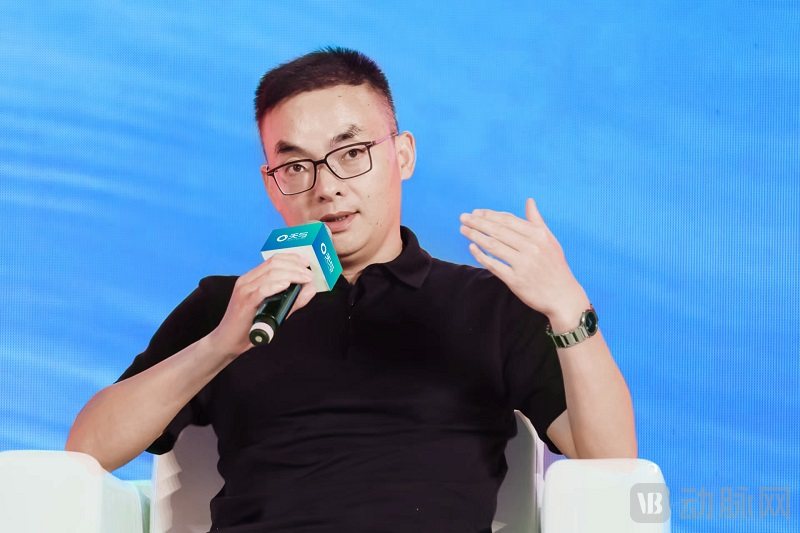
Bu Jiangyong, Founder of Tianyu Pension
“I am a serial entrepreneur. My various work experiences happen to reflect the shifts in social demand over the past two decades, following China’s reform and opening-up and the gradual rise in societal prosperity:”Initially, the demand was for an increasingly diverse range of goods; next, it shifted to asset ownership; now, the focus is on enhanced well-being, namely, a better quality of life.“Reviewing this process has only deepened my conviction: every enterprise is a product of its time.”
Bu Jiangyong, who has carved out successive spheres of influence across diverse commercial domains, demonstrated a rare equilibrium in his interview: meticulous business logic paired with grand strategic objectives, a global perspective coupled with deep engagement in the Chinese market, and steadfast belief in technology balanced by humanistic reflection. Capable of both focusing on the intricacies of business operations and technological implementation, and abstracting to a bird’s-eye view for broader scrutiny, he resembles a master cinematographer, seamlessly shifting perspectives and depth of field without any sense of discord.
Perhaps it is this very balance that defines the uniqueness of Tianyu Pension and explains why he, rather than anyone else, founded the company.
All differences are, at their core, cognitive disparities. Bu Jiangyong holds somewhat different views from others regarding the elderly care industry. In his opinion, there are currently three prevalent misconceptions.
Scale ≠ Economies of Scale
The substantial demand for elderly care in China is widely recognized. The pace of population aging in the country continues to accelerate, with data from the Seventh National Population Census (hereinafter referred to as the “Seventh Census”) showing that the total number of individuals aged 60 and above reached 264 million.
“In fact, the pace of population aging has exceeded most people’s expectations,” he said.Data from the 2010 “Sixth National Population Census” and the 2020 “Seventh National Population Census” reveal two significant differences:First, data from the Sixth National Population Census projected that China’s population would peak around 2030. However, data from the Seventh National Population Census indicate that the population peak will occur within the next two years, followed by a decline. Second, compared with the Sixth Census data, the Seventh Census data suggest that an aged society—with individuals aged 60 and above accounting for 30% of the total population—will arrive ten years earlier than previously anticipated. This indicates that the aging process is not proceeding at a constant rate but is instead accelerating.
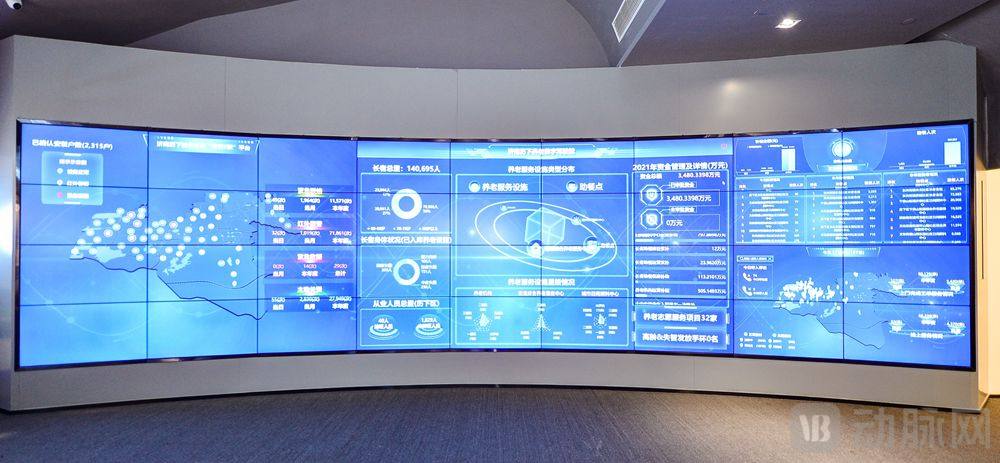
Tianyu Pension · Digital Elderly Care System Backend for a Local Project
From the supply side, while the total volume of elderly care services is currently insufficient, greater attention should be paid to the low efficiency of supply.
“If the supply efficiency of the entire industry is not improved, the gap between supply and demand will widen at an accelerating pace. This is a mathematical problem yet to be solved.”
Where Does Efficiency Come From? Economics tells us that as scale increases, marginal costs decrease and efficiency rises. However, he points out that having scale does not necessarily mean achieving economies of scale.In labor-intensive traditional service models, efficiency does not necessarily scale with size; in fact, the relationship can be inverse—as operational scale expands, management layers must be added, leading to a rigid and inevitable rise in labor costs.
“The demographic dividend” has been exhausted; how to realize the “efficiency dividend” is the key to solving this problem.Only through the application of new technologies can a leap in cost structure be achieved.For example, China’s manufacturing sector is undergoing a new transformation by adopting machinery to reduce reliance on manual labor. In 2021, the number of robots installed on production lines in China increased by 44% year-on-year, accounting for approximately half of the global newly installed volume. Enhancing efficiency through the application of new technologies can undoubtedly offset the challenges posed by rising labor costs and ensure operational efficiency. For the elderly care service industry, technology is the only pathway to escape the efficiency trap.
Ability to Pay ≠ Willingness to Pay
Practitioners often believe that the current elderly population lacks either the financial capacity or the willingness to pay. However, this situation is poised to change significantly as the post-1960s generation, which has benefited from the dividends of China’s reform and opening-up policy, enters old age. Nevertheless, Bu Jiangyong argues that this perspective fundamentally conflates ability to pay with willingness to pay, emphasizing that having the financial means does not necessarily equate to having the willingness to spend.
Unlike purchasing tangible goods, when buying intangible services, people actually make consumption choices based on “stable expectations.”For example, by using a mobility platform via its mobile app, we essentially place full trust in the platform’s ability to fulfill its service commitments; our expectations are “punctuality” and “no additional charges due to drivers taking detours.”
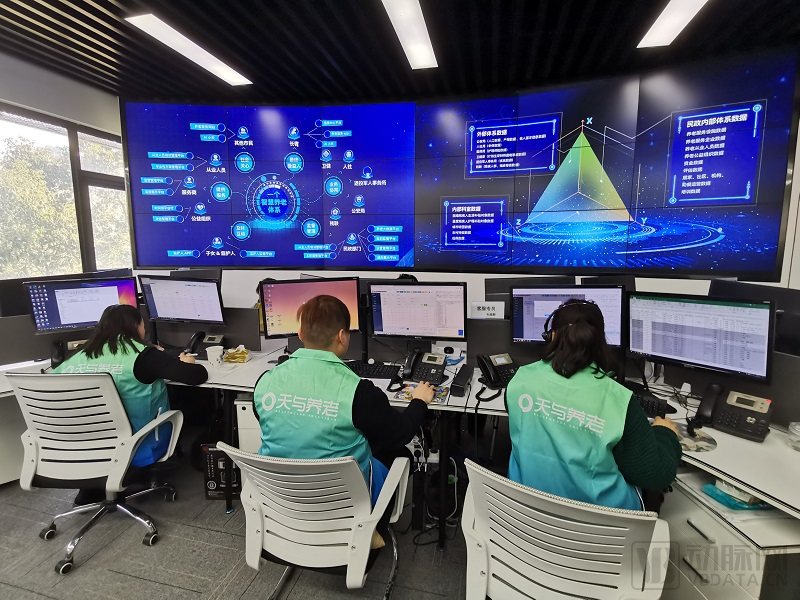
Customer Service Staff at Tianyu Pension’s Shanghai Hongkou Digital Elderly Care Service Platform
“If the quality of elderly care services can ensure ‘stable expectations’ and foster a certain degree of social consensus through transparent information-sharing mechanisms, the willingness to pay for essential needs can be unlocked at the current stage, enabling healthy growth.” Bu Jiangyong added that, conversely, even if future payment capacity is sufficient, it does not necessarily guarantee that users’ willingness to pay will be stimulated.
Achieving “stable expectations” relies not only on skills training for practitioners but also, more critically, on assurances provided through appropriate technological means that balance cost and effectiveness.
Prerequisites for the Comprehensive and Sound Development of Elderly Care Services—“Stable Expectations” Require Technical Safeguards.Once this goal is achieved, the willingness to pay for commercial insurance and out-of-pocket expenses will be further unlocked.
Elderly Care Needs ≠ Nursing Care Needs
Human aging is not an instantaneous event, but a gradual process.
From a temporal perspective, individuals gradually transition from vitality to physical decline, progressing through stages of independence, partial disability, and ultimately disability.
From a scenario-based perspective, individuals typically progress through stages ranging from independent living at home and community-based care to institutional care (which is also, to some extent, related to the health status of older adults).
Throughout this long-term process, the home serves as the most critical spatiotemporal setting,Seniors should be enabled to live with peace of mind at home, receiving high-quality provision for a range of core needs, including safety alerts, daily living conveniences, chronic disease intervention, and emotional support.Meanwhile, the solutions provided to address these needs are not isolated but often integrated; for instance, potential medical risks can be predicted from behavioral data.
Unlike other companies in the industry, which often enter the market through a single point, achieve breakthroughs in a specific niche, and then expand into other areas,Tianyu Pension has deeply recognized the demand for integrated elderly care services. From the outset, it established the construction of a robust digital foundation—the “bedrock”—as a strategic objective, upon which it builds more powerful and diverse intelligent solutions—the “superstructure.” Tianyu Pension is not pursuing “plus digital,” but rather “digital plus.”
After recognizing that “Digital+” is the true key to addressing supply-side challenges in the elderly care industry, Shanghai Tianyu Pension Service Co., Ltd. has strategically positioned itself from a “digitalization” perspective.
Leveraging Technology to Serve Elderly Care Scenarios and Deeply Refining “Digital” Products
Bu Jiangyong noted that many traditional service industries have been thoroughly transformed by digitalization, such as mobility, food and beverage, and secondary housing transactions. The elderly care industry must study and draw lessons from these examples. Prior to their digital transformation, these industries shared certain common characteristics, including substantial inelastic demand, highly fragmented supply, and non-standardized service processes. “The core lies in examining the transformation mechanisms of these industries, specifically how to enhance supply efficiency and ensure supply quality.” In his view,Digital transformation mechanisms are categorized into three types: automation, process transparency, and industrial intensification.
Currently, the maturity of domestic smart hardware—including sensors, telecommunications, the Internet of Things (IoT), and artificial intelligence technologies—has facilitated age-appropriate and intelligent transformations in the elderly care sector. “Technology is optional,Requirements–Technology–Price form a triangular balance; the goal is suitability, not perfection.”
One question is why enterprises with pure technology R&D have failed to grow into leading companies in the elderly care industry. In his view,A key characteristic of the elderly care industry is the need to refine technologies and iterate products within service delivery scenarios.Without implementation in real-world service scenarios, it is impossible to obtain authentic feedback from older adults, making it difficult for technology to truly meet user needs.“No technology stays ahead forever; only operations can maintain a perpetual lead.”
Roadmap: Informatization, Digitalization, and Intelligence
Tianyu’s blueprint for elderly care evolves from informatization to digitalization, and ultimately to intelligence.
Digitalization is the most fundamental step. In the process of building its service system, Shanghai Tianyu Pension Service Co., Ltd. (Tianyu Pension) has enabled its operations department to submit requirements to the R&D department, which then addresses these needs. This approach has truly achieved smooth operation of the entire system, enhancing both service efficiency and capacity. For Bu Jiangyong, Tianyu Pension had already completed the initial phase of digitalization by 2021, namely “online” operations.
Advancing to a higher level of “digitalization” essentially involves the R&D department setting requirements for operations to enable intelligent decision-making and management, thereby reducing costs, improving efficiency, and enhancing overall service quality. For instance, systems can automatically flag abnormal work orders, prompting the operations team to conduct timely follow-ups and root-cause analyses to ensure service quality. Furthermore, the application of technologies such as voiceprint recognition and speech recognition can further boost efficiency. Ultimately, the goal of “digitalization” is to improve operational quality as demonstrated through data insights.
Intelligentization is not merely about the use of smart hardware. Drawing from the practices of leading countries in elderly care, intelligent monitoring, telemedicine, and wearable devices have undoubtedly played a significant role in this sector. Observing its development trajectory and trends, it is precisely through intelligent solutions that elderly care services have evolved from passive to proactive service models, and from simple caregiving to an integrated approach combining non-medical and medical care.
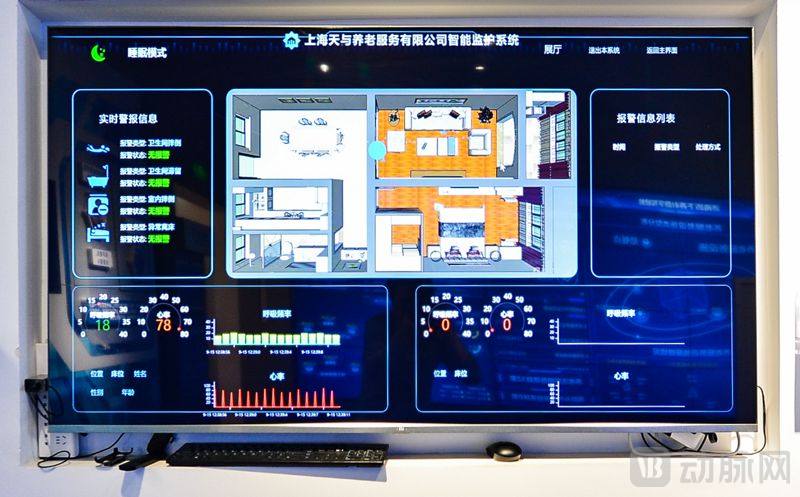
Tianyu Pension uses millimeter-wave radar to monitor seniors’ activity trajectories, respiration, heart rate, and other data.
Tianyu Pension is also leveraging intelligent solutions to deliver proactive care for the elderly. For instance, it analyzes behavioral trajectories and vital signs such as respiration and heart rate recorded by in-home millimeter-wave radar devices, in conjunction with usage logs of indoor facilities. When significant changes in an elder’s behavior patterns are detected, the system’s AI algorithms assess the risk level of physical discomfort, triggering alerts at varying levels. Customer service representatives then proactively intervene to check on the elder and notify their children or relatives. “Data is the raw material of intelligence, and the essence of intelligence lies in insight. Needs that must be explicitly stated by users are not true needs,” he remarked.
In short, informatization aims to achieve standardization; digitalization focuses on high-quality operations; and intelligence is geared toward gaining insights and meeting demands.
Empowering the Elderly Care Industry Ecosystem for Mutual Advancement
Tianyu Pension has gradually formed a three-step strategy in its development, achieving a transition from providing operational services to offering intelligent solutions and then empowering the industry.
Bu Jiangyong introduced that Tianyu Pension Service started with the operation of elderly care services, considering that technology needs to be implemented in specific scenarios for refinement. He mentioned that solutions that are nearly perfect in experimental settings often encounter various issues in real-world scenarios. It is only through extensive testing, debugging, and calibration that these solutions can be rolled out for business use.Refining technology in real-world scenarios through the operation of elderly care services is the first step.In this process, Tianyu Pension has successively entered nearly 50 cities across more than 10 provinces, achieving in three years what other leading industry peers typically take eight to ten years to accomplish.
On this basis, Tianyu Pension has begun to build intelligent solutions, providing integrated online and offline services.For example, during the pandemic in Shanghai, when offline services were severely disrupted, Tianyu Pension’s online-enabled services played a critical role, helping over 30,000 seniors address issues such as emotional distress, shortages of essential daily necessities, and scarcity of commonly used medications.
To further advance its intelligent capabilities, Tianyu Pension is collaborating with select manufacturers to implement age-friendly scenario modifications and integrate these solutions into its platform. In application scenarios with critical needs but no existing solutions, Tianyu Pension actively engages leading global technology providers to deliver tailored solutions. Currently, Tianyu Pension has established partnerships with 22 renowned global technology enterprises, including strategic collaborations with six internationally recognized tech firms. These partnerships will ensure the successful implementation and deployment of its intelligent solutions in the future.
China's elderly care market is a tiered market, with significant disparities between the north and south, as well as between urban and rural areas.Service provision requires the collaborative efforts of providers across different tiers and categories. SaaS-based operational platforms and intelligent solutions enable small, regional service providers to achieve a high operational starting point without the need for upfront investment or trial-and-error experimentation."Through technological support, services can achieve 'stable expectations'."
Shanghai Tianyu Pension Service Co., Ltd. is gradually transitioning from providing elderly care services to delivering elderly care technology solutions, and will open up its built capabilities and ecosystem to more industry peers in the future. “Within the platform ecosystem, the enhancement and iteration of Tianyu’s capabilities will, in turn, drive improvements in the supply capacity and service standards across the industry.” This will undoubtedly better help China address the increasingly severe challenges in elderly care under the current circumstances.
“Love and Technology, Making Life Better for the Elderly”—this is the slogan of Tianyu Pension. If “technology” corresponds to instrumental rationality, then “love” clearly corresponds to value rationality. Value rationality is more fundamental than instrumental rationality, just as means are developed to achieve ends; the existence of instrumental rationality serves value rationality.
For Tianyu Pension, from beginning to end, their goal has never been merely to provide cold technology. Instead, they aim to leverage technology as a robust support system, empowering caregivers to fully utilize their greatest strengths—meeting the needs of the elderly with warm, compassionate care.
“Everything must ultimately be remembered: technology is the means, while people are the end,” emphasized Bu Jiangyong.