

Salus Biomed Secures Over RMB 100 Million in Pre-A Financing to Accelerate Industrialization of Sequencing and Spatial Omics Platforms
Salus
Sequencing and Spatial Omics Platform Provider
VCBeat (WeChat ID: vcbeat) has learned that Salus Biomed, an innovator in sequencing and spatial omics platforms, has recently completed its pre-A financing round. The pre-A1 tranche was solely invested by Qielou Investment, while the pre-A2 tranche was co-led by Qianhai Great Wall Fund and Qielou Investment, with participation from Longping Biology. This marks the successful conclusion of Salus Biomed’s pre-A round, raising a total of over RMB 100 million. The proceeds will be primarily used for the regulatory submission and continuous R&D of Salus Biomed’s proprietary gene sequencing platform and its globally leading super-resolution spatial omics products, as well as for the exploration of other innovative products. Previously, Salus Biomed secured angel-round investments from ZhenFund, Pinfeng Medical, and other institutional and industrial investors.
The successful completion of Salus’s Pre-A financing round reflects investors’ high recognition of the company’s team and products. Meanwhile, as Salus’s products have officially entered the commercialization stage, this new round of financing will further accelerate their market adoption. Salus has been deeply engaged in the fields of sequencing and spatial omics, committed to achieving technological iteration and innovation in domestically produced equipment, thereby breaking the monopoly held by overseas companies in the high-end upstream market for clinical and research applications.
The gene sequencing industry has gradually matured, with application areas including non-invasive prenatal testing (NIPT), microbial detection, tumor diagnosis and treatment, assisted reproduction, multi-omics research, population cohort sequencing initiatives, and new drug development and innovation. The rapid growth of downstream sequencing applications has significantly increased the demand for upstream equipment and reagents. Meanwhile, prominent issues such as information security and genetic security pose new challenges to domestically produced sequencers.
As a platform-based enterprise centered on its independently developed sequencing technology, Salus has achieved innovation and iteration in multiple fields—including surface chemistry, sequencing enzymes, optical modules, and data analysis—through holistic design and optimization of core modules within its sequencing segment. By integrating these proprietary technologies with new developments across various domains, the company has successfully developed a flexible, modular, high-performance, and domestically produced sequencing platform that can adapt to diverse application scenarios and throughput requirements.
Salus’s first mid-to-high-throughput sequencer, the Salus Pro™, has entered mass production and demonstrated differentiated advantages in clinical and research applications. Testing and feedback across multiple application scenarios have shown that the Salus Pro™ better meets users’ multidimensional needs. “Competing with rivals to usher in a new era of sequencing freedom”—this was Salus’s initial positioning for the Salus Pro™. The Salus Pro™ is a product that truly enables hassle-free operation in clinical sequencing, driving the adoption of downstream applications and ultimately realizing clinical value.
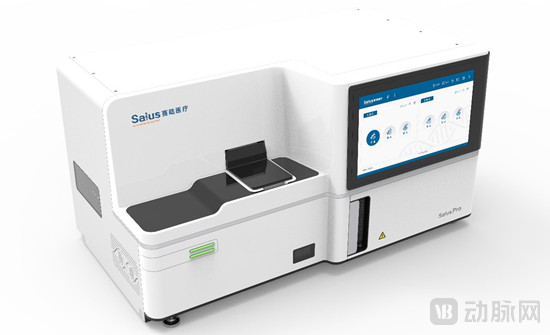
Salus Pro™ Sequencer
Spatial omics is the science that investigates the spatial location information and interaction relationships between cells and among gene expressions. It provides essential tools for in-depth research into tissue cell function, microenvironment interactions, developmental lineage tracing, and disease pathology, playing a critical role in clinical medicine and pharmaceutical R&D. Taking cancer as an example, the core factor affecting therapeutic efficacy is the heterogeneity of the tumor microenvironment (TME), which manifests as spatial distribution differences in various cell types and gene expression patterns. This heterogeneity significantly diminishes the effectiveness of therapies targeting all genes and signaling pathways.
Compared with single-cell transcriptomics, spatial transcriptomics provides an additional dimension of research data to elucidate biological phenomena. Consequently, *Nature Methods* named spatial transcriptomics the “Method of the Year” in 2020. To date, the application of spatial transcriptomics has surged like a tidal wave.
In the spatial omics sector, leveraging its proprietary high-throughput sequencing platform and Salus’s breakthrough super-resolution imaging technology that surpasses the optical diffraction limit, the company has launched multiple globally leading super-resolution spatial omics chips featuring super-resolution analytical capabilities and high-capacity tissue loading. The omics chips developed by Salus have achieved sub-micron resolution, hundreds of times higher than that of 10x Genomics’ Visium™ from the United States, enabling the acquisition of transcriptomic information at the sub-organelle level within tissues and propelling the company into the top tier of advanced scientific instrumentation. The company has collaborated with numerous renowned research institutions to promote the application of its distinctive super-resolution spatial omics tools in scientific research and clinical diagnostics, striving to become a globally leading omics enterprise.
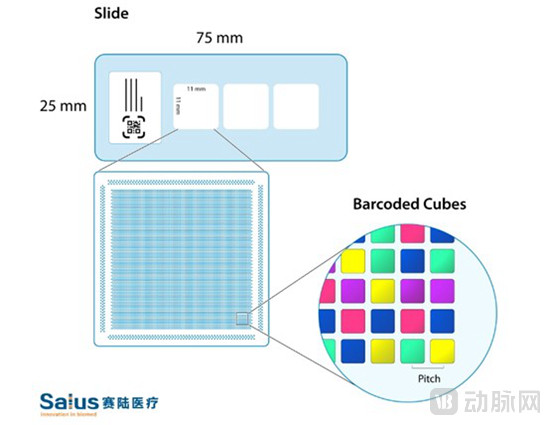
Spatial Omics Chip
Dr. Zhao Luyang, Founder and CEO of Salus, stated, “Multi-omics research tools, such as genomics and transcriptomics, can deeply reveal the underlying information of life development, providing comprehensive data support for life and health management. As an upstream innovator in sequencing and spatial omics platforms, Salus strives to enhance performance and build a domestic national brand in the field of sequencing through independent R&D, while achieving globally leading super-resolution analysis and breakthroughs in cutting-edge domestic scientific research tools in the field of spatial omics. We are honored to continue receiving support from investors in this round of financing, which will greatly accelerate Salus’s development, enhance the competitiveness of local enterprises in the multi-omics field, and facilitate the healthy development of China’s biopharmaceutical industry in both research and clinical applications. Salus is willing to work with numerous ecosystem partners to seize the historical opportunity of comprehensive localization, fulfill the role assigned by the times, and take on significant responsibilities in the track of upstream life science tools.”
Zhang Kun, founder of Qielou Investment, stated: “Young scientists and entrepreneurs are often highly innovative and creative. Frankly speaking, I came into contact with Dr. Zhao and his team while considering investments in young scientists. I was deeply inspired by their curiosity, thirst for knowledge, relentless spirit, and genuine passion. I have also witnessed firsthand the Salus team’s dedicated R&D efforts since its establishment and the rapid maturation of Salus’s products.”
Due to the inherently high technical barriers, the field of gene sequencing instruments—a core tool in life sciences—is characterized by very few players and the dominance of foreign enterprises. This industry landscape has directly resulted in downstream service providers and enterprises receiving inadequate services, while also placing immense pressure on their overall operational performance due to issues such as supply constraints and bargaining power. Therefore, Salus Medical’s commitment to independent innovation, its emphasis on comprehensive domestic production, and its strive to break through “chokehold” technologies make its strategic layout in upstream key equipment particularly valuable. We eagerly anticipate that, under Dr. Zhao’s leadership, the Salus team will go all out to live up to expectations, building products that offer high quality at competitive prices, providing excellent service to partners, continuously creating value for employees and shareholders, and making sustained contributions to human health.
Mao Zhiwei, Investment Director at Qianhai Great Wall Fund, stated: “Based on our understanding of the gene sequencer industry, Qianhai Great Wall Fund believes that Salus is one of the few domestic R&D and manufacturing enterprises with strong innovation capabilities in high-throughput sequencing platforms. The company also possesses unique reserves in super-resolution imaging technology. In the development of next-generation models with higher throughput, Salus demonstrates global competitiveness.”
Salus has built a robust team centered on sequencer development, ensuring strong future momentum. By bringing together talent from the sequencing, omics, semiconductor, and optics industries, Salus boasts strong execution capabilities and rapid R&D progress, fully leveraging its late-mover advantage. Looking ahead, the vast potential of super-resolution imaging technology and spatial omics is highly promising. We hope Salus will leverage its late-mover advantage to achieve breakthroughs and surpass competitors at a higher level, empowering downstream enterprises to explore new frontiers in spatial omics.
Dr. Lv Yuping, Founder and CEO of Longping Biotechnology, stated that Salus possesses a high-throughput, domestically produced sequencing platform with independent intellectual property rights, breaking through critical technological bottlenecks in the field of gene sequencing. Notably, while maintaining leading performance quality and throughput, Salus has significantly reduced sequencing costs—a development of particular importance to the biological breeding industry. Low-cost sequencing technology makes it possible for the biological breeding sector to widely adopt sequencing-assisted molecular breeding, potentially exerting a revolutionary impact on the industry. The application of sequencing technology can enhance basic research capabilities in genome and gene mining during the breeding process, thereby promoting the development of new varieties and new technologies. As an industry-leading enterprise in the research and development of biological breeding traits, Longping Biotechnology, through its in-depth collaboration with Salus, can strengthen its capabilities in the identification, analysis, and application of functional genes in major food crops (such as corn, soybeans, and rice), accelerating the company’s technological innovation and product creation in the R&D of biological breeding traits.
Salus, founded in October 2020, specializes in the development of upstream sequencing platforms with independent intellectual property rights. Building upon this foundation, the company has established a globally leading super-resolution spatial omics platform, enabling the independent development of genomics and spatial omics products and their translation into research and clinical applications. Led by Dr. Zhao Luyang, the scientist-led entrepreneurial team has overcome previous bottlenecks in sequencing products related to throughput, cost, resolution, and automation, while also achieving domestic production of the platform. Over the two years since its establishment, Salus has rapidly developed and now possesses internationally leading sequencing and omics platforms. It provides comprehensive solutions for mid- and downstream applications and has established collaborations with multiple institutions.
Qielou Investment is a service-oriented investment firm rooted in trust. It firmly believes that, regardless of how times change, there will always be entrepreneurs who adapt to the era and ultimately become business leaders driving social progress. Through sustained efforts, Qielou Investment facilitates effective connections among entrepreneurs, scientists, and investors, going beyond mere capital provision. For Qielou Investment, this approach not only further embodies its credo of “perseverance carves even metal and stone,” but also reflects a collective commitment to making society better and creating sustained social value. Since its establishment, Qielou Investment has strategically focused on the upstream and downstream sectors of biopharmaceuticals, medical devices, and synthetic biology. Its portfolio companies include MGI Tech (688114), BGI Yuan, TCBio, Jingliang Gene, Nuofus, XiaoZao Technology, Han’s Robot, Huayuan Regeneration, and GenCell Therapeutics, among others.
Qianhai Great Wall Fund is a professional investment institution focused on strategic emerging industries such as biomedicine, semiconductors, new energy, and new materials. Anchored in long-termism as the cornerstone of value investing, the firm upholds its distinctive investment philosophy and adheres to an investment logic characterized by “broad tracks, full-chain coverage, selection of industry leaders, and people-centric approach.” It implements an investment strategy centered on “early-stage, small-scale, innovative, hard-tech, domestic substitution, and specialized expertise,” striving to become a hidden champion among “specialized, refined, distinctive, and innovative” enterprises in the venture capital sector. To date, the company has invested in more than 60 outstanding enterprises, including New Industries Biomedical (300812), Kangtai Biological Products (300601), MGI Tech (688114), Tongrui Micro, Menovo Pharmaceutical (603538), BestDx, JC Vision (300264), Jiuri Advanced Materials (688199), and Lihexing (301013).
Longping Biotechnology (Hainan) Co., Ltd. was established in May 2019 in the Yazhou Bay Science and Technology City of Sanya, Hainan. It is a leading enterprise in biological breeding, controlled by the Central State-owned Capital Rural Revitalization Investment Fund under SDIC Chuangyi of the State Development & Investment Corp. (SDIC) Group, with strategic shareholders including industrial capital such as Longping High-Tech, Xinyangfeng, and New Hope Group, as well as financial capital such as Sequoia Capital and the Greater Bay Area Common Home Fund. Aiming to build an internationally first-class R&D platform for agricultural biological “chips,” the company focuses on improving key traits of major crops such as corn and soybeans, and developing precise biological breeding products. It has established R&D technical platforms for molecular biology, genetic transformation, trait analysis, and four-generation-per-year backcrossing, possessing R&D strength and technological development capabilities in transgenic and gene editing fields comparable to those of multinational seed companies. After more than three years of development, the company has completed multiple rounds of financing and has become the fastest-growing R&D-oriented leading enterprise in China’s biological breeding sector.