

MicroQuin Files IPO Prospectus Highlighting Novel Cancer Therapy Capable of Inducing >95% Tumor Cell Apoptosis Within 28 Days

MicroQuin
Developer of New Breast Cancer Therapies
Breast cancer is a malignant tumor commonly seen in women, posing a serious threat to their life and health. According to statistical data from Frost & Sullivan,Breast Cancer Has Surpassed Lung Cancer as the Most Common Cancer Worldwide.The number of new breast cancer cases worldwide increased from 2 million in 2016 to 2.26 million in 2020, representing a compound annual growth rate (CAGR) of 3.1%. This figure is projected to reach 2.47 million by 2025.
In recent years, the incidence of breast cancer in China has shown an upward trend. According to data released by the National Cancer Center,The number of new breast cancer cases in China increased from 310,000 in 2016 to 420,000 in 2020, with its incidence rate now twice the combined total of cervical, ovarian, and endometrial cancers., with new breast cancer cases in China accounting for 12.2% of the global total each year, it has become a veritable “pink killer.”
As the incidence of breast cancer continues to rise, treatment options are expanding. The global market size for breast cancer drugs grew from $21.5 billion in 2016 to $31.8 billion in 2020, representing a compound annual growth rate (CAGR) of 10.3%, and is projected to reach $47.5 billion by 2025.
The market size of breast cancer drugs in China is also showing a rapid growth trend. It increased from RMB 30 billion in 2016 to RMB 50.7 billion in 2020, with a compound annual growth rate (CAGR) of 14%.The Chinese breast cancer market is projected to grow at a faster rate than the global average, reaching RMB 81.8 billion in 2025.
In terms of cure rate, it is higher in the early stage,However, the cure rate drops sharply to around 50% at Stage IV.Therefore, breast cancer remains a challenging problem to overcome, and several companies are still committed to continuously improving therapies to increase cure rates. MicroQuin is one such startup dedicated to developing new treatments for breast cancer.
Former GSK Developer Leads Startup Venture
MicroQuin is a preclinical biotechnology company founded in 2018, dedicated to developing novel therapies for breast cancer. MicroQuin posits that the core of all diseases lies in alterations of the interleukin-1β converting enzyme (ICE).All cancers induce extreme ICE. Modulating ICE can enable the development of novel cancer therapies., it is leveraging proprietary small molecules, synthetic peptides, and gene therapies to achieve this goal.
Scott Robinson is the founder and Chief Scientific Officer of MicroQuin. He holds a Ph.D. from Imperial College London, with a primary research focus on cellular stress signaling and survival pathways.He previously served as a Protein Biochemist at GlaxoSmithKline (GSK)., throughProteomics AnalysisandTarget-based DrugsIdentified candidate drugs through technological research. Previously worked in investment banking, with eight years of experience in the field.
Yang Zheng is another co-founder of MicroQuin and a graduate of the University of Chicago. Prior to founding MicroQuin, Yang co-founded Oxalo Therapeutics in 2018 with a professor from UChicago Medicine, a company dedicated to developing drugs for kidney stones. As an investor, Yang aims to bridge the gap between scientific research and commercialization; MicroQuin is the second company he has founded.
Promising to accelerate apoptosis in over 95% of cancer cells within 28 days
In recent years, the rapid development and launch of targeted therapies and immunotherapies have ushered cancer treatment into a new era. In 2021, the FDA approved as many as 40 cancer therapies, covering 15 types of cancer. Breaking through in the competitive landscape of cancer therapeutics is no easy feat; it requires demonstrating robust therapeutic efficacy.
MicroQuin Creates Novel Cancer Therapies by Modulating ICE Levels. Changes in ICE are linked to alterations in the intracellular environment; overexpression of ICE may induce apoptosis, and selective modulation of ICE can mitigate and reverse disease-related damage. MicroQuin achieves regulation of ICE in breast cancer cells through two technical approaches.
First,Cell PenetrationMembranePeptide(CPPs), through delivery vectors that selectively guide payloads to cancer cells, whenConjugation with Existing DrugsBy leveraging its delivery mechanism, it can enhance therapeutic safety and efficacy.
MicroQuin's CPPsExhibits preferential high affinity for cancer cells, enabling rapid binding and internalization of CPPs and their cargoes; healthy cells do not respond to CPPs during a seven-hour exposure period. Therefore,UseMicroQuinCPPs can precisely target cancer cells.. Due to its affinity for cancer cells, this effect can also be observed in other types of cancer cells (lung, melanoma, ovarian, and prostate), which makes it possible to develop a variety of drugs.
Second,Protein-Based Small-Molecule Drugs, this drug is combined with CPPs,Killing Cancer Cells by Modulating Organelle Function and Signaling Pathways.
MicroQuin has developed MQ001 and MQ002, small-molecule drugs that induce cancer cell death by inhibiting anti-apoptotic factors of the Bcl-2 protein family (such as Bcl-2 and Bcl-xL) to prevent cancer cell proliferation, while simultaneously promoting the activation of pro-apoptotic factors (e.g., Bax, Bid). Furthermore, it continues to act onActin cytoskeleton, blocking the formation of F-actin in cancer cells and inhibiting their invasiveness. Experiments show that,This lead compound drug can selectively bind to cancer cells in the body to induce their accelerated death (>95% within 28 days).
Currently,MicroQuin has also developed an oral small-molecule drug, SMQ-2174, which induces apoptosis in various types of cancer cells.
Utilizing the principles of the ICE regulator,MicroQuin is advancing multi-pipeline drug development in the fields of oncology, antivirals, and neurology.
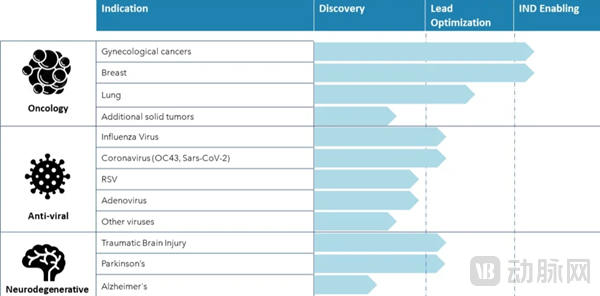 MicroQuin Drug Development Pipeline Source: MicroQuin Official Website
MicroQuin’s antiviral drug pipeline has also made progress. Viruses hijack cells to establish ICE, enabling viral self-replication and spread. MicroQuin’s therapeutic approach activates ICE regulators to neutralize and inhibit virus-induced ICE alterations, thereby suppressing viral replication and transmission.MicroQuinantiviral drugs that can achieve single-dose administration>99.9% Viral SuppressionEfficacy。
In 2021, MicroQuin entered into a Non-Clinical Evaluation Agreement (NCEA) with the National Institute of Allergy and Infectious Diseases (NIAID) to assess the potential of MicroQuin’s therapeutic candidates (MQPs) and advance them toward clinical trials. MicroQuin will leverage NIAID’s preclinical service suite to further screen the efficacy of MQPs against a broad panel of viruses and evaluate their performance in relevant preclinical models.
Protein Cultivation in Space and 3D Tumor Cells
Microgravity in the Space Environment Brings New Hope for Cancer Research. Since its inception, MicroQuin has been committed to conducting research and development and achieving breakthroughs in microgravity environments.The primary reason is the development of its protein-based drugs.. In microgravity environments, protein crystals are easier to obtain and purer, and cells can develop faster and better.
In 2018, MicroQuin received two grants from CASIS (Center for the Advancement of Science in Space) and Boeing through the “Technology in Space” program to develop novel cancer therapies, while also being authorized to conduct protein crystallography research on the International Space Station. In 2019, this protein crystallography study was launched aboard SpaceX CRS-18.
This study aims to elucidate the structure of Bax inhibitor-1 (BI-1). BI-1 is an elusive drug target that is difficult to express and purify in terrestrial environments and nearly impossible to crystallize. It is associated with various cancers and other diseases, including liver disease, autoimmune disorders, neurodegenerative diseases, diabetes, and viral infections. Experimental findings revealed thatCancer cells undergo spontaneous cell death upon BI-1 knockdown or loss of function.Leveraging this discovery, MicroQuin has developed a therapy targeting BI-1 using cell-penetrating peptides (CPPs) and protein-based drugs.
In February 2022, MicroQuin sent another experiment into space.In microgravity environments, the growth of tumor cells under 3D conditions stimulates the acquisition of relevant cellular structures, thereby creating a spatial organization highly similar to the natural tumor microenvironment, which can induce changes in cell signaling.When cells undergo uncontrolled mutations, they become cancer cells through the process of tumorigenesis.
In this experiment, changes induced in breast cancer and prostate cancer cells under microgravity conditions will be examined and compared with those in healthy cells to observe alterations in the cancer cell environment and evaluate the fundamental pathways involved in tumorigenesis. Furthermore, observations will be conducted onMicroQuin is investigating the precise mechanisms by which its whole-cell intracellular protein targeting TMBIM6 acts on cancer cells, with the aim of further refining its cancer therapies and developing additional drugs for targeted treatment of breast cancer, prostate cancer, and other malignancies.
Currently, MicroQuin is proposing additional space projects that will investigate how latent viruses are reactivated in space and test how microgravity and associated cellular changes affect the life cycle and dissemination of enzymatically reactivated or lytic bacteriophages.
In 2022, MicroQuin received grants from the U.S. Department of Defense (DOD) Ovarian Cancer Research Program (OCRP), Lung Cancer Research Program (LCRP), and Rare Cancers Program (RCP) to continue developing novel cancer therapies.