

Top 20 Pharma Companies Ranked by 2025 Revenue: J&J, Roche, and Lilly Lead the Pack

Johnson & Johnson
Medical Device R&D and Manufacturer
Based on the revenue of major pharmaceutical companies in 2025, the industry media Fierce Pharma recently released the ranking of the top 20 global pharmaceutical companies. In this list,Johnson & Johnson, Roche, and Eli Lilly and Company rank in the top three.This article will organize the recent progress made by these pharmaceutical companies for our readers.Click "Read Original" at the end of the article to access the original rankings page.
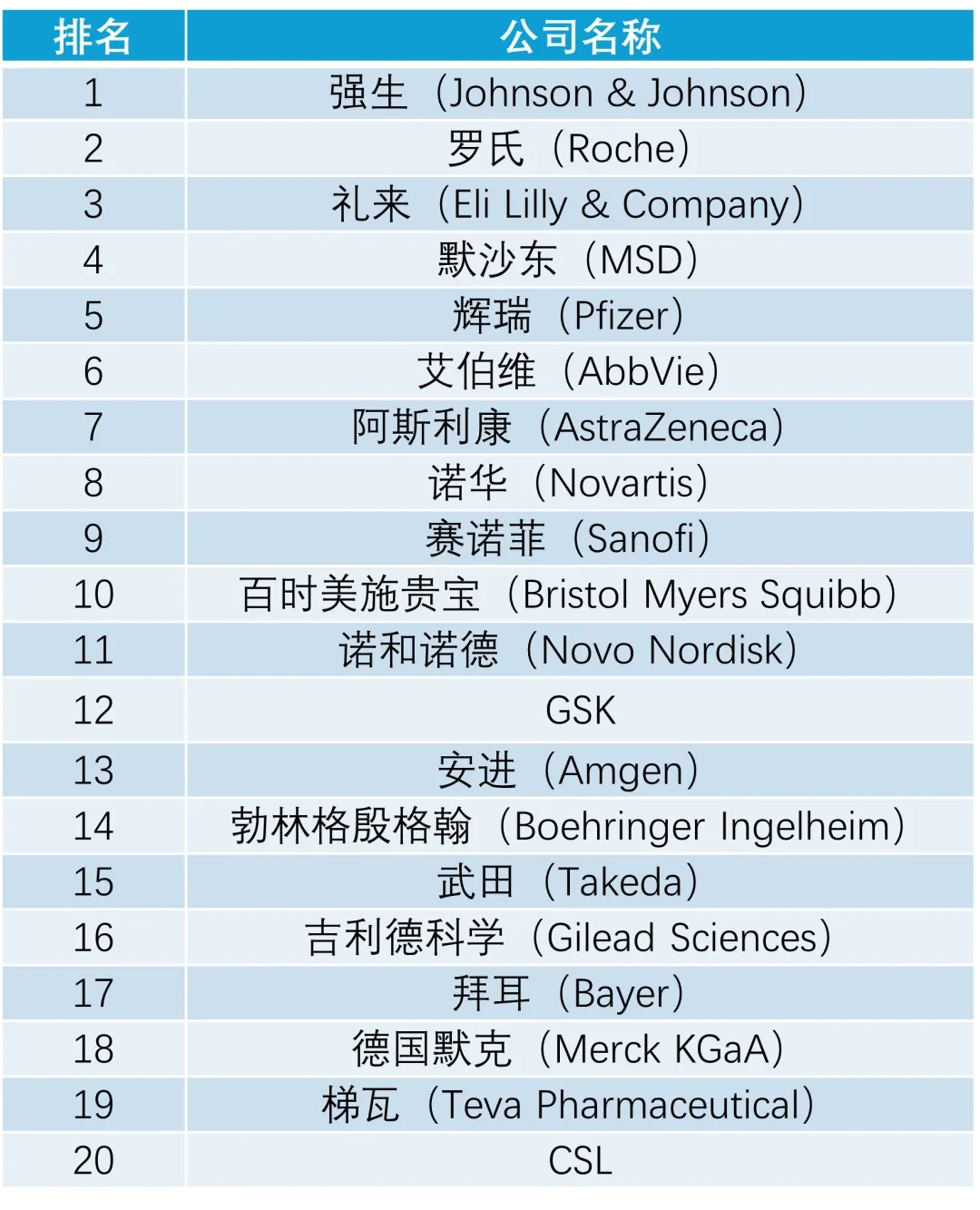
Chart according to Reference [1]
Johnson & Johnson
Revenue in 2025:$94.2 billion

Johnson & Johnson has been focusing on the two core businesses of pharmaceuticals and medical technology in recent years. After spinning off its consumer health business, the company has further concentrated resources on innovative drugs, advanced medical devices, and high-value treatment areas.In the pharmaceuticals sector, the company is advancing research and development in areas such as oncology, neuroscience, immunology, cardiovascular diseases, and mental health.The product portfolio of multiple myeloma, the nasal spray therapy Spravato for depression, and the anticoagulant Xarelto, demonstrates its R&D transformation capabilities in major disease areas.
In terms of external collaborations, Johnson & Johnson supplements its R&D pipeline and technology platforms through mergers, acquisitions, and strategic partnerships.After acquiring Intra-Cellular Therapies, the company incorporated Caplyta into its neuropsychiatric disease portfolio and promoted its expansion into adjunctive treatment for major depressive disorder, reflecting a strategy of accelerating key area layouts through external innovation resources.Medical technology is also an important part of Johnson & Johnson, covering fields such as surgery, orthopedics, interventional treatment, and digital healthcare. The company continuously collaborates with hospital systems, research institutions, and clinical experts to promote device innovation and the upgrading of treatment solutions. Overall, Johnson & Johnson is deepening its long-term presence in the pharmaceuticals and healthcare industry by leveraging its global R&D system, diverse product portfolio, and extensive collaboration network.
Roche
Revenue in 2025:$74 billion
In recent years, Roche has been continuously advancing the upgrading of its product structure, deepening its R&D layout in multiple fields such as oncology, ophthalmology, neuroscience, and metabolic diseases. It is also expanding its mid-to-long term pipeline through internal innovation and external collaboration.Beyond traditional oncology products, the company's current key products have expanded into the fields of ophthalmology and neurology. Among these, the bispecific antibody Vabysmo has become an essential component of the ophthalmology portfolio, showcasing Roche's ongoing capabilities in translating its antibody drug platform. In the field of oncology, Roche continues to advance the next generation of products focused on breast cancer and immunotherapy. The PD-L1 therapy Tecentriq remains one of the core products, while the company is also advancing giredestrant, an oral selective estrogen receptor degrader (SERD), for treating HR-positive, HER2-negative breast cancer, reflecting its continuous investment and therapeutic iteration strategy in breast cancer.
In the field of neuroscience, the multiple sclerosis drug Ocrevus maintains steady progress. The company is also advancing fenebrutinib, a BTK inhibitor, aiming to further expand its treatment portfolio in autoimmune and neuroimmunology-related areas.This strategy shows that Roche is strengthening its R&D system for central nervous system diseases through a product portfolio with complementary mechanisms. In addition, Roche has listed metabolic diseases as a key expansion direction, proposing to enhance the layout of obesity treatment.The company acquired GLP-1/GIP receptor agonist CT-388 through the purchase of Carmot Therapeutics and advanced it to the later stages of development; meanwhile, it collaborated with Zealand Pharma to develop the long-acting amyloid analog petrelintide, further enriching its metabolic disease product portfolio.
Eli Lilly
Revenue in 2025:$65.2 billion
In recent years, Eli Lilly has continuously advanced its industrial layout around metabolic diseases, cancer, and innovative drug delivery technologies, with GLP-1-related therapies becoming one of the key cores of the company's R&D system.Dual GIP/GLP-1 receptor agonist Mounjaro and Zepbound cover the treatment of type 2 diabetes and obesity, respectively, demonstrating Lilly's capability to simultaneously advance multi-indication development and commercialization in the field of metabolic diseases.
In the next phase of its strategy, Eli Lilly is accelerating the advancement of oral weight-loss therapies. The oral GLP-1 drug orforglipron has received FDA approval under the brand name Foundayo, marking the company's further expansion into oral treatments for metabolic diseases beyond injectable formulations. This also reflects its research and development focus on patient accessibility and dosing convenience. With the launch of the oral product, Eli Lilly is building a comprehensive portfolio of metabolic disease treatments that includes both injectable and oral dosage forms.In addition to metabolic diseases, Eli Lilly remains committed to the field of oncology, with Verzenio, a breast cancer drug, still being one of the company's key products, showcasing its long-term strategy in the treatment of solid tumors.At the same time, the company continues to advance its global market expansion, including promoting the coverage and access of Mounjaro in China for the treatment of type 2 diabetes, demonstrating its international operational capabilities.
Merck & Co.
Revenue in 2025:$65 billion

In recent years, Merck has continuously advanced its industrial layout in the fields of oncology, vaccines, cardiopulmonary diseases, and anti-infectives, while enhancing its mid-to-long-term product portfolio through external acquisitions and business expansion.In the field of oncology, PD-1 therapy Keytruda remains the company's core product, continuously advancing indication expansions across multiple cancer types and treatment lines, reflecting its long-term commitment to the field of cancer immunotherapy. In terms of vaccine business, the HPV vaccine Gardasil is still one of the company’s key products, showcasing Merck's strong foundation in preventive medicine. Meanwhile, the company is accelerating the expansion of non-vaccine anti-infective strategies by acquiring Cidara Therapeutics to develop innovative antiviral therapies for influenza prevention, further enriching its respiratory infection product pipeline.
In the field of cardiopulmonary diseases, Merck has further entered the treatment track of cardiovascular and pulmonary vascular diseases by acquiring Acceleron Pharma to obtain Winrevair, a drug for pulmonary arterial hypertension. Subsequently, it acquired Verona Pharma, incorporating Ohtuvayre, a product for chronic obstructive pulmonary disease (COPD), to strengthen its respiratory disease portfolio. In addition, the company continues to advance research and development in the field of hematological tumors. Recently, it acquired Terns Pharmaceuticals and its leukemia candidate drug TERN-701, demonstrating its continuous supplementation of late-stage pipelines through external innovation.
Pfizer
Revenue in 2025:$62.6 billion
In recent years, Pfizer has been continuously advancing its business structure adjustment, deepening research and development as well as industrial layout in the fields of oncology, vaccines, specialty care, and core chronic diseases. The company's current key growth sectors include oncology and specialty care businesses.In the vaccine field, Pfizer continues to strengthen its layout in the prevention of respiratory diseases. The respiratory syncytial virus (RSV) vaccine Abyrsvo has become one of the company's key products, reflecting its extended strategy in adult vaccines and infectious disease prevention. At the same time, the company’s collaboration with Bristol-Myers Squibb on the anticoagulant drug Eliquis demonstrates its ongoing expansion of product coverage in the cardiovascular field through partnership models.
In terms of specialized treatment, the Vyndaqel product portfolio continues to drive the company's growth in the field of rare cardiovascular diseases.The oncology field is one of Pfizer's most important strategic directions at present, and the company is accelerating the integration of the antibody-drug conjugate (ADC) platform acquired from Seagen.Among them, Padcev has become a key product, and the company is also actively advancing the clinical development of Seagen-related ADC assets to expand its broader oncology indications layout. In terms of R&D,Pfizer Announces 20 Key Studies to Launch in 2026, with Continued Increase in R&D Investment.Overall, the company is relying on its vaccine foundation, diversified specialty product portfolio, and next-generation oncology technology platforms such as ADC to further transform its business into an innovation-driven model.
AbbVie
Revenue in 2025:$61.2 billion

AbbVie has been continuously advancing its dual-core layout in immunology and neuroscience in recent years, and has been upgrading its overall R&D system by succeeding the lifecycle of existing mature products with next-generation ones.Immunology remains the most crucial strategic segment for the company, with Skyrizi and Rinvoq forming the core product portfolio. These products cover multiple indications such as psoriasis, inflammatory bowel disease, ulcerative colitis, and Crohn's disease, demonstrating the company’s ability to continuously expand its multi-indication layout around autoimmune diseases. In the field of inflammatory bowel disease, AbbVie continues to increase its clinical investment. Skyrizi is currently conducting a head-to-head study with Entyvio for ulcerative colitis, while Rinvoq is further expanding its application in inflammatory bowel disease, creating a complementary mechanism-driven product portfolio.
In addition to immunology, neuroscience has become another key growth area for AbbVie. The company's neuroscience portfolio includes therapeutic Botox injections, the psychiatric medication Vraylar, and Vyalev, a Parkinson's disease therapy approved in 2024.Vyalev, composed of a combination of carbidopa and levodopa prodrugs, represents the company's continued investment in the field of neurodegenerative disease treatment and reflects its approach to developing innovative delivery methods for well-established mechanisms.
AstraZeneca
Revenue in 2025:$58.7 billion

AstraZeneca has been continuously advancing its layout in multiple fields such as oncology, cardiovascular, respiratory immunology, and cell therapy in recent years, while strengthening its mid-to-long-term innovation system through global R&D investment and external collaborations.In 2025, the company achieved 16 positive Phase 3 clinical results and 43 major market approvals, indicating that its late-stage pipeline has entered a concentrated realization phase.
The oncology field remains one of AstraZeneca's core strategic directions.The ADC therapy Enhertu, co-developed by the company and Daiichi Sankyo, has achieved positive progress in first-line treatment for HER2-positive breast cancer. Another ADC therapy from their collaboration, Datroway, has obtained Phase 3 data in the triple-negative breast cancer field and is advancing in combination with Imfinzi for non-small cell lung cancer treatment, reflecting the company’s continuous efforts in ADC and combination therapies. Additionally, the oral SERD drug camizestrant has advanced to the late-stage development phase. In the cardiovascular and inflammation disease fields, the company’s hypertension candidate drug baxdrostat has achieved positive results in two Phase 3 studies. Tezspire, developed in collaboration with Amgen, has been approved for use in chronic rhinosinusitis with nasal polyps, further expanding the respiratory and immunology product portfolio. Beyfortus, the RSV prevention product co-developed with Sanofi, continues to advance the company’s respiratory disease prevention strategy. The company has also expanded into in vivo cell therapy technology through the acquisition of EsoBiotec.
Novartis
Revenue in 2025:$56.7 billion

Novartis has been continuously advancing its business structure adjustment in recent years, deepening its layout in multiple fields such as cardiovascular, oncology, nephrology, immunology, and gene therapy. It is also enhancing the growth pipeline for the next phase through R&D investment and external collaboration.Currently, Kisqali for breast cancer, Kesimpta for multiple sclerosis, Pluvicto for radioligand therapy, and Cosentyx for immunotherapy have become key pillar products for Novartis, reflecting the company's diversified portfolio in oncology, autoimmune diseases, and neurological disorders. Notably, the development of Pluvicto underscores the company’s ongoing commitment to precision radioligand therapy.
The nephrology field is a key expansion area for Novartis in recent years. The company already has two IgA nephropathy (IgAN) treatment drugs, Vanrafia and Fabhalta, with Fabhalta also approved in 2025 for complement 3 glomerulopathy (C3G), showcasing its systematic layout in rare kidney diseases and complement pathway therapies. In the neurology and immunology fields, the company launched the intrathecal injection version of Zolgensma, named Itvisma, for spinal muscular atrophy (SMA) patients across a broader age range; Rhapsido, a BTK inhibitor, was the first to enter the treatment of chronic urticaria. Meanwhile, Novartis acquired Avidity Biosciences in 2025, further strengthening its pipeline of therapies for neuromuscular diseases.
Sanofi
Revenue in 2025:$52.2 billion

In recent years, Sanofi has continued to advance its industrial layout in the fields of immunology, autoimmune diseases, vaccines, and rare diseases, while enriching its innovative product portfolio through mergers, acquisitions, and global collaborations.In 2025, the company completed its acquisition of Blueprint Medicines, marking one of its significant transactions in recent years. This move brought Ayvakit, a treatment for systemic mastocytosis (SM), into its rare disease portfolio, further strengthening its precision medicine and rare disease strategy. The immunology field remains a core growth area for Sanofi. Dupixent, co-developed with Regeneron, continues to expand its indications, gaining approvals in 2025 for chronic obstructive pulmonary disease (COPD), bullous pemphigoid, and chronic spontaneous urticaria, showcasing its ability to broaden its therapeutic scope in type 2 inflammation-related diseases. In vaccines, Sanofi maintains its global presence in preventive medicine and collaborates with AstraZeneca to advance Beyfortus, an RSV antibody for infants, expanding its coverage in respiratory disease prevention. In the field of blood disorders, Altuviiio, a therapy for hemophilia A approved in 2023, continues to increase patient access, enriching the company’s portfolio of treatments for rare blood diseases.
Bristol-Myers Squibb
Revenue in 2025:$48.2 billion

In recent years, Bristol-Myers Squibb has been continuously advancing the renewal of its product portfolio. The company is deepening its research and industrial layout in the fields of oncology, cell therapy, cardiovascular, and central nervous system diseases, while gradually addressing the impact of lifecycle changes of mature products through a new product mix.The oncology field remains the core strategic direction for Bristol-Myers Squibb. The immune checkpoint inhibitor Opdivo continues to hold a key position, while the company accelerates the advancement of next-generation oncology products, including lymphoma therapy Opdualag, CAR-T cell therapy Breyanzi, and more, demonstrating its simultaneous focus on solid tumors and hematologic malignancies, as well as the continuous expansion of its cell therapy capabilities.
In the cardiovascular field, the company has entered the treatment area of specialized diseases such as hypertrophic cardiomyopathy through Camzyos, further enriching its specialized drug portfolio. At the same time, the company continues its long-term cooperation model in the cardiovascular field by promoting the anticoagulant drug Eliquis in collaboration with Pfizer. In the neurosciences field, the company launched the schizophrenia drug Cobenfy in 2024, demonstrating its accelerated expansion into the central nervous system disease sector and driving further diversification in therapeutic areas.
Novo Nordisk
Revenue in 2025:$46.7 billion
Novo Nordisk has been continuously focusing on the two strategic areas of diabetes and obesity in recent years, deepening its global R&D and industrial layout around GLP-1 related therapies.The company's core products, Ozempic and Wegovy, cover the treatment of type 2 diabetes and obesity, respectively, forming a product portfolio that addresses the main populations affected by metabolic diseases. This also reflects its long-term accumulation in the incretin赛道. In the next phase of its R&D strategy, Novo Nordisk is advancing the layout of oral GLP-1 products, launching an oral version of Wegovy to expand treatment options beyond injectable formulations and enhance patient medication convenience. The company is also accelerating the development of next-generation weight loss therapies, continuously strengthening its position in the field of metabolic disease innovation.
GSK
Revenue in 2025:$43.1 billion

In recent years, GSK has been continuously advancing the layout of core therapeutic areas such as vaccines, respiratory diseases, HIV, and oncology. It has also strengthened its medium- and long-term development strategy through management adjustments, external collaborations, and R&D investments.Vaccines are an important cornerstone of GSK's business, with key therapies including the shingles vaccine Shingrix, while the RSV vaccine Arexvy further expands the company’s global presence in the prevention of respiratory diseases in adults. The company has also received approval for its pentavalent meningococcal vaccine Penmenvy, enriching its preventive medicine portfolio.
The respiratory disease field has become a key investment focus for GSK. The company is advancing the approval of Nucala for chronic obstructive pulmonary disease (COPD) and accelerating the late-stage development of the long-acting biologic Exdensur, with a primary focus on COPD indications. Additionally, GSK has entered into a collaboration agreement with Hengrui Pharma covering 12 projects, the first being a PDE3/4 inhibitor for COPD. The company has also in-licensed a COPD siRNA candidate in Phase 1 development from Empirico, demonstrating its strategy to strengthen its respiratory pipeline through diversified collaborations. In the HIV field, Cabenuva continues to progress as a long-acting complete treatment regimen, with plans to develop a dosing schedule of once every four months, further enhancing its long-acting therapeutic portfolio. In oncology, the company is expanding the use of the BCMA antibody-drug conjugate Blenrep and continuing to broaden its application in multiple myeloma treatment.
Amgen
Revenue in 2025:$36.8 billion

In recent years, Amgen has been continuously advancing the diversification of its product portfolio, deepening its presence in multiple fields such as bone metabolism, inflammation, cardiovascular, respiratory, oncology, and biosimilars. It has also strengthened its mid- to long-term growth foundation through external acquisitions.Following the acquisition of Horizon Therapeutics in 2023, the company further expanded its rare disease and specialty care product portfolio, injecting new momentum for future growth. Bone health remains a key business segment for Amgen. The products Prolia, Xgeva, and Evenity form a comprehensive portfolio addressing osteoporosis and bone-related conditions, reflecting the company’s long-standing expertise in bone metabolism. In the cardiovascular field, the cholesterol-lowering drug Repatha continues to grow, underscoring its solid positioning in chronic disease management.
In the field of respiratory and inflammatory diseases, Tezspire, co-developed with AstraZeneca, continues to advance the layout for asthma and related indications, further strengthening the immunology and inflammation product portfolio. In oncology, the company's hematological tumor drug Blincyto maintains growth, reflecting its ongoing investment in cancer treatment. Meanwhile,The company is advancing its next-generation innovative pipeline, including the highly anticipated weight-loss candidate drug MariTide, as well as multiple Phase 2 and Phase 3 projects.
Boehringer Ingelheim
Revenue in 2025:$31.4 billion

Boehringer Ingelheim has been continuously advancing its dual business layout in human pharmaceuticals and animal health in recent years. The company has deepened its R&D investment in the fields of metabolic diseases, respiratory diseases, oncology, and cardio-renal metabolism, while leveraging its long-term product portfolio to drive steady business growth.In the field of metabolic diseases, Jardiance, a Type 2 diabetes drug, has become the company's core product, reflecting its strong presence in diabetes and cardio-renal metabolic conditions. In respiratory diseases, Ofev, an anti-fibrotic drug, is widely used for treating Idiopathic Pulmonary Fibrosis (IPF) and stands as one of its key specialty products.
In the second half of 2025, the company will launch two key new drugs, further enriching its innovative portfolio.Among them, Hernexeos has been approved for previously treated HER2 tyrosine kinase domain (TKD) activating mutation non-small cell lung cancer patients, demonstrating the company's continued investment in the field of precision oncology; Jascayd is for IPF.Innovation MechanismTherapy, leveraging the mechanism of selective PDE4B inhibitors for the treatment of pulmonary fibrosis. The company has also observed a trend in the combined use of Jascayd and Ofev, demonstrating their potential in combination therapy.
Takeda
Revenue in 2025:$29.8 billion
In recent years, Takeda has been continuously advancing its global transformation, deepening its presence in core areas such as gastrointestinal diseases, plasma-derived therapies, oncology, vaccines, rare diseases, and neuroscience. It has also been driving innovation-led growth through product upgrades and organizational optimization.As some mature products enter a new phase of their lifecycle, the company is accelerating the transition to a new growth product portfolio to sustain future development momentum. Gastrointestinal diseases are one of Takeda's most important therapeutic areas. Entyvio, a drug for inflammatory bowel disease, has become a core product, covering treatments for ulcerative colitis and Crohn's disease. The company is also advancing the development of a subcutaneous injection pen formulation, showcasing its ability to enhance patient accessibility and manage the product lifecycle through innovative formulations.
In terms of new product layout, Takeda builds a growth portfolio around six core therapeutic areas.The key products include Fruzaqla for colorectal cancer therapy, Livtencity for rare diseases post-transplant, and Eohila for eosinophilic esophagitis corticosteroid therapy, demonstrating the company's continued investment in oncology, rare diseases, and specialty disease areas. In terms of the R&D pipeline, the company expects to advance the narcolepsy candidate drug oveporexton and the polycythemia vera candidate drug rusfertide, further enriching the late-stage product portfolio.
Gilead Sciences
Revenue in 2025:$29.4 billion
Gilead Sciences has been continuously advancing its industrial layout in the three core areas of HIV, oncology, and liver disease in recent years, with its HIV business remaining the most important foundation for the company's development.Following the launch of the once-daily pre-exposure prophylaxis (PrEP) drug Truvada in 2012, the company introduced Yeztugo (lenacapavir), a long-acting injectable PrEP therapy administered twice a year, in 2025. This demonstrates its continued ability to drive innovation in HIV prevention dosing methods. In the field of HIV treatment, Biktarvy is widely used for both initial treatment and treatment-experienced populations. Meanwhile, the company is advancing the bictegravir/lenacapavir combination regimen, further enriching its product portfolio that integrates both treatment and prevention. The oral medication Descovy continues to serve the PrEP population, showcasing Gilead's efforts to build a comprehensive HIV product matrix covering oral medications, long-acting injectables, and combination regimens.
In addition to HIV, the oncology business is a key area for the company's expansion.Cell therapies Yescarta and Tecartus continue to form the company's CAR-T portfolio, reflecting its long-term commitment to hematological oncology and cell therapy. The company also aims to further increase the proportion of its oncology business by 2030, demonstrating its strategic direction toward business diversification. In the field of liver disease, the company has recently launched Livdelzi for primary biliary cholangitis (PBC) and is accelerating commercialization efforts to drive growth in its liver disease segment.
Bayer
Revenue in 2025:$26.7 billion
In recent years, Bayer has been continuously advancing the transformation of its pharmaceuticals business, optimizing its product portfolio around key areas such as cardiovascular, renal, oncology, ophthalmology, and women's health, while meeting the development needs of mature assets entering a new lifecycle phase with new growth products.Cardiovascular and renal diseases are key areas of focus for Bayer. Its portfolio includes Kerendia, a treatment for chronic kidney disease. Additionally, the company has partnered with BridgeBio Pharma to launch Beyonttra, a therapy for cardiomyopathy, further expanding its product line for rare cardiovascular conditions.
In the field of oncology, Nubeqa, a prostate cancer drug, has become one of the company's key therapies, showcasing its continuous breakthroughs in the treatment of solid tumors. The company is also advancing the development of asundexian, a stroke candidate drug, reflecting its innovative research extension into mechanisms related to cardiovascular and thrombotic diseases. Additionally, Bayer maintains its presence in ophthalmology and women’s health. Eylea, an ophthalmology drug developed in collaboration with Regeneron, remains one of its key products; the recently approved menopause therapy, Lynkue, further enriches the portfolio for women’s health. Meanwhile, the company continues its long-standing partnership model in the cardiovascular field by co-promoting the anticoagulant Xarelto with Johnson & Johnson.
Merck Germany
Revenue in 2025:$19.8 billion

In recent years, Merck KGaA of Germany has been continuously advancing its dual-engine strategy in life sciences and healthcare, deepening industrial development in the fields of rare diseases, cardiovascular, metabolism, neurology, and oncology. It has also promoted strategic upgrades in a new phase through mergers and acquisitions as well as management transitions.In 2025, the company achieved steady growth amidst a complex external environment, with both the life sciences and pharmaceuticals & healthcare businesses providing significant support. In the pharmaceuticals & healthcare segment, the newly established rare disease business became a growth highlight. Through the acquisition of SpringWorks Therapeutics, Merck KGaA (Germany) gained Ogsiveo for the treatment of desmoid tumors and Gomekli for neurofibromatosis type 1-related plexiform neurofibromas, further strengthening its rare disease portfolio. Meanwhile, the company maintained steady progress in the fields of cardiovascular, metabolic and endocrine, neuroimmunology, and oncology.
Teva
Revenue in 2025:$17.3 billion

In recent years, Teva has accelerated its transformation from a traditional generic drug company to an innovative drug enterprise with a diversified business model. It has continuously promoted the upgrading of its product structure and achieved consecutive growth in recent years. The innovative drug business has become the core driving force for Teva's current development.The sustained growth of Austedo, a treatment for tardive dyskinesia, and its long-acting version Austedo XR, reflects the company's deep commitment to the field of neurological disorders. Ajovy, a migraine drug, further strengthens the company’s product portfolio in the direction of neuropathic pain and chronic disease management. In the area of mental health disorders, the rapid growth of Uzedy, a long-acting injectable therapy for schizophrenia, along with its planned expansion in 2025 to include patients with Type I bipolar disorder, highlights Teva's acceleration in advancing its long-acting delivery platform within the mental health space. Through a combination of oral medications, long-acting injectables, and chronic disease management solutions, the company is steadily building a comprehensive treatment system covering multiple types of central nervous system disorders.
CSL
Revenue in 2025:$15.4 billion

CSL has been continuously focusing on two core businesses in recent years: vaccines and plasma therapies, and is an important participant in the global plasma protein products and influenza vaccine fields.In response to changes in the external environment, the company is driving the next phase of strategic upgrades through organizational adjustments, optimization of R&D resources, and management transitions. In terms of R&D, the company is accelerating the development of new disease target projects, with related projects sourced from both internal R&D and external collaborations. Overall, CSL is leveraging the dual-platform advantages of plasma therapy and vaccines to advance the next stage of global business growth through organizational restructuring, resource focus, and strategic realignment.
References:
[1] The top 20 pharma companies by 2025 revenue. Retrieved April 24, 2026 from https://www.fiercepharma.com/special-reports/top-20-pharma-companies-2025-revenue
Disclaimer: This article is for information exchange purposes only. The views expressed in the article do not represent the position of WuXi AppTec, nor does WuXi AppTec support or oppose the views mentioned in the article. This article is not a recommendation for treatment plans. For guidance on treatment options, please visit a正规 hospital.
Copyright Statement: Individuals are welcome to share this article on their Moments. Unauthorized reproduction by media or institutions in any form to other platforms is prohibited. For authorization to reproduce, please reply with "reprint" on the WeChat Official Account of "WuXi AppTec" to obtain reprint guidelines.
Share,PointLike,In view, Focusing on Global Biomedical Health Innovation