

Space Tango Files for IPO After Completing 25 Missions, 123 Payloads, and 193 Experiments on Its Space-Based Research Platforms

Space Tango
Health Product Developer
In 1994, NASA launched the “Technology Transfer Program” and allocated 20% of its annual budget to support commercial partners in developing new technologies, thereby pioneering the commercialization of the space economy. Private aerospace companies such as SpaceX, Virgin Galactic, and Blue Origin have since entered the arena, unlocking the door to a multi-billion-dollar space economy.
In March 2021, NASA announced the implementation of the Commercial Low Earth Orbit Development (CLD) program, inviting more companies to participate in space station research and development to ensure the sustained conduct of human spaceflight activities in low Earth orbit in the future. NASA expects that commercial space stations destined to succeed the International Space Station will be capable of supporting the continuous on-orbit presence of two astronauts and facilitating 200 experimental studies annually.
Experimental research is one of the cornerstones of NASA’s “Commercial Low Earth Orbit Development” program and a key initiative in the global commercialization of space stations. Space-based experimental research primarily focuses on materials science, fluid physics, and biotechnology, holding potential value for drug development and regenerative medicine.
The primary difference between space-based and Earth-based experiments lies in the environment: low Earth orbit can sustain a microgravity environment indefinitely, which serves as the foundation for space experiments. As the main venue for microgravity research, space stations have thus become the central hub for the advancement of space medicine.
Conducting space experiments aboard the space station requires specialized equipment and expertise. Most space medicine companies entrust their experimental work to third-party platforms and the space station for completion. These third-party platforms provide engineering and technical support to clients, assisting with experimental design, payload design and assembly, as well as supplying facilities and comprehensive testing equipment and capabilities to ensure successful launch. The payloads are then delivered to the space station for experimentation. Space Tango is one such third-party platform.
University of Kentucky Alumni Co-Found Startup
Kentucky Science and Technology Corporation (KSTC), founded in 1987, primarily explores business models based on space station platforms. KSTC has two subsidiaries: one is Kentucky Space, a non-profit organization focused on researching high-value small satellites and their applications; the other is Space Tango, which was established in 2014.
Space Tango aims toLeveraging the Space Environment for Discovery, Design, and ApplicationOn EarthofProduct orplan, and commercialize it. All of these are achieved through the space station platform—providing hardware and software to researchers or companies seeking to leverage the unique microgravity environment.
Space Tango primarily focuses on the space entrepreneurship market, with its business scope encompassing CubeSat-class satellites and other microsatellites along with their subsystems, satellite ground operations, space platform design and testing, as well as the development of new technologies and experiments for space stations. Space Tango is committed to achieving in-orbit production by leveraging technologies such as space-based processing, automation systems, and pipeline development to manufacture products in low Earth orbit (LEO).
Kris Kimel is the Co-founder and Chairman of Space Tango. He holds a master’s degree from the University of Kentucky and was awarded the Sullivan Medal by the University of Kentucky in 1974. Kris initially co-founded KSTC, and subsequently established two subsidiaries and the Exomedicine Institute, which is dedicated to researching and exploring medical solutions in microgravity environments.
In 2019, Kris also founded Humanity In Deep Space, a startup dedicated to addressing a range of challenges in deep-space exploration, including ethical and health-related issues. Meanwhile, he launched the idea Festival, an international event centered on innovation, discovery, and creative thinking across diverse disciplines, which has held 22 editions to date.
Twyman Clements is the co-founder and CEO of Space Tango, holding a Master’s degree in Mechanical Engineering from the University of Kentucky. After graduation, he served as a Senior Space Systems Engineer at Kentucky Space, where he developed high-altitude balloons, CubeSats, and other hardware for the International Space Station.
Launched 25 missions, delivered 123 payloads, and conducted 193 experiments
As an innovative platform, the space environment leverages microgravity to produce products that cannot be manufactured or are produced with insufficient purity on Earth. Since 2017, Space Tango has launched diversified collaborative programs and projects in fields such as cell culture, tissue chips, thin-film fabrication, flow chemistry, microbiology, and plant science.Twenty-five missions have been launched, delivering 123 payloads and conducting 193 experiments.
Currently, Space Tango has two complete experimental platforms: CubeLab and ST-42.
1CubeLab
CubeLab is a standardized experimental platform developed by Space Tango for the U.S. National Laboratory on the International Space Station. This automated hardware enables Earth-based scientific experiments to be conducted in space, serving as the foundation for scalable commercial models in the future of space exploration. Currently, organizations such as Lambda Vision and Cedars-Sinai are utilizing this hardware for their experiments.
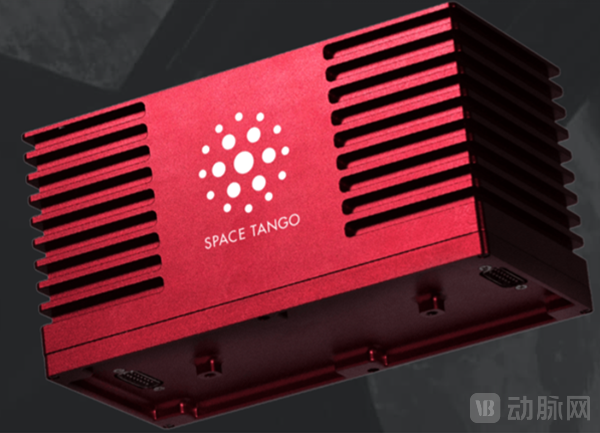
CubeLab Source: Space Tango Official Website
CubeLab has the following features:
① Retractable
CubeLab customizes laboratories for each experiment, with sizes determined by experimental requirements. Using 1U (10 cm³) as the standard unit, CubeLab can be expanded to 2U, 4U, 6U, and 9U configurations, and new hardware enabling expansions beyond 9U is currently under development.
② Multi-branch catheter
CubeLab utilizes multiple branch lines to manage various fluids, enabling experimental processes such as media exchange, sampling, and fixation. These branch lines are designed according to the flow rate and pressure parameters required for the experiments.
③ Temperature Control
The temperature system developed by CubeLab can maintain temperatures below 4°C and provide precise temperature control tailored to experimental requirements throughout the experiment.
④ Documentation and Observation
CubeLab is equipped with imaging devices such as lighting and microscopes, enabling cyclical recording and observation to allow researchers to monitor experimental progress more effectively.
⑤ Automated Control and Real-Time Data
CubeLab achieves automated control of laboratory structures through built-in flight algorithms, providing near real-time experimental data.
2ST-42
ST-42 is an autonomous in-orbit manufacturing facility developed by Space Tango in 2018. It is a free-flying spacecraft capable of being deployed into Earth orbit. Equipped with robotic systems, solar panels, propellant, and other components, ST-42 enables automated free-flight operations.
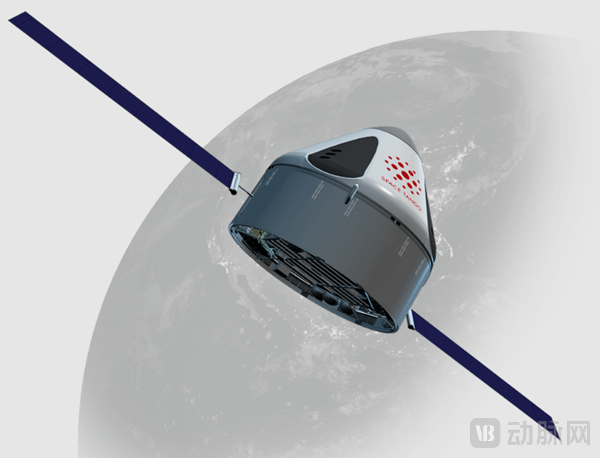
ST-42 Image source: Space Tango official website
In compliance with the Current Good Manufacturing Practice (CGMP) regulations established by the FDA, ST-42 is capable of producing advanced materials, biomedical devices, and other high-value products. Each ST-42 mission spacecraft remains in orbit for 10 to 30 days and can execute ten missions simultaneously, thereby reducing production costs and shortening turnaround times.
Currently, Space Tango is developing new commercial market segments in space through ST-42.
Space Business Opportunities and the LEO Economy
Kentucky Science and Technology Corporation (KSTC) has established a comprehensive in-orbit production ecosystem leveraging low Earth orbit (LEO). Its affiliates—Kentucky Space, Space Tango, and the Exomedicine Institute—provide technical support, platform development, and experimental design, respectively, thereby lowering entry barriers to enable research and manufacturing in LEO.This interdisciplinary approach to research and development heralds the rise of a “New Space” era—a novel market for uncovering space-related business opportunities and developing the low Earth orbit (LEO) economy.
In 2020, three collaborative projects by Space Tango focused on biomedical applications received the NASA Technology Utilization Award, including one with Lambda Vision for tissue manufacturingProtein-Based Retinal Implants, in collaboration with the University of California, San DiegoDeveloping Orbital LaboratoriesAdvancing stem cell therapy and regenerative medicine, with joint development and application alongside Cedars-SinaiStem Cell ProductionCapability to support personalized medicine.
In 2021, Space Tango partnered with Sierra Space, another startup specializing in microgravity laboratory platforms, to leverage their respective strengths in jointly identifying space-based business opportunities and pioneering a new low Earth orbit (LEO) space economy. This emerging space economy will involve partners from multiple sectors, including technology, materials, and biomedical industries.
According to estimates and forecasts by Morgan Stanley, the global space industry—currently dominated by satellites in low Earth orbit (LEO)—is projected to see its revenue grow from $350 billion in 2016 to $1.1 trillion or more by 2040. LEO holds significant potential for creating new markets that will further drive terrestrial commercial applications of space-based manufacturing.