

Smart Socks Based on Plantar Pressure and Gait Analysis Enable 24/7 Diabetic Foot Monitoring, Targeting a $40 Billion Market
China is the country with the largest number of diabetes patients in the world, ranking first globally, and the patient population continues to grow rapidly.
According to data released by the International Diabetes Federation (IDF) in 2021,# China’s Adult Diabetic Population Reaches 141 Million, accounting for approximately one-quarter of the global patient population,It is projected to increase to 174 million by 2045.[1]。
Diabetic foot ulcers are one of the most severe chronic complications of diabetes. Based on global data, among patients with type 2 diabetes,The prevalence of diabetic foot ulcers is 6.4%.[2], globally,The annual mortality rate among patients is as high as 11%.,The mortality rate among amputees is as high as 22%.,One diabetic patient undergoes amputation every 30 seconds as a result.[3]。
Most severe plantar lesions develop from initial-stage plantar ulcers; therefore, preventing diabetic foot ulcers is of great significance for patients with diabetes in preventing and controlling complications, while also avoiding substantial treatment costs for families.
Affected by ““Sci-Tech China” The 2nd High-Value Patent Project Selection for BiomedicineAt the invitation of VCBeat, we were honored to interviewZhao Dong, Director of the Center for Endocrine, Metabolic and Immune Diseases, Beijing Luhe Hospital, Capital Medical University。
Director Zhao Dong is from Luhe Hospital.Director of the Beijing Key Laboratory for Diabetes Prevention and Control Research, leading the integrated diabetes prevention and treatment program in Tongzhou District, Beijing, together withDr. Shen Sun, Beijing University of Technology、Professor Wu ShuicaiCo-developedThe smart sock system for preventing diabetic foot ulcers meets patients' round-the-clock monitoring needs, enhances patient management, and improves coverage.。
The Over-10-Billion-Yuan Market for Diabetic Foot Ulcer Testing Has Long Been Monopolized by Overseas Companies
According to Grand View Research's market research report,The global market size for treatment costs associated with diabetic foot ulcers was $3.6 billion in 2017 and is projected to grow at an annual rate of 8.2% from 2019 to 2025.[4]。
Abnormal changes in plantar pressure are the earliest signs of diabetic foot ulcers, and daily monitoring of plantar pressure can serve as an effective preventive measure.
ButThe diabetic foot screening market in China has long been monopolized by foreign plantar pressure measurement devices.。
Footscan plantar pressure plate is a device commonly used in hospitals to detect patients' plantar pressure information. It is used to collect plantar pressure data under static and normal gait conditions, and is recognized as the standard system for detecting plantar pressure. However, it is expensive and bulky.
In addition, there is the JASENCO treadmill, which is equipped with pressure-sensing plates to detect plantar pressure information during running; however, this device is also bulky. The AFA-50 foot pressure analyzer reduces the instrument’s weight but can only measure static plantar pressure.
“The biggest drawback of these three testing systems is their limited application scenarios; they can only be deployed in fixed hospital settings and are unable to support routine, around-the-clock monitoring. ‘Each unit costs hundreds of thousands of yuan, making it impractical for use in patients’ homes. Moreover, many hospitals lack such equipment, leaving patients with very few options for testing. This significantly compromises the effectiveness of assessment and detection,’ Director Zhao Dong told VCBeat.”
Meanwhile,Many patients lack awareness of prevention and proactive screening, and do not place sufficient emphasis on diabetic foot.。
A considerable number of patients with diabetic foot fail to recognize the severity of foot ulcers and the urgency of treatment, opting for self-care or seeking care at non-medical facilities. Even among those with severe conditions who present to hospitals, some forgo comprehensive in-hospital treatment due to financial constraints, or even abandon all treatment altogether. It is reported thatThe average hospitalization cost for patients with diabetic foot in China is 26,610 yuan, while the hospitalization cost for patients undergoing amputation is 49,456 yuan.[5]。
Director Zhao Dong believes that,The limited availability of diagnostic equipment and patients' lack of awareness constitute significant risks and deficiencies in the diagnosis and treatment of diabetic foot.。
Therefore, if devices for routine screening of diabetic foot could be developed to improve patient adherence and enable timely intervention in the preclinical stage of diabetic foot, would this effectively reduce the number of patients with diabetic foot and alleviate the burden of subsequent treatment?
Given patients’ limited understanding of their disease, Director Zhao Dong, in collaboration with the Biomedical and Electronic Information Processing Laboratory at the School of Life Science and Bioengineering, Beijing University of Technology, designed aSmart Socks Based on Flexible Pressure Sensors and Plastic Bare Optical Fiber Sensors, intelligent detection of diabetic foot ulcers.
Smart Socks Equipped with Flexible Sensor Systems Enable 24/7 Monitoring of Diabetic Foot
These smart socks utilize flexible sensing fibers, with multiple sensors integrated during the knitting process to measure plantar pressure.Flexible Pressure Sensor、Accelerometer Sensors for Gait MeasurementandData Processing Circuit, and equipped withThe terminal device features a data module that integrates gait pressure analysis.。
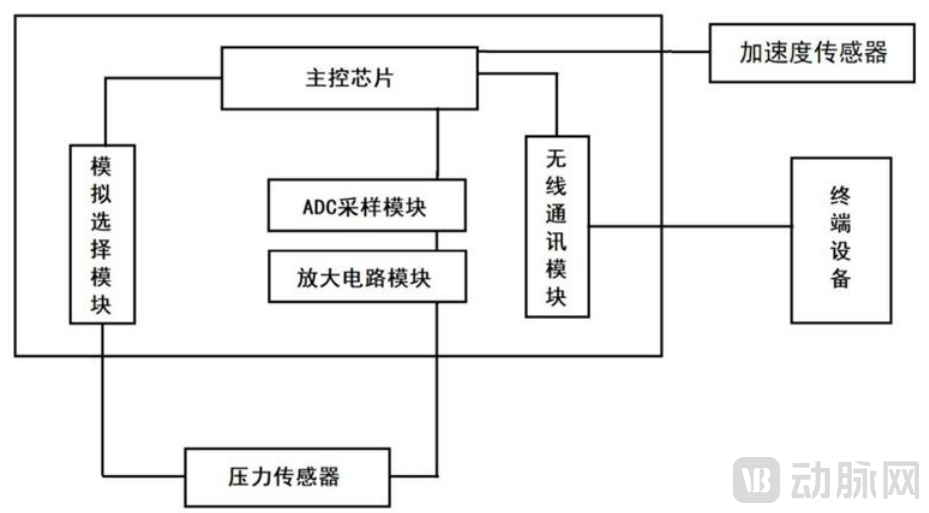
System Connection Diagram
Among these components, the data processing circuit serves to interconnect various sensing devices. It primarily consists of a main control chip, an analog multiplexer, an amplifier circuit module, an ADC sampling module, and a wireless communication module.
The input terminal of the flexible pressure sensor is sequentially connected to the analog multiplexer and the main control chip, forming a closed loop for the pressure acquisition circuit; the accelerometer sensor is connected to the main control chip; and the main control chip communicates with the terminal device via a wireless communication module.
It is reported that this system uses the nRF52832 low-power Bluetooth SoC as the main control chip. Through row and column control via the CD74HC4051 analog multiplexer, it can cyclically output plantar pressure signals and transmit them to the OPA365 operational amplifier for amplification. The built-in analog-to-digital converter of the nRF52832 is used for signal sampling, and the collected foot pressure signals are transmitted to a smartphone via low-power Bluetooth for real-time display.
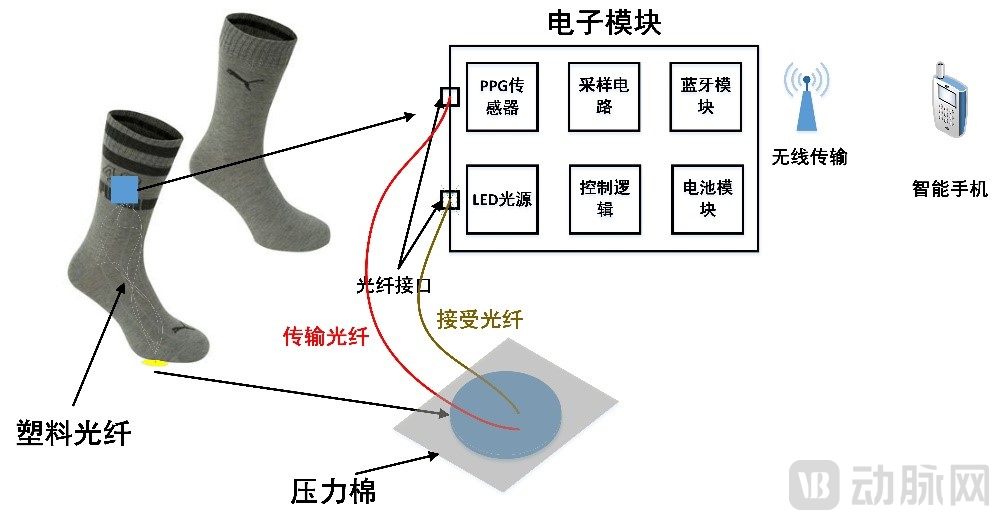
Schematic Diagram of Smart Sock Operating Modes
Based on the aforementioned biological and information technology foundations, smart socks perform comprehensive spatial and temporal analyses of the wearer’s gait data and movement status to detect abnormal pressure variations and/or gait alterations across different gait patterns, thereby establishing correlations between pressure distributions and pathological conditions based on these gait characteristics.
“Whether running, walking, or standing still, as long as the wearer’s feet are in contact with the ground, different pressure points are generated. Once detected by the flexible pressure sensors in the smart socks, the data is automatically transmitted via Bluetooth to the cloud and pushed to the patient’s mobile app, allowing them to monitor changes in plantar pressure,” continued Director Zhao Dong. “However, since patients are not professional physicians, they often find it difficult to interpret the specific numerical values. Therefore, we have also implemented certain alert systems.”
The mobile app will automatically issue alerts under the following circumstances: abnormal pressure distribution is detected during different movement states; and/or abnormal gait is detected during different movement states; and/or high-pressure values exceeding the threshold are detected, indicating potential areas for ulcer development.
More importantly,Smart Sock Data Is Linked to the Monitoring Platform of the Endocrine, Metabolic and Immune Disease Center at Luhe HospitalDirector Zhao Dong stated, “We can provide remote guidance to patients. In severe cases, we will promptly advise them to seek medical attention at a hospital; for mild cases, we can implement measures to correct and protect pressure points, such as customizing special insoles and footwear to improve gait-related pressure distribution.”
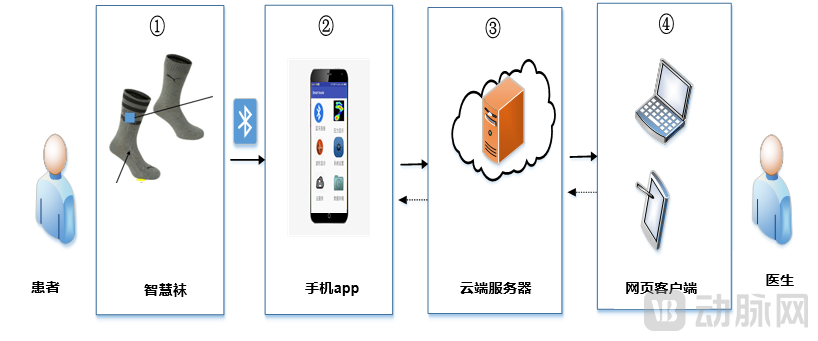
Schematic Diagram of Telecommunication Model
Currently, Professor Zhao Dong’s team has commissioned Footfalls and Heartbeats (UK) to produce prototype smart socks. Each test takes only 15–20 minutes, with varying testing frequencies and time points tailored to patients’ individual needs.
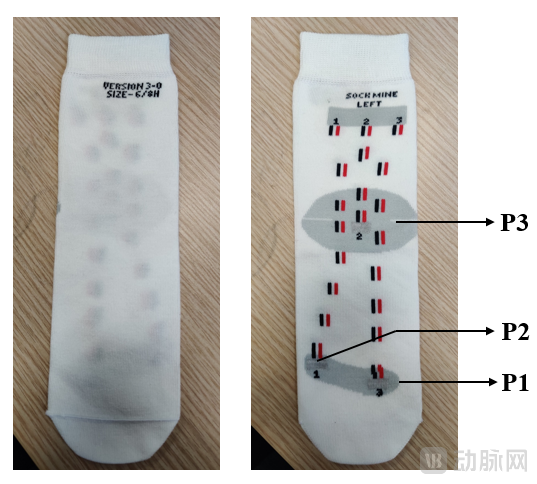
Footfalls and Heartbeats: Production of Smart Sock Samples
P1: Forefoot sensor position P2: Midfoot sensor position P3: Heel sensor position
Plantar pressure data from the left feet of 15 patients with diabetes were collected using both smart socks and the Footscan flat-plate plantar pressure measurement system, as shown in the figure below. Although there are slight differences in the measured values between the two methods, the overall trends are consistent. For instance, four peaks were observed at V1, V5, V9, and V12 in region P1; the highest pressures occurred at V1 and V12 in region P2; and two peaks were identified at V1 and V10 in region P3. These findings indicate that further optimization of foot zoning is required.
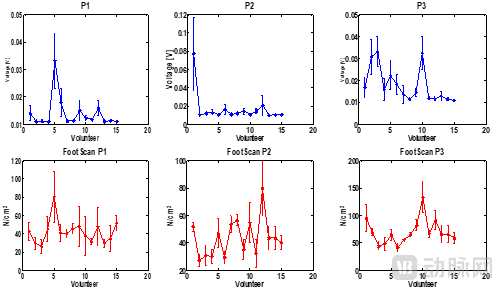
Peak Plantar Pressure Values at Different Sites of the Left Foot in 15 Patients with Diabetes
P1: Forefoot sensor position P2: Midfoot sensor position P3: Heel sensor position
Mass production capability is key to bringing smart socks to market
Regarding how to bring smart socks to market, Director Zhao Dong candidly admitted that marketing and research are ultimately two different directions. “We provide the ideas and technology,”Mass production should be left to specialized manufacturers; interested companies may directly acquire the technology through transfer.”。
“We can only contribute at the research level, but the ultimate goal of research must be centered on patients. Without translation into clinical practice, it remains merely at the research stage, and its value is significantly diminished,” said Director Zhao Dong.
"In fact, throughout her conversation with Director Zhao Dong, she consistently expressed her desire to translate diabetic foot research into clinical practice and enhance patients’ awareness of diabetic foot."
"In fact, while she was conceptualizing, she had already begun to put her ideas into action."
Step 1 is to start with patient education.Currently, Zhao Dong’s team is rolling out the diabetes MMC 1+X management system across communities in Tongzhou. “Regardless of whether patients seek care at Luhe Hospital or their affiliated community health centers, they can receive standardized treatment. Furthermore, we regularly conduct community-based activities, including specific guidance and education on diabetic foot care, as well as free clinic services.”
After enhancing patients' awareness of the importance of diabetic foot,The second step is to popularize prevention and detection methods.
"In addition to the routine control of blood glucose and blood lipids, Director Zhao Dong told VCBeat's Orange Bureau that there is a relative scarcity of technologies for detecting diabetic foot,"Luhe Hospital is the only facility in Tongzhou District equipped with large-scale diagnostic equipment; the development of smart socks aims to meet the testing needs of communities and households.”。
If the patient truly has diabetic foot,Step 3 is to achieve seamless integration between internal medicine and surgery, thereby saving critical treatment time.
Zhao Dong’s team has integrated advanced domestic therapeutic approaches into an integrated medical-surgical model, aiming to buy time for patients and improve treatment outcomes. “In the future, we hope to achieve research breakthroughs in vascular pathology and neurotrophic support, although the process may be somewhat lengthy.”
It is evident that Director Zhao Dong is engaged in every conceivable aspect of diabetic foot care, spanning prevention and the early, middle, and late stages of the disease.
At the end of the interview, she shared her perspective as a physician on the significance of scientific research: Research should strive for practical implementation and translation, ultimately benefiting patients. Merely publishing a paper or securing a grant should not be the ultimate goal, but rather part of the process.
References:
[1] International Diabetes Federation. IDF Diabetes Atlas, 10th. Brussels [EB/OL]. http://www.diabetesatlas.org.
[2] Zhang P, Lu J, Jing Y, Tang S, Zhu D, Bi Y. Global epidemiology of diabetic foot ulceration: a systematic review and meta-analysis†. Ann Med. 2017;49(2):106–16.
[3] Amoah VMK, Anokye R, Acheampong E, Dadson HR, Osei M, Nadutey A. The experiences of people with diabetes-related lower limb amputation at the Komfo Anoky Teaching Hospital (KATH) in Ghana. BMC Res Notes. 2018 Jan 24;11(1):66.
[4] Market Research Reports & Consulting | Grand View Research, Inc. https://www.grandviewresearch.com/
[5] Shi Hongyan, Xu Zhangrong, Jiang Yufeng, Li Xiang, Wang Yuzhen, Lan Ying, Liu Jianqin. Serum albumin is a good predictor of amputation risk and medical costs in diabetic foot ulcers: The 12th National Academic Conference on Endocrinology of the Chinese Medical Association, Xi'an, Shaanxi, China, 2013[C].