

Bao'ao Naxi Challenges Obeticholic Acid Head-to-Head in NASH with Novel FXR Inhibitor
To date, no new drug for NASH (non-alcoholic steatohepatitis) has been launched globally, but in the view of Liu Quanhai, founder of Baona Xi,The NASH therapeutic arena has ushered in a second wave of new drug development.
Obeticholic acid, developed by Intercept Pharmaceuticals in the United States, was launched in 2016. Although its initial indication was primary biliary cholangitis, it became a landmark event in the treatment of fatty liver disease.brought numerous companies into the first wave of NASH new drug development.
Obeticholic acid, as an FXR agonist, is a representative drug targeting the FXR receptor. Although its first approved indication was not NASH, its successful market launch has prompted numerous multinational corporations (MNCs), including Novartis, AbbVie, Gilead, and Eli Lilly, to actively pursue strategic layouts in this area. Notably, Novartis has made significant investments in the FXR target, having developed four products. Among Chinese pharmaceutical companies, Chia Tai Tianqing, CSPC, Ascletis, Zeltex, and Kefei Ping Medicine have also entered the field of FXR-targeted drug development.
Treating NASH: FXR Is an Inescapable TargetCurrently, FXR agonists represent the most mature area of research and development; however, their adverse effects are also evident. Developing effective drugs while ensuring safety is an urgent challenge that needs to be addressed in the NASH therapeutic landscape.
FXR inhibitors have come into the spotlight. With a deepening understanding of the biological functions of FXR, particularly the beneficial effects of FXR transcriptional inhibition on fatty liver disease,Research on FXR inhibitors is gradually increasing and has become a new hope for the treatment of NASH.
Bai Aona Xi is a company that started with FXR inhibitors and focuses on the research and development of new drugs in the field of lipid metabolism.
Shanghai Institute of Pharmaceutical Industry Scientists and CAS Academicians Form Joint Team
Among the older generation of scientists, multidisciplinary talents with both medical and pharmaceutical backgrounds, like Liu Quanhai, are rare. When Liu Quanhai graduated from the Fourth Military Medical University with a bachelor’s degree, he majored in clinical medicine. In the 1980s, he served as a visiting scholar at the University of Maryland and at the multinational pharmaceutical company Merck & Co. Upon his return, he joined the Shanghai Institute of Pharmaceutical Industry to engage in new drug research and development.
Liu Quanhai’s career bears witness to the development of China’s pharmaceutical regulatory system from its inception.He is not only the Vice Chairman of the Applied Pharmacology Professional Committee of the Chinese Pharmaceutical Association, but also served as a national expert for drug and food review, making him one of the earliest scientists in China to become a drug review expert.
At the Shanghai Institute of Pharmaceutical Industry, Liu Quanhai has achieved numerous accomplishments. He was awarded the Second Prize for Scientific and Technological Progress by the General Logistics Department of the Chinese People's Liberation Army, and has received funding from multiple sources, including the 863 Program, the National Natural Science Foundation, and major national special projects. He has been granted more than 50 invention patents both domestically and internationally, and has published over 60 academic papers.
Leveraging his clinical and pharmacological background, Liu Quanhai has worked for many years on drug developability and the drug development process. In 1995, he began leading his own team to spearhead new drug research and development efforts. To date, he has dedicated several years to in-depth work in the field of lipid metabolism disorders, successfully securing clinical trial approvals for two Class 1 innovative drugs. Additionally, he has led the research and development of, and obtained clinical trial approvals for, two Class 2 traditional Chinese medicine products.
Until his retirement, Liu Quanhai still had many projects of personal interest that remained unfinished. Unwilling to simply retire and abandon research initiatives he deemed promising, he continued to delve deeply into his work after retirement, focusing primarily on the development of drugs for lipid metabolism disorders that had not yet been completed.
During an in-depth study of a parent structure, Liu Quanhai’s team discovered that it exhibited favorable effects on lipid metabolism. This compound has clear advantages, including the ability to promote cholesterol metabolism; however, its small molecular structure makes it less than ideal from a drug development perspective.
Therefore, Liu Quanhai’s team undertook structural modifications of the compound. This work was led by Dr. Liu Minyu, daughter of Liu Quanhai, who also participated in subsequent preclinical studies of the candidate compounds. Based on the development results from the computational team, nearly one hundred compounds were ultimately synthesized. Among them, compound 886 stood out, demonstrating clear pharmacodynamic efficacy and a favorable safety profile, which led Liu Quanhai to recognize the potential of compound 886 in the field of lipid metabolism disorders.
During the development of 886, Liu Quanhai’s team received strong support from Wang Guangji, an academician of the Chinese Academy of Engineering. Liu and Wang have long admired each other and have been close friends for many years.Wang Guangji is a Chinese expert in pharmacokinetics,Recipient of the Second-Class National Award for Progress in Science and Technology on two occasions, he has served as Director of the Ministry of Science and Technology’s Preclinical Drug Metabolism and Pharmacokinetics Research Platform, and as an expert reviewer for the China Food and Drug Administration and the Jiangsu Provincial Center for Drug Evaluation. Regarding compound 886, which demonstrates drug development potential, Wang Guangji led his team in conducting pharmacokinetic evaluations, thereby providing more practical and innovative insights for subsequent drug research and development.
Liu Quanhai and Wang Guangji, unwilling to see this drug-worthy compound go to waste, decided to embark on a path of commercial R&D by establishing Baiao Naxi, a novel drug development company focused on lipid metabolism disorders. Committed to advancing their investigational new drug through clinical trials and ultimately to market launch, the company appointed Academician Wang Guangji as its Chief Scientist.Compound 886 was henceforth codenamed “Boao Naxi 001”.
Head-to-Head with Obeticholic Acid: A Tough Nut to CrackNASHThis Tough Nut to Crack
Baiaonaxi 001 is an FXR receptor-targeting inhibitor, with indications primarily focused on non-alcoholic fatty liver diseases such as NASH.
Currently,There are numerous targets worldwide for the NASH indication,including FXR, PXR, NRF2, PPARs, GLP-1, SGLT-2, ASK-1, ACC, miR-33a, DGAT1/2, FGF21, AMPK, mTORC, CCR, AnxA1, RvD1, Galectin-3, LOXL2, and CYR61. There are already over a hundred NASH drugs under development, with some pharmaceutical companies even adopting a multi-pronged approach by exploring different targets and combinations of targeted therapies in an effort to conquer NASH.
Among these, FXR is considered one of the ideal targets for treating NASH, and FXR agonists are numerous and have made relatively advanced progress in current clinical studies.
However, the fact that no company has achieved success indicates that NASH is a tough nut to crack.According to statistics, one-third of new drug candidates for NASH in clinical Phase II and beyond fail. Even obeticholic acid has failed to conquer NASH and is associated with relatively serious side effects. Investigating the underlying reasons, Liu Quanhai’s research team believes thatNASH, as a multifactorial, progressive, and complex disease, is difficult to treat effectively with single-target therapies. Meanwhile, the stringent requirements for clinical endpoints imposed by regulatory authorities have created significant challenges in the development of new NASH drugs.
In light of this landscape, Bai’ao Naxi has opted for a differentiated strategy. Unlike FXR agonists represented by obeticholic acid currently on the market, Bai’ao Naxi 001 is not a steroidal compound and functions as an FXR inhibitor. By avoiding the activation of other pathways associated with agonists, it ensures a relatively lower incidence of side effects.
According to reports, Baiaonaxi 001 targets the FXR receptor, which is enriched in intestinal and hepatic tissues while maintaining low peripheral blood concentrations, thereby enhancing its safety profile. Mechanistically, 001 facilitates the metabolism of cholesterol into bile salts and bile acids, thus reducing the accumulation of lipids and bile in the liver at the source.
Currently, Bai’ao Naxi has chosen to conduct a head-to-head trial of 001 against obeticholic acid, which has already demonstrated positive pharmacodynamic results.
Based on preclinical experimental results, Bai’aona Xi 001 can reduce cholesterol and low-density lipoprotein (LDL) levels, while also demonstrating a relatively rare additional therapeutic effect: a stable increase in high-density lipoprotein (HDL). HDL has long been recognized as a lipoprotein with hepatoprotective effects; its steady elevation facilitates the removal of cholesterol from visceral tissues and its transport to the liver for excretion.
In the rat model of fatty liver induced by fat emulsion, Bai’ao Naxi 001 demonstrated superior efficacy in reducing cholesterol and low-density lipoprotein (LDL) levels compared to obeticholic acid (OCA). Additionally, it increased high-density lipoprotein (HDL) levels and provided a certain degree of protection for liver function. Hematoxylin and eosin (HE) staining revealed clear hepatic cord architecture in rats treated with 001, with the extent and severity of steatosis being lower than that observed in the OCA group, which exhibited inflammatory infiltration. In Oil Red O staining assays, 001 showed more than a 10% improvement over OCA. Masson’s trichrome staining indicated that 001 was slightly superior to OCA in reducing the degree of hepatic fibrosis.
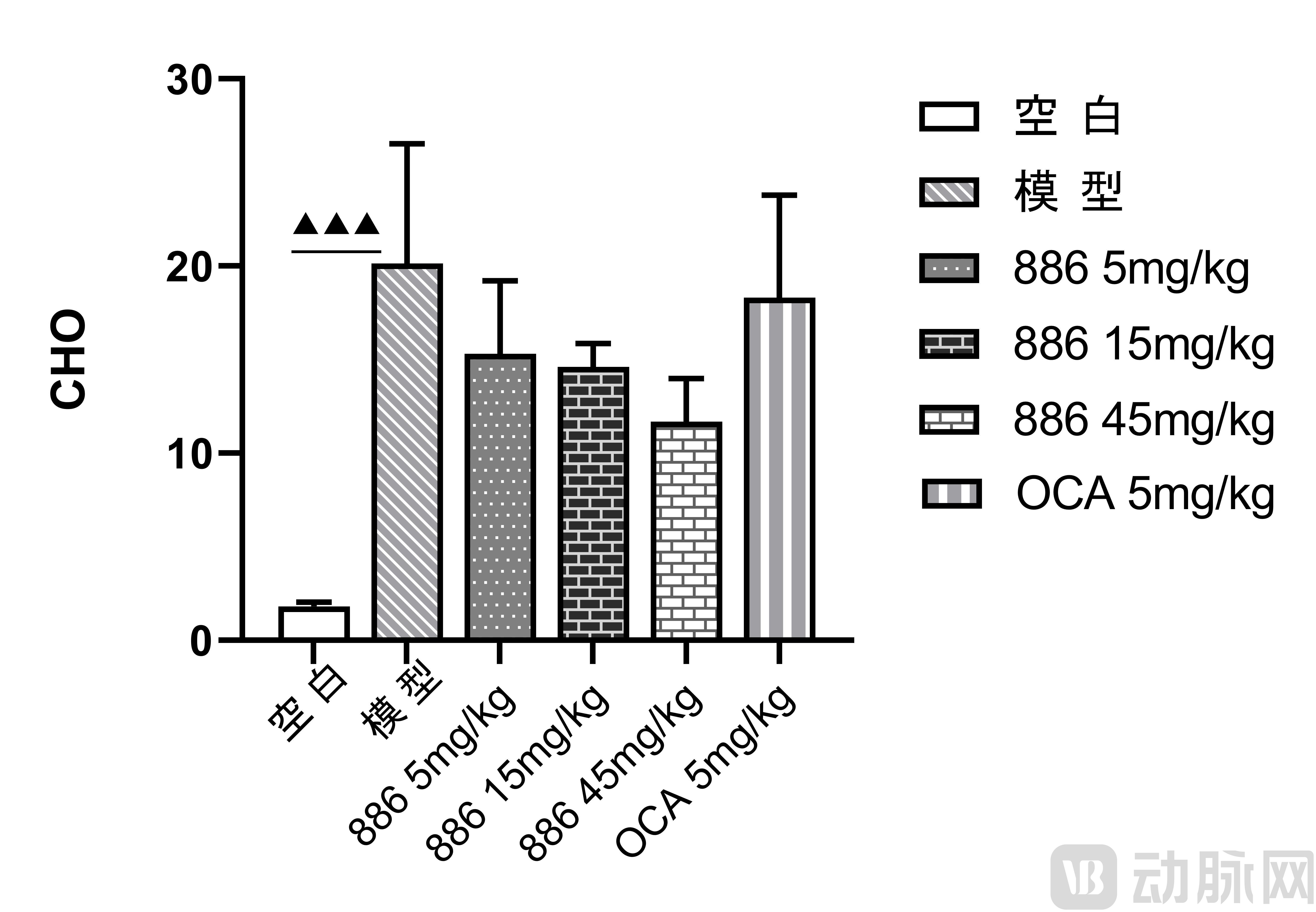
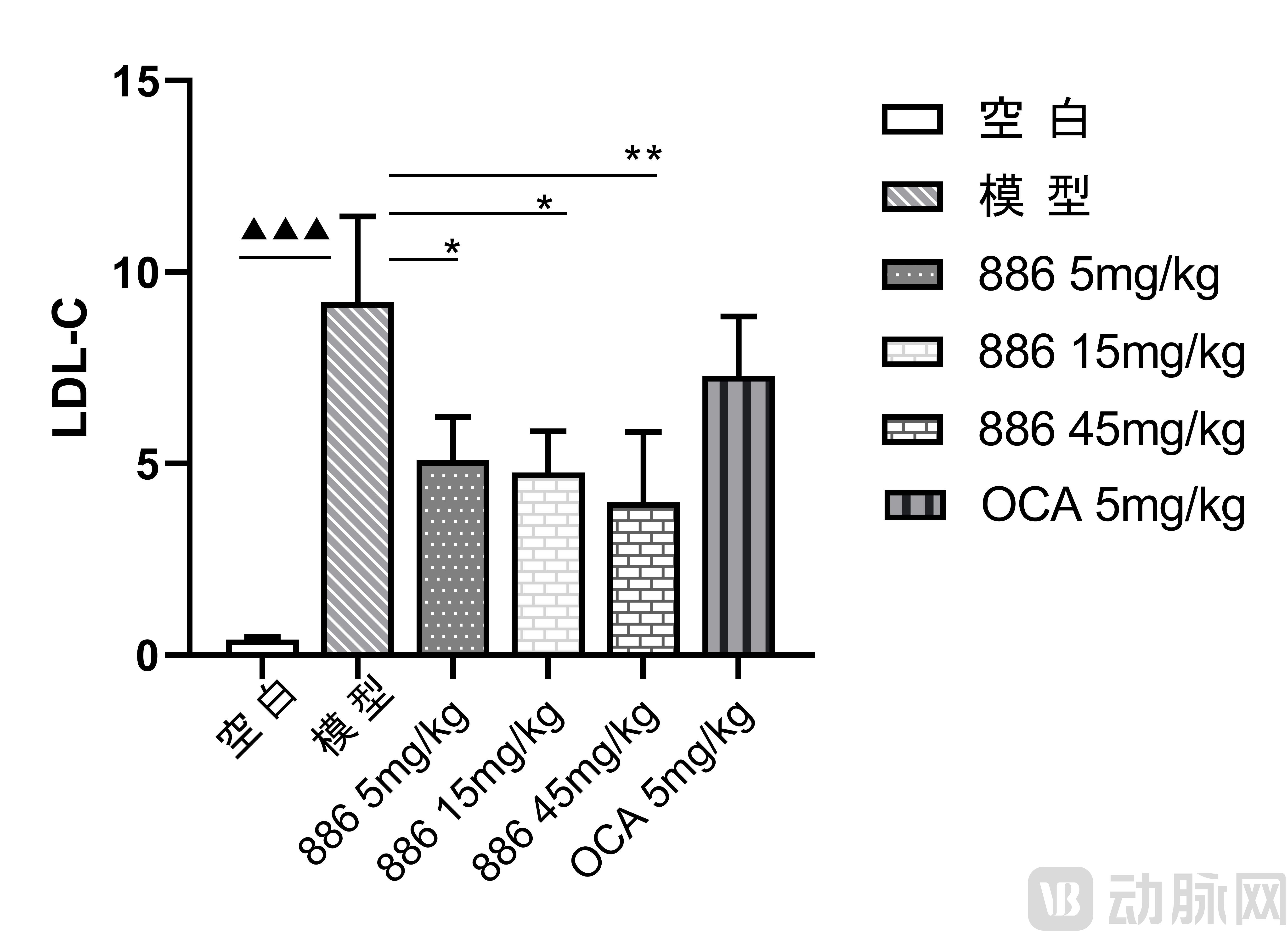
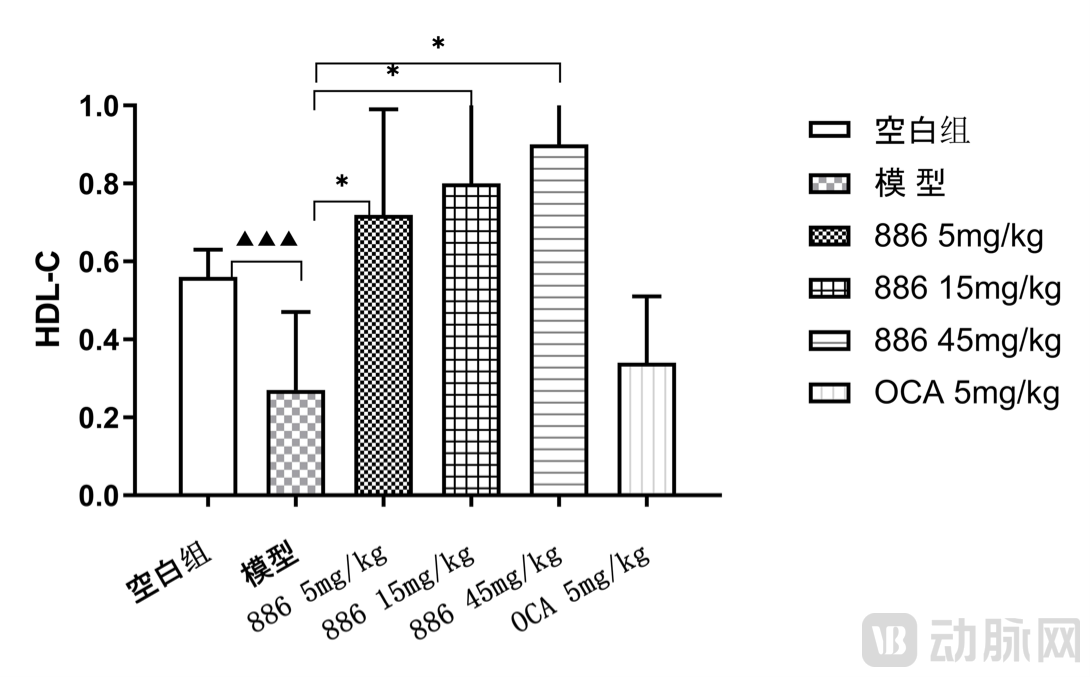
Data Performance of Biao Naxi 001 (886) versus Obeticholic Acid (OCA) on Cholesterol (CHO), Low-Density Lipoprotein (LDL), and High-Density Lipoprotein (HDL) in a Rat Model of Fat Emulsion-Induced Fatty Liver. Image Source: Biao Naxi
More importantly, obeticholic acid was required by the FDA to carry a boxed warning in its labeling due to the risk of hepatic decompensation and liver failure in patients with moderate-to-severe hepatic impairment. Concerns about drug safety are one of the reasons why it has not been approved for the treatment of NASH.Bai'ao Naxi 001 did not exhibit this serious risk in mice and had minor side effects.Results from acute toxicity studies in mice and non-GLP long-term toxicity studies demonstrated that Bai’ao Naxi 001 is safe and non-toxic. The maximum tolerated dose (MTD) in mice was ≥5 g/kg. In rats, administration of a high dose of 1.2 g/kg for four weeks resulted in no abnormalities in biochemical parameters or complete blood count (CBC), and gross pathological examination revealed no abnormal changes in organs.
This has bolstered the confidence of Liu Quanhai’s team in advancing BAO NAXI 001 into clinical trials.
Liu Quanhai, the team leader, revealed that,Currently, Bai’ao Naxi is in the process of submitting an Investigational New Drug (IND) application to the Center for Drug Evaluation (CDE), with homozygous familial hypercholesterolemia, a rare disease, selected as the first indication.Although it is a rare disease, China’s large population base means that the number of patients with this condition is not insignificant. For this disease, preclinical pharmacodynamic studies of Bai’ao Naxi 001 are currently underway. The team will obtain additional pilot-scale samples to conduct safety evaluations under Good Laboratory Practice (GLP) conditions and, once the requirements for an Investigational New Drug (IND) application are met, perform another round of safety verification for 001.
As planned, once Bo’ao Naxi 001 is approved and launched for the treatment of homozygous familial hypercholesterolemia, the company will expand its indications to the highly anticipated NASH sector. Meanwhile, Bo’ao Naxi has also begun laying out its strategy in sectors such as hyperlipidemia and obesity.
From the perspective of the Bo’ao Naxi R&D team, Liu Quanhai, as a seasoned veteran, drove the company’s establishment through innovative ideas, spearheaded the development of Bo’ao Naxi 001, and laid a solid foundation for the company’s future growth. In Liu Quanhai’s view, times are constantly evolving; he hopes that the new generation of pharmaceutical professionals, well-versed in innovation education, will keep pace with the times and leverage emerging technologies to conduct more meaningful pharmaceutical R&D work.