

YHJY IPO: China's Leading Home Respiratory Device Maker Goes Public, Fengyu Capital Reaps 100x Return After 12-Year Partnership
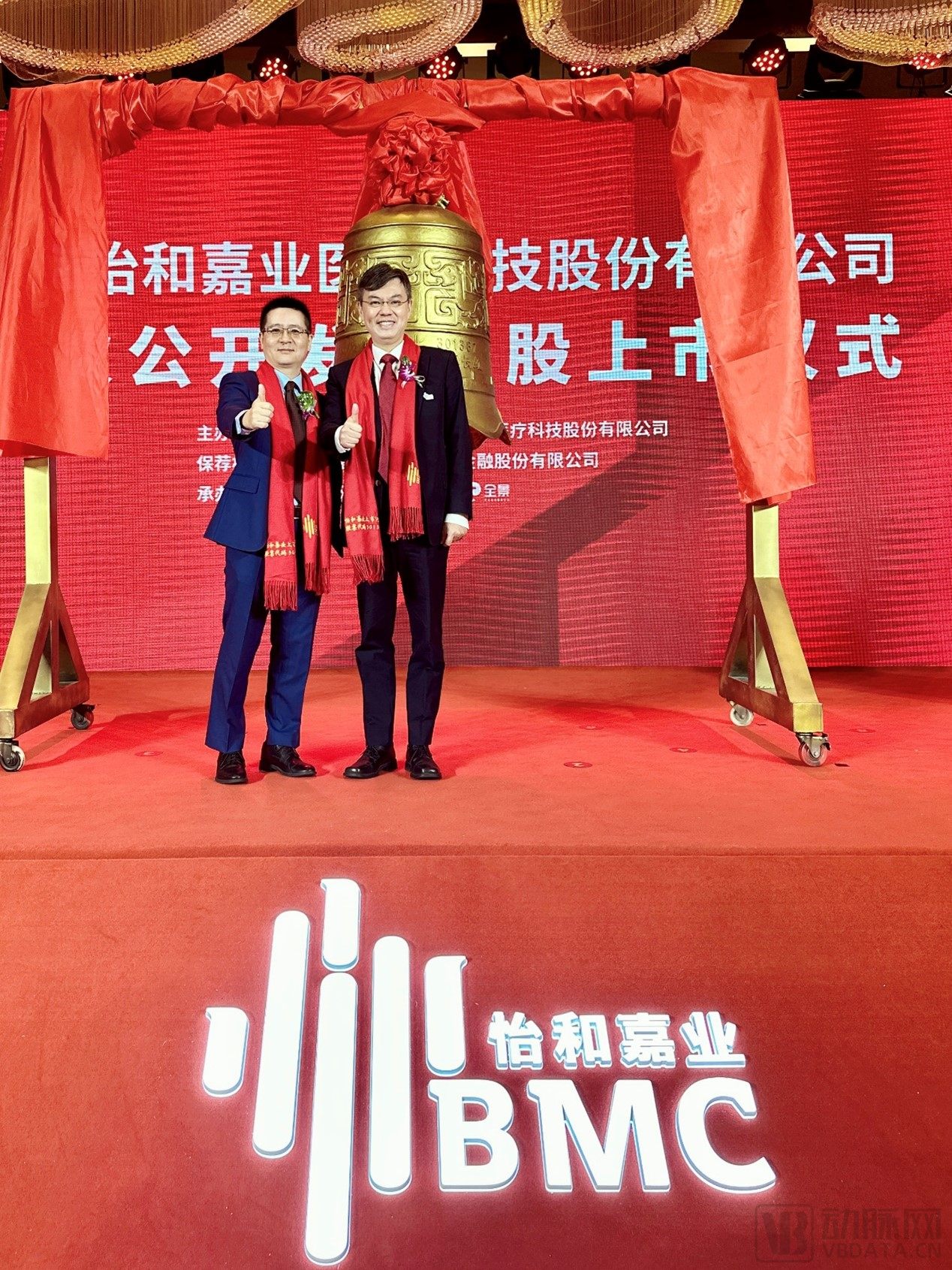
BMC successfully listed on the ChiNext board of China’s A-share market on Tuesday, November 1, 2022, becoming the first publicly traded company in China to offer ventilators under an independent domestic brand. The IPO price was set at RMB 119.88 per share, and the stock opened with a 100% surge on its first day of trading.
Since its establishment in 2001, BMC has undergone 22 years of development, evolving from a startup to an IPO. Fengyu Capital made its initial investment in BMC in 2010, with founder Tian Zirui and his team accompanying the company for 12 years. The hardships, struggles, breakthroughs, growth, and expansion experienced during this period remain vivid in their memories. This article presents Mr. Tian Zirui’s insights from a unique industrial investment perspective on why BMC was able to grow into the leading enterprise in China’s home ventilator market and successfully go public.
Zhuang Zhi, the founder of BMC, has been affectionately referred to by me as “Old Zhuang” over the years. Old Zhuang is my senior fellow alumnus. We first met in 2009 at a restaurant just outside the south gate of Tsinghua University. At that time, BMC had endured eight years of arduous entrepreneurship. Although its annual revenue had reached several million yuan, the company still required substantial investment in research and development as well as sales and marketing. It was a period marked by shortages across the board and significant developmental challenges. During our dinner, Old Zhuang did not complain about these hardships. Instead, he spoke continuously about ventilators, a smile playing on his lips, seemingly savoring the tough journey of the past eight years. I felt that he must have been sustained by a grand dream, and I gradually found myself won over by his unwavering spirit.
In mid-2010, our team invested in BMC, and I joined the company’s board of directors. In the following years, BMC’s business gradually entered a trajectory of rapid development. Through the team’s efforts, the company’s products began to gain momentum in the international market, strategically entering mainstream markets for the ventilator industry at the time, such as Western Europe and the United States, with performance doubling year after year.
In the winter of 2012, at the international medical equipment exhibition in Düsseldorf, Germany, BMC unveiled its latest model of ventilator products. The company’s team was highly motivated and prepared to significantly intensify its business expansion into overseas markets following the exhibition. However, late on the first night of the event, I received a call from Old Zhuang: “Resmed, the global giant in ventilators, has requested that the German police directly seal off our booth and detain all exhibited products, alleging patent infringement.”
It was later revealed that ResMed’s “campaign” was not directed solely at BMC, but also constituted a patent offensive against other ventilator manufacturers entering the U.S. market, including Apex Medical Corp. Shortly thereafter, Apex reached a settlement with ResMed and voluntarily withdrew from the U.S. market. Upon learning of Apex’s exit from the U.S. market, Lao Zhuang invited me and Xu Jian, General Manager of BMC, to dinner. During that harsh winter in Beijing, we chose a Chongqing-style hotpot restaurant to ward off the cold, yet as we gazed at the bubbling red broth, the three of us felt heavy-hearted.
In the spring of 2013, ResMed formally filed a Section 337 patent lawsuit against BMC before the U.S. International Trade Commission (ITC). I called Mr. Zhuang to discuss how to respond, and he firmly replied with a single word: “Fight!” From his resolve, I fully understood that BMC had confidence in its patent technology. As the company’s sole external director, I began to fully support the management team in defending against the lawsuit. It was only later that we learned this case was the first-ever ITC Section 337 investigation in China’s medical device sector, with no precedent to draw upon.
The legal battle raged simultaneously in the United States and China for three years, a truly arduous struggle. It is hard to imagine that in 2013, a small Chinese enterprise with annual sales revenue of less than $20 million would directly confront an industry leader with a market capitalization of $30 billion. When ResMed’s management assessed the litigation, they likely assumed that BMC (Beijing Yihe Jiaye Medical Technology Co., Ltd.) would choose to settle outright. This international lawsuit consumed nearly all of BMC’s profits during those years, yet its management team remained steadfast, advancing methodically. They responded with composure in the U.S. while simultaneously launching patent infringement lawsuits against ResMed in China. I closely monitored the progress of the case and the morale of the team, growing increasingly confident in the outcome. In 2015, at the most stalemate-prone stage of the litigation, we made an additional key investment in BMC, providing the company with valuable resources to fuel its development.
Over the course of three years, BMC leveraged its agility to compete effectively against a larger rival, navigating strategic moves with precision and ultimately earning the respect of ResMed. ResMed’s Chief Legal Officer made multiple proactive visits to China to engage in discussions with BMC, leading both parties to reach an optimal outcome through a comprehensive settlement.
Arduous experiences often yield valuable rewards. BMC chose to confront the challenge head-on; while this path was undeniably difficult, it allowed stakeholders across the industry chain to understand the true circumstances and recognize that BMC is not a plagiarist, but a company with genuine capabilities in product development and market services. Following the conclusion of the lawsuit, BMC swiftly secured global orders, and customer recognition of the brand was significantly enhanced through this legal battle. The company has also brought pride to Chinese enterprises in the realm of global patent competition, honoring the nation.
To date, Fengyu Capital has accompanied BMC for 12 years, witnessing its transformation from a startup into China’s leading medical device enterprise, with products exported to over 100 countries worldwide. Throughout my career in equity investment, BMC is the company I have supported for the longest period, and its successful IPO has delivered my highest single-project return. Observing the company’s achievements today, I am gratified that I made the right investment decision 12 years ago. Looking ahead, the Fengyu team will continue to support BMC’s growth and expansion, leveraging capital advantages to work alongside the management team in driving industrial upgrading and building a more robust ecosystem. We hope that BMC will continue to forge ahead, solidifying the global leadership position of Chinese medical device enterprises.
Fengyu Capital is a dual-currency equity investment firm focused on the healthcare and technology sectors, with offices in Beijing, Shanghai, and Hong Kong. The core team at Fengyu Capital has collaborated for over 10 years, consistently empowering portfolio companies through comprehensive support spanning industry-academia-research integration, clinical resources, sales channels, and regulatory expertise. Acting as true partners to its portfolio companies, Fengyu leverages its professional capabilities to drive their growth. The Fengyu team has delivered stable and sustained outstanding returns to investors, achieving a 39% IRR over the past decade, and has earned continuous recognition from numerous domestic and international institutional investors.
Mr. Tian Zirui has been deeply engaged in the healthcare industry for nearly 20 years. He is the founder of Fengyu Capital and a director of BMC (Beijing Medical Care Co., Ltd.). His previous investment portfolio includes companies such as Meditech (603990), Kemei Diagnostics (688468), Kindstar Globalgene (9960.HK), LabTech (688056), and Sonoscape Medical (300633), which have subsequently gone public on domestic and international stock exchanges. Mr. Tian holds bachelor’s and master’s degrees in Biomedical Engineering from Tsinghua University, as well as an MBA from Duke University in the United States.
BMC is the leading domestic enterprise in home non-invasive ventilators and ventilation masks. In terms of sales revenue for home non-invasive ventilators and ventilation masks in 2020, it ranked first among all Chinese brands. In terms of export sales revenue of home non-invasive ventilators and ventilation masks in China in 2020, the company's market share also ranked first. The company holds a leading market position among domestic brands. After years of development, the company has established a comprehensive distribution network both domestically and internationally, with products exported to over 100 countries and regions across Asia, Europe, North America, South America, Africa, and Oceania. The company has mastered the core technologies of its main products and possesses independent intellectual property rights. Currently, the company holds 388 domestic patents, including 74 domestic invention patents; 27 international patents, including 13 U.S. patents, 13 European patents, and 1 Indian patent; and 55 software copyrights. The company’s products have been well-received in the industry for their technological innovation and practicality. The BMC-790-30ATH ventilator was included in the Ministry of Science and Technology’s “Catalog of Innovative Medical Device Products (2018)” and recognized as achieving “significant technical improvement.”
As global awareness of health and medical care continues to rise, the market size for home non-invasive ventilators has been growing steadily, presenting the company with significant development opportunities. In 2021, the company’s revenue reached RMB 660 million, with a compound annual growth rate (CAGR) of 60.2% over three consecutive years. From January to September 2022, the company’s performance is projected to grow by more than 120%, with revenue exceeding RMB 1 billion and net profit surpassing RMB 260 million. Continuous product R&D innovation, strong market entry capabilities, a synergistic and complementary product portfolio, a comprehensive quality control system, an extensive marketing network, a robust after-sales service system, and an experienced management team collectively serve as strong guarantees for the company’s rapid future growth.