

DPM Advances National Scientific Instrument Innovation with Optical Multimodal Imaging and Magnetic Particle Imaging (MPI)
Recently, the 20th National Congress of the Communist Party of China concluded at the Great Hall of the People in Beijing. In his report to the 20th National Congress, General Secretary Xi Jinping emphasized that “we must uphold the principle that science and technology are the primary productive force, talent is the primary resource, and innovation is the primary driving force.” As a new round of technological revolution gains momentum worldwide, basic scientific research has clearly become a cornerstone for China’s efforts to build an innovative nation and a global leader in science and technology. Major scientific instruments, as key tools for exploring unknown realms and investigating natural laws, play an indispensable role in promoting high-quality development in basic research and technological innovation.
Development of Original Major Scientific Research Instruments and Equipment
Comprehensively Enhance China's Capacity for Original Innovation
For a long time, China has had a weak foundation in the research and development (R&D) of major instruments and high-end precision instruments, relying heavily on imports. This has become a stumbling block to China’s efforts to build an independent and innovative nation. In response to this severe challenge, and in accordance with the national strategic layout for scientific and economic-social development, China has focused on scientific frontiers and national needs. With science-oriented goals, it has strengthened top-level design, clarified key development directions, and encouraged and cultivated the development of exploratory research instruments based on original ideas. Particular emphasis has been placed on supporting the R&D of original, major scientific research instruments and equipment, providing novel means and tools for scientific research to comprehensively enhance China’s capacity for original innovation.In 2011, the National Natural Science Foundation of China (NSFC) established the “Special Project for the Development of Major National Scientific Research Instruments.” In 2014, instrument-related projects were optimized and integrated into the “National Major Scientific Research Instrument Development Project,” which includes two categories: unsolicited applications (with direct cost budgets of less than RMB 10 million per project) and department-recommended applications (with direct cost budgets of RMB 10 million or more per project). In 2021, the special project received 594 unsolicited applications, ultimately funding 75, with an average funding intensity of RMB 8.1246 million per project. It also received 56 department-recommended applications, ultimately funding 4, with an average funding intensity of RMB 84.2714 million per project.
DPM Small Animal Optical Multimodality
Integrated Molecular Imaging Equipment
2012,DPM Team(Incubated at the Key Laboratory of Molecular Imaging, Chinese Academy of Sciences) the independently developed “Small-Animal Optical Multimodal Fusion Molecular Imaging System” (hereinafter referred to as “Multimodal”) has been successfully approved for project establishment.Received a grant of 85 million yuan from the National Natural Science Foundation of China.
The successful implementation and acceptance of this project mark the completion of China’s independently developed five imaging modalities, which are integrated into a single system and compatible with magnetic resonance: bioluminescence tomography, fluorescence molecular tomography, Cerenkov luminescence tomography, X-ray computed tomography, and magnetic resonance imaging.Small-Animal Optical Multimodal Fusion Molecular Imaging SystemAchieve success. Centered on optical molecular imaging, the imaging equipment integrates radionuclide and structural imaging modalities within a single system, systematically and comprehensively providing in vivo physiological and pathological information across multiple levels, including cellular molecules, functional metabolism, and anatomical structures.
Multimodal devices are continuously innovating in key performance indicators such as sensitivity, accuracy, and speed.This system features high imaging sensitivity at the nanomolar to picomolar level, three-dimensional (3D) imaging accuracy at the hundred-micrometer scale, and 3D imaging speed at the second level, thereby advancing the capability of non-invasive in vivo imaging equipment to observe major diseases such as tumors at the cellular and molecular levels. A series of small animal imaging experiments demonstrated that the device improves tumor detection sensitivity from a minimum detectable diameter of 5 mm with conventional single-mode imaging to 2 mm; enhances localization accuracy from a minimum error of 1 mm with conventional single-mode imaging to within 300 μm; and reduces 3D reconstruction time from over 1 minute with conventional methods to under 20 seconds. It provides new imaging tools for the early precise detection of major diseases such as tumors and for evaluating the in vivo efficacy of novel drugs, successfully overcoming the performance limitations of single-mode imaging, enabling the observation of molecular activities within animals, and leading interdisciplinary basic and applied research in information science, chemistry, biology, and medicine through optical multimodal fusion molecular imaging technology.

In terms of independent intellectual property rights, the project has been granted 112 Chinese invention patents and has filed 99 Chinese invention patent applications; it has also filed 9 international invention patent applications and obtained 2 granted U.S. invention patents, thereby establishing a comprehensive system of independent intellectual property rights. In terms of academic publications, more than 250 high-impact SCI papers have been published internationally, including over 60 papers with an impact factor greater than 5 and 8 papers with an impact factor greater than 10. The cumulative number of SCI citations has exceeded 5,000.
Riccardo A. Audisio, President of the European Society of Surgical Oncology, cited the research findings of the DPM team in an article published in Nature Reviews Clinical Oncology, stating that fluorescence-guided navigation technology for precise intraoperative guidance will be one of the next major advancements for surgeons.
DPM Primate MPI-CT Fusion Imaging System
In 2021, the DPM team built on their previous successes with the project titled “In Vivo 3D Fusion Imaging Device Based on Nonlinear Response of Nanoparticles” (abbreviated as MPI),Once again awarded the National Major Research Instrument Development Project by the National Natural Science Foundation of China”(Direct funding: RMB 77.96 million).
Previously, magnetic nanoparticle imaging devices were constrained by their operating principles, resulting in a trade-off between imaging speed and sensitivity; thus, they could not simultaneously achieve high sensitivity, high resolution, a large three-dimensional field of view, and high frame rates. In contrast, the MPI device developed by the DPM team is based on a novel magnetic nanoparticle imaging principle, enabling non-invasive imaging by leveraging the nonlinear response signals of superparamagnetic nanoparticles. It features three innovations:

The successful development of this instrument will overcome the limitations of existing in vivo imaging systems, enabling for the first time highly sensitive, high-resolution, rapid, and large-field-of-view 3D in vivo observation of key biological molecules. It will establish a magnetic nanoparticle imaging system with independent intellectual property rights that is world-leading, free from magnetic field lines and inertia. This system will provide unprecedented imaging tools for basic research on tumor molecular evolution and precise quantification, creating the world’s largest imaging field of view while maintaining high resolution and sensitivity. This advancement will place China at the forefront globally in the precise detection, scientific understanding, and early diagnosis and treatment of key molecules involved in tumor progression, thereby enhancing the nation’s comprehensive capacity to prevent and combat malignant tumors. Furthermore, it will play a significant role in applications such as cardiovascular and cerebrovascular disease research, cell tracking, and surgical guidance.
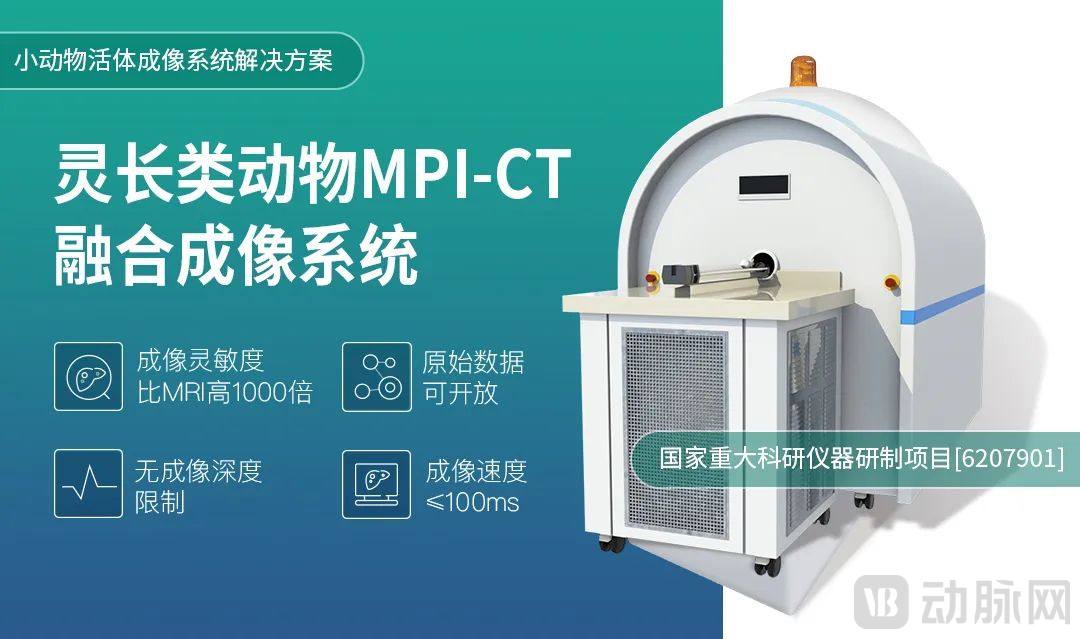
Over the two years since the project's inception, the team has been granted two U.S. invention patents and more than 20 Chinese invention patents.
The Leader in the Post-Precision Medicine Era
DPM Company(Including Beijing Digital Precision Medicine Technology Co., Ltd. and Zhuhai Dipu Medical Technology Co., Ltd.) Upholding the philosophy and goal of “Precision Medicine, Restoring Health,” we are committed to improving surgical outcomes and prognosis for patients with cancer and other diseases. Our business scope covers multiple series of high-end intraoperative optical molecular imaging surgical navigation systems and optical molecular imaging contrast agents, independently developed and manufactured. The core technologies of our products have received support from national special projects, including the National 973 Program, the Major Scientific Instrument Special Project of the National Natural Science Foundation of China, and the Nanotechnology Special Project of the Ministry of Science and Technology. Our products have been awarded the Gold Medal at the 43rd International Exhibition of Inventions of Geneva and the Gold Medal at the China Invention Exhibition. Our newly developed wide-spectrum super-resolution intelligent endoscopic molecular imaging system has been successfully selected for the national-level “Unveiling the Leader” list under the “Artificial Intelligence Medical Device Innovation Tasks” initiated by the Ministry of Industry and Information Technology.
DPM Company TeamAchievements in the field of multimodal molecular imaging have reached a leading international position. Its advantages lie in the real-time intraoperative localization of microscopic tumors, highly accurate and sensitive identification of contrast agents within cancerous lesions, and the provision of timely feedback on the efficacy of cancer surgical treatments. This not only enhances the precision of intraoperative cancer diagnosis and reduces postoperative morbidity but also provides new research perspectives and methodologies for optical molecular imaging technology. The core technologies have been successfully commercialized, resulting in a series of derivative products. These products have passed the reviews for National Innovative Medical Devices and Beijing Municipal Innovative Medical Devices, and have obtained 13 National Medical Device Registration Certificates. Furthermore, the team has participated in drafting multiple expert consensus statements and guidelines for clinical applications. Two group standards for near-infrared fluorescence imaging, jointly developed with the Guangdong Provincial Institute for Medical Device Quality Supervision and Inspection, have been prominently published on the National Group Standard Information Platform.
In promoting the clinical application of its products, the DPM team collaborated with Academician Wang Jun’s team at Peking University People’s Hospital to pioneer international clinical research on intraoperative near-infrared fluorescence imaging of the thoracic sympathetic nerves, achieving a 100% ganglion visualization rate in enrolled patients. Peter Licht, President of the European Society of Thoracic Surgeons, commented that this “...will become a breakthrough solution to the clinical challenges of intraoperative imaging of the thoracic sympathetic nerves.” In collaboration with Director Li Bo’s team at the Affiliated Hospital of Southwest Medical University, the DPM team conducted clinical research on near-infrared II (NIR-II) fluorescence imaging for liver cancer, enabling precise intraoperative identification and resection of millimeter-sized liver cancer lesions and metastases. Professor Hak Soo Choi from Harvard Medical School and Pep Pàmies, Editor-in-Chief of Nature Biomedical Engineering, each published special commentaries stating that this study achieved the first-in-human clinical translation of NIR-II technology. Furthermore, in partnership with Director Li Jian’s team at the Fifth Affiliated Hospital of Sun Yat-sen University, a prospective randomized controlled clinical trial was conducted for colorectal cancer liver metastases, reducing the one-year recurrence rate from 47% to 19%. Jeffrey A. Norton, Chief of Surgical Oncology at Stanford University School of Medicine, published a special review in the Journal of the American College of Surgeons, stating that “...the proposed new method for tumor lesion visualization based on near-infrared fluorescence imaging represents a major breakthrough in the treatment of colorectal cancer liver metastases.”
The development of the MPI system was conducted under the support of the National Natural Science Foundation of China’s Key Program for the Development of Major Scientific Research Instrumentation. As one of DPM Company’s future core products, it holds a leading position internationally. The primary advantages of this device include an imaging sensitivity 1,000 times higher and a temporal resolution 2,000 times greater than those of existing magnetic resonance imaging (MRI) systems. It overcomes the depth limitations of optical imaging, enables real-time dynamic three-dimensional imaging, and facilitates non-invasive, precise early diagnosis in living subjects within the realm of health screening. Furthermore, the MPI system has already achieved industrial translation from a research instrument to a commercial product.
Precision diagnosis and treatment technologies represent a key trend in the advancement of medical innovation. Molecular imaging has been recognized as one of the ten most promising frontier areas in medical science, with its emergence creating new opportunities for the development of precision medicine. Currently, DPM is strategically positioning itself in precision surgery through a comprehensive portfolio of molecular imaging equipment, while establishing a closed-loop “equipment plus consumables” model supported by its molecular imaging contrast agents. In the future, DPM aims to expand further from precision surgery into the broader realm of precision health. We anticipate that DPM will emerge as a leader in the development of imaging technologies in the post-precision medicine era.