

Peking University PhD Founder's Second Venture Ignites Molecular Diagnostics Sector as Kangwei Century Debuts on STAR Market

CoWin Biotech
Biological Reagent Research and Development, Manufacturer
The Capital Frenzy in the Life Sciences Tools Market Is Still Unfolding.
Today, CoWin Biotech, a leading domestic supplier of raw materials for molecular diagnostic reagents, listed on the STAR Market, becoming another publicly traded company in the upstream life science tools and raw materials sector, following ACROBiosystems, Sino Biological, and Novoprotein.
CoWin Biotech focuses on the field of nucleic acid extraction and preservation. Since this segment accounts for a smaller proportion of reagent costs, it is undoubtedly more challenging for a company in this space to go public. This can be seen from CoWin Biotech’s fundraising history in the primary market since its formal establishment in 2010. It was not until 2020, amid the surge in demand for COVID-19 nucleic acid testing that drove its rapid performance growth, that CoWin Biotech secured its first round of financing, completing only three funding rounds prior to its IPO.
Without the surge in demand brought about by the COVID-19 pandemic, CoWin Biotech and other companies deeply entrenched in the niche field of life science tools might have remained merely “small but beautiful” entities. “My youth is back!” Just over five months ago, when news broke that CoWin Biotech’s initial public offering (IPO) on the STAR Market had passed its inaugural review, a professional healthcare investor exclaimed this, sparking a lively discussion in WeChat groups about the bygone days of scientific research and laboratory work.
Of course, what people are more concerned about is how a company with such vertically specialized technology and products can achieve stable and sustainable growth amid fierce market competition.
Dr. Wang Chunxiang, the founder of CoWin Biotech, is a serial entrepreneur and a leading authority in China’s nucleic acid extraction field. The two life science tools companies she founded have become pioneers in the domestic substitution of biological reagent raw materials. Today, one of these companies has been acquired by the global biotechnology giant Qiagen, while the other is CoWin Biotech, which is now listed on the STAR Market.
In 1994, Wang Chunxiang graduated from the Department of Biology at Peking University and subsequently enrolled in the University of California, Los Angeles (UCLA) to pursue a Ph.D. in Pathology. During this period, she achieved significant academic success, publishing a total of 11 SCI-indexed papers. In 2002, after completing her doctoral degree, Wang Chunxiang embarked on her first entrepreneurial venture by founding Tianwei Shidai in Beijing. The company provided plasmid extraction product series essential for sample processing to researchers engaged in molecular detection. This product segment had been established and long dominated by foreign brands.
Three years later, Tianwei Times was acquired by Qiagen, as expected, with the latter being the most influential enterprise globally in this field. In that transaction at the time, nucleic acid extraction giant Qiagen offered a high cumulative consideration of approximately $4 million for Tianwei Times, clearly demonstrating its strong confidence in this startup. Nevertheless, many early users of Tianwei Times could not help but regret the company’s premature “sale.” In their view, Tianwei Times had the potential to become a great company in China’s life sciences tools sector.
Following the acquisition, Dr. Wang Chunxiang also participated in establishing Qiagen’s wholly-owned subsidiary in China, known to domestic scholars as Tiangen Biotech. “I miss the days of using Tiangen reagents; this company is truly impressive,” remarked a professional investor, recalling his laboratory experience, “as it broke Bio-Rad’s monopoly on certain Q-PCR kits.”
By 2007, Dr. Wang Chunxiang embarked on her second entrepreneurial venture, founding Beijing CoWin Biotech. At Beijing CoWin Biotech, Dr. Wang personally served as the R&D Director, overseeing the company’s overall operational development and product research and development, which enabled its independently developed and manufactured biological reagent products to rapidly penetrate the domestic market. In 2010, to expand production capacity, Dr. Wang extended the company’s business footprint to Jiangsu Province, where she jointly invested with China Medical City in Taizhou to establish Jiangsu CoWin Biotech. This initiative completed the design, construction, and product manufacturing of what was then the most advanced biological experimental platform in China.
For most of its history since its founding, CoWin Biotech, as a supplier of biological reagents, was not widely known to the general public, yet it remained an indispensable brand for those with research experience. “I used Qiagen products first, then Tiangen Biotech, and finally CoWin Biotech. CoWin’s plasmid maxi-prep kits are indeed very effective,” stated another investor who emerged from a research laboratory. The plasmid maxi-prep he referred to, namely plasmid large-scale extraction reagents, is frequently employed in experiments requiring high plasmid purity, such as cell transfection, and stands as one of CoWin Biotech’s core products.
In fact, Dr. Wang Chunxiang is one of the pioneers in China’s nucleic acid extraction industry. CoWin Biotech and Dr. Wang Chunxiang, as the primary drafters, formulated GB/T 37875-2019 “Technical Specifications for Quality Evaluation of Nucleic Acid Extraction and Purification Kits,” released in August 2019, thereby establishing industry access standards.
Nucleic acid extraction is a critical foundation for molecular diagnostics. Only by extracting nucleic acids of sufficient quantity and purity from biological samples such as blood, tissue, saliva, and feces can subsequent molecular testing experiments be conducted. In recent years, the high growth rate of the molecular diagnostics industry has driven increased demand in the niche segment of nucleic acid extraction and purification reagents. Between 2016 and 2020, the global market for nucleic acid extraction and purification kits grew from $2.45 billion to $3.7 billion.
In China, the explosive growth of the nucleic acid extraction market has been primarily driven by the accelerated commercialization of early cancer screening. This is also a key reason why CoWin Biotech has bet its second growth curve on the early screening industry for digestive tract cancers. Between 2016 and 2020, the domestic market for nucleic acid extraction and purification reagents grew from RMB 340 million to RMB 1.68 billion, representing a compound annual growth rate (CAGR) of nearly 50%.
Previously, China’s nucleic acid extraction market was long dominated by foreign brands such as Qiagen and Thermo Fisher Scientific, which supplied more than 70% of the products available. This landscape shifted amid the surge in demand triggered by the COVID-19 pandemic. Although Qiagen still holds the largest market share, domestic nucleic acid extraction reagents from companies such as CoWin Biotech, Bioer Technology, Sansure Biotech, and ZJ Bio-Tech have begun to carve out a niche against these industry giants.
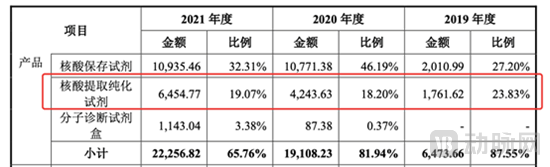
Revenue from Certain Products of CoWin Biotech, 2019–2021 Data Source: Prospectus
According to the prospectus, CoWin Biotech is the supplier with the largest number of filed medical device records for nucleic acid extraction and purification reagents. Its products incorporate both mainstream technical approaches—spin column and magnetic bead methods—and can be used to extract nucleic acids from a wide range of samples, including blood, blood smears, swabs, saliva, fresh tissues, fixed tissues, feces, urine, and viruses. Over the past three years, revenue generated by CoWin Biotech’s nucleic acid extraction and purification reagents has maintained rapid growth. By 2021, CoWin Biotech had become the fourth-largest domestic supplier of nucleic acid extraction reagents in China. Notably, among the top suppliers on this list, all companies other than CoWin Biotech are manufacturers of nucleic acid testing instruments or test kits. For these competitors, leveraging their existing customer base and channel resources clearly makes it easier to increase market share.
In this sense, CoWin Biotech’s pace in replacing imported products with domestically produced ones in the biological reagents market has not been fast, but it has been remarkably steady.
Between 2019 and 2021, CoWin Biotech’s operating revenue grew from RMB 73.9385 million to RMB 338 million, representing year-on-year increases of 215.41% and 45.13%, respectively. According to the prospectus, in 2020 and 2021, following the global outbreak of the COVID-19 pandemic, CoWin Biotech generated RMB 143 million and RMB 199 million, respectively, from its COVID-19 testing business, accounting for 61.37% and 58.88% of its total revenue for those periods. In other words, the incremental business driven by the COVID-19 pandemic served as the core growth engine for CoWin Biotech over the past two years.
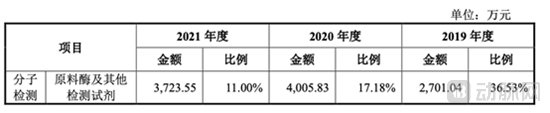
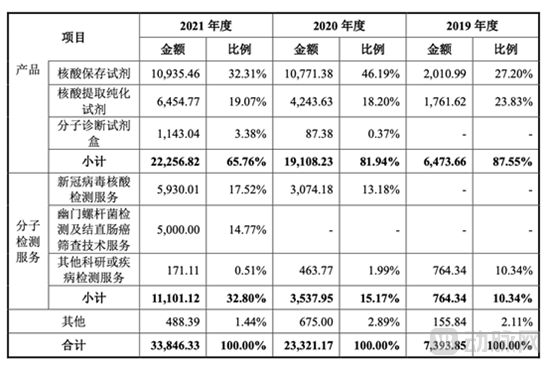
Revenue from Certain Products of CoWin Biotech, 2019–2021 Data Source: Prospectus
Specifically, the COVID-19 testing-related business mainly consists of three segments: upstream reagents (including nucleic acid preservation reagents, nucleic acid extraction reagents, and raw material enzymes), testing services, and overseas test kit operations. Among these, nucleic acid preservation and extraction reagents constitute CoWin Biotech’s core COVID-19 testing business. According to its prospectus, CoWin Biotech cumulatively supplied more than 83 million person-tests worth of nucleic acid preservation and extraction reagents in 2020 and 2021.
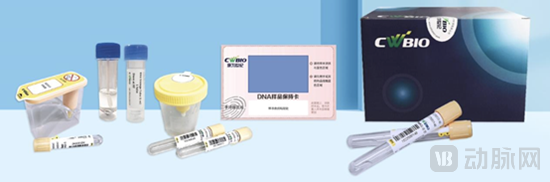
CoWin Biotech’s Representative Nucleic Acid Preservation Products Data Source: Prospectus
Nucleic acid preservation is another area of strength for CoWin Biotech.
Nucleic Acid Preservation ReagentNucleic acid preservation reagents are among the most familiar products associated with COVID-19. They are used to store swabs after sample collection. Nucleic acids in biological samples are typically unstable; therefore, these reagents contain a mixture of biochemical components, including nuclease inhibitors, to prevent nucleic acid degradation and contamination. This ensures testing accuracy and enables long-term transport and even room-temperature storage of nucleic acid samples.
In clinical testing and scientific research, in addition to the nucleic acid preservation reagents repeatedly used during the COVID-19 pandemic, there are various other types, including cell-free DNA (cfDNA) preservation reagents, salivary DNA preservation reagents, tissue sample RNA preservation reagents, fecal nucleic acid preservation reagents, urinary DNA preservation reagents, and cervical cell preservation cards. Nucleic acid preservation in different sample types requires specific formulations regarding component concentrations, pH levels, buffer systems, and other parameters. Among these, cfDNA preservation reagents are the most commonly used products in tumor companion diagnostics. However, due to the extremely low concentration of cell-free nucleic acids in blood, their rapid degradation rate, and susceptibility to contamination by nucleic acids from blood cells, preservation is highly challenging. Consequently, this product category has long been monopolized by imported brands.
In 2012, Dr. Wang Chunxiang pioneered the development of detection technologies and related reagents for cell-free DNA and genomic DNA in China. She subsequently developed precision medicine-related genetic testing services for cancer patients and high-risk populations, disease susceptibility gene testing services, and high-throughput genomic sequencing reagents. Through Taizhou Jianwei Medical Laboratory, established in 2016, she provides commercial tumor DNA testing services.
Under the leadership of Dr. Wang Chunxiang, the research team at CoWin Biotech has drafted three industry standards and one group standard related to cell-free DNA (cfDNA) preservation. The cfDNA preservation reagent developed by the company is the first Class II medical device product on the market with the intended use specified as “for the preservation of cell-free nucleic acids in blood.” Currently, CoWin Biotech has become a leading enterprise in China’s cfDNA preservation reagent sector, supplying products to more than 100 downstream clients, including BGI Genomics, Daan Gene, Lepu Medical, Zhenhe Biology, and Meinian Onehealth, thereby breaking the monopoly held by international industry giants such as Streck and Norgen on similar products.
As indicated by the preceding analysis, although the demand for nucleic acid testing driven by the COVID-19 pandemic was the most powerful engine behind CoWin Biotech’s hypergrowth over the past two years, the company itself still possesses substantial room for further expansion. After all, nucleic acid preservation and extraction, as foundational technologies in molecular diagnostics, offer broad scalability across more diverse scenarios. This represents a strategic direction in which CoWin Biotech can deepen its focus in the future.
On one hand, the application scenarios for molecular diagnostics are continuously expanding. In recent years, driven by population aging, heightened health awareness, and advancements in emerging technologies, the market size of molecular diagnostics has steadily grown. Furthermore, the continuous iteration of nucleic acid extraction and preservation technologies is also pushing the boundaries of molecular diagnostic applications.
From 2016 to 2020, the domestic molecular diagnostics market grew from RMB 8.2 billion to RMB 36.17 billion, with a compound annual growth rate (CAGR) of 44.9%. In the next five years, driven by the improvement of China’s tiered healthcare system, technological innovation, and the continued support and implementation of relevant policies, the market size is projected to reach RMB 48.07 billion by 2025.
On the other hand, CoWin Biotech has demonstrated flexibility in transitioning its application scenarios. According to its prospectus, thanks to its agility as a smaller enterprise, the revenue and gross profit from non-COVID-19-related products grew faster than those from COVID-19-related businesses between 2020 and 2021, with higher gross profit margins as well.
Behind this lies the new momentum generated by CoWin Biotech’s strategic shift to focus on gastrointestinal diseases, represented by Helicobacter pylori (H. pylori) testing, and its expansion downstream into diagnostic reagents. As is well known, H. pylori infection is the most significant risk factor for gastric cancer. Statistics show that the infection rate among the Chinese population is as high as 40%–60%. Clinical studies have demonstrated that H. pylori infection leads to chronic inflammation and significantly increases the risk of duodenal and gastric ulcers, as well as gastric cancer. In recent years, major molecular diagnostics manufacturers have recognized the critical importance of H. pylori screening in reducing the incidence of gastric cancer and have actively developed related products. According to the prospectus, CoWin Biotech’s independently developed molecular detection technology for H. pylori can analyze stool samples to determine not only the presence or absence of infection but also provide multidimensional information, including drug resistance profiles.
Currently, detecting Helicobacter pylori from stool samples remains highly challenging in the industry. This is primarily due to the complex composition of stool, which makes it difficult to extract qualified and sufficient amounts of nucleic acids. Nucleic acid extraction is precisely where CoWin Biotech holds its technological advantage. According to the prospectus, leveraging years of technical accumulation in the field of nucleic acid preservation and extraction, CoWin Biotech can purify evaluable DNA from highly complex stool samples and preserve stool nucleic acids at room temperature for up to several weeks.
Notably, CoWin Biotech has taken a leading position in the industry in promoting the large-scale commercialization of Helicobacter pylori detection products. According to reports, in 2021, CoWin Biotech initiated a large-scale prospective population study in Taizhou, Jiangsu Province, focusing on H. pylori detection and early screening for colorectal cancer using stool samples. This marks the first planned and organized effort in China to conduct relevant research on stool samples from the general population. The findings of this study will undoubtedly provide significant large-sample data support for the development of CoWin Biotech’s test kits and detection technologies. As of CoWin Biotech’s initial public offering (IPO), the study had completed the collection and testing of 100,000 stool samples from the general population.
For CoWin Biotech, listing on the capital market marks a new starting point. The extensive product expansion opportunities driven by its deep expertise in specialized foundational technologies may pave a smoother path for this originally “small but beautiful” company.