

Innovative Anti-Adhesion Barrier Film Enhanced by Radiation-Induced Grafting and Electrospinning Technology
Tissue adhesion after surgery has always been a major challenge in clinical medicine, almostAll SurgeriesAll involve the issue of preventing postoperative tissue adhesions.
Postoperative adhesions are highly likely to causeSevere Complications, and complications vary depending on the anatomical site. For instance, abdominal or pelvic surgeries may lead to adhesive intestinal obstruction; thyroid surgery may cause recurrent laryngeal nerve injury; and adhesions involving the heart and thoracic cage may necessitate a repeat thoracotomy. This not only inflicts secondary physical harm on patients but also imposes significant financial burden.
Currently, the primary approach to addressing postoperative adhesions relies on implantation at the surgical siteAnti-adhesion Barrier MembraneHowever, existing anti-adhesion barriers still suffer from issues such as excessive hydration and brittleness. How, then, can anti-adhesion isolation membranes be upgraded to overcome these current limitations? Inspired by ““Innovation China” The 2nd Biomedical High-Value Patent Project Selection Eventat the invitation of, VCBeat Orange Bureau had the honor of interviewingWang Jingxia from the Sichuan Academy of Atomic Energy.
Wang Jingxia primarily researches the application of radiation technology in the field of polymer materials. Through years of accumulation and experimentation, she has developed irradiation-based modification methods for bioinert and biodegradable polymer materials, and pioneered the preparation of polylactic acid radiation-grafted copolymers using radiation techniques.
Recently, she has been working on the development of an upgraded anti-adhesion barrier membrane—incorporating into the membrane fabrication processIrradiation GraftingThis technology significantly enhances the anti-adhesion membrane’s properties, including its antibacterial efficacy, stability, and biodegradability, offering new options for a broader range of surgical patients.
Safer Irradiation Modification Method to Improve the Antibacterial Properties and Hydrophilicity of Separators
When irradiation is mentioned, people often associate it with radiation, nuclear energy, and other related concepts, frequently worrying about its potential harm to the body. However, in reality,Irradiation is ubiquitous, whether in the natural environment or in daily life.
For instance, we are all exposed to a certain dose of radiation during activities such as watching television, wearing luminous watches, or flying. Additionally, we may receive a certain dose of radiation from natural sources; for example, the Qinshan Nuclear Power Plant releases an annual radiation dose of 2.4 millisieverts per year.
These types of radiation are essentially harmless to the body. In summary,With proper and correct use of irradiation, we can control and utilize it.
Wang Jingxia incorporated radiation grafting technology into the anti-adhesion barrier membrane. She leveraged the reaction between radiation-polymerized polyvinylpyrrolidone (PVP) and iodine to form an iodine-containing polymer with potent antibacterial properties, significantly enhancing the barrier membrane’sAntibacterial Properties。
Not only that, but polylactic acid modified by radiation grafting, due to the surface grafting ofHydrophilicitymonomer, the hydrophilicity of the anti-adhesion barrier film has also been significantly improved. Hydrophilicity is crucial for anti-adhesion barrier films, as it directly affects the degree of adhesion between the barrier film and the patient's surgical wound. The higher the hydrophilicity, the more effectively it can prevent adhesions at the affected site, thereby facilitating wound healing in patients.
One might ask, “If antimicrobial properties and hydrophilicity can be achieved through other material modification techniques, what are the specific advantages of irradiation grafting technology?”
It is reported that there are currently many methods for material modification, with the most common ones beingChemical Grafting Modification, UV Irradiation, Plasma Treatment, Surface Coatingetc., but these methods all have certain drawbacks to varying degrees.
For instance, chemical grafting modification may lead to issues such as residual initiators and catalysts, as well as solvent recovery, directly compromising material safety. Ultraviolet (UV) irradiation typically requires the addition of photosensitizers to enhance grafting efficiency; however, this easily introduces impurities, thereby affecting material purity. Furthermore, plasma treatment and surface coating yield highly unstable modification effects with significant temporal limitations, rendering them unsuitable for long-term use.
Compared with these methods, the advantages of irradiation graft modification are very obvious. First, the penetrating power of γ-rays in irradiation is very strong, which can easily complete graft polymerization reactions that are difficult to carry out by general polymer chemical synthesis methods,Broader Applicability, researchers can leverage this to conduct more comprehensive trials.
In addition, the modification by irradiation graftingThe operation is very simple., with virtually no requirements for the operating environment, and can be performed at room temperature or even under low-temperature conditions. Furthermore, by adjusting reaction conditions, the grafting concentration, grafting ratio, and grafting depth can be precisely controlled to achieve precise modification.
Most importantly, irradiation grafting is a radiation-based modification process that does not involve any chemical reagents, thereby naturally eliminating concerns about residues of initiators, catalysts, or other substances. Wang Jingxia told VCBeat’s Chengguo Bureau: “Based on current experimental data, polylactic acid samples modified through radiation grafting treatment basically”Non-cytotoxic, very safe."

Cell Viability of PLA-g-PVP Extracts at Different Dilution Concentrations, PLA Extracts, Positive Control, and Negative Control
Innovative Electrospinning Technology Breaks the Dilemma of Local Inflammation Caused by Polymer Degradation
Wang Jingxia’s innovations are not limited to material modification via irradiation grafting technology; she has also experimented with a novel spinning method—throughElectrospinningManufacture of Anti-Adhesion Barrier Membranes.
"So-called 'electrospinning' is a spinning technique that utilizes a high-voltage electric field. During the spinning process, the polymer modified by irradiation grafting is in a solution state, ejected through a specialized metal needle, and deposited onto a low-potential collector plate."
Due to the generation of substantial electrostatic charges on the surface of the liquid polymer, electrostatic repulsion occurs between the polymer and the collector plate. Under this repulsive force, the polymer is continuously stretched and thinned until it becomes only5-1000nmof ultrafine fibers, which ultimately condense to form a polymeric fibrous membrane.
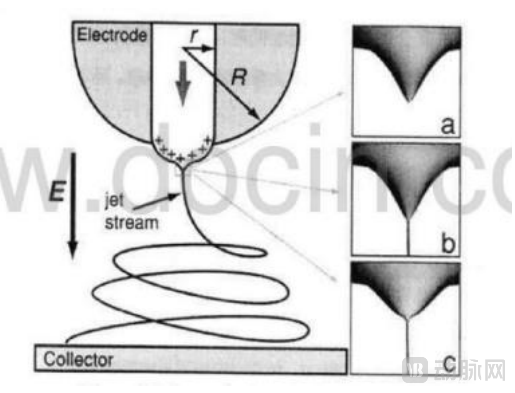
Schematic Diagram of Electrospinning
Polymer fiber membranes produced through this process exhibit excellentFlexibility and Conformability, while also improvingDegradation Mechanisms of Polymeric Materials。
First, superior flexibility facilitates clinical manipulation by physicians. The spaces between surgical incisions and anatomical structures such as organs and muscular diaphragms are extremely narrow and irregularly shaped. If an anti-adhesion barrier membrane lacks sufficient flexibility, it is prone to damage during surgical procedures, thereby increasing operational difficulty for surgeons and imposing unnecessary financial burdens on patients. In contrast, anti-adhesion barrier membranes fabricated via electrospinning maintain dimensional uniformity under mechanical stress, significantly reducing the risk of rupture.
Secondly, the conformability of anti-adhesion barrier membranes affects postoperative patient recovery, a principle analogous to how irradiation grafting improves material hydrophilicity. The better the membrane conforms to the tissue, the more effective it is at preventing adhesions, thereby accelerating patient recovery and avoiding the risks associated with reoperation. According to current experimental data, anti-adhesion barrier membranes fabricated via electrospinning exhibit a contact angle of 0° when in contact with tissue under wet conditions, achieving complete conformity.
In addition, the electrospinning process has innovated the degradation methods for polymeric materials. The degradation of traditional polymeric materials mostly involves the localized accumulation of lactic acid, leading to internal disintegration. However, this approach is highly likely to trigger an inflammatory response due to the accumulation of lactic acid.
Although the anti-adhesion barrier membrane designed by Wang Jingxia is also made of polymer materials and similarly requires the accumulation of lactic acid for degradation, the nanofibers produced by electrospinning arePorous Structure, rapidly clears lactate, effectively reduces the formation of non-infectious inflammation, and provides patients with a comfortable medical experience.
Wang Jingxia stated, “Electrospinning offers significant clinical advantages, with applications extending far beyond anti-adhesion barrier membranes. In the future, we will continue to explore the use of electrospinning technology in other fields, striving to address more clinical pain points in the medical device sector.”
Capable, risk-taking, and technically savvy partners
Currently, the application of biodegradable polymer materials in the field of medical devices is ubiquitous; however, two decades ago, domestic technology in China still faced challenges even in the synthesis of polylactic acid (PLA) materials.
In 2006,Sichuan Academy of Atomic Energy and Karpov Institute of Physical Chemistry, RussiaFollowing the signing of a collaborative agreement on polymer materials, breakthroughs in polylactic acid (PLA) synthesis were achieved through the concerted efforts of laboratories in both countries. Over the subsequent two decades, the Sichuan Provincial Institute of Atomic Energy has maintained its leading position in the field of PLA materials, further developing their applications, particularly in medical devices. It was within this supportive environment that Wang Jingxia developed a long-acting antibacterial anti-adhesion barrier membrane.
With the support of the hospital and the Sichuan Provincial Department of Science and Technology, Wang Jingxia and her team have also applied for and obtained approval for their research on anti-adhesion barrier membranes.Sichuan Province Supporting Projects, securing ample research funding and a favorable research environment. Nevertheless, Wang Jingxia still believed that collaboration with enterprises was essential to directly address market pain points.
Given the high technical barriers associated with both irradiation grafting technology and electrospinning processes, Wang Jingxia’s most critical criterion for selecting partners is that they must possessThe capability to develop high-end products.
At present, the application market for anti-adhesion barrier membranes is vast and holds promising development prospects. However, Wang Jingxia is well aware that anti-adhesion barrier membranes are not ordinary medical devices that compete on volume; their high technical content requires partners to possess a certain level ofSpirit of Adventure。
Wang Jingxia stated, “Our research on the anti-adhesion barrier membrane project has reached a relatively mature stage, and we are highly confident in it. However, persuading physicians to alter their long-established practices and adopt our barrier membrane remains a challenge. Therefore, how to effectively promote it to physicians and gain their acceptance is our primary concern at present, as well as the main objective behind our search for partners.”