Shuimu Future: Empowering Next-Generation Drug Discovery with AI-Driven Cryo-EM Platform
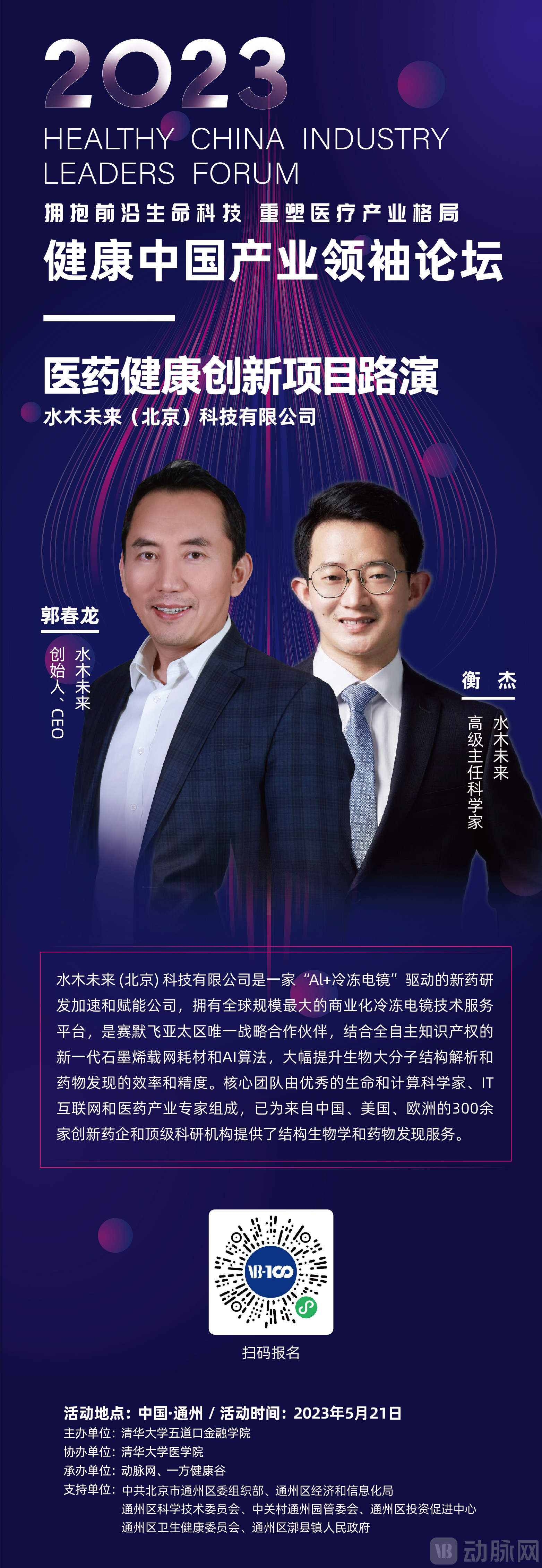
The healthcare industry is currently undergoing a period of transformation, with some individuals breaking away from rigid mindsets to courageously explore optimal solutions for industrial development. On May 21, the “2023 Healthy China Industry Leaders Forum,” to be held in Tongzhou, Beijing, will create a platform for showcasing cutting-edge technologies in the healthcare sector. It aims to connect and gather core resources from government, industry, academia, research, medical practice, and investment sectors related to healthcare technology, thereby facilitating more efficient and rapid commercialization of scientific achievements. To build an open venture capital and investment platform, the forum will specially feature the “2023 Pharmaceutical and Healthcare Innovation Project Roadshow.” Six high-quality projects affiliated with Tsinghua University will take the stage, engaging with top-tier investment judges to spark innovative ideas and demonstrate the vibrant vitality of emerging forces.
Shuimu Future (Beijing) Technology Co., Ltd. was founded in 2017 at Tsinghua University. It is a novel drug R&D acceleration and enablement company driven by “AI + cryo-electron microscopy.” Its core team comprises outstanding life and computational scientists, as well as experts from the IT/internet and pharmaceutical industries. The company operates the world’s largest commercial full-service cryo-electron microscopy technology platform.
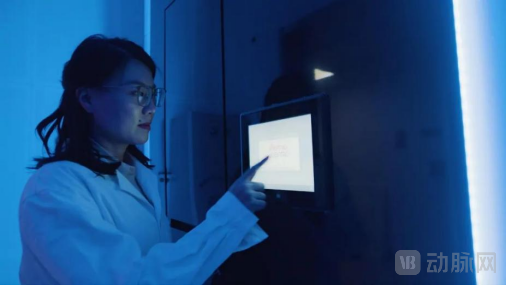
Dr. Ni Xiaodan, Senior Scientist at the Shuimu Future Cryo-EM Platform
By integrating next-generation graphene support grids with fully independent intellectual property rights and innovative AI algorithms, Shuimu Future has significantly enhanced the efficiency and precision of structural analysis and drug development. Combined with a comprehensive wet-lab workflow, the company empowers global innovative pharmaceutical enterprises to drive more efficient and precise drug R&D and therapeutic innovations in fields such as small molecules, antibody drugs, protein degradation, and gene therapy. Since its inception, Shuimu Future has successfully provided structural biology and drug discovery services to over 300 innovative pharmaceutical companies and top-tier research institutions across China, the United States, and Europe.
Cryo-EM:A Game-Changing Tool for New Drug Development
In late 2017, the Nobel Prize in Chemistry was awarded to three scientists—Jacques Dubochet, Joachim Frank, and Richard Henderson—in recognition of their contributions to the development of cryo-electron microscopy (cryo-EM) for the high-resolution structure determination of biomolecules in solution. The announcement of the Nobel Prize drew industry-wide attention to cryo-EM, and the drug discovery sector also began to recognize the value of this technology.
Biopharmaceuticals is widely recognized as one of the most complex fields: it relies on traditional R&D models, requires substantial capital investment often reaching tens of billions of RMB, involves an average development timeline of 6–7 years, and bears the burden of high failure rates. Ultimately, the core issue with traditional new drug development lies in the blind “screening” approach targeting disease sites; when target structures are unknown, the process is highly random, time-consuming, and costly. There is an urgent need for innovation in traditional new drug development models.
Cryo-electron microscopy is an essential tool in structural biology research, enabling the observation of the microscopic structures of proteins, nucleic acids, and other biomolecules. It elucidates the atomic composition and spatial relationships of organic macromolecules, thereby facilitating the rapid and precise determination of the structures of potential drug targets. In recent years, continuous improvements in hardware and algorithms have significantly enhanced both the speed and resolution of structure determination by cryo-EM. Whereas solving a single structure previously took an average of 2–3 years, it now takes only weeks or even days, with future advancements expected to reduce this timeframe to just one day or even a few hours. Technical breakthroughs are also being made in resolving structures with lower molecular weights. According to Dr. Wang Hongwei, co-founder of Shuimu Future Sciences, traditional X-ray crystallography primarily resolves protein structures with molecular weights below 100,000 Daltons, whereas cryo-EM technology has broken through this limitation.
Built on breakthroughs in structural biology and digital technology R&D at Tsinghua University, Shuimu Future was officially established in December 2017 as a platform for commercializing scientific and technological achievements from the School of Life Sciences at Tsinghua University. Guo Chunlong, founder of 2048 Capital, serves as Chairman and CEO, while Dr. Wang Hongwei, Dean of the School of Life Sciences at Tsinghua University, is a co-founder of Shuimu Future. According to Guo Chunlong, Shuimu Future’s investments in core technologies encompass the development of both software tools and hardware platform infrastructure. Leveraging world-leading capabilities in macromolecular complex structure determination and AI-driven computational technologies, Shuimu Future is building the world’s largest structure- and AI-powered digital drug discovery platform to empower the industry, fundamentally and innovatively transforming the blind screening model traditionally used in new drug development.
The COVID-19 Pandemic: Cryo-Electron Microscopy Comes into Its Own
In early February 2020, a research team at the University of Texas at Austin used cryo-electron microscopy to resolve the structure of the SARS-CoV-2 spike (S) protein for the first time worldwide, revealing that the affinity between the ACE2 receptor and SARS-CoV-2 was 10–20 times higher than that with SARS-CoV. This finding partly elucidates the reason for the high transmissibility of SARS-CoV-2.
In mid-February 2020, the research groups led by Wang Xinquan from the School of Life Sciences and Zhang Linqi from the School of Medicine at Tsinghua University collaborated to resolve the crystal structure of the complex formed by the receptor-binding domain (RBD) of the novel coronavirus spike glycoprotein and the human receptor ACE2 protein. One day later, the research group led by Zhou Qiang at Westlake University announced the full-length structure of the ACE2 receptor and the structure of the complex between the spike protein’s receptor-binding domain (RBD) and the full-length ACE2 protein, as determined by cryo-electron microscopy. Thus, structural biologists have provided a critical foundation for drug and vaccine development in the fight against COVID-19.
Shuimu Future did not sit out this battle. According to Mr. Guo Chunlong, CEO of Shuimu Future, the company has resolved the structures of multiple antibodies and vaccines related to COVID-19 since the outbreak of the pandemic, playing a significant role in bringing the latest antibody drugs and vaccines to market.
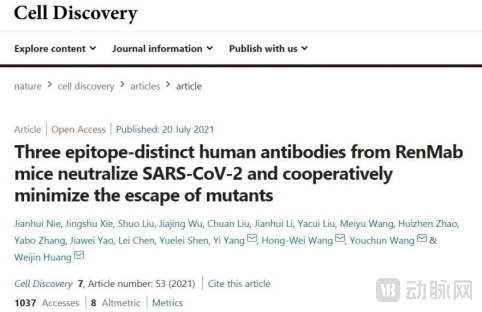
In July 2021, Shuimu Future, in collaboration with Biocytogen and other institutions, published a research paper on SARS-CoV-2 neutralizing antibodies in the journal *Cell Discovery*. Dr. Chuan Liu, an electron microscopy scientist at Shuimu Future, was responsible for the cryo-electron microscopy (cryo-EM) structure determination in this study and served as a co-first author of the paper. All data collection was completed on Shuimu Future’s cryo-EM platform. Dr. Jing Li, a protein and crystallography scientist at Shuimu Future, performed the atomic structure model building.
From Academic Research Institutions to the Pharmaceutical Industry
Looking to the future, Guo Chunlong, CEO of Shuimu Future, shares an exciting vision: “Imagine a future where high-throughput structural output drives the development of entirely new drug pipelines that far surpass current human capabilities, including numerous novel targets previously considered undruggable. Drug design based on high-resolution structures and AI computations may initially be slower and more challenging than traditional methods, but once a certain tipping point is reached, it will experience exponential growth. In the future, all drug development—whether for small molecules, large molecules, or gene therapies—will rely heavily on electron microscopy and computational technologies.”
On July 4, 2022, the commissioning ceremony for Shuimu Future’s “Global Cryo-EM and AI Drug Innovation Center” project was held in Hangzhou Qingshanhu Science and Technology City. The event announced that six additional top-of-the-line 300kV cryo-electron microscopes had been installed in Hangzhou. Driven by the Lin’an District Government of Hangzhou, Shuimu Future’s “Global Cryo-EM and AI Drug Innovation Center” aims to establish the world’s largest cryo-EM platform and a high-precision structural database of biological macromolecules. It will provide services to global research institutions and innovative pharmaceutical companies and collaborate with them on the development of novel therapies. By partnering with Tsinghua University and leading domestic and international research institutions, the center seeks to enhance fundamental scientific research, integrate basic research, technology development, and achievement translation, and build a global hub for structure-based and AI-driven drug discovery and innovation.
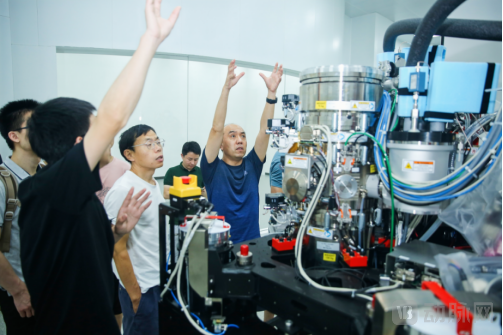
In June 2022, the Scientific Advisory Committee of Shuimu Future Visited the Hangzhou Electron Microscopy Facility
As of September 2022, Shuimu Future has completed the commissioning and put into operation a total of eight top-configured 300kV cryo-electron microscopes (cryo-EM), officially becoming the world’s largest and technologically leading commercial platform for cryo-EM structural analysis. By integrating its self-developed, AI-driven next-generation software platform for cryo-EM structure determination and modeling with its GraFuture™ graphene grid cryo-sample preparation technology, Shuimu Future has taken another significant step forward in enhancing the efficiency, resolution, and industrialization of cryo-EM.
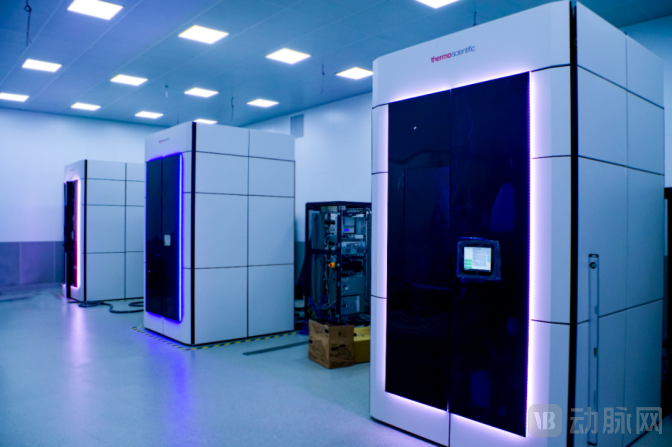
Shuimu Future Global Cryo-EM and AI Drug Innovation Center
2023 Pharmaceutical and Healthcare Innovation Project Roadshow--Shuimu Future (Beijing) Technology Co., Ltd.