

Magnetic Bead Microspheres + Lyophilized Reagents: A New Breakthrough in Domestic Flow Cytometry Detection Technology!
Our understanding of the human body as a complex system at the molecular level has propelled us into the era of precision medicine. The clinical demand for diagnostic technologies is not only for “greater accuracy,” but more importantly, for the ability to “measure more parameters simultaneously and at faster speeds.” Among the new generation of high-throughput, multidimensional single-cell detection technologies, flow cytometry stands out as a typical representative.
Since the development and production of the first commercial flow cytometer, the FACS I, in the 1970s, flow cytometry has been increasingly applied in clinical medicine and basic research fields such as immunology, hematology, oncology, and cell biology. It has gradually become a key technical tool in biology, medicine, clinical diagnostics, and drug development. Industry giants such as BD, Beckman Coulter, Agilent, and Luminex continue to invest heavily in this field.
Quan Qiang, who graduated from the College of Life Sciences at Sichuan University in 2013, enter intoGeneral Hospital of the Western Theater CommandCenter for Experimental Medicine, under the mentorship of hospital experts and leadershipComprehensiveMastered the techniques of flow cytometry analysis and flow cytometric cell sorting.. The advanced instruments and cutting-edge technology sparked Quan Qiang's strong interest, prompting him to proactivelyParticipated in training on flow cytometry technology conducted by BD headquarters。
In Quan Qiang’s view, flow cytometry is the only platform technology capable of highly integrating cytology, immunology, and molecular biology within the field of laboratory medicine. It brings together a multitude of cutting-edge technologies, including acoustics, optics, electronics, computer science, materials science, and organic chemistry. The technology can be developed into large-scale, automated systems for clinical laboratories, or into miniaturized, intelligent devices for point-of-care testing. It is characterized by high technological barriers and broad application scenarios.
Resigned from the hospital in 2016, focusing on the development and application of flow cytometry technology, subsequently investing over 3 million yuan from personal savingsFounded ChengDu NuoHe Biological Technology Co. , Ltd.(hereinafter referred to as “NuoHe Bio”). This was followed by three years of round-the-clock, year-round work, during which Quan Qiang led the NuoHe Bio technical teamFrom Key Raw Material Research to Product Process Development,Mastered full-scale manufacturing capabilities for flow cytometry-based liquid bead array detection products., and in 2021, its first product—a seven-cytokine detection kit—was approved by the Chengdu Medical Products Administration.
In 2021, ChengDu NuoHe Biological Technology Co., Ltd. entered a period of rapid development, during which it secured RMB 5 million in angel-round investment. Currently,Cumulative investment exceeding RMB 10 million, and signed an investment cooperation agreement with the Chengdu High-Tech Zone to establish the project inChengdu Tianfu International Bio-Town。
(Image source: NuoHe Bio)
Compared with traditional chemiluminescence assays, the greatest advantage of flow cytometry lies in its ability to perform high-throughput, multiparametric analysis on tens of thousands of cellular particles per second., featuring advantages such as high speed, high precision, and excellent accuracy, it is one of the most advanced cell quantitative analysis technologies in contemporary times.
Compared to Existing Flow Cytometry Technologies on the Market,Nuohe BiologicsIts advantage lies in its self-developedMagnetic Fluorescent Encoding Microsphere Technology,Antibody Conjugation Technology。
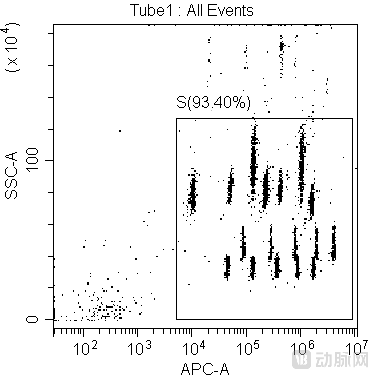
Polystyrene-coated magnetic beads are stained with specific fluorescent dyes to create a microsphere array with varying fluorescence intensities. By utilizing microspheres of different sizes, a two-parameter matrix encompassing dozens of distinct combinations of size and fluorescence intensity can be generated. These microspheres are then conjugated with different specific antibodies or nucleic acid probes, enabling the specific recognition of antigens and nucleic acid sequences. In practical applications, mixing dozens of these microsphere arrays for simultaneous reaction allows for the combined detection and analysis of multiple indicators.
Through this microsphere technology, ChengDu NuoHe Biological Technology Co., Ltd.'s flow cytometry assays can yield dozens to hundreds of test results in a single reaction. The specific binding of magnetic bead microspheresImproved detection accuracy and linear range,Less Specimen Required, the volume of blood required from the subject is reduced, and the overall turnaround time for testing is improved.Significant improvements have been achieved in accuracy, cost, turnaround time, and labor efficiency.。
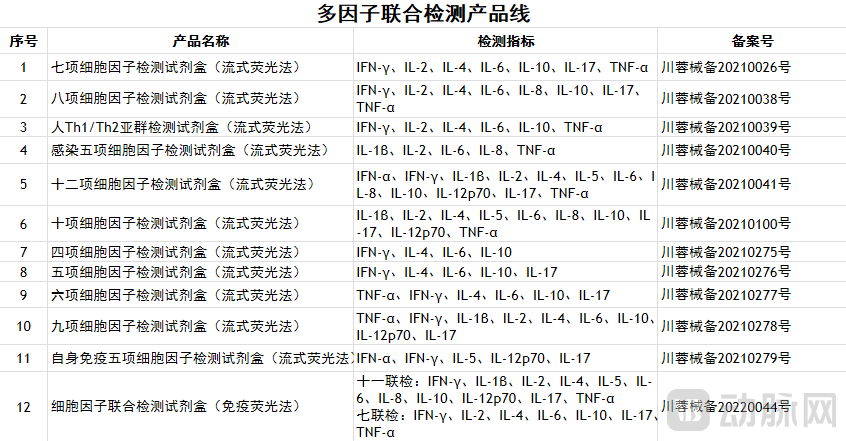
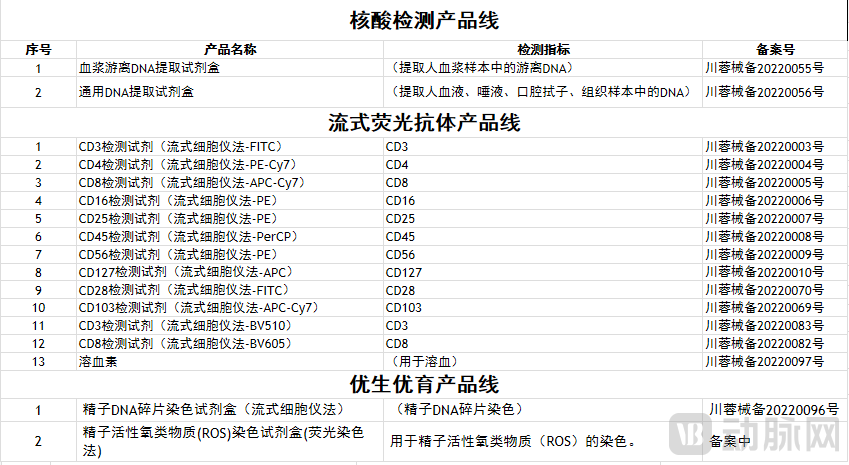
Currently, NuoHe Biologics' products are primarily targeted atMulti-Parameter Combined Testing,The pipeline has strategic layouts in cytokines, inflammation and autoimmune diseases, tumor markers, and multi-respiratory-specific antigen-antibody assays.Currently targeting basic medical research and CRO companies, we have developed 26 human cytokine detection markers, 24 model animal cytokine markers, 12 cytokine combination detection kits, and 17 products across lines including nucleic acids, flow cytometry fluorescent antibodies, and eugenics.
 (Image source: NuoHe Biologics)
 (Image source: NuoHe Biologics)
In recent years, influenced by the COVID-19 pandemic, the concept of “cytokine storm” has garnered increasing clinical attention. The number of professionals in this field and the level of technical recognition have gradually risen, and cytokine detection via flow cytometry has progressively transitioned from research settings to clinical applications.
“The increased technological recognition has also heightened the necessity for our development of corresponding diagnostic reagents. During the reagent development process, we identified shortcomings in existing liquid reagents, so we”Targeted development of ‘cryogenic freezing technology’“to address the many existing issues,” Quan Qiang shared in an interview.
Most diagnostic reagents currently available on the market are in liquid form, and freezing is the most commonly adopted method to facilitate transportation and storage. However,Repeated freeze-thaw cycles can directly affect reagent activity., with the active consumption range reaching 30%-50%, thereby leading toThe accuracy of test results is significantly reduced.。
Secondly, in a vast country like China with significant spans in latitude and longitude, there are considerable temperature differences across different regions during the same season. In high-latitude and high-altitude areas, precautions must be taken to prevent reagents from freezing, while in low-latitude areas, measures should be implemented to avoid excessive temperatures that could cause reagent degradation. ThereforeTemperature-Controlled TransportationThis is also the most basic requirement for diagnostic reagents, typically 2-8°C. Traditional liquid reagents incur high costs and significant energy consumption during transportation and storage, and liquid reagents alsoAt risk of contamination and bacterial proliferation。
Therefore, ChengDu NuoHe Biological Technology Co., Ltd. employs lyophilization technology to comprehensively address the aforementioned issues, enabling room-temperature transportation and storage without compromising reagent quality. This approach not only reduces intermediate costs but also ensures assay quality.
Amid the pandemic, skyrocketing prices and prolonged lead times for imported reagents have severely hindered the progress of various scientific studies in the life sciences sector. Leveraging its robust R&D capabilities, ChengDu NuoHe Biological Technology Co., Ltd. has developed high-quality domestic reagents as alternatives to imports, offering research institutions a new approach to addressing these challenges.
According to Quan Qiang, NuoHe Bio established in Chengdu this yearClass 10,000 and Class 100,000 R&D and Production Workshop for In Vitro Diagnostic Reagents, currently capable of meeting the R&D and production needs for Class I, II, and III diagnostic reagents, especially for customized products,High efficiency enabling same-day order placement and next-day shipment。
NuoHe Bio currently has over 30 products approved by the National Medical Products Administration (NMPA). In 2020, the company actively contributed to epidemic prevention and control efforts by developing corresponding clinical diagnostic products. Despite its robust product R&D pipeline, in the process of commercializing these products,Quan Qiang Has Also Made New Discoveries and Reflections。
“Laboratory technologists are the ‘scouts’ in clinical practice, while R&D and manufacturing enterprises in the IVD industry provide them with the most advanced ‘weapons,’ enabling them to deliver precise and rapid services to clinical care.”Quan QiangSpeaking of,Existing in vitro diagnostic technologies still need to be extensively deployed to hospitals in second- and third-tier cities and to primary healthcare institutions, enabling patients in these cities and remote areas to access advanced diagnostic and therapeutic techniques without having to travel to major metropolitan centers.
High testing costs and low reimbursement rates have consistently hindered the adoption of advanced technologies in second- and third-tier cities., not only thisSlowed the pace of healthcare service development in second- and third-tier cities, but also due to the lack of an application market,"Inability to Achieve 'Mass Production to Reduce Manufacturing Costs'"。Quan Qiang believes, regardless of technological advancements, IVD companies must remain patient-centric and disease-focused, ensuring precision and speed.Reduce Patient Travel and Costs。
The Future of NuoHe BiotechWe will actively promote the implementation of our technology across healthcare institutions at all levels, including large hospitals, small hospitals, and primary community health centers, striving to facilitate“Testing is affordable at large hospitals and reassuring at small ones.”scenarios for the equitable allocation of medical resources. Focusing on the flow cytometry technology platform, we will fully leverage the advantages of this advanced technology in the field of precision diagnostics, continue to develop first-class products to serve clinical practice, and build a company with sustained innovation capabilities and a strong sense of responsibility.
“It is our hope that NuoHe Biological’s products will be visible in hospitals of all sizes, whether large or small.” This is Quan Qiang’s aspiration, and it also reflects our high hopes for the future of precision diagnostic technology.