

Danwang Medical Advances Industry Standardization Starting from Intestinal Organoid Standards
The current stage of organoid development is considered analogous to next-generation sequencing (NGS) in 2014 or 2015. Hans Clevers, the pioneer of organoid technology, defines organoids as NGD—Next Generation Diagnosis. Compared with NGS, NGD is in a more rapid growth phase.
In the early stages of rapid technological development, standardization and policy dividends serve as key drivers: advancing the formulation of industry standards can help enhance customer recognition of the technology, while policy liberalization will further open windows for commercialization.
In the organoid sector, many companies have backgrounds in translating academic research into industrial applications, with numerous influential industry experts launching startups. What can early-stage startups do to promote standardization and regulatory compliance?
Starting from this question, VCBeat New Medicine interviewed a domestic platform company specializing in organoid technology.Danwang Medical. Danwang Medical, founded in 2019 and joined by Academician Hans Clevers, a pioneer in international organoid research, has been committed to the industrialization of organoid technology and initiating the formulation of organoid standards.Founder Dr. Hua GuoqiangHas been engaged in organoid research at the Memorial Sloan Kettering Cancer Center in the United States since 2009, and is also a pioneer of organoid technology in China.
The First Standard for Intestinal Organoids Has Been Established
Since 2009, Dr. Hua Guoqiang, founder of Danwang Medical, has been engaged in organoid research at the Memorial Sloan Kettering Cancer Center in the United States, experiencing the process from academic proof-of-concept to clinical validation and industrial application.
Hua Guoqiang saw,To achieve commercial translation, organoid companies need to establish rigorous quality control and standardization systems, while moving toward automation in culture instruments and identification and screening platforms.Therefore, Danwang Medical has strategically prioritized automation and standardization from the outset.
Leveraging the inherent technical advantages of organoids, current attention is primarily focused on two major application scenarios:
First, in the context of clinical drug prediction using patient-derived organoids, concordance with clinical efficacy is a critical evaluation metric. Danwang has conducted extensive validation using clinical data. By applying clinical sensitivity criteria, it has reverse-engineered and validated the optimal experimental systems and time points for drug administration in organoid models. This approach not only addresses urgent clinical needs but also ensures rigorous quality control standards.
Second, organoid-based drug screening represents another major application scenario. It is necessary to establish standards and parameters for the entire workflow of organoid model preparation to enhance the validity and stability of the models. Key aspects requiring attention in the standardization of organoids include the transportation of clinical samples, quality criteria for clinical samples, protocols for sample preparation and culture, as well as parameters for drug sensitivity in clinical trials, such as the determination of organoid sensitivity thresholds and cut-off values.
“Pharmaceutical companies impose stringent requirements on organoid disease models: they place significant emphasis on the quality assurance system for organoids, conduct exhaustive data mining, and request additional novel data, such as an assessment of the stability of disease models within ten passages..” Hua Guoqiang introduced that Danwang Medical also focuses on the research and development of standardized automated equipment. It is reported that Danwang’s first-generation high-throughput prototype has been put into use.
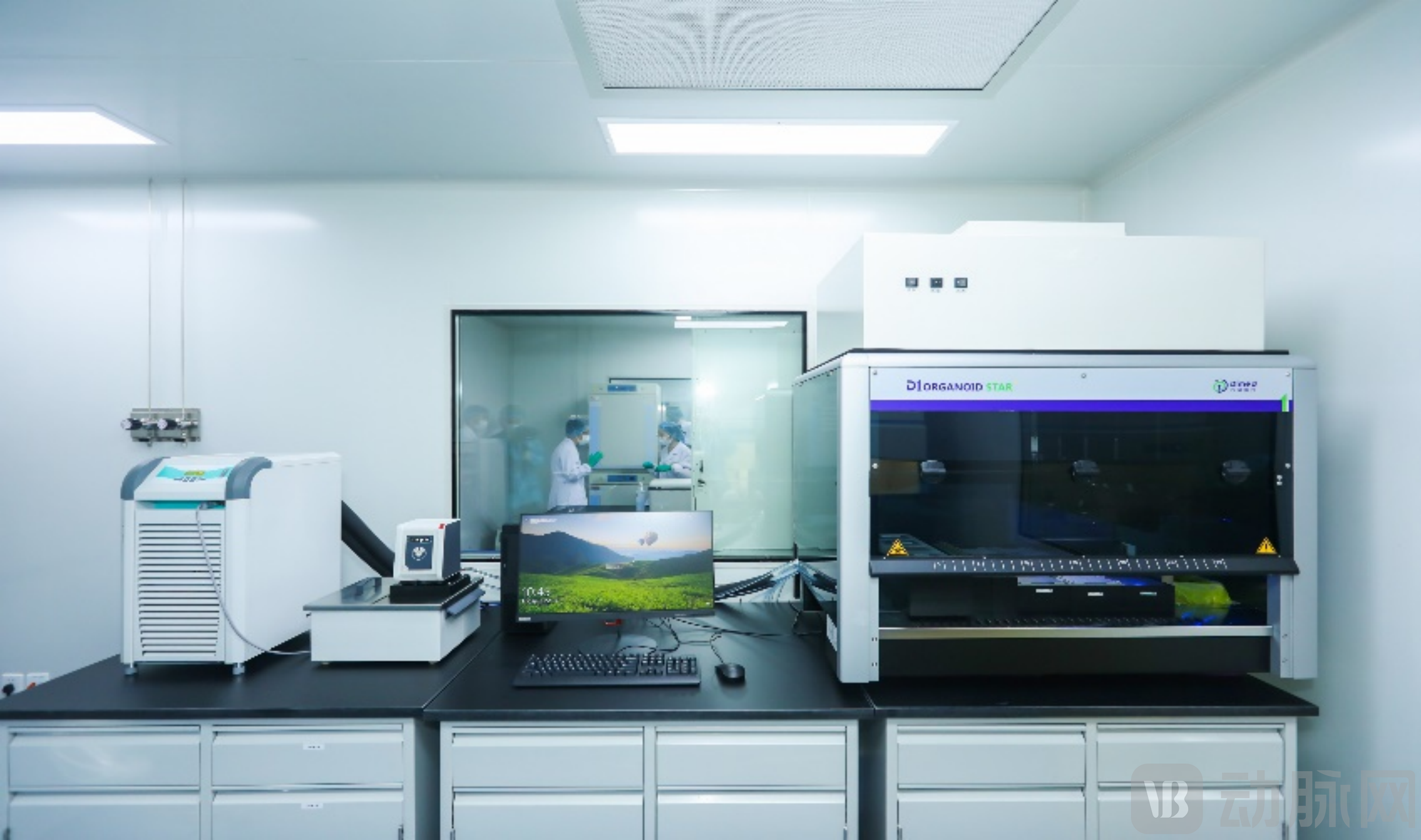
Danwang Medical's Automated Organoid Culture Workstation
Of course, in the face of concerns from both the clinical and industrial sides,It is insufficient to merely adhere to the de facto standards within the industry; Danwang Medical aims to genuinely drive the standardization of technology applications.The Stem Cell Innovation Platform Conference held in September released a series of standards related to the field of stem cells, including the group standards “Human Colorectal Cancer Organoids” and “Human Intestinal Organoids,” jointly developed by Academician Chen Yeguang’s team, Danwang Medical’s team, and multiple other institutions.
This document specifies the definitions, ethical requirements, technical requirements, and testing methods for human colorectal cancer organoids and human intestinal organoids, providing technical support for the preparation and testing of patient-derived human colorectal cancer organoids.
“Among all epithelial tissue organoids, intestinal organoids are the most mature and have the most extensive international clinical data; therefore, we considered them an ideal starting point.“The National Stem Cell Standards Committee has expressed strong support, acknowledging that emerging technologies indeed require standards.” Hua Guoqiang introduced the original intent behind the development of this standard. “To ensure broader acceptance of the standard, we invited participation from academia, clinicians, pathologists, major pharmaceutical companies, and other domestic organoid companies.”Finally, a summary was compiled.The First Standard for Intestinal Organoids.”
Bridging Academia and Industry
During his time at Memorial Sloan Kettering Cancer Center in the United States, what impressed Hua Guoqiang was,Pharmaceutical companies are highly attuned to emerging technologies such as organoids. As early as 2015, major pharmaceutical firms like Eli Lilly were collaborating with his research institute to conduct drug testing using organoids.
During the years Hua Guoqiang conducted organoid research overseas, Hans Clevers, the pioneer of organoids, maintained in-depth collaboration with him.and reached a consensus on the translational application of organoid technologies: Promoting the transition of technology from the laboratory to practical application involves R&D related to the technology, experimentation associated with its application, and the formulation of relevant standards. China possesses advantages in sample resources, enabling the establishment of truly dominant international standards during the industrialization process. Currently, no other country has such a large sample volume to support the creation of comprehensive organoid biobanks.
Recognizing the promise of organoid technology and its potential in China, Hua Guoqiang chose to return to his home country in 2015, joining Fudan University’s Shanghai Medical College and Fudan University Shanghai Cancer Center, where he initiated clinical trial collaborations with Hans Clevers. The advantage of rapid patient enrollment in China was evident, with nearly 120 patients recruited, making it the largest statistically significant clinical trial of colorectal cancer organoids to date. In 2019, upon obtaining the clinical data, Hua Guoqiang officially founded Danwang Medical Technology (Shanghai) Co., Ltd., and Hans Clevers subsequently became the company’s Chief Scientific Advisor.
“Danwang Medical operates on a ‘one body, two wings’ model. The core ‘body’ is our organoid biobank, known as ‘Patient in the Lab,’” said Hua Guoqiang, who provided a clear definition of the company’s business. “The ‘two wings’ refer to precision personalized medication guidance using organoids and microfluidic high-throughput automated equipment for organoids. To address throughput challenges, we have developed relatively mature microfluidic organoid technologies, with capabilities comparable to those of U.S. companies such as Xilis.”
“Patient-in-the-Lab” is Danwang Medical’s strategic priority, with a plan to establish an organoid biobank comprising 20,000–30,000 cases within three years, covering most refractory tumor models. This biobank will include living organoid stocks, clinical and testing-related information, as well as algorithms and analytical results. “This is not merely a physical repository; it also encompasses comprehensive clinical data, such as medication records, follow-up information, drug resistance profiles, and gene mutation data. We maintain exceptionally high standards for our biobank, ensuring superior data quality.”
Based on this, Patient in the Lab can facilitate new drug development using organoid-specific models, organoid-based target discovery and validation, organoid clinical trials, and the discovery of novel biomarkers.
Hua Guoqiang stated, “The Patient-in-the-Lab platform is still under construction, but pharmaceutical companies are already collaborating with us and utilizing it. We are also engaging with various pharmaceutical firms to establish biobank standards, prioritizing their key concerns to highly meet their drug development needs.”
In addition to pharmaceutical companies, Danwang Medical also collaborates with numerous renowned institutions both domestically and internationally, including Fudan University Shanghai Medical College, Shanghai Jiao Tong University School of Medicine, Shanghai Cancer Center, Zhongshan Hospital, Huashan Hospital, and Changhai Hospital.
Academia always pursues the cutting-edge, while industry always focuses on the most mature.Danwang Medical possesses both cutting-edge technology and the determination for industrialization, “linking” the newest with the most mature solutions to drive the “exponential development” of organoid technology.
Animal Testing Is Not Yet Replaceable, but It’s Time for Organoid Technology to Deliver Its Value
For emerging technologies, regulatory deregulation serves as a major impetus for promoting development and widespread adoption. The most significant recent positive development is the U.S. Senate’s unanimous passage of the FDA Modernization Act 2.0. The legislation aims to eliminate the federal mandate for animal testing in new drug approvals, which could substantially reduce the use of laboratory animals in the coming years.
In new drug development, certain metabolic pathways involve entirely different metabolic enzymes in animals and humans; the discrepancies between animal models and the human body can hinder data bridging, thereby reducing the success rate of clinical trials.
Driven by cost considerations and animal ethics, discussions and policies regarding the "de-animalization" of research have been increasingly prominent in recent years. However, although animal experiments have shown limitations in evaluating novel therapeutic regimens and complex diseases—particularly in fields such as immunology, infection, metabolism, and the central nervous system, where precise modeling is difficult to achieve through animal models—animal models remain an integrated system with mature methodologies and diverse varieties. Consequently, they continue to be the primary means and tools for non-clinical research.
This bill has sparked extensive discussion, with some arguing that its passage will fundamentally transform the traditional model of preclinical research that relies entirely on animal models, potentially even leading to the complete phase-out of laboratory animals.
In response, Dr. Hua Guoqiang, founder of Danwang Medical, stated that the introduction of the legislation should be viewed rationally, with an understanding of the FDA’s underlying rationale. “I believe this legislation merely removes the mandatory requirement for animal testing. Animal experimentation has long faced scrutiny, and its high costs have indirectly driven up drug development expenses. While animal data may sometimes appear robust, it is not always practically useful. Emerging technologies in recent years—such as sequencing, artificial intelligence (AI), 3D printing, and organoids—have provided new tools for novel drug development.”"The passage of the bill, I believe, opens a window for the application of new technologies such as organoids in the drug development process at the policy or legal level."”
“However, there is still a long way to go before organoids gain widespread acceptance and large-scale application, let alone become fully integrated into Investigational New Drug (IND) applications. It is essential to solidify the underlying technology,” added Hua Guoqiang. “As the name suggests, organoids are ‘organ-like,’ and thus remain somewhat deficient as complete physiological systems. For a considerable period, organoids and animal models should coexist in a complementary manner, rather than being viewed as opposing approaches.”
The formulation and release of the organoid standards mentioned above is a positive signal, with all parties across the industrial chain hoping that organoid technology will unlock greater value. Only in this way will the replaceability of animal experiments be significantly enhanced, and the long-awaited revolution in new drug development using organoids will come to fruition.