

Zhirui Medical: AI-Powered Pathology Ignites a New Era in Smart Healthcare
The pathology department sees no coming and going of patients; instead, it is filled with optical microscopes, tissue processors, embedding machines, stainers, labeling machines, tissue specimens, and the pungent odor of formalin.
Although the Department of Pathology does not have direct contact with patients, its pathological diagnosis serves as the gold standard for determining whether a patient is diseased and assessing the nature of the disease.
However, pathological diagnosis is an extremely labor-intensive process. First, upon receiving tissue specimens, pathologists must perform gross examination, tissue processing, fixation, dehydration, and embedding. Second, pathology technicians must cut the tissue into glass slides with a thickness of 4–6 micrometers, a procedure involving nearly 40 steps and thus highly complex. Finally, pathologists examine the tissue under a microscope and with modern equipment to render a diagnosis.
During slide preparation, physicians impose strict requirements on timing, temperature, and reagent concentration, with most steps performed manually by pathology technicians. Generally, a histopathological diagnosis requires 3–5 working days of collaborative effort between pathologists and technicians. This process involves a high workload, and the use of optical microscopes can easily cause visual fatigue for physicians, thereby affecting diagnostic efficiency.
Meanwhile, pathological diagnosis relies heavily on physicians’ subjective experience; it is an experience-based qualitative diagnostic approach with low inter-rater consistency. This also necessitates a prolonged training period for pathologists.
It is reported that after completing standardized residency training and obtaining qualification as a practicing pathologist, medical school graduates still require approximately ten years of clinical case diagnostic practice in the pathology department before they can independently perform pathological diagnoses for common diseases. Due to this lengthy training period, China currently faces a shortage of more than 90,000 pathologists.
Overall, the field of case diagnosis faces challenges such as prolonged diagnostic times, low efficiency, poor inter-rater reliability, and a shortage of pathologists. To address these pain points, Dr. Xie Weidong founded Guangzhou Zhirui Medical Technology Co., Ltd. (hereinafter referred to as “Zhirui Medical”) in 2018, leveraging his over 30 years of experience and resource accumulation in the biopharmaceutical industry. The company aims to empower healthcare with artificial intelligence and lead the development of a new ecosystem for smart healthcare.
To date, Zhirui Medical has developed digital and intelligent products for pathological diagnosis, including digital pathology image viewing software,AI-Assisted Pathological Diagnostic System,AI-powered all-in-one digital pathology diagnostic systems, etc.
Digital Pathology Image Viewing Software
It is reported that Zhireui Medical’s self-developed digital pathology image viewing software has obtained the Class II medical device registration certificate and manufacturing license. The software is designed for use by healthcare institutions to acquire, process, view, manage data, and print reports for whole slide images (WSI).
This product is suitable for histopathological and cytopathological slide analysis, offering high-performance efficiency for online viewing of gigabyte-scale whole slide images (WSI). By leveraging digital pathology image viewing software, pathological diagnosis can be transitioned from the microscope to the computer screen, thereby reducing eye strain for pathologists and enhancing diagnostic workflow efficiency.
Amidst the digital wave sweeping through the healthcare industry, pathology departments are also exploring the digitization of pathological diagnosis. Digital pathology image viewing software meets the current needs for digital transformation in pathological diagnosis, facilitating a fully digital workflow. The one-click distribution, storage, and viewing of high-resolution pathology images can significantly save pathologists’ time, thereby improving diagnostic efficiency and comprehensive management capabilities. The digital archiving of pathology images facilitates subsequent retrieval and scientific application, enabling medical data to generate continuous value.
Nowadays, digital slide reading is rapidly replacing traditional microscopic examination due to its multifaceted advantages, and digital pathology image viewing software is expected to see rapid, large-scale adoption as a result.
AI-Assisted Histopathological Diagnostic Product
Zhirui Medical’s AI-assisted histopathological diagnostic products include an AI-assisted system for breast cancer classification and grading, an AI-assisted system for lung cancer classification and subtyping, and an AI-assisted system for thyroid cancer classification and grading. The company is also developing corresponding AI-assisted pathological diagnostic systems for liver cancer, esophageal cancer, and other diseases.
According to the introduction, the AI-powered predictive capabilities of pathology AI-assisted diagnostic products are primarily demonstrated through AI quantitative diagnosis, AI visualization, and AI-generated reports. Targeting high-incidence, high-severity cancers such as breast cancer, lung cancer, and thyroid cancer, the pathology AI-assisted diagnostic system developed by Zhirui Medical leverages artificial intelligence, particularly deep learning technologies. Driven by high-quality data annotation and powered by substantial computational capacity and server throughput, the system assists in diagnosis, guides treatment decisions, and evaluates prognosis, thereby significantly enhancing the work efficiency of pathologists.
Meanwhile, compared to manual image interpretation based solely on subjective experience, AI-assisted diagnosis enables quantitative analysis with higher accuracy and consistency, helping medical institutions such as tertiary hospitals, primary care facilities, and third-party clinical pathology diagnostic centers enhance their pathological diagnostic capabilities.
Notably, Zhirui Medical’s AI-assisted pathological diagnosis product series features a modular design that allows for flexible configuration, thereby meeting the needs of fully digital and intelligent construction in pathology departments.
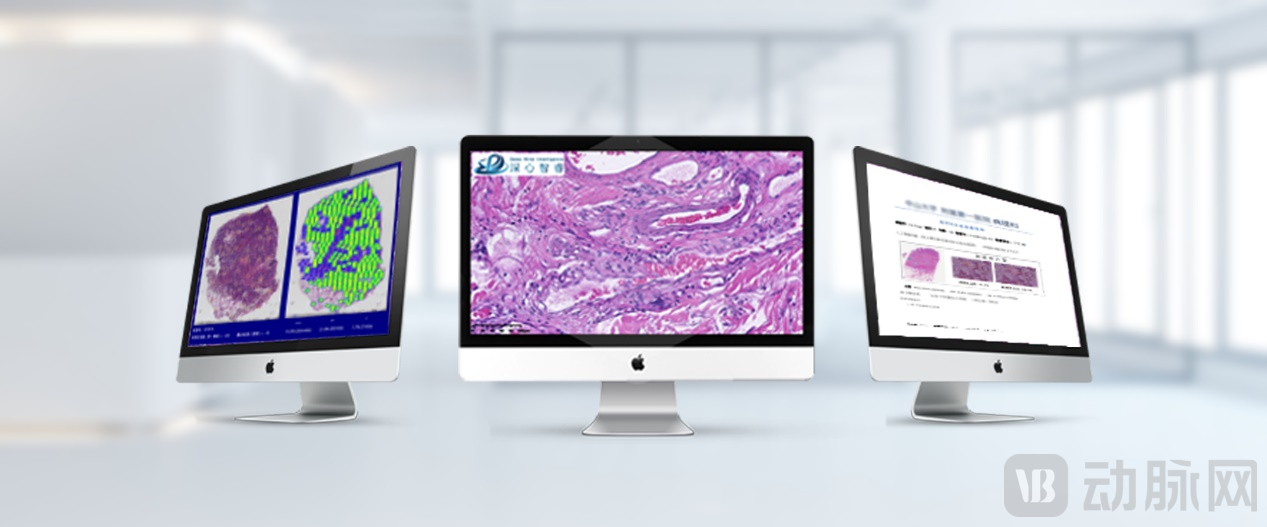
All-in-One AI-Assisted Digital Pathology Diagnostic System
The AI-powered digital pathology all-in-one diagnostic system is Zhirui Medical’s flagship product, offering pathology departments a one-stop, end-to-end digital and intelligent solution.

For patients, the use of an all-in-one digital pathology AI-assisted diagnostic system enables faster acquisition of pathology reports, with greater diagnostic accuracy and consistency. Patients can also undergo fewer sampling procedures, incur lower medical costs, benefit from subsequent diagnosis and treatment, and enjoy an improved healthcare experience.
For physicians, digital features help liberate their visual attention, reduce time spent on trivial tasks, and improve efficiency; intelligent features enable the evolution of traditional experience-based qualitative analysis into quantitative diagnosis, thereby enhancing diagnostic accuracy, precision, and reproducibility, reducing repetitive work for senior physicians, and improving the diagnostic capabilities of resident physicians. Meanwhile, the integration of multiple modalities can meet physicians’ diverse needs in clinical practice, scientific research, and teaching scenarios.
For hospitals, the all-in-one digital pathology AI-assisted diagnostic system can help reduce labor and material costs associated with pathological data storage, significantly enhance the service capacity of hospital pathology departments, increase diagnostic efficiency by more than 30-fold, and improve the overall quality of pathology services.
Furthermore, the all-in-one digital pathology AI-assisted diagnostic system enhances the automation of pathological diagnosis and enables remote diagnostics, thereby eliminating geographical barriers. This expands market capacity, strengthens the service capabilities of primary healthcare institutions, and meets the needs of a broader patient population.
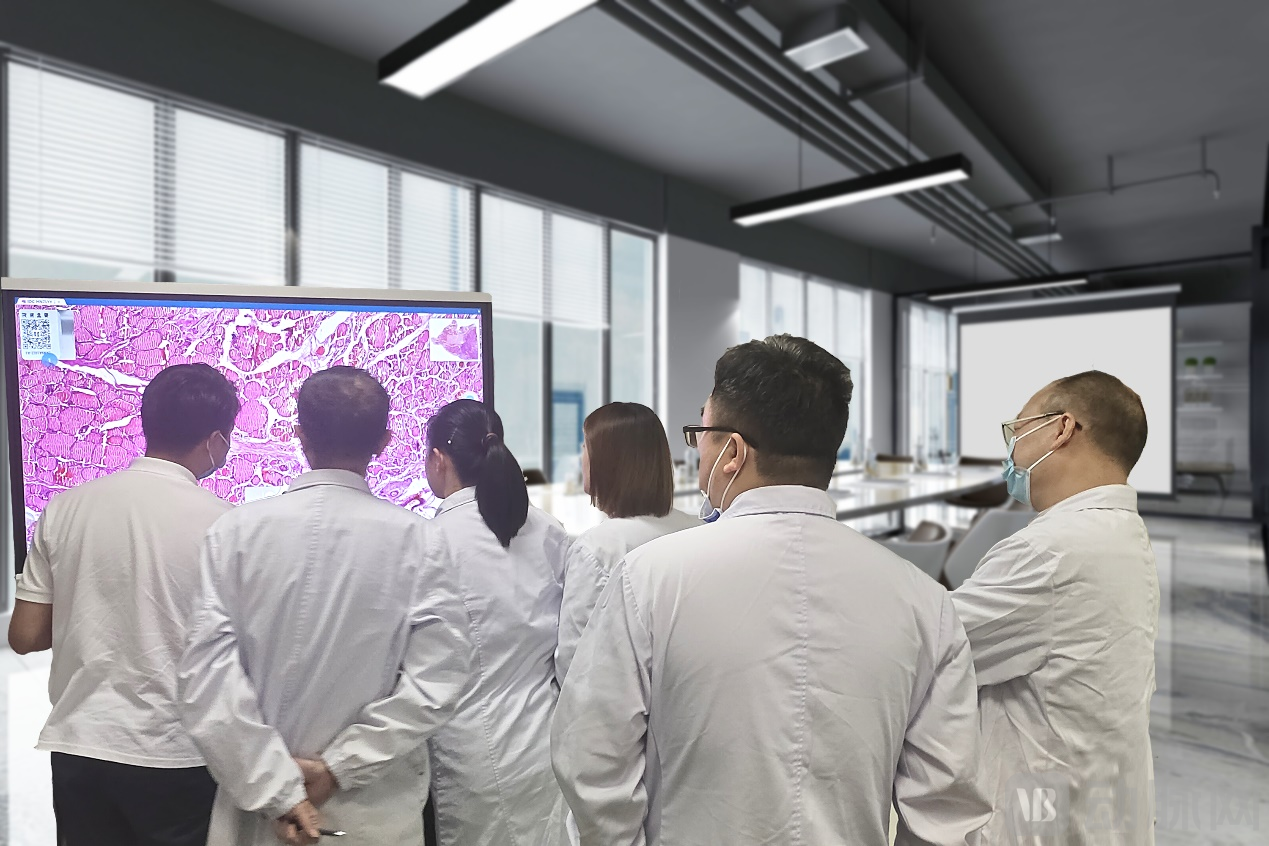
According to the report from the 2020 World Congress of Pathology, the pathology market size is projected to grow from $30.3 billion in 2019 to $44.4 billion in 2024, with a compound annual growth rate (CAGR) of approximately 6.1% from 2019 to 2024.
With the advancement of digitalization and intelligence, AI in pathology is expected to become the industry mainstream. Consequently, we anticipate that products such as digital pathology image viewing software and AI-assisted pathological diagnosis systems will be rapidly adopted at scale.
Recognizing the blue-ocean potential of the pathology AI market, a cohort of innovative companies in China has been actively investing in the research and development of pathology AI products. However, to date, no histopathology AI product has received regulatory approval for market launch. Leveraging its team’s strengths and innovative capabilities, Zhirui Medical has positioned its product development among the global leaders.
According to reports, over 70% of Zhirui Medical’s team members hold master’s or doctoral degrees. Its core team comprises senior biopharmaceutical experts, senior artificial intelligence engineers, medical consultants from top-tier (Grade A tertiary) hospitals, and business management professionals, forming a highly interdisciplinary talent pool.
For example, Xie Weidong, Founder and Chairman of Zhirui Medical, holds a Master’s degree in Biology from Sun Yat-sen University and a Ph.D. in Biology from Imperial College London. With over 20 years of academic background in biomedicine, he has served as a Lecturer and Associate Professor at the Center for Biotechnology of Sun Yat-sen University, and as a Principal Investigator (PI) at St. Jude Children’s Research Hospital in the United States. Additionally, Dr. Xie has more than 10 years of experience in project investment and corporate management, having served as an Investment Advisor and Chief Scientist at renowned research institutions and healthcare companies such as the Sino-Canada Rock Venture Biopharmaceutical Fund and POLYNOMA LLC in the United States.
Wang Xunzhang, Chief Technical Advisor at Zhirui Medical, graduated from the University of Oxford. As a professor at Sun Yat-sen University, he has over 30 years of experience in bioinformatics and algorithm development. He has led two national and Ministry of Education projects on computer-based intelligent prediction in bioinformatics, as well as one project on bioinformatics platform development. His accolades include one National Natural Science Award, one Second Prize for Scientific and Technological Progress from the State Education Commission, and two First Prizes for Science and Technology from Guangdong Province. He is also a recipient of the State Council’s Special Allowance.
Currently, Zhirui Medical is planning to launch a new round of financing. The funds raised will be primarily used for the promotion of existing products and for conducting clinical trials for its AI-based histopathological diagnostic product for breast cancer, which is seeking registration as a Class III innovative medical device.
In the future, Zhirui Medical will strengthen product promotion, enhance platform technology, and accelerate the market launch of its R&D products.
The “Top 50 Biotech Innovation Enterprises in the Guangdong-Hong Kong-Macao Greater Bay Area” selection campaign is hosted by the Zhongchuang Industry Research Institute and organized by Guangdong Medical Valley. The initiative aims to cultivate an integrated innovation ecosystem for industry, academia, and research in the Greater Bay Area, promote the in-depth integration and development of biotechnology—a strategic emerging industry—across Guangdong, Hong Kong, and Macao, systematically document the evolution of biotech innovation in the region, and drive the growth of the local biotechnology sector.
The selection covers three sectors: medical devices, biopharmaceuticals and technology, and healthcare services. It will comprehensively assess participating companies’ technological innovation and future development prospects from three dimensions: innovative technology, market application, and capital. A panel of expert judges, comprising representatives from government agencies, third-party research firms, professional investment institutions, and healthcare organizations, will conduct in-depth on-site visits and due diligence before compiling an authoritative list of innovative enterprises. This initiative aims to identify future unicorns in the biotechnology sector within the Greater Bay Area and showcase the region’s urban clusters’ achievements in developing the biotechnology industry.
“Top 50 Biotech Innovation Enterprises in the Guangdong-Hong Kong-Macao Greater Bay Area” has garnered extensive attention and coverage from government agencies, scholars and experts, media outlets, and biotechnology companies since its inaugural edition in 2018.