

Multifunctional Nanomotor Drug Delivery System Combining RNAi, Tumor Starvation, and Microenvironment Oxygenation to Overcome Trastuzumab Resistance in HER2-Positive Breast Cancer
According to the latest global cancer burden data released by the World Health Organization’s International Agency for Research on Cancer in 2020, breast cancer has surpassed lung cancer to becomeThe World's Most Prevalent Cancer, posing a serious threat to women's life and health.
Among the various types of breast cancer,HER2-Positive Breast CancerIt belongs to a category that is relatively difficult to control. This subtype of breast cancer accounts for approximately of all breast cancer patients20%-25%, with a relatively high incidence rate, strong proliferative capacity, and aggressive invasiveness, making it highly prone to distant metastasis. These characteristics result in a poor prognosis for patients, making complete cure difficult to achieve.
Currently, the pharmacological treatment of HER2-positive breast cancer in clinical practice mainly relies onTrastuzumabproceed, but trastuzumab has issues such as high cost and long treatment cycles. Most importantly,Primary or Secondary Trastuzumab ResistanceThis has become increasingly evident, severely limiting the efficacy and application of trastuzumab. This not only causes suffering for patients themselves but also represents a significant waste of national medical resources and health insurance expenditures.
Dr. Kong Xiangyi, National Cancer Center/Cancer Hospital, Chinese Academy of Medical SciencesHaving long been deeply engaged in the research and development of breast cancer drugs, in recent years, leveragingNational Natural Science Foundation of China, Beijing Municipal Natural Science Foundation...and other projects, he conducted a series of basic and translational medical studies focused on trastuzumab resistance.
Dr. Kong Xiangyi told VCBeat’s Orange Bureau, “Our team has been dedicated in recent years to studying the molecular biological mechanisms underlying resistance to trastuzumab in HER2-positive breast cancer, and striving to identify effective and safe strategies or approaches to overcome this drug resistance.”Nanomotor Drug Delivery Systemwas developed for this very purpose.”
RNA Therapeutics + Nanotechnology: Building a Novel Nano-Drug Delivery System
To address trastuzumab resistance, several clinical strategies have been proposed, primarily focusing on drug substitution.“Saving the Nation Through Indirect Means”approaches, such as the use of pertuzumab, T-DM1, everolimus, neratinib, and pyrotinib. However, the mechanisms of action of these drugs are largely similar: they block HER2 dimerization or inhibit the mTOR signaling pathway, thereby alleviating HER2-positive breast cancer.
Thus, current approaches do not directly address the essence of drug resistance but rather attempt to “evade” it. Moreover, irreversible inhibition of HER2 dimerization may cause severe side effects in normal tissues and organs.
Therefore, Dr. Kong Xiangyi believes that there is an urgent need to identify more suitable targets for addressing trastuzumab resistance in HER2-positive breast cancer.Specific Intervention, and develop truly effective strategies for reversing drug resistance.
In his research, Dr. Kong Xiangyi discovered that the long non-coding RNA HOTTIP is closely associated with trastuzumab resistance, which may hold the key to overcoming this resistance.
Based on this, Dr. Kong Xiangyi thought of usingMethod for Lentiviral Transduction of siRNA to Knock Down HOTTIP. Experimental results indicated that this method could indeed effectively reverse drug resistance. However, Dr. Kong did not rush to conclusions; instead, he repeatedly validated the findings using transgenic approaches, and the results confirmed this—Overexpression of HOTTIP exacerbates drug resistance, whereas knockdown of HOTTIP reverses it.
However, this lentiviral approach is difficult to translate into clinical practice due to the strong immunogenicity of the virus, low transfection efficiency, and its propensity to cause carcinogenesis and mutagenesis, leading to adverse outcomes for patients.
Therefore, Dr. Kong Xiangyi decided to make some modifications to the corresponding siRNA—NanotechnologyIntegrate these components to construct a novel nanoscale drug delivery system. On one hand, enable it to carry siRNA for targeted inhibition of HOTTIP; on the other hand, employ biochemical strategies to locally release oxygen within the tumor, thereby alleviating the hypoxic microenvironment. This dual-pronged approach aims to reverse drug resistance.
During the research and development process, Dr. Kong Xiangyi consulted with numerous professionals and, after approximately two years of exploration, ultimately collaborated withProfessor Kuo-Chu Ho’s Team, Department of Chemistry, National Tsing Hua University, Taiwan、Beijing Baiti Biotechnology Co., Ltd.Achieved collaboration, designed and successfully synthesizedNanomotor Drug Delivery System。
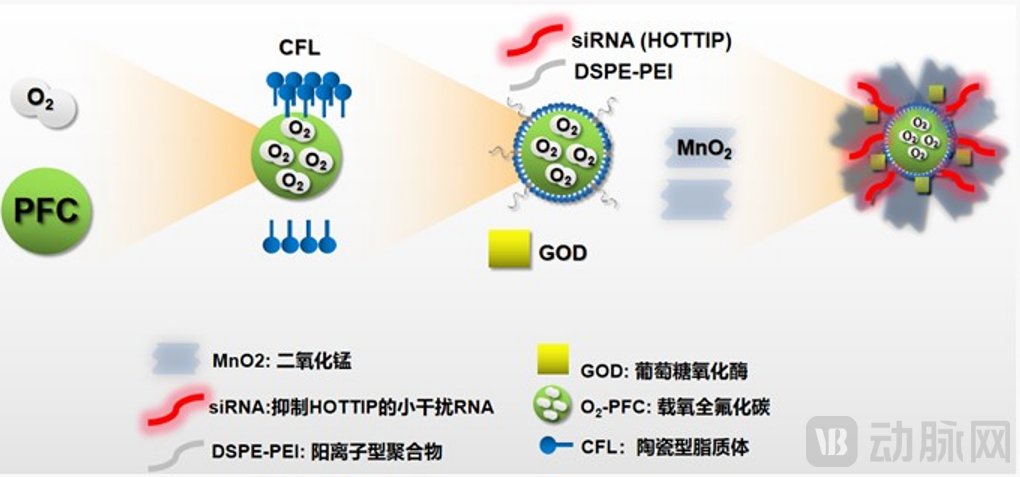 Specific Synthesis Steps of Nanomotor Drug Delivery Systems
Parallel Multi-Mechanisms, Combined Multi-Pathways: A Multi-Pronged Approach to Reversing Drug Resistance
The nanomotor drug delivery system reverses trastuzumab resistance primarily through two major “strategies.” One isStrong Targeting, a feature not possessed by conventional non-nanomedicines. The nanomotor drug delivery system integrates passive targeting, active targeting, and physicochemical targeting, thereby enhancing drug targeting efficacy from multiple perspectives—including drug initiative and environmental responsiveness—to achieve precise drug delivery.
Another isCan be modified by multiple functional groups, exerting multifaceted effects. Nanomotor drug delivery systems can encapsulate numerous effective drugs, enabling a “cocktail therapy” with multiple mechanisms to reverse drug resistance, thereby truly addressing the challenge of drug resistance in breast cancer.
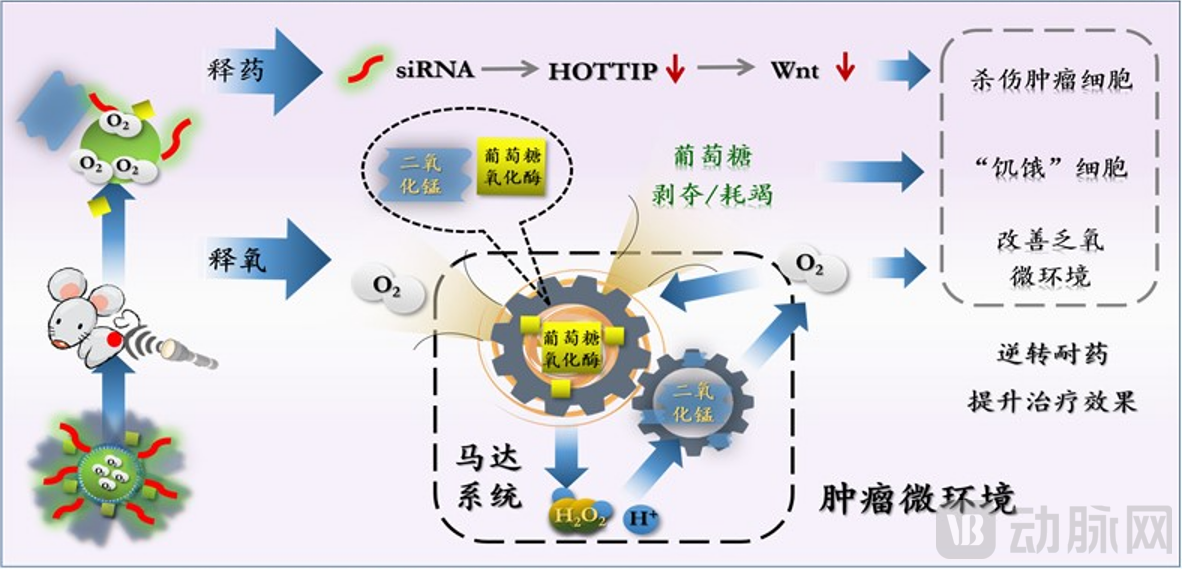
Schematic Diagram of the Construction of Nanomotor Drug Delivery Systems
With the support of these two key advantages, the benefits of nanomotor-based drug delivery systems are highly pronounced.
Not to mention the multi-layer localization brought byStrong Targeting, the nanomotor drug delivery system itselfThe design is very ingenious.. The drug response of the nanomotor drug delivery system is primarily driven by the reaction GOD + O2 → H2O2, catalyzed by MnO2. In other words, the entire cyclic reaction continues until glucose or H2O2 in the environment is completely consumed. This creates a “power-driven motor” that can sustain therapeutic effects.
Furthermore, the nanomotor drug delivery system’sThe effect is also significant.. It integrates RNA blockade therapy, tumor starvation therapy, and microenvironmental oxygenation therapy, employing a three-pronged approach to reverse trastuzumab resistance at multiple levels.
Most critically, the nanomotor drug delivery system'sExtremely High Safety Profile. Neither current theoretical research nor experimental data have revealed any safety concerns.
Dr. Kong Xiangyi told VCBeat’s Orange Bureau: “If the nanomotor drug delivery system achieves the expected outcomes, it will hold significant health economic implications for reducing national healthcare insurance expenditures and facilitating precision translation in novel drug development.”
The Underlying Logic of Nanomotor Drug Delivery Systems Adapts to Multi-Scenario Applications
Although the nanomotor drug delivery system was developed to address trastuzumab resistance, it actually provides a foundation for broader exploration.
If the small interfering RNA (siRNA) encapsulated within the nanomotor drug delivery system is replaced with another type of siRNA, this nano-delivery system can address drug resistance in other types of malignant tumors to different therapeutic agents. Based on the same principle, by simply modifying the components, the nanomotor drug delivery system can not only overcome drug resistance but also tackle challenges related to tumor ablation, metastasis, recurrence, imaging, and diagnosis.
Furthermore, nanotechnology can be closely integrated with tumor immunotherapy, such as nanoparticle-assisted photoimmunotherapy, photodynamic therapy, photothermal therapy, and gene therapy.
It is reported that numerous nanoparticle-assisted cancer immunotherapy approaches have emerged in the medical community. Various results indicate that the integration of nanotechnology with tumor diagnosis and treatment mayWill be a major development trend in future clinical oncology. It can, to a large extent and in certain aspects, resolve long-standing challenges in tumor diagnosis and treatment that have persisted for decades, offering extremely broad application prospects.
Dr. Kong Xiangyi stated, “When we masterThe Underlying Logic of Targeted and Multifunctional Chemical Group Modification...we can then integrate nanotechnology with clinical medicine to address more critical challenges in healthcare. In the future, we may develop additional such nanomedicines to establish a nanotechnology platform for the diagnosis and treatment of malignant breast tumors.”
Preclinical Studies Completed; Multiple Institutions Express Optimism
Currently, Dr. Kong Xiangyi and his team have completed the preparation, characterization, in vitro cellular studies, and in vivo animal studies of the nanosystem. They are actively conducting preliminary clinical investigations, striving to accelerate its translation into clinical practice.
During the translation process, the Cancer Hospital of the Chinese Academy of Medical Sciences, where Dr. Kong Xiangyi is based, provided support in terms of platform, talent, and team building. With the hospital’s assistance, Dr. Kong Xiangyi and his team successively developed multiple nanomedicines similar to the nanomotor drug delivery system, and repeatedly featured inwith impact factors exceeding 10 or even 20Publish papers in journals.
In addition, Dr. Kong Xiangyi also consulted with professionals from pharmaceutical manufacturers and companies, as well as relevant technology transfer organizations, such asZhongguancun Emerging Technology Service Industry Allianceetc. Relevant experts are highly optimistic about the translational potential of nanomotor-based drug delivery systems, believing that this achievement fills a critical gap in the targeted therapy of HER2-positive breast cancer, where current options for addressing drug resistance are limited to switching medications rather than reversing resistance.
Dr. Kong Xiangyi stated, “We are currently actively conducting preliminary clinical explorations, striving to accelerate its translation into clinical practice. The number of enrolled cases remains relatively small at present, and there is still a long road ahead. After all, the true clinical translation of a drug requires substantial investments in manpower, effort, resources, and time. Nevertheless, we will spare no effort and remain persistent, confident that we will ultimately succeed in this endeavor.”