

Breakthrough AI-Powered Precision Dermatology Platform for Pigmentary Disorders Enters IPO Filing
Recently, the Ministry of Industry and Information Technology officially released the first list of selected entities for the AI Medical Device Innovation Challenge. The project titled “Clinical Staging, Grading, and Zoning Auxiliary Diagnosis System for Pigmented Skin Diseases (Vitiligo and Melasma)” in the intelligent auxiliary diagnosis category was successfully included on the list. Led by Professor Cui Yong of China-Japan Friendship Hospital, the project was jointly submitted by China-Japan Friendship Hospital and Aigaosende Company.
Distinguished by its AI-driven data source based on skin hyperspectral imaging and its focus on addressing critical challenges in precision medicine for dermatological conditions, this project has pioneered innovative research in AI-assisted diagnosis of skin diseases. As a nationally recognized finalist, it serves as a benchmark and leader in the field.
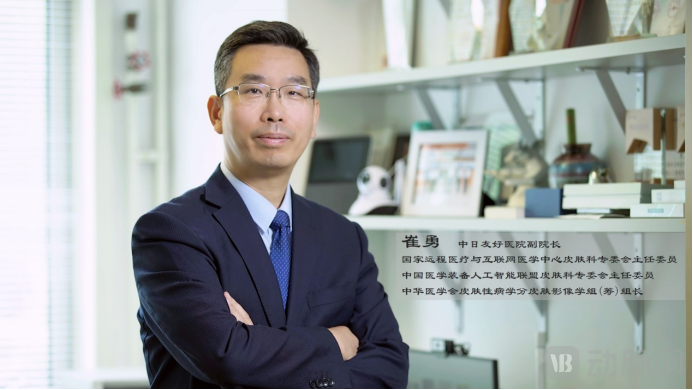
Professor Cui Yong, the project leader, believes that the distinctiveness of this project lies in several key innovations: First, it pioneers the use of hyperspectral skin imaging as an AI data source and has developed a "Digital Skin" model tailored to the requirements of dermatological morphological analysis, thereby achieving strong pathological correlation. Second, it focuses on precision medicine in dermatology, addressing critical challenges in the clinical diagnosis, treatment, and efficacy assessment of skin diseases—particularly pigmentary disorders—by providing evidence for precise therapeutic interventions, assisting in the determination, iteration, and optimization of treatment plans, supporting the entire treatment process, and more effectively realizing the clinical value of AI-based medical devices. Third, it breakthroughly proposes and has preliminarily established a comprehensive methodology for analyzing dermatopathology through the morphological distribution of skin components. This approach may give rise to the concept of "Skin Component Pathology," serving as the theoretical foundation for the project titled "Auxiliary Diagnostic System for Clinical Staging, Grading, and Zoning of Pigmentary Skin Diseases (Vitiligo and Melasma)" and establishing standards for refined data annotation.
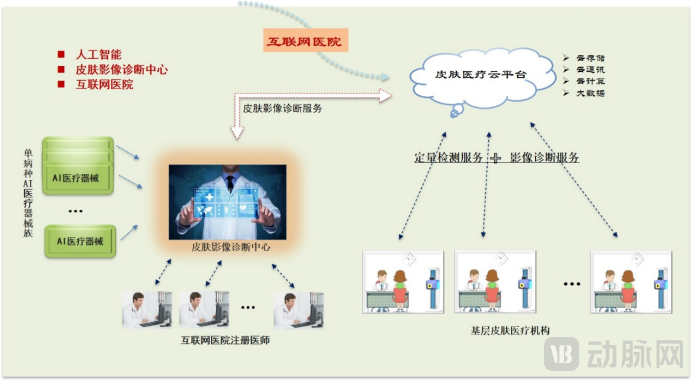
Professor Cui Yong further pointed out that nearly all dermatological conditions have their own hyperspectral imaging signatures. Well-trained models hold the potential to generalize to other skin diseases, providing a comprehensive solution for precision dermatology. By integrating with the internet hospital model and empowered by specialized skin imaging diagnostic centers, this approach comprehensively enhances capabilities in dermatological image-based diagnosis.
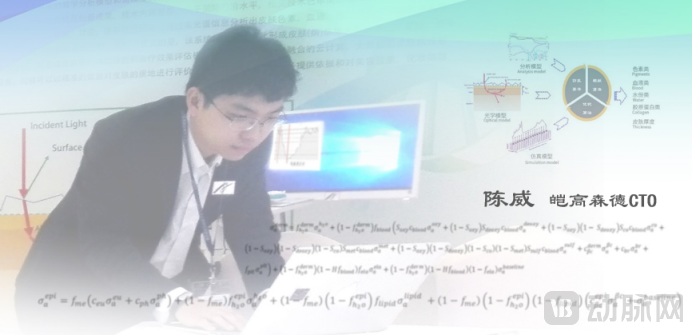
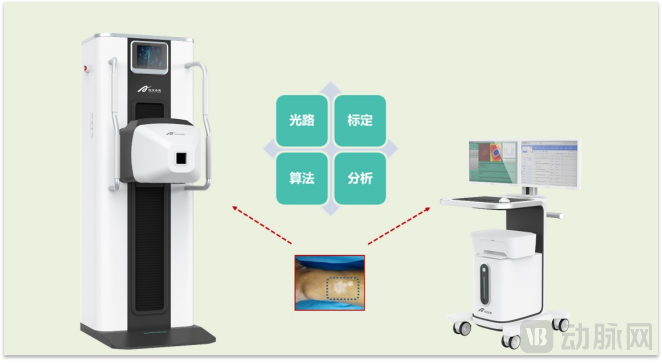
Chen Wei, Algorithm Scientist and CTO of Aigaosende, introduced that the project’s advantage lies in its internationally leading hyperspectral skin simulation deterministic Monte Carlo algorithm. This algorithm enables the separation and extraction of photobiological components of the skin and establishes objective quantitative indicators with strong pathological correlations. Based on this algorithm, the research team has developed the world’s first non-invasive quantitative detection medical device for skin components (recognized as an Innovative Medical Device in Beijing, having obtained both the Medical Device Registration Certificate and Production License), which can provide compliant, high-quality data for the development of AI-enabled medical devices for dermatology. Also leveraging this algorithm, the team’s Skin Component Extraction (SCE) technology achieves significant dimensionality reduction while addressing the medical interpretability of fine-grained data annotation. The development of the “Auxiliary Diagnostic System for Clinical Staging, Grading, and Zoning of Pigmentary Skin Diseases (Vitiligo, Melasma)” represents a perfect extension of this technology and an enhancement of its clinical value.
It is reported that Professor Cui Yong, the project leader, is a leading figure in China in the fields of dermatological imaging and artificial intelligence for skin diseases. He has established the Chinese Skin Imaging Database (CSID) and developed a clinical decision support system for skin tumors, while actively promoting the development of China’s dermatological imaging technology framework and quality control systems. This project focuses on a novel dermatological imaging modality—hyperspectral skin imaging—and has assembled a core expert panel, including Professor Chang Jianmin from Beijing Hospital, Professor Li Chengxin from the Chinese PLA General Hospital, and Professor Meng Rusong from the Air Force Medical Center. The project is expected to yield a series of outcomes, including theoretical research, clinical application studies, clinical diagnosis and treatment consensus statements, invention patents, AI-based medical device products, and data annotation standards.
This project is jointly developed through close medical-engineering collaboration between China-Japan Friendship Hospital and Aigaosende Company. In coordination with other medical and research institutions, China-Japan Friendship Hospital has jointly established a Big Data Laboratory based on skin hyperspectral technology and an Institute of Artificial Intelligence for Dermatology, to collectively promote the practical application of new technologies and products.