

iEasy Dental Positions Itself as the 'Original Apple' of Orthodontics with Breakthrough Customized Invisible Aligner Technology

easy day
Invisible Aligner Developer
I first connected with Frank, the founder of Easy Day, in April this year.
At the time, Frank expressed extreme confidence, stating, “Yi’er Dai, with its proprietary product technology, will be a powerful disruptor in the orthodontics sector.”
For over six months after our initial contact, Frank shared insights about orthodontics and Easy Day on his WeChat Moments almost daily. His profound passion for the orthodontic industry inevitably sparked greater interest in his endeavors. Moreover, this consistent sharing has continued for two years—his intensive posts covering all aspects of orthodontics began in June 2020.
The earliest post on his WeChat Moments dates back to 2018. The story he shared, much like his distinctive personality, underscores the unique selling point of Yierdai, an orthodontic brand: its one-of-a-kind customization.
The founding of Easy Day has a somewhat convoluted backstory. Its development is, to varying degrees, linked to the industry’s leading companies.
In 1997, two MBA students from Stanford University in the United States, Kelsey Wirth and Zia Chishti, unlocked a new era in orthodontics with an innovative idea. That same year marked the founding of a company that would go on to reshape the global orthodontic industry—Align Technology, the parent company of the Invisalign brand.
The idea that would later propel Invisalign to soaring success was the use of clear aligners combined with computer-aided 3D technology to effectively move teeth. Initially, the therapeutic efficacy of these clear aligners was clearly not as ideal as that of the long-established metal bracket orthodontics. However, appearance-conscious individuals had long grown weary of the significant visual drawbacks (metal brackets and wires fixed to the tooth surface, visible from the outside), poor comfort (pronounced presence in the mouth, irritating oral tissues or rubbing against gums and lips), and suboptimal hygiene (fixed and non-removable, making it difficult to maintain oral hygiene) associated with metal bracket orthodontics. These previously underappreciated issues gradually opened up a broad market pathway for Invisalign clear aligners. With continuous product upgrades and iterations, the company ultimately went public with an IPO in 2001.
Almost simultaneously, China’s Taiwan region began introducing invisible orthodontic technology. Industry practitioners and experts in the field of dentistry joined the ranks of those researching clear aligners, and Frank was one of them.
Frank’s academic background—having studied in the Department of Dental Technology at Taipei Medical University, pursued advanced studies in biomedical engineering, and engaged in multiple academic exchanges across Europe, the United States, and Japan—has given him a profound realization: “While we can emulate other countries’ technologies and products, and leverage cost advantages to achieve product substitution, wanting toTo drive the development of the entire industry, the fundamental focus remains innovation.”. In 2004, Frank, who had previously managed a functional appliance company, also embarked on research into clear aligners.
In their research, they found that while attachments in traditional clear aligners help secure the trays and apply forces to teeth, they also present a double-edged sword: the presence of attachments compromises the continuity of force delivery by the aligners. Frank and numerous expert teams have attempted to address this issue. However, removing attachments introduces another obvious challenge: since tooth surfaces are smooth, how can friction be increased to effectively move teeth and achieve successful orthodontic treatment?
Initially, they made numerous attempts, including roughening the surface of clear aligners to increase friction, but all these studies ended in failure. An accidental discovery provided inspiration to the engineers. They unexpectedly observed the movement of flies on glass surfaces.Through in-depth research, they identified a novel material and, after eight years of research and development based on this new material, ultimately achieved the final product formulation for Easy Day.By this time, it was already 2012.
Where Should This Brand-New Orthodontic Product Technology Go? Frank Has Certainly Considered It.
Initially, Frank sought to maximize the value of this product technology as quickly and extensively as possible, so he chose to collaborate with the industry’s leading manufacturers at the time.However, as the product had not yet secured a U.S. patent, the sale of the patent encountered obstacles. When the counterparty lowered its expectations and inquired whether we could develop a production line for Frank or provide contract manufacturing services, the relatively low monthly demand of 500 units led to an indefinite suspension of the collaboration.
Frank remained undeterred. He drew constant inspiration from a widely circulated tale in the tech industry: in the early days, touch-panel manufacturers had approached leading mobile phone makers at the time, such as Nokia, but all collaboration attempts ultimately fell through. Then, in 2007, Apple ushered in a new era of smartphones. A novel human–computer interaction paradigm—touchscreen-based rather than button-based—reshaped the entire mobile phone industry. Easy Day’s technology is akin to the “disruptive touch panel” of the orthodontics sector. But after being “shunned” by industry giants, where should this “touch panel” go next? The answer may lie in becoming a product akin to the “original iPhone.”
After unsuccessful collaborations with major industry players, Frank caught the attention of a friend. This friend graduated from Case Western Reserve University in the United States, the birthplace of the Tweed technique, which laid the foundation for modern orthodontic technology. At that time, the friend, who ran a dental clinic, allowed Frank to conduct an orthodontic trial on his wife. Four months later, having witnessed the efficacy of the new orthodontic technology, the friend openly praised it, remarking that it was rare to find a technology capable of surpassing those offered by leading companies in the dental industry. He further advised Frank to develop his own branded products in mainland China.
In 2012, Frank set out for mainland China.However, the orthodontic market environment was still immature at that time, which led him to continue accumulating strength and wait for the full-scale explosion of the market. This wait lasted for four years. In 2016, driven by various forces, Taiwan Quanliang, Guangzhou Baiyun Industrial Technician College, and Frank along with the research community he represented came together to establish Guangdong Fan Yu Medical Technology Co., Ltd. (with its main product brand easy day, i.e., Yi Er Dai), and began constructing a factory. Shortly thereafter,In 2018, its customized orthodontic appliances were approved for the NMPA Class II Medical Device Registration Certificate.
Their products have found a market in mainland China.
The principles underlying this orthodontic technique may not be as mysterious as they seem.
After studying the orthodontic products of leading companies, Frank discovered that their initial offerings did not include attachments (attachments are typically resin-based materials bonded to teeth to help secure aligners and apply forces to the teeth). However, the absence of attachments often resulted in a narrow range of indications for orthodontic treatment. To address the diverse and complex clinical needs in orthodontics, leading orthodontic companies gradually developed and incorporated attachments into their systems. Following the introduction of attachments, these industry leaders have also been attempting to optimize and iterate on their designs, such as by reducing their size and surface area.
However,The presence of attachments introduces certain drawbacks.
According to the research paper "Several Excellent Clinical Performances of Attachment-Free Clear Aligners," in single-layer aligners with attachments, tooth movement is typically achieved through pressure generated by the deformation of the rigid material. Attachments address issues such as aligner retention and force application. They act like steps, influencing the seating of the aligner. The force applied between the aligner and the teeth usually involves two-point contact, which is accomplished through the attachments. However, torque control capability is often weak with single-material aligners. Due to the presence of attachments, each tooth acts as a fulcrum, which can easily lead to a loss of continuous force across the aligner system. Furthermore, anchorage and root control are relatively weak, potentially necessitating the addition of temporary anchorage devices (TADs). Since single-layer aligners are used, their rigidity and elasticity remain virtually unchanged throughout the treatment process.
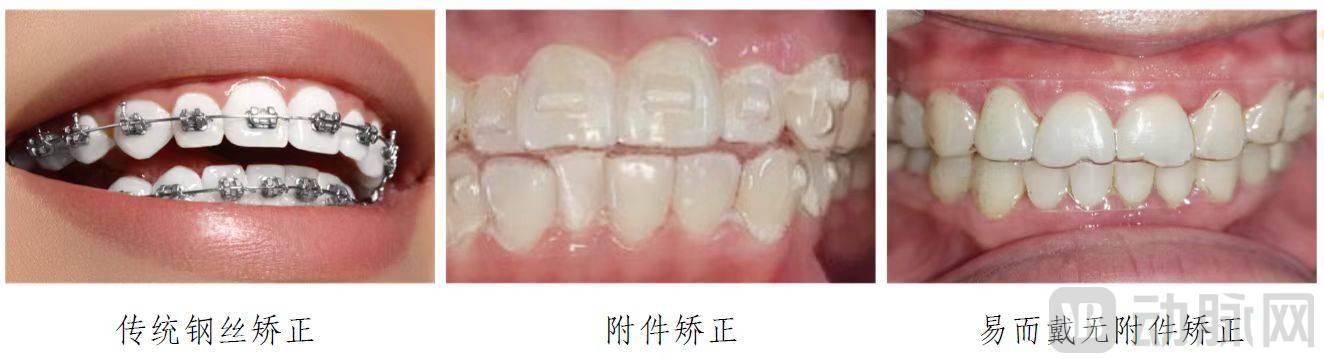
However, Easy Day’s products offer a novel solution. First, it delivers orthodontic forces through friction. Without the need for attachments, the aligner achieves retention via the adsorption force of the biofilm, while force application relies on biological friction. During this process, a “displacement discrepancy” may occur, leading to initial misfit upon insertion; however, the aligner subsequently guides the target teeth into proper position within the tray. The comprehensive coverage provided by the biofilm enables multi-point force application. Owing to its dual-layer design incorporating both soft and hard films, it exhibits strong torque control capabilities. Furthermore, during treatment, a localized dual-film design with variable force delivery can be implemented, providing a more personalized therapeutic solution.
Among these, the most core element is undoubtedly its dual-layer soft-and-hard membrane material, which was developed over many years of research and development.
Medical-grade thermoplastic polymers used for fabricating clear aligners are generally categorized into two types: PET-G and TPU. TPU materials often exhibit high elasticity but insufficient rigidity, whereas PET-G materials typically offer high rigidity but lack adequate elasticity. Both materials present certain limitations in orthodontic treatment. The patented TPP material developed by Easy Day features a coating of biomimetic soft medical-grade material (similar to artificial skin) applied over conventional TPU and PET-G substrates. Furthermore, to meet the biomechanical requirements of orthodontic correction, the manufacturing process has been advanced to enable the application of this biomimetic soft material on the buccal, lingual, and occlusal surfaces of the teeth.
Furthermore, by leveraging materials science and customized manufacturing, Easy Day can achieve three distinct combinations of elasticity and rigidity—light, medium, and high force—within a single aligner, thereby meeting clinicians’ design requirements across different stages of treatment.
In other words, this technology addresses many issues associated with clear aligner orthodontics, such as the loss of continuous force caused by bonded attachments and the unchanging rigid elasticity resulting from single-layer film materials.
In fact, for Frank,Perhaps more importantly, Easy Day empowers dentists through the iterative advancement of its technological products, enabling them to transition from traditional “solo practice” to a “team-based” model. This allows dentists to maximize their professional efficacy and benefit a broader pool of potential patients.
Why is this point so important? We can find the answer in the relevant data.
From the patient (demand) perspective, there is a vast pool of patient needs on one hand, yet extremely low market penetration on the other.According to a report by Huaan Securities Research Institute, as of 2020, the overall prevalence of malocclusion in China and the United States was 74% and 73%, respectively. However, in terms of the proportion of severe cases (Class II and Class III malocclusion), the prevalence rate in China reached 49%, compared to 23% in the United States. In 2020, the number of malocclusion cases in China was 1.04 billion, significantly higher than the 245 million in the United States, indicating that China has a much larger patient base for malocclusion. Generally, a large patient base implies a substantial market; however, in 2020, the penetration rate of orthodontic treatment in China was only 17% of that in the United States.
From the perspective of physicians (supply), there is a high absolute number of dentists, yet a low number of dentists per capita.According to a Frost & Sullivan report, in 2020, the United States had approximately 158,400 general dentists and 10,800 orthodontists, equivalent to 47.8 general dentists and 3.3 orthodontists per 100,000 people. In contrast, China had approximately 277,500 general dentists and 6,100 orthodontists, equivalent to only 19.5 general dentists and 0.4 orthodontists per 100,000 people.The lengthy training required to produce a qualified orthodontist has, to some extent, exacerbated the shortage of orthodontists in China.
As residents’ awareness of oral health consumption grows and the number of orthodontic service providers increases, the orthodontics market size is gradually expanding.According to Frost & Sullivan’s forecasts, China’s orthodontics market is projected to reach $29.6 billion by 2030, with the clear aligner segment expected to account for $11.9 billion. However, to fully realize this market potential, the key lies in enhancing the accessibility of medical service supply.Another major advantage of Easy Day’s products is enabling orthodontists to utilize orthodontic technology products more efficiently.
First, it can further free up the orthodontist’s hands by reducing the bonding of attachments. The process of bonding attachments itself consumes more of the orthodontist’s time; furthermore, attachment bonding is prone to causing oral health issues, which the orthodontist must address after completing the orthodontic treatment. Therefore, reducing the need for attachment bonding will undoubtedly enhance the orthodontist’s efficiency.
Secondly, Easy Day is striving to further liberate dentists’ cognitive load through the application of AI technology. After dentists acquire patients’ oral data in their clinics, Easy Day leverages this front-end data and its understanding of orthodontic biomechanics to provide comprehensive treatment solutions. This enables dentists to move beyond working in isolation and instead collaborate as part of a team with Easy Day, thereby delivering superior products and orthodontic plans to patients. “This will further empower the 80% of dentists who previously did not perform clear aligner therapy to handle simple to moderately complex cases. For dentists with four to five years of experience who have already trained in clear aligner therapy, they can immediately adopt and utilize Easy Day’s products to conduct orthodontic treatments,” Frank added.
Easy Day has not been without its challenging moments.
When first entering the Chinese mainland market, the company chose to quietly build its capabilities due to the immaturity of the orthodontics market. As the orthodontics sector began to flourish, it opted for rapid follow-up. However, even after obtaining a Class II medical device registration certificate in 2018, its progress was not without challenges.
As an innovative medical product, gaining market trust proved far more difficult than anticipated. The greatest obstacle lay in securing physicians’ endorsement. “We initially offered trial use to doctors, but very few were willing to adopt a completely novel product. This is hardly surprising, given that medical practice inherently carries risks, and physicians are concerned about potential joint liability.” Recalling that darkest hour, Frank still sighs with emotion. During the most challenging period, shareholders did consider abandoning the venture. The outbreak of the pandemic even made such a decision appear reasonable. However, Frank, who remained optimistic about the future of clear aligner orthodontics, ultimately persuaded his fellow shareholders to persevere through well-reasoned arguments.
Hard work pays off. After identifying physicians willing to adopt innovative products, the orthodontic outcomes gradually became evident over several years. Many doctors began to recognize that Easy Day’s products possessed capabilities comparable to those of other clear aligner systems. It took Easy Day nearly five years to shift orthodontists’ perceptions from initial skepticism, through hesitation, to eventual trust. This experience also led Frank to acknowledge Invisalign, the industry leader, as a company worthy of respect for ushering traditional orthodontics into the digital era. Meanwhile, Frank confidently asserts that Easy Day has propelled clear aligner therapy into the age of AI-driven connectivity.
For clear aligner companies, a core competitive advantage stems from their superior understanding of orthodontic biomechanics. Even as some patents held by leading orthodontic firms face expiration, their systematic knowledge and comprehension of orthodontic biomechanics, accumulated through extensive case databases, continue to maintain their favorable market position. As an emerging player, Easy Day’s case database is also expanding annually.Frank pointed out that Easy Day currently adds approximately 5,000 to 6,000 new orthodontic cases annually. This continuously growing case database is further deepening Easy Day’s understanding and application of orthodontic biomechanics.
It was also during the product commercialization process that Easy Day identified its target customers: chain dental clinics. Currently, Easy Day has established partnerships with multiple chain dental clinic groups. The decision to focus on B-end clients stems from a clear understanding of the specific needs and pain points of these chain institutions. Chain dental clinics typically face two major challenges: patient acquisition and dentist retention. In scenarios where patient volume is secured, the loss of orthodontists can inflict devastating damage on chain dental clinics.
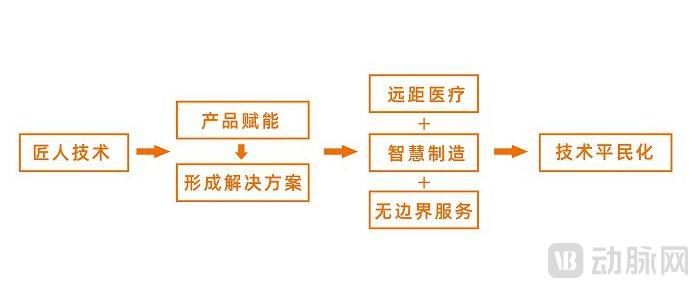
Yi’er Dai helps dental chain institutions significantly reduce the risks associated with dentist turnover through its customized product solutions based on standardized processes. In Frank’s own words, regardless of which dentist is involved, each specific patient receives a single, unique treatment plan tailored exclusively to them. This approach maximizes the mitigation of inconsistencies in patient outcomes caused by varying treatment plans from different dentists. Furthermore, Yi’er Dai is exploring collaborations with leading hardware manufacturers to embed chips that verify whether patients are wearing their appliances correctly. This initiative aims to enhance compliance among end-users while further reducing doctor-patient disputes. Dentists can thus focus on diagnosis, while Yi’er Dai’s team handles the subsequent provision of solutions. The company’s future development is well-supported by Taiwan’s Quanliang Company (specializing in the R&D of CNC engraving machines and related applications), Guangzhou Baiyun Industrial Technician College (which cultivates talent in digital dental technology), and the orthodontic academic team behind Frank.
Currently, Easy Day is attempting to allow customers to use its products through a franchise model with chain institutions. Through this franchising approach, Easy Day aims to achieve "borderless service," enabling patients to access more readily available services. Ultimately, its goal is to realize "healthy orthodontics."
“Achieving optimal outcomes with minimal dental materials is the essence of ‘healthy orthodontics,’” Frank added. This approach may well align with the original intent of industry leaders in clear aligner therapy: “invisible, comfortable, and aesthetically pleasing.”
References:
1. Huaan Securities Research Institute, “Orthodontic Demand Is ‘Highly Personalized’: Accelerating Growth and Building High Barriers in a Non-Standard Market”
2. Li Huangming, Liu Yihan, "Several Excellent Clinical Manifestations of Attachment-free Clear Aligner Therapy"