

Pharmaceutical Digital Transformation Surges as Hidden Distribution Data Unlocks New Commercial Applications
When it comes to big data in healthcare, one readily thinks of clinical big data, health big data, or biological big data. Taking clinical big data as an example, the acquisition of such data involves high barriers, and the data itself holds substantial value; whoever possesses the data holds the initiative in developing related applications.
There is another category of data with a lower barrier to acquisition. After being organized and integrated by specialized vendors, it has begun to demonstrate unique value in many scenarios and is gaining increasing attention from numerous pharmaceutical companies, which are leveraging it to address various challenges encountered in their operations. This is pharmaceutical distribution big data.
The historical lack of attention paid to big data in pharmaceutical distribution is closely tied to the nature of the pharmaceutical distribution supply chain.
Pharmaceutical distribution addresses the challenge of connecting pharmaceutical manufacturers, sales terminals, and consumers. Its primary business models can be broadly categorized into three types: wholesale, retail, and new-style distribution. The wholesale model alone can be further divided into direct hospital sales, commercial allocation, and third-terminal sales, depending on the target customers. Coupled with pharmaceutical logistics, the supply chain involves a wide range of segments. The multitude of these segments naturally generates substantial amounts of data.
To summarize briefly, from the perspective of pharmaceutical distribution alone, one can obtain data across major categories such as flow analysis, competitive product analysis, core hospital tracking, and license management.
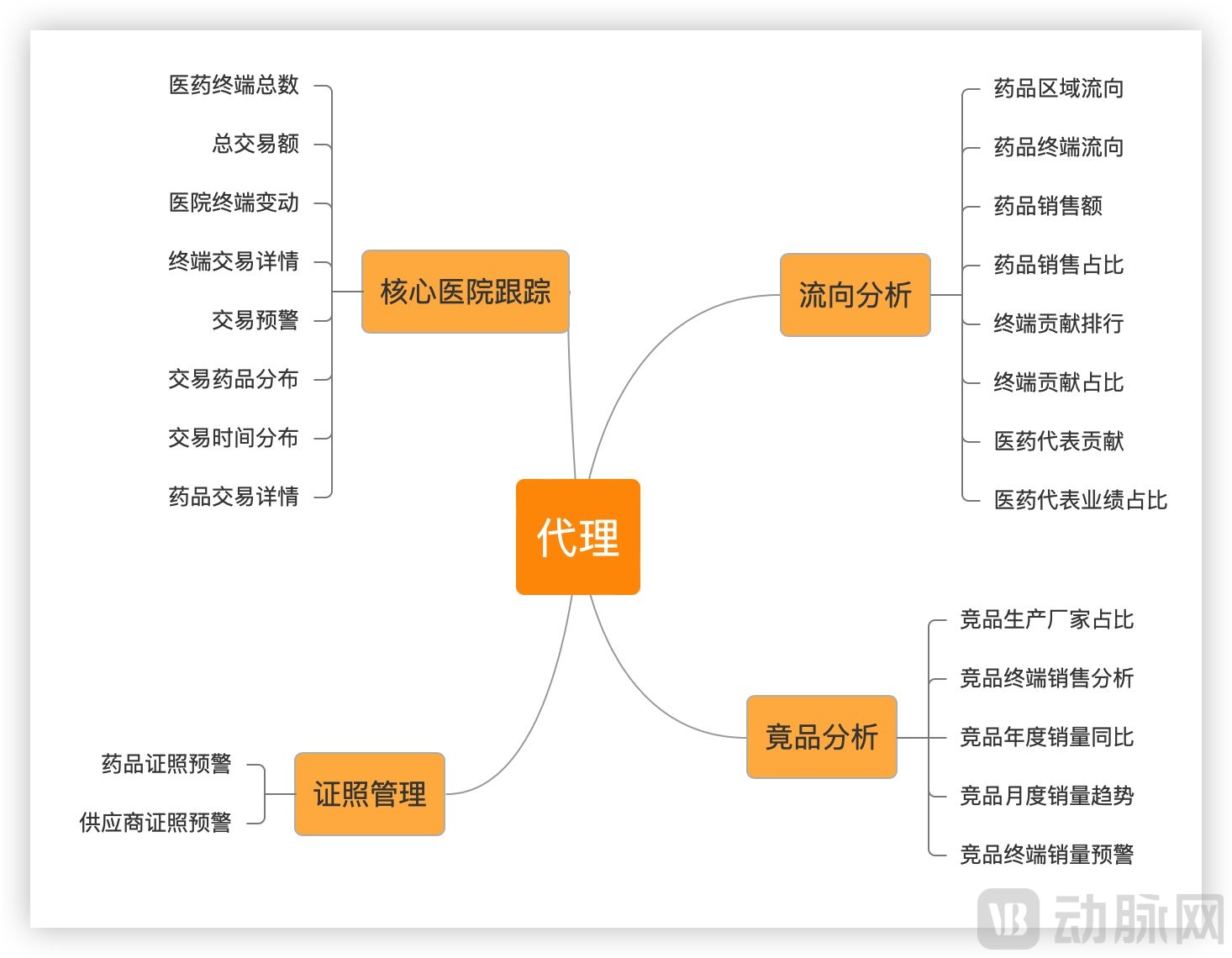
Data That Can Be Generated from the Perspective of Pharmaceutical Agents
One of these categories can be further subdivided. For instance, flow analysis can be broken down into data such as regional drug distribution, terminal-level drug distribution, drug sales revenue, share of drug sales volume, terminal contribution rankings, share of terminal contribution, medical representative contributions, and share of medical representative performance. Competitive product analysis can provide data from a product-centric perspective, covering competitors’ market share, annual sales comparisons, monthly sales trends, terminal-level sales analysis, and sales status alerts.
If needed, the data granularity can be further refined. For instance, by tracking core hospitals, one can not only view the sales performance of all hospitals from a holistic perspective and monitor changes in the number of hospital endpoints, but also identify which partners are core, which are being maintained, which require further engagement, and which are in a “dormant” state. Furthermore, in-depth analysis can be conducted for individual hospitals, covering metrics such as drug sales rankings, product delistings, volume declines, transaction timing, and historical ordering frequency and amounts.
In addition to pharmaceutical distribution, data can be generated from multiple dimensions, including logistics management, medical representatives, and capital.
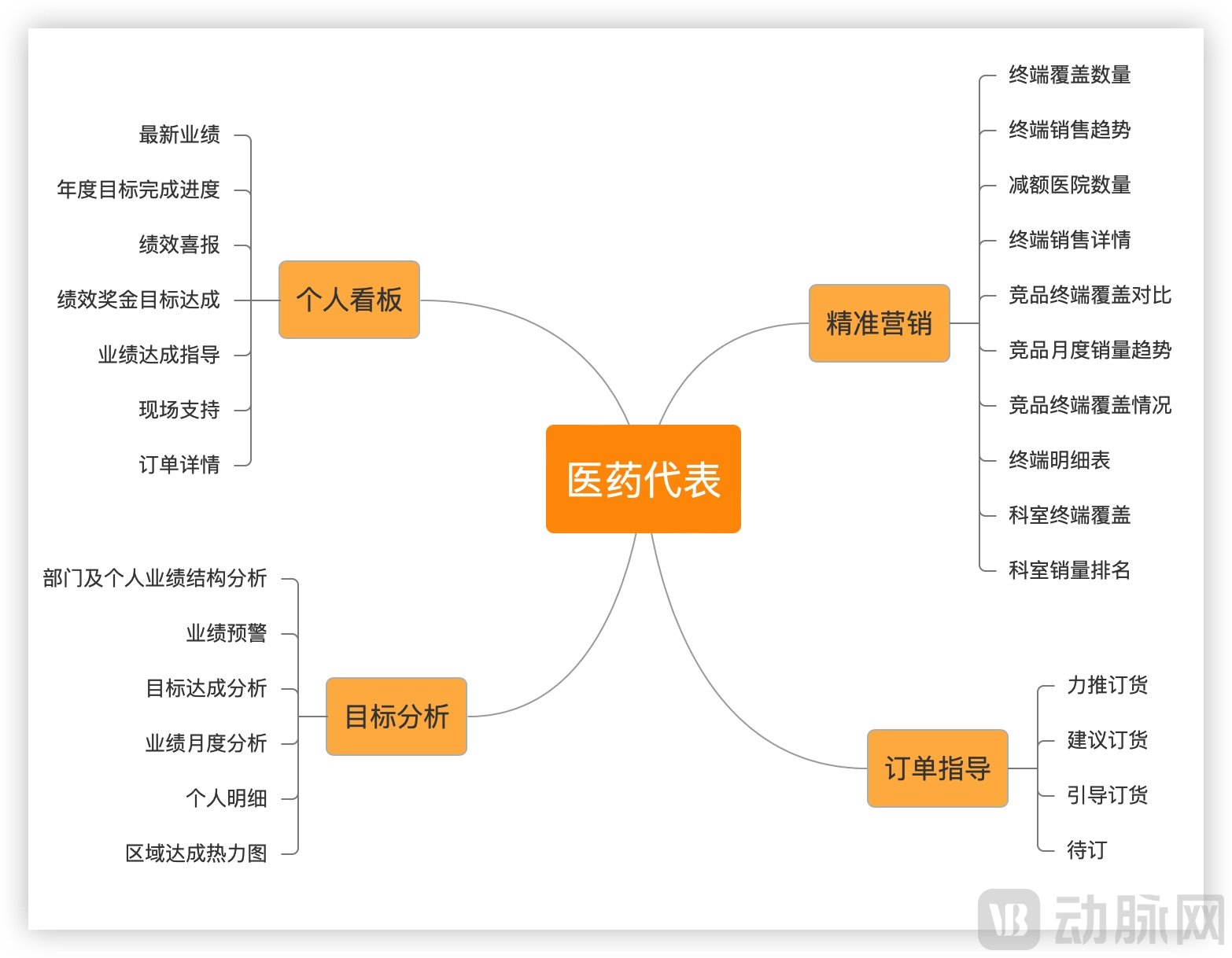
Data Generated from the Perspective of Pharmaceutical Sales Representatives
The pharmaceutical distribution sector itself constitutes a non-linear, multi-tiered network structure; consequently, the data it generates is characterized by fragmentation and disorganization. Although such data has long existed, its inherent value has yet to be fully realized.
Taking the data generated from the perspective of medical representatives as an example, it was primarily used in the past for performance evaluation within sales departments. However, in many cases, sales data were self-reported by the medical representatives themselves, with some even calculating their own sales expenses. Regardless of the value of such data, it is inadvisable from a compliance standpoint alone.
Such data is, at best, only useful within the sales department and lacks the value of being integrated across the entire company. The same applies to other data: whether in logistics and transportation, procurement management, or financial analysis, the data generated can only partially reflect the status of their respective departments, falling short of true big data applications.
Despite certain issues with data in the pharmaceutical distribution sector, its underlying value should not be overlooked.
With the implementation of policies such as the “Two-Invoice System,” consistency evaluation, volume-based procurement, and medical insurance cost containment, the pharmaceutical distribution chain has been compressed, and profit margins on drug prices have been squeezed. The era of high gross margins is gone for good, leaving pharmaceutical companies facing the challenge of refined operations, while the value of big data is increasingly recognized by the industry.
Before pharmaceutical companies can utilize data, they must address several key issues: first, data collection across the entire distribution chain; second, cleaning and aggregating the collected data; and third, generating reports from the data. Naturally, pharmaceutical companies cannot handle these tasks on their own and require professional channel digitalization solution providers.
Suppliers need to bridge the gap between pharmaceutical manufacturers and distribution channels, assuming responsibility for data integration. While this may sound straightforward, it is in fact a cumbersome task. Enterprises along the pharmaceutical distribution supply chain have different business natures and generate diverse types of data. Key considerations include: What methods should be used for data integration? What are the counterparties’ approval processes and timelines for data sharing? Which data fields are required? What is the frequency of data updates?
After data integration, the data must undergo cleaning, classification, and governance to become valuable. The master data management (MDM) system provided by the vendor serves precisely this purpose. Its primary function is to ensure a consistent understanding of data across both internal and external stakeholders, thereby maintaining data consistency, integrity, and controllability, and preventing information gaps or errors arising from differing data recording practices among various parties.
Therefore, master data management systems tailored for pharmaceutical enterprises will be the first demand to experience explosive growth during the commercialization of big data in pharmaceutical distribution.
The consolidated data goes beyond mere departmental aggregation, offering a multidimensional view of the entire business process. For instance, based on the standardized operational workflow of “preparation, execution, quality inspection, analysis, and delivery,” accurate channel data for distributors and products are obtained through data cleaning, inventory reconciliation, backward deduction, and comparative analysis. This enables efficient tracking of product flow and management of cross-territory sales (diversion), timely confirmation of rebates, price adjustments, and compensation amounts, rapid identification of distributor inventory management issues, and overall enhancement of distributor data management capabilities.
If big data reports could be generated in this manner across the entire pharmaceutical distribution chain, it would undoubtedly serve as a powerful tool for corporate management to evaluate their own development.
“For enterprises, big data helps them gain a clear, comprehensive, and accurate view, enabling them to understand themselves and their industry, compare their own situations with industry trends, and thereby make informed decisions,” Wang Dingqiang, Strategic Director of Pharmaceutical Channels at Pharmeyes, told VCBeat.
The value of big data in pharmaceutical distribution, for pharmaceutical companies, is mainly reflected in cost reduction and efficiency improvement, business opportunity discovery, and risk early warning.
Cost Reduction and Efficiency Enhancement
It is common practice for pharmaceutical companies to acquire multiple firms during their development to expand their product pipelines. However, acquisition is merely the first step; aligning operations between subsidiaries, as well as between subsidiaries and the parent group, is no easy feat. Unified management and resource sharing often remain an elusive vision.
A simple example is that subsidiaries may each use different data standards. For any individual subsidiary, this is not a major issue and does not affect its operations. However, from the group’s perspective, data silos create blind spots, making it impossible to assess cost-reduction needs at the enterprise level or to capitalize on business opportunities in a timely manner.
By integrating multiple systems and standardizing data definitions, the operational performance of each subsidiary is consolidated in a timely and accurate manner for presentation to group management, significantly enhancing operational management efficiency. Group resources can be allocated more efficiently. Meanwhile, leveraging the massive data processing capabilities of the big data architecture, the report generation time for various teams has been substantially reduced, thereby improving overall operational efficiency.
Business Opportunity Discovery
For pharmaceutical companies, identifying sources of incremental growth is a critical focus that cannot be overlooked. Strategically, this can be approached in three steps: consolidating existing market share, unlocking the potential value of end customers, and capturing market share from competitors.
First, monitor data on coverage gaps and volume reductions to track competitors’ encroachment on the existing market, promptly alert medical representatives, and adjust sales strategies accordingly. For hospitals already secured, use data to identify departments that should be covered but are not yet, and promptly arrange activities to educate physicians in these departments about the product, thereby driving sales. Through comparative analysis of terminal coverage between our product and competitors’, drive penetration into competitors’ market segments and increase our product’s market share within this therapeutic category.
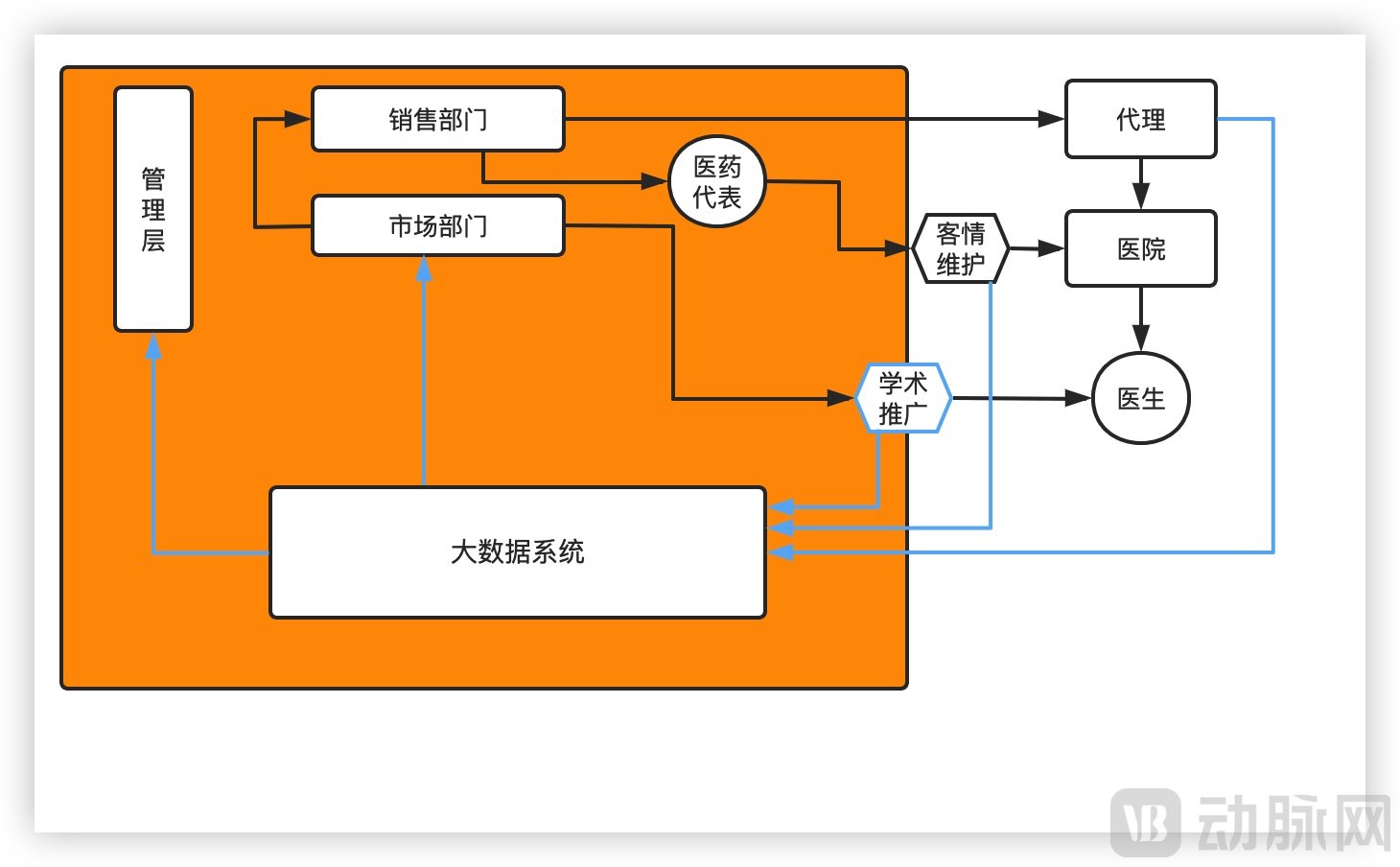
Big Data Empowers the Business Chain
Simply put, even routine tasks such as academic dissemination, key opinion leader (KOL) relationship management, and offline visits must be scheduled with the support of big data to achieve optimal operational outcomes.
Risk Warning
Group management can directly gain visibility into the operational risks of subsidiary enterprises through big data, which provides risk warning assessments from multiple dimensions. For instance, from a capital perspective, it can assess whether sales performance is normal and if there are any anomalies in product categories. If the accounts receivable collection period is prolonged and inventory levels are high with a wide variety of items, significant capital will be tied up across the entire supply chain. This imposes a heavy financial burden on pharmaceutical distribution companies, which typically operate with low gross profit margins.
Management can assess risks based on these alerts, consider whether internal audits are necessary, determine if there are vulnerabilities in their own systems, and decide how to implement improvements. All of this can be achieved without management needing to review financial statements, which exemplifies the value of big data.
In addition to finance, the logistics segment is also critical. The end-to-end transportation of pharmaceuticals involves multiple stages, requiring enhancements in order progress control, logistics information tracking, order fulfillment efficiency analysis, slotting management, and regional operation monitoring to improve distribution efficiency, reduce inventory costs, and minimize losses throughout the distribution chain.
The extracted big data serves not only for internal analysis but also for external forecasting. It enables enterprises to identify existing market patterns and predict future trends, thereby providing data-driven support for managerial decision-making. For instance, in channel risk management, by analyzing the distribution of quality indices across different provinces and benchmarking against industry peers, companies can purposefully optimize their channel grids and promptly adjust supply and distribution rules.
Big data can also present the sales index distribution of a specific product across the traditional three terminal channels, assess whether it aligns with the patterns observed in comparable competing products, and guide enterprises on how to adjust their sales strategies. This enables companies to leverage their own resources and product-specific conditions more effectively, utilizing various approaches to achieve their business objectives.
To date, competition among pharmaceutical companies at the channel level has become increasingly fierce. As the most direct reflection of business outcomes, pharmaceutical distribution data serves as a critical reference for companies to promptly monitor drug sales performance across channels. Pharmaceutical companies now rely heavily on big data from pharmaceutical distribution to formulate marketing strategies and make sales management decisions. In this application scenario, big data in pharmaceutical distribution has firmly taken center stage.
With the widespread adoption of mobile internet and 5G technology, data applications have become indispensable across all industries, and the state has placed increasing emphasis on data security. Currently, China’s pharmaceutical distribution industry is experiencing rapid growth, with a substantial scale in both the number of enterprises and overall size, generating an astronomical volume of data. How to effectively manage this data is an urgent issue that the big data sector within the pharmaceutical distribution industry must address.
According to incomplete statistics, there are currently as many as eight national standards related to this field. Many localities have also introduced their own local regulations, and the industry itself has numerous management standards. However, since these are not mandatory standards, they are implemented selectively. The lack of unified data management standards inevitably creates barriers to data exchange, ultimately leading to misconceptions about data among enterprises in the market. From the perspective of industry development, it is necessary to further establish a standard that enables enterprises to achieve greater consistency in their analysis and understanding of data, thereby guiding their business operations and growth.
Wang Dingqiang, Channel Strategy Director at Pharmeyes, stated to VCBeat: “For data suppliers, the absence of unified standards necessitates that enterprises elevate their own internal benchmarks. They must assess compliance by examining whether the data involves state secrets, trade secrets, personal privacy leaks, or unfair competition, as well as evaluating the legitimacy of data ownership, the legality of the data transaction process, and the validity of the transaction itself, thereby ensuring the compliant application of data.”
Fortunately, the industry has also taken note of these irregularities. Led by the China Pharmaceutical Commerce Association, 18 pharmaceutical distribution enterprises—including United Pharmaceutics, Shanghai Pharmaceuticals, and Pharmeyes—have jointly compiled and released the “Standard for Master Data Management of Terminal Institutions in Pharmaceutical Distribution.” By addressing master data from its most fundamental and core perspective, the standard largely resolves the issue of inconsistent data interface standards between upstream and downstream partners. If effectively implemented, it will break through the bottlenecks in the foundational informatization of operational management for pharmaceutical distribution enterprises, aligning the industry’s digital transformation with contemporary development trends and achieving multi-party win-win outcomes.
Currently, the primary value of big data in pharmaceutical distribution lies in enhancing enterprises’ internal digital capabilities. In the future, big data will also be used to evaluate products throughout their entire lifecycle, assisting companies in setting business objectives, selecting target markets, and determining corresponding pricing strategies. Furthermore, big data can provide actionable recommendations for market expansion models, the development of performance evaluation systems, organizational structure adjustments, and the optimization of management processes and policies.
At the marketing level, personalized solutions are tailored to specific clients, and insight reports on the return on investment (ROI) of academic and commercial initiatives are generated to support corporate decision-making. In the future, big data in pharmaceutical distribution will be applied in more scenarios, playing a greater role in helping enterprises improve the accuracy of their decisions.