231 AI-Powered Medical Device Projects Selected in China's National Innovation Initiative Led by MIIT and NMPA
After nearly a year of evaluation, the results of the “AI Medical Device Innovation Task Unveiling Initiative,” jointly organized by China’s Ministry of Industry and Information Technology (MIIT) and the National Medical Products Administration (NMPA), have been announced. A total of 231 AI projects were selected for the innovation tasks, outlining the future landscape of medical artificial intelligence.
The officially released documents categorize the key artificial intelligence (AI) projects slated for future breakthroughs into eight types: “Intelligent Auxiliary Diagnostic Products,” “Intelligent Auxiliary Therapeutic Products,” “Intelligent Monitoring and Life Support Products,” “Intelligent Rehabilitation and Physiotherapy Products,” “Intelligent Traditional Chinese Medicine (TCM) Diagnosis and Treatment Products,” “Medical AI Databases,” “AI Medical Device Clinical Trial Platforms,” and “AI Medical Device Real-World Data Application Platforms.” Each selected project is further classified into either “Lead Entities” or “High-Potential Entities.” The former are tasked with rapid implementation, as their products are relatively mature, while the latter are still in development but hold the potential to become mainstream in future medical AI.
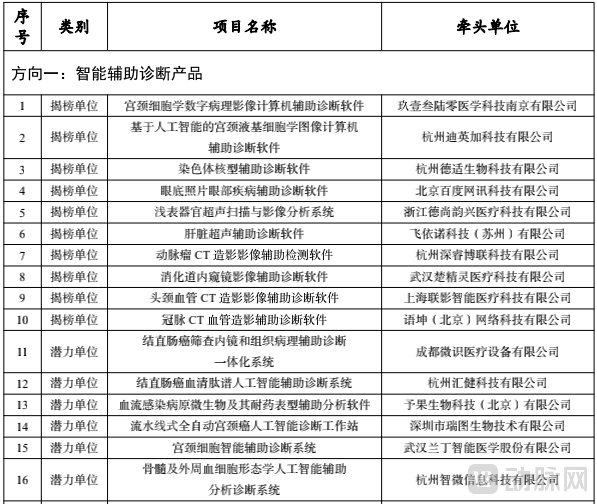
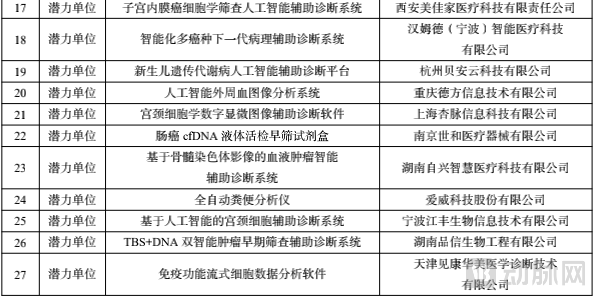
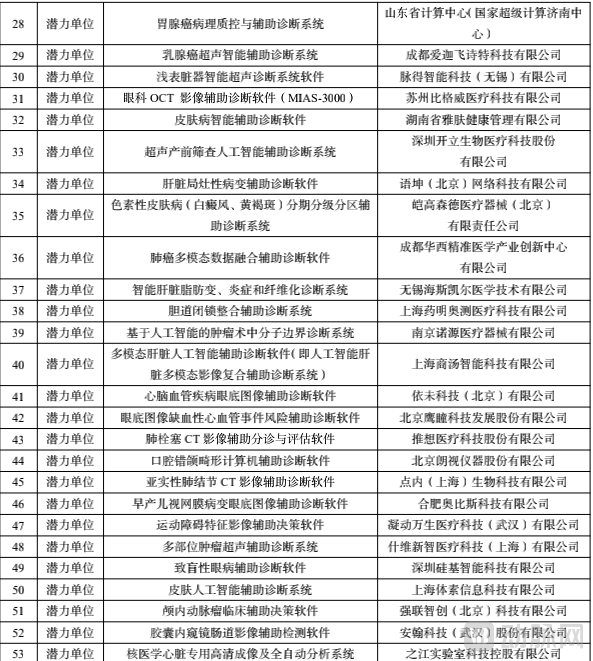
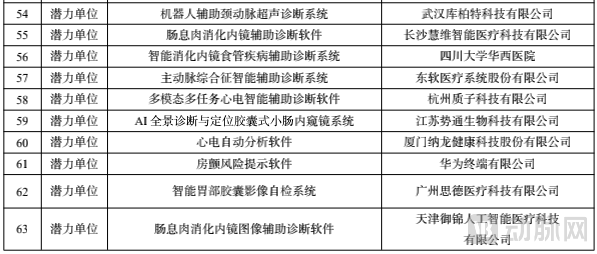
Unlike the NMPA approval statistics previously released by official authorities or compiled by media outlets, this ranking features an exceptionally granular categorization of AI products. Taking “intelligent assisted diagnostic products” as an example, the list includes AI-based diagnostic solutions for high-throughput scenarios such as CT angiography (CTA) and pulmonary nodules, with highly detailed segmentation, as well as niche applications with clearly defined scales, such as peripheral blood testing and early prenatal screening.
If the initiatives on this list are implemented step by step as expected, artificial intelligence will truly become integrated into healthcare, with the capacity to empower every scenario within diagnosis and treatment.
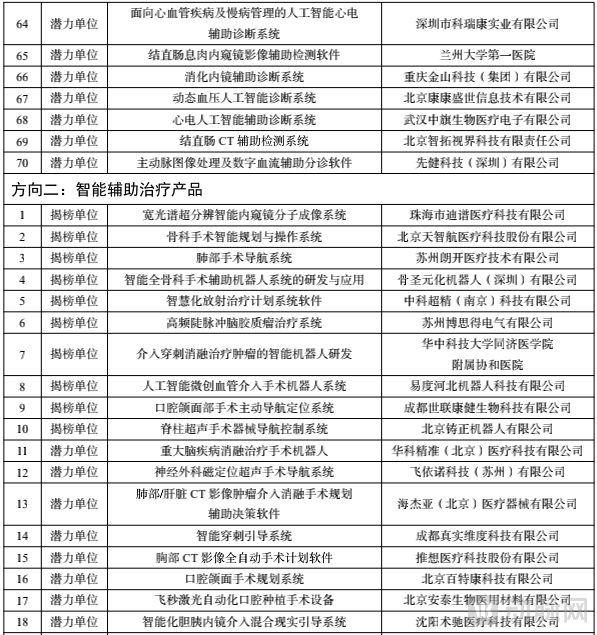
A brief statistical analysis of the companies featured in this ranking reveals that among the 231 AI projects, “Intelligent Auxiliary Diagnostic Products” rank first with a total of 70 projects, far exceeding those in scenarios such as auxiliary treatment and intelligent monitoring. However, it is worth noting that although “Intelligent Auxiliary Therapeutic Products” have limited support from Class III medical device registrations issued by the National Medical Products Administration (NMPA), their total number of projects has already approached half that of auxiliary diagnostics, indicating promising future development prospects.
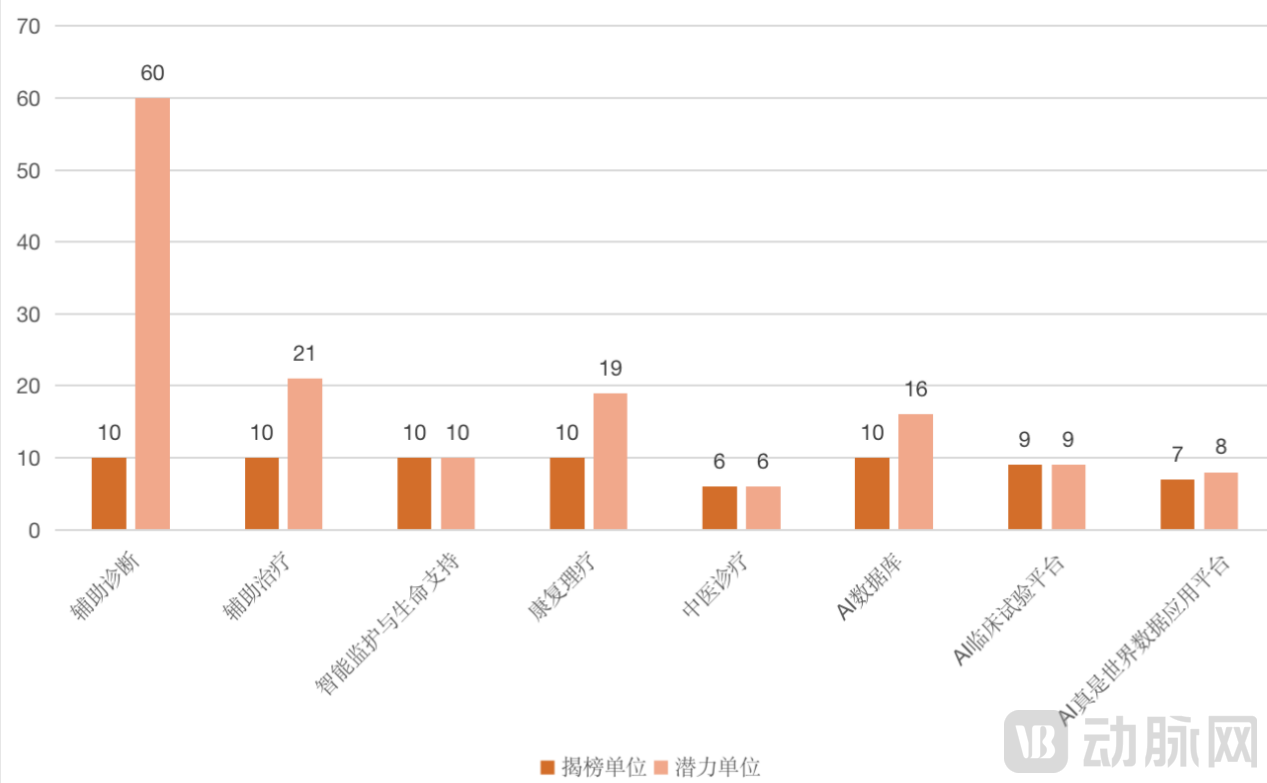 Distribution of AI Medical Device Innovation Tasks
In the field of computer-aided diagnosis, the documents released this time provide an extremely detailed description of the project,Particularly Emphasize Differentiation. Taking AI for pulmonary nodules as an example, only Diannei Technology’s project on subsolid pulmonary nodules was selected in this high-throughput scenario. Compared with the more common ground-glass nodules, subsolid pulmonary nodules exhibit lower density than solid nodules but have a relatively higher malignant potential. Therefore, Diannei Technology’s project represents a further refined segmentation of conventional pulmonary nodule AI, narrowing the AI application scenario while enhancing the effectiveness in addressing specific clinical issues.
In addition, among the auxiliary diagnostic projects selected this time, there are alsoContains a large number of AI-powered diagnostic products based on multimodal data, such as Hangzhou Proton Technology’s multimodal, multitask AI-assisted ECG diagnostic software, SenseTime’s multimodal AI-assisted liver diagnostic software, and Shanghai WuXi NextCODE Medical’s integrated AI-assisted diagnostic system for biliary atresia, have all moved beyond the traditional approach of building AI models based on single-modality imaging. Instead, they integrate and analyze imaging data from CT and ultrasound with pathological, molecular diagnostic, and even genetic information. Compared with single-modality AI, multimodal AI modeling is more challenging and capable of addressing a wider variety of clinical problems, thereby opening new pathways for the development of medical AI.
Enterprises are the primary entities responsible for executing innovation tasks, and it is evident that leading companies hold a certain competitive advantage in exploring potential areas within medical AI. For instance, Deepwise Medical was shortlisted for one “unveiling” task and five “potential” tasks in this selection process. Its “unveiling” task entry, the Aneurysm CT Angiography Image-Assisted Detection Software, is a relatively mature product. It serves as a one-stop AI solution for aneurysm detection, integrating 3D post-processing of intracranial vessels, detection of intracranial aneurysms, and assisted analysis. The product has currently been approved to enter the National Medical Products Administration (NMPA) Innovative Medical Device Review Channel. Related research findings have been supported by the National Natural Science Foundation of China and published in Nature Communications (Impact Factor: 14.919), representing rare multi-center validation results for AI-based detection of intracranial aneurysms.
Shukun Technology and United Imaging Intelligence each secured one “unveiling the list” task and one potential task. Shukun Technology’s coronary CT angiography (CCTA) aided-diagnosis software is one of the company’s most mature products and has been widely implemented in tertiary hospitals. Meanwhile, United Imaging Intelligence, a subsidiary of United Imaging Healthcare, was nominated as an “unveiling the list” entity for its head and neck CT angiography aided-diagnosis software. Subsequently, Zhongshan Hospital Fudan University will serve as the primary investigator to conduct clinical trials and file for Class III medical device registration.
Notably, the announced results of this innovation challenge did not categorize solutions into Class II or Class III, nor did they include AI applications for scenarios such as pneumonia, diabetic retinopathy, or fractional flow reserve (FFR). VCBeat believes that the role of medical artificial intelligence in advancing healthcare systems should be diverse and comprehensive, rather than being limited to optimizing imaging diagnosis within the clinical workflow. Therefore, both diagnostic-grade and assistive-grade products are needed to achieve optimization across the entire process and all clinical scenarios.
On the other hand, the exclusion of projects such as pneumonia detection, diabetic retinopathy screening, and fractional flow reserve (FFR) assessment is not due to lagging development in these areas; rather, it may be because these technologies are sufficiently mature and do not require policy support for implementation. To vigorously promote the deployment of medical artificial intelligence (AI) products, enterprises need to focus on developing more differentiated AI scenarios that deeply align with clinical needs, thereby facilitating better integration of medical AI into diagnostic and treatment workflows.
If the purpose of this open innovation challenge is to accelerate the in-depth exploration of potential artificial intelligence scenarios, then where should the next major trend in medical AI be headed? To address this question, we have conducted a detailed breakdown of the projects featured on this year’s list.
Over the past six years, CT scanners, fundus cameras, and digital radiography (DR) systems have been the preferred entry points for AI startups, owing to their large installed base, relatively easy data acquisition, and the presence of conditions with readily identifiable signs, such as pulmonary nodules and diabetic retinopathy. However, as the first generation of AI solutions matures, emerging data indicate that the platforms for medical AI applications are expanding beyond traditional modalities like CT and MRI. Surgical navigation, endoscopy, pathology, and ultrasound are poised to become the next frontiers for a flourishing ecosystem of medical AI innovation.
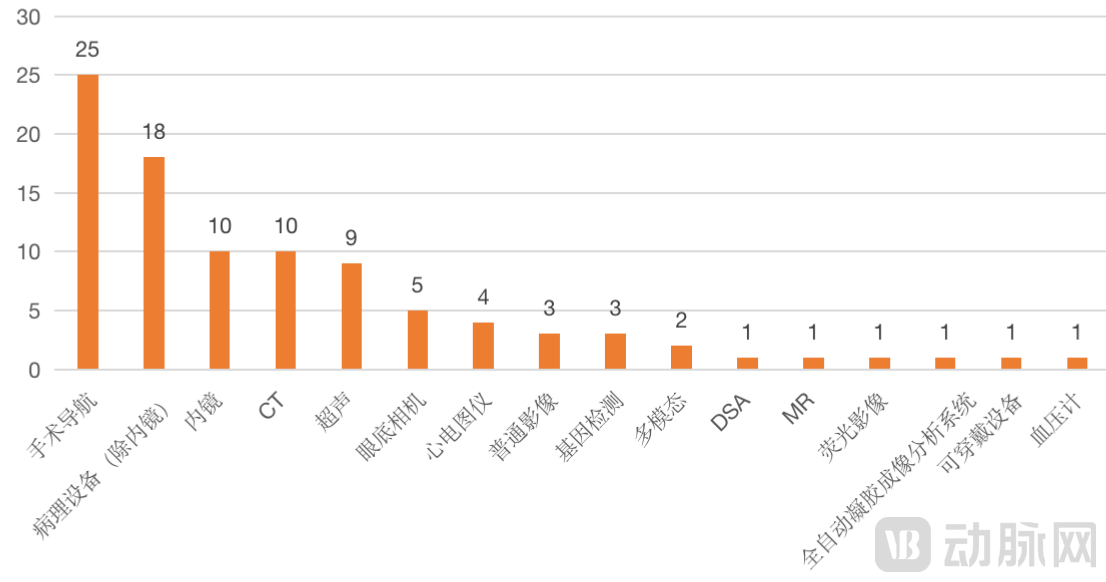 "Medical Technologies/Devices Involved in 'Intelligent Auxiliary Diagnostic Products'"
On September 20, 2022, the Hunan Provincial Healthcare Security Administration issued the “Notice on Regulating the Use and Charging of Surgical Robot-Assisted Operating Systems.” On one hand, the notice requires hospitals to charge additional fees solely based on the number of core surgical steps completed, thereby promoting innovation in surgical procedures and core operational steps within the surgical robotics industry. On the other hand, it establishes the status of surgical navigation robots through pricing regulations, reduces information asymmetry between healthcare providers and enterprises, and prevents some hospitals from purchasing expensive, high-cost, single-function surgical robots, encouraging them instead to acquire more practical surgical navigation products.
In this document, numerous high-potential entities have leveraged artificial intelligence to drive intelligent innovations in surgical techniques while expanding the application scenarios of surgical robot navigation and control systems. It is foreseeable that various surgical robot hardware and software solutions will become increasingly integrated into surgical workflows in the future.
Pathology equipment represents the second-largest application scenario by project count in this report. A significant number of diagnostic companies have entered this field, adopting artificial intelligence (AI) for pathological data analysis to facilitate assisted diagnosis. AI technologies have been integrated into the diagnostic analysis of various cancers, including colorectal and cervical cancer. Furthermore, some enterprises are attempting to fuse pathological data with other data types to develop multimodal cancer diagnostic tools.
However, the development of pathology AI faces multiple obstacles and challenges beyond the regulatory review and approval system. Specifically, since imaging-assisted diagnosis occupies a midstream position in the industry chain, it relies on the standardization of upstream imaging equipment. Yet, domestic mainstream electron microscope manufacturers have not established unified data standards, nor do they have sufficient incentive to modify their devices in accordance with industry-specified data standards, thereby creating certain barriers to data interoperability.
Revisiting Ultrasound: A Key Sector Poised for New Breakthroughs in Regulatory ApprovalUltrasound imaging adds a temporal dimension to the two-dimensional data generated by CT and DR. Moreover, ultrasound examinations often produce a large number of frames with no diagnostic value. Therefore, AI must identify the value of each frame in a dynamic environment, compare them against one another, and extract the responsible view at specific moments to enable effective image analysis. In recent years, companies such as Yizhun Intelligent and Deepwise Technology have made significant investments in the ultrasound sector. Yizhun Intelligent holds the world’s first regulatory approval for real-time dynamic ultrasound-assisted diagnostic technology, which has been applied to breast, abdominal, and thyroid examinations. Meanwhile, Deepwise Technology has focused extensively on intelligent handheld ultrasound, aiming to promote ultrasound screening in primary healthcare settings.
In this document, we observe that AI-enhanced ultrasound is being deployed across a broader range of clinical scenarios, such as intelligent examination of superficial organs and assistance in prenatal screening, thereby effectively expanding the application scope of ultrasound equipment.
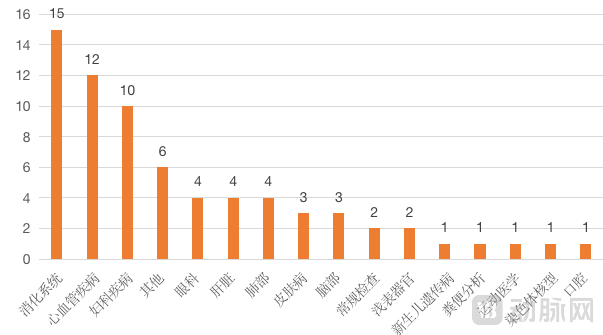
Diseases Covered by “Intelligent Auxiliary Diagnostic Products”
Overall, as the regulatory approval process becomes increasingly mature, the development costs of medical AI are gradually becoming more manageable. More imaging AI solutions targeting niche scenarios are also likely to obtain medical device registration certificates issued by the Center for Medical Device Evaluation (CMDE). In the future, application scenarios for medical AI will continue to expand alongside the maturation of the review and approval processes, enabling medical AI companies to better mitigate risks and effectively reduce R&D costs.
Although clinical research and application development have entered the era of intelligence, the vast amount of medical data in China has not yet been transformed into structured, actionable big data. Standardized medical datasets remain a scarce resource, hindering the rapid advancement of medical AI-related research and industry.
However, building an effective database is no simple task. It requires substantial time and effort from numerous highly skilled physicians to address challenges such as data collection, data annotation, formulation of standard operating procedures (SOPs), and data security issues. Therefore, to promote the comprehensive development of the medical artificial intelligence industry, reliance on corporate efforts alone is insufficient; hospitals and academic institutions should also participate in database construction to support enterprises’ AI research and development initiatives.
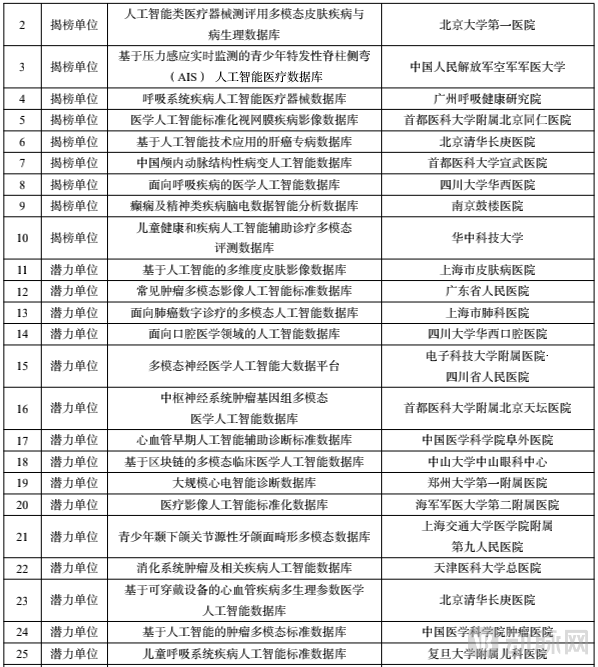
A total of 10 leading entities and 16 high-potential entities were selected in this document, all under hospital leadership. The projects implemented by the leading entities include the development of AI-powered products for cardiovascular imaging and the creation of a testing database; a multimodal database of skin diseases and pathophysiology for the evaluation of AI-based medical devices; a specialized liver cancer database based on AI applications; and an intelligent analysis database for EEG data related to epilepsy and psychiatric disorders. These initiatives encompass multiple stages, including AI algorithm development, evaluation, and regulatory approval, and are expected to effectively streamline the R&D process for AI products in the future.
Due to the diversity of disease types, few conditions can achieve the establishment of a full-process R&D database, even with the inclusion of high-potential institutions. However, database development is a long-term endeavor. As hospitals become more aware of the importance of building databases and are supported by effective incentive mechanisms, medical AI databases will gradually become more comprehensive, facilitating continuous updates throughout the entire lifecycle of AI products.
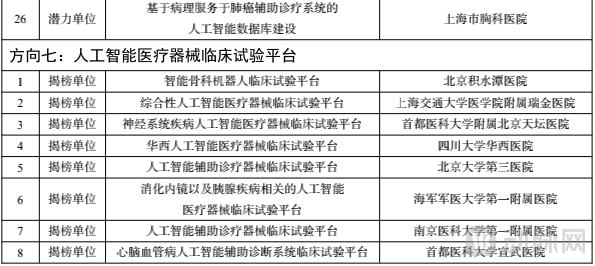
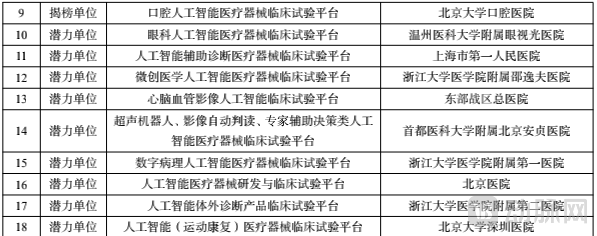
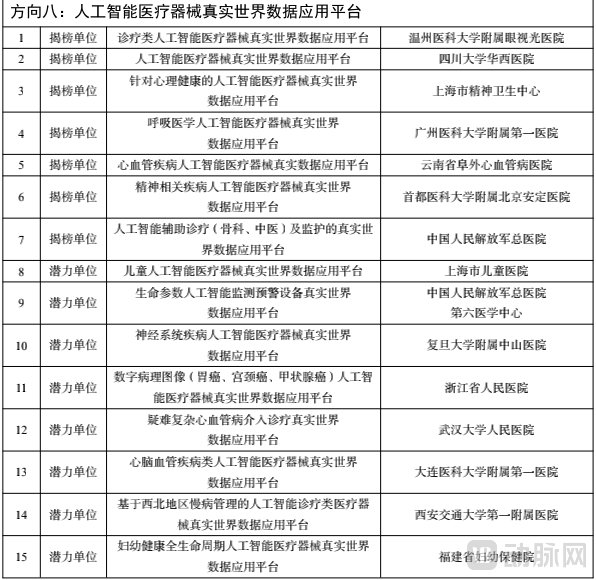
“The AI Medical Device Clinical Trial Platform” and the “AI Medical Device Real-World Data Application Platform” have also garnered extensive attention from hospitals, with a total of 33 projects selected across these two categories.
The “AI Medical Device Clinical Trial Platform” focuses predominantly on major disease categories, with hospitals already engaged in the neurological, gastrointestinal, cardiovascular and cerebrovascular, and ophthalmological sectors mentioned above. Upon completion, hospitals will gain robust independent capabilities for AI development, and during the initial phase of the clinical trial platform, they are poised to leverage their monopoly advantage to achieve dual leadership in both R&D and academic pursuits within these fields.
The development of a real-world data application platform for AI-based medical devices is oriented toward practical applications. This initiative will also effectively attract AI companies and pharmaceutical firms to establish their presence, thereby significantly enhancing the overall standard of medical practice.
Since the concept of medical artificial intelligence entered the public eye, we have become accustomed to categorizing companies engaged in AI software development as a distinct group. However, an analysis that integrates the information presented in documents with the current strategic moves of these enterprises reveals that former AI software solution providers are incorporating hardware manufacturing into their production lines, while traditional medical device manufacturers are increasing their investment in AI technology to offer intelligent equipment and services.
The convergence of various industries has provided AI technology with greater room for development, while also offering an efficient pathway for its deep integration into diagnostic and treatment workflows. In this process, whether in IVD, fluorescence imaging, wearable devices, or blood pressure monitors, there is an active pursuit of AI integration to lower the threshold for medical applications and enhance healthcare efficiency.
However, as medical AI enters the Age of Discovery, it must also clarify its own value.
The documents issued by the Ministry of Industry and Information Technology (MIIT) and the National Health Commission (NHC) outline various potential forms that medical artificial intelligence may take, but do not address the market pressures these products may face.
Thus, when AI is bundled with other technologies, are we paying for the device or for the AI? Exploring business models remains a core issue that must be addressed to ensure the sustainable development of medical AI in the new era.
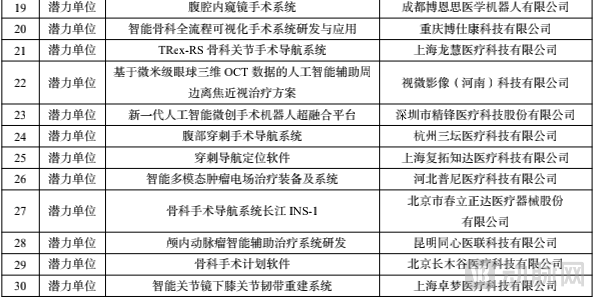
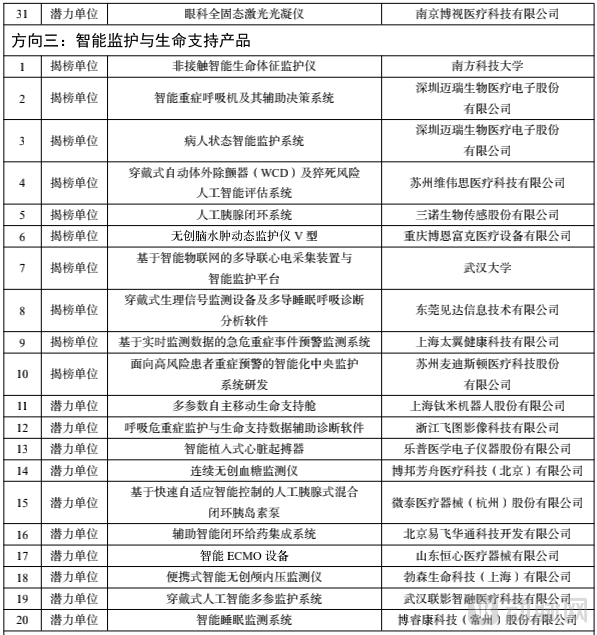
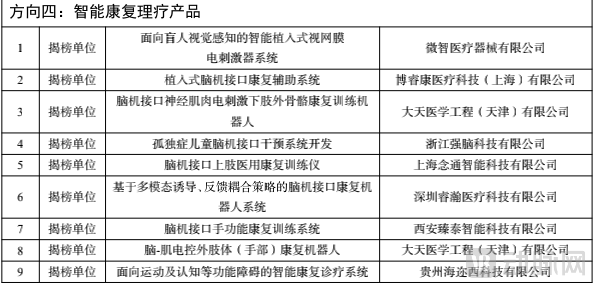
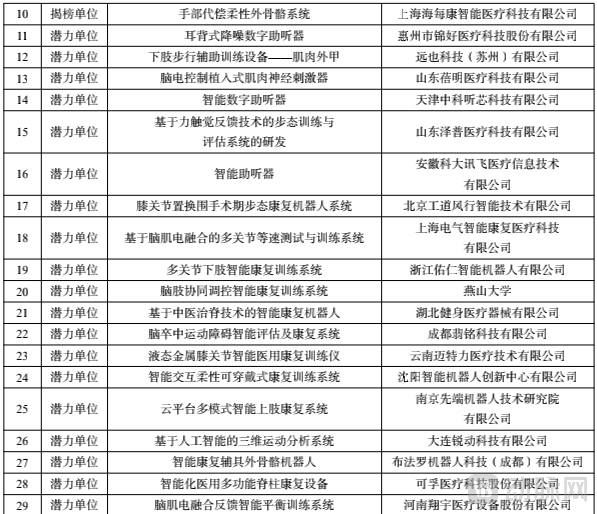
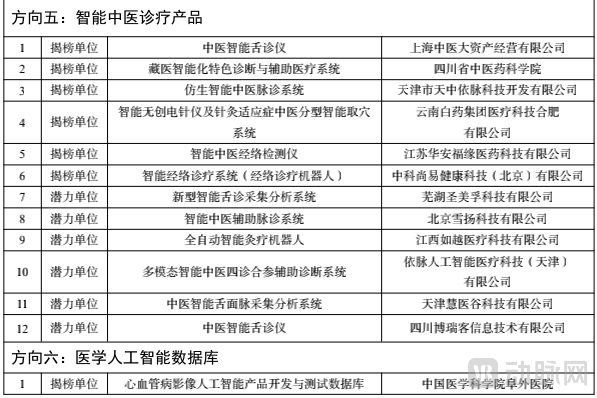
Appendix: Shortlisted Units for the AI Medical Device Innovation Challenge