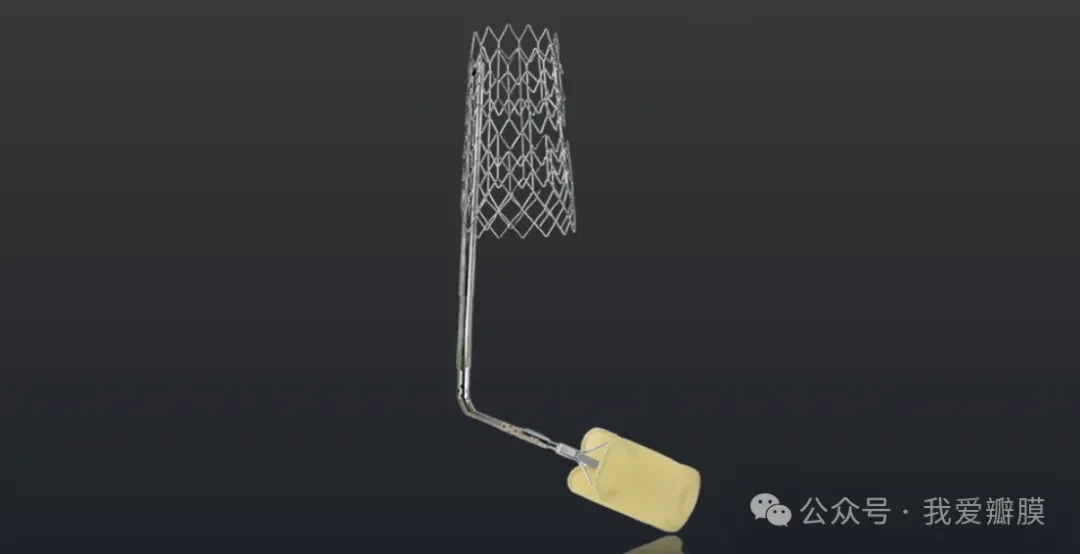
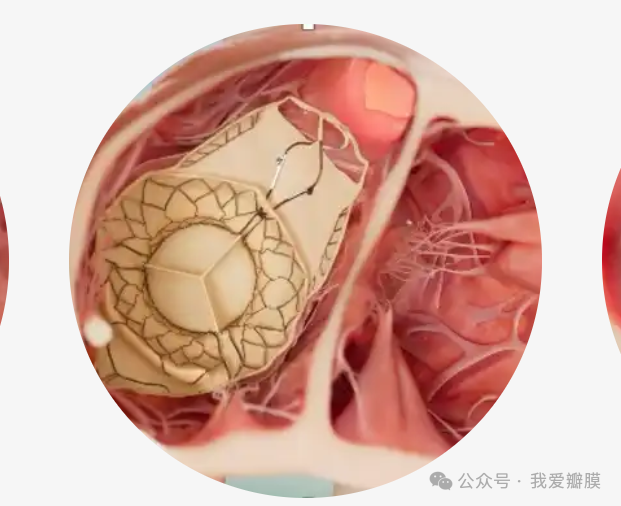
The heart is the human body's never-stopping "pump," and the valves are the most precise "one-way valves" inside the pump — once the valves age or malfunction, blood flows backward and the heart becomes overworked; patients may then face the fear of open-heart surgery or the lifelong constraint of medication dependence.But now, everything is changing!The Next Generation of Heart Valve Replacement Technology is Here: No Thoracotomy Required, Minimal Trauma, and Precise Imitation of the Structure and Function of the Human Native Valve, Allowing Patients to Recover Quickly After Surgery and Eliminate the Hassle of Lifelong Medication.On May 4, the 2026 DeviceTalks Minnesota Conference will kick off at the University of Minnesota, featuring a high-profile forum titled "Designing the Next Generation of Heart Valves." This event will bring together the five most dynamic companies in the field from around the world—whose technologies are redefining the future of heart valve treatment and deserve close attention from everyone concerned with health!Today, we will unlock these 5 "Heart Guardians" in advance, and see how they bring new life to tens of millions of valvular disease patients with innovative technology. PART.01 Anteris Technologies (Australia/USA) —— The "Top Performer" in Bionic Valves As a company listed on both Nasdaq and in Australia, Anteris not only boasts strong capabilities, but its core product, the DurAVR aortic valve, has also gained immense popularity due to its "bionic breakthrough technology." Even medical giant Medtronic has shown great interest, making a strategic investment of $90 million. From the outset of development, Anteris focused on the core challenges of traditional bioprosthetic valves, such as susceptibility to calcification and poor blood flow simulation. The company formed an interdisciplinary R&D team and, after nearly a decade of efforts, integrated technologies from bionic medicine, materials science, and other fields. Through repeated optimization of leaflet morphology and material formulation, they first completed extensive in vitro mechanical testing and animal experiments to verify the valve’s hemocompatibility and anti-calcification properties. Gradually advancing clinical research, they ultimately developed this product that closely mimics the function of native human valves. Earlier this year, it reached a critical clinical milestone and is now being progressively rolled out globally.Unlike the stitched design of traditional valves, the most distinctive feature of DurAVR is that its leaflets are made from a single piece of material in its natural form, perfectly mimicking the mechanical behavior and blood flow distribution of a healthy human aortic valve. It can accurately restore normal aortic blood flow, akin to replacing the heart's valve with an "original version."More notably, it adopts Anteris' exclusive ADAPT anti-calcification technology. This material, used as a cardiac and vascular patch, has been applied in 55,000 patients worldwide, with no signs of calcification even after 10 years, completely resolving the pain point of traditional bioprosthetic valves prone to degeneration.At this conference, Wayne Paterson, CEO of Anteris Technologies, will be present to unveil more core advantages of this bionic valve. 【Core Highlights】: Bionic design + anti-calcification technology, no need to worry about valve degeneration, blood flow is closer to the natural state. PART.02 CroíValve (Ireland) —— The "Minimally Invasive Revolutionary" in Tricuspid Valve Treatment Tricuspid Regurgitation (TR) is a highly prevalent heart valve disease. Traditional treatments are invasive and carry high risks, but the Duo Adapt system developed by CroíValve has completely broken this deadlock – it successfully completed the world's first transcatheter tricuspid regurgitation treatment in Poland, using an innovative anchoring method that makes minimally invasive treatment safer and gentler. The development process began with an in-depth understanding of the clinical pain points in tricuspid valve treatment. The research team discovered that traditional anchoring methods often damage native heart structures, prompting them to spend over six years exploring non-invasive anchoring technology. They repeatedly tested stent fixation stability and catheter delivery safety, collaborated with multiple hospitals worldwide on clinical trials, optimized the compatibility between support catheters and valves, and gradually overcame challenges such as unstable anchoring and slow postoperative recovery. This ultimately led to the world’s first clinical application, marking a breakthrough achievement in the field of minimally invasive tricuspid valve treatment.The innovation of this system lies in "non-invasive anchoring": a support catheter fixed on the stent in the superior vena cava can securely anchor the valve at the annulus without touching the right heart or the native valve structure, minimizing cardiac damage and significantly speeding up postoperative recovery.If you want to learn more details about this "gentle repair" technology, at this conference, CroíValve's Vice President of R&D, Gavin Kenny, will provide professional insights—don't miss it. 【Core Highlights】: New anchoring technology, no damage to native heart structures, minimally invasive treatment for tricuspid regurgitation is safer. PART.03 Foldax (USA) —— The "Game-Changer" of Polymer Valves About 2 million people worldwide need to undergo heart valve replacement surgery each year. However, traditional mechanical valves require lifelong anticoagulation, and bioprosthetic valves are prone to calcification and deterioration, always struggling to balance safety with long-term outcomes—until the advent of Foldax's Tria mitral valve, which broke this deadlock.This enterprise from Salt Lake City, USA, has developed the world's first commercially available polymer heart valve using its exclusively researched LifePolymer material. It officially launched in India last year, benefiting countless patients. Foldax’s R&D journey began with breakthroughs addressing the limitations of traditional valves, initiating a polymer valve R&D project years ago. The core goal was to solve the problems of mechanical valves requiring lifelong anticoagulation and bioprosthetic valves being prone to calcification. In 2023, the company signed an agreement with Australia’s national science agency, CSIRO, acquiring full ownership of the polymer technology patent. This was integrated into the LifePolymer material platform, undergoing repeated testing and optimization, while conducting extensive in vivo studies to verify the valve's deliverability and hemodynamic performance. In August 2023, the first clinical trials were initiated in India. After multiple rounds of optimization and iteration, the product achieved commercialization, becoming a benchmark in the polymer valve field.This non-animal-derived polymer material, after molecular structure optimization, exhibits extremely strong anti-calcification properties – in mouse experiments, the number of calcification crystals was only one-third that of traditional bioprosthetic valves, and the risk of thrombosis is very low. Patients do not need to take anticoagulants for life after surgery; short-term medication (3-6 months) is sufficient, greatly improving quality of life.At the same time, the Tria mitral valve is robotically precision-manufactured to perfectly match the anatomical structure and pressure characteristics of the mitral valve position, with a larger opening area and smoother blood flow. Patients can quickly return to normal life after surgery, making it especially suitable for younger patients and women of childbearing age.At this conference, Ryan Stanfield, Foldax's Vice President of Engineering and Operations, will be present to elaborate on the development story and clinical advantages of this "all-in-one valve." 【Core Highlights】: New polymer materials, anti-calcification + no lifelong anticoagulation required, precision manufacturing by robots, stronger adaptability PART.04 Laplace Interventional (USA) —— A "Blessing" for Patients with Complex Anatomy For patients with tricuspid regurgitation, anatomical differences often make treatment challenging. However, Laplace from Plymouth, Minnesota, USA, has solved this problem with a TTVR (Transcatheter Tricuspid Valve Replacement) system. The development process focused on the treatment needs of patients with complex anatomies, as the research team collaborated with clinicians to deeply analyze cardiac anatomical variations in different patients. Over five years were spent optimizing the stent design to overcome the poor adaptability of traditional stents. At the same time, a 26Fr transjugular minimally invasive delivery method was developed, with repeated testing of catheter flexibility and procedural safety. Special attention was given to optimizing the design for contact with atrioventricular nodal tissue and the structure for pacemaker lead placement. After multiple rounds of animal experiments and clinical validation, the system performance was gradually refined, ultimately creating a TTVR system that accommodates complex anatomies while balancing short-term treatment and long-term health.This system adopts a simple 26Fr transjugular procedure, with minimal trauma. More importantly, it features a flexible stent design that can adapt to the anatomical structures of different patients, achieving precise conformity regardless of how complex the condition is.In addition, it features a specially designed atrioventricular node tissue contact structure and reserves space for future pacemaker leads, providing ample room for subsequent treatments and balancing immediate care with long-term health. 【Core Highlights】: Flexible stent adapts to complex anatomy, minimally invasive operation, reserves space for subsequent treatment, maximum adaptability. PART.05 TriCares (Germany) —— The "Pioneer" of Low-profile Technology TriCares from Munich, Germany, has recently gained significant attention with its Topaz Transcatheter Tricuspid Valve Replacement System—earlier this month, the company received Investigational Device Exemption (IDE) approval from the U.S. FDA, officially launching the clinical study of Topaz, bringing it one step closer to benefiting patients worldwide. The R&D journey focused on breakthroughs in low-profile technology, with the development team addressing the pain points of large catheter sizes and complex operations in traditional tricuspid valve replacements. They formed an international R&D team, integrating German precision manufacturing technology with clinical needs, spending over seven years optimizing the valve structure, innovatively designing a dual-stent system and multi-size compatibility solutions, repeatedly testing catheter compatibility and vascular injury risks, progressively advancing preclinical studies, and ultimately receiving FDA IDE approval to initiate clinical research. At the same time, they are establishing global operations to accelerate technology implementation.The most prominent advantage of Topaz lies in its unique dual-stent design and two valve sizes, which can easily adapt to low-profile catheter systems. This not only makes surgical procedures more convenient but also reduces vascular damage, allowing more patients with special physical conditions to receive minimally invasive treatment.Currently, TriCares has established operation centers in Paris and Minnesota, with its global layout continuously advancing. It is expected to become a key player in the tricuspid valve replacement field in the future. 【Core Highlights】: Dual-stent design + low-profile catheter compatibility, easy operation, FDA IDE exemption obtained PART.06 Final Words: Technology for Good, Restarting the Heart's Strength From open-heart major surgeries to minimally invasive interventions, from lifelong medication dependence to freedom from drugs, and from ordinary valves to bionic and polymer valves, every breakthrough in heart valve replacement technology is lighting up the hope for millions of patients.And these five enterprises are precisely the core drivers of this medical revolution — they break limitations with innovation and safeguard lives with technology, making "heart valve replacement" no longer a frightening surgery, but rather an effortless "health reboot."On May 4th, at the DeviceTalks Minnesota conference, the key leaders of these five companies will gather to deeply discuss the engineering technology and commercial strategies for the next generation of heart valves. If you are interested in medical innovation and care about heart health, keep an eye on this industry event to witness more life-saving breakthroughs!May every medical innovation be implemented in clinical practice as soon as possible, and may every patient with valvular heart disease be free from pain and regain health and freedom ❤️