

Billion-Dollar PE Firm Backs Vaccine Giant Aimed at Global Markets
The vaccine industry has seen another IPO.
On October 6, 2022, Livzon Vaccine Group, China’s largest private vaccine conglomerate, was officially listed on the Hong Kong Stock Exchange, becoming the only Chinese publicly listed vaccine company with a comprehensive portfolio of technologies and products across all five validated platforms for human vaccines: bacterial vaccines, viral vaccines, genetically engineered vaccines, combination vaccines, and mRNA vaccines.
From today’s perspective, AiMei Vaccine’s successful emergence appears inevitable, and the vaccine industry is undoubtedly a high-growth potential sector. However, prior to the outbreak of the COVID-19 pandemic, the vaccine industry was considered a “niche field” characterized by substantial capital requirements, high technical barriers, and significant uncertainty in research outcomes, for both industry practitioners and investors. Very few institutions were able to truly seize the industry’s development opportunities.
AiMei Vaccine and its investors behind the scenes can be considered as leaders in this field.
Looking back on the financing journey of Aim Vaccine, HuaKong Fund, as one of its shareholders, ultimately accompanied the company to its initial public offering (IPO). Prior to investing in Aim Vaccine, HuaKong Fund was renowned for its investments in hard technology. After 2014, HuaKong Fund began to strategically position itself in hard-tech sectors such as healthcare, investing in nearly 20 leading enterprises in the medical field. These investments covered high-growth sub-sectors including antibodies, high-value consumables, nucleic acid drugs, and vaccines. Meanwhile, several companies in its biotechnology portfolio, such as Junshi Biosciences, Allgens Medical, and Shengnuo Pharmaceutical, successfully completed their IPOs on the STAR Market and the Hong Kong Stock Exchange in 2021.
Why is Huakong Fund able to accurately judge industry development trends and discover enterprise value at the precise moment? For investment projects, what help do investment institutions actually provide to truly enable enterprise growth? After in-depth visits and research on Huakong Fund, VCBeat found that Huakong has a unique thinking model for investments in the biotechnology field.
Amid the current sluggish capital market, biopharmaceutical investments demand heightened vigilance from institutional investors.Huakong Fund has consistently maintained an exceptionally high success rate: a 45% IPO rate and an exit rate exceeding 60%. On average, it takes 2.1 years from investment to IPO, with an average exit cycle of 4–5 years. All remaining unexited projects have achieved substantial valuation growth, with an annualized valuation growth rate surpassing 40%.
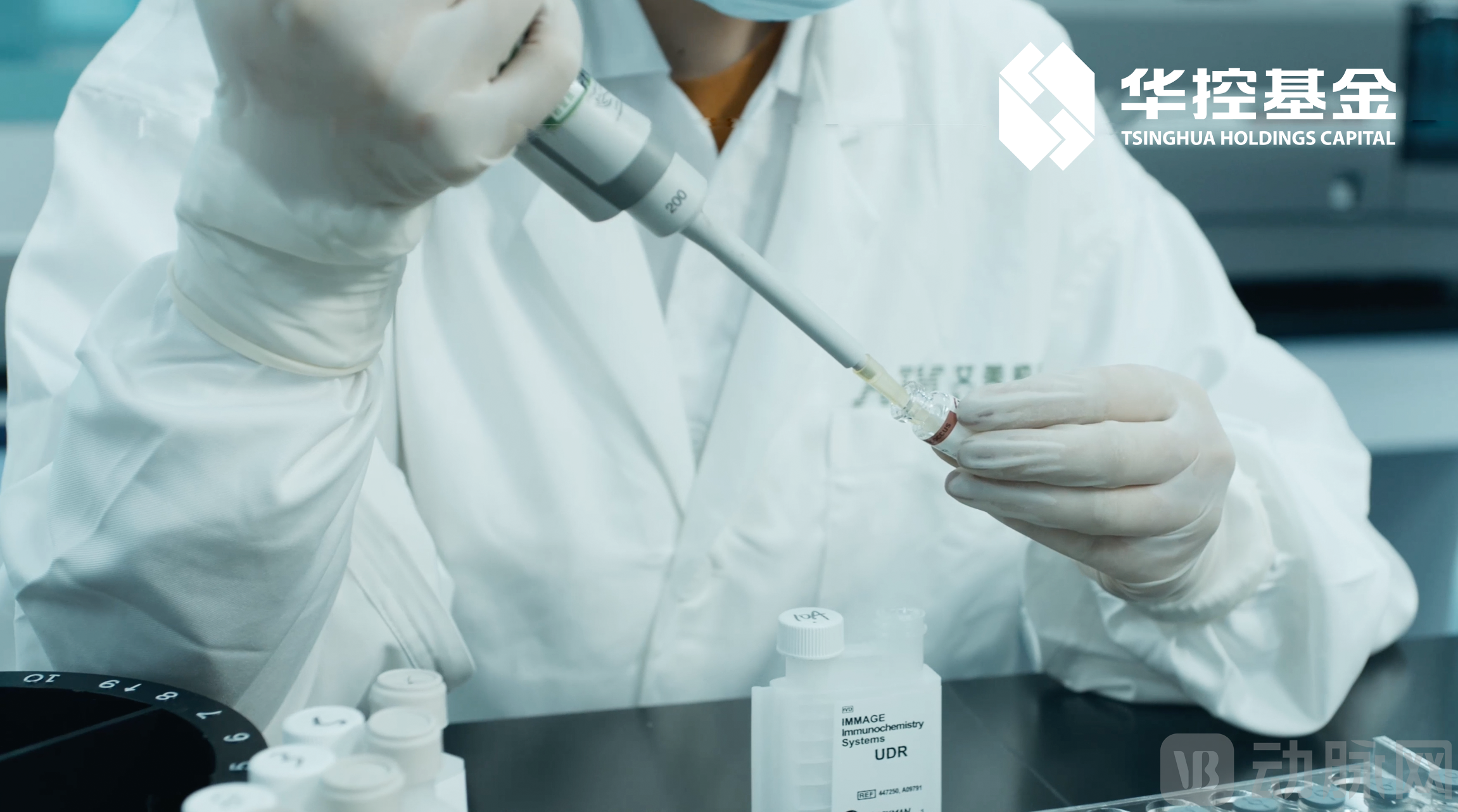
Behind these achievements, Huakong Fund has developed its own research methodology and judgment framework to securely capture opportunities in high-growth industries and mitigate investment risks.
Comprehensive, In-Depth, and Forward-Looking Top-Down Industry Research
Huakong Fund has its own industry research team, conducting comprehensive, in-depth, and forward-looking top-down research on key investment areas.
First, examine macroeconomic trends to construct an investment map for the entire pharmaceutical industry. Next, analyze meso-level industry developments to identify key sectors for targeted investment and strategic positioning. Finally, assess micro-level corporate growth to uncover leading enterprises in niche segments with genuine innovative capabilities. Based on these assessments, implement a diversified investment strategy across various sub-sectors to reduce the overall portfolio’s beta, thereby achieving steady growth.
In the biopharmaceutical sector, Huakong Fund has conducted in-depth research on more than 150 sub-sectors and included key enterprises in its investment database.Meanwhile, Huakong Fund continues to closely track global frontier developments in the pharmaceutical industry and dynamically update its investment strategies for specific sub-sectors.
Since its inception, research has been ingrained in the very DNA of the Huakong Fund team.It is understood that the team tracks more than 1,000 tertiary sub-segments across four major industries and publishes at least 50 industry research reports on specific sub-segments annually to deepen its understanding of industries and enterprises.The construction of the team's research capabilities, along with a top-down investment approach, has formed the foundational architecture supporting Huakong Fund's growth and endowed it with core investment competencies.
Precisely Timing Investment Opportunities
“From the perspective of investment success rate, choosing the right industry is the primary factor; only in promising industries do high-quality companies have ample growth opportunities. For investment institutions, it is essential to conduct thorough industry research before selecting a sector, so as to invest in projects at the most opportune time.”A senior investment executive at Huakong Fund remarked.
The biotechnology sector is characterized by high barriers to entry and relative closure. Nevertheless, factors such as China’s large population base, supportive national policies, strengthened disease prevention efforts, and advancements in multivalent vaccines, combination vaccines, and mRNA vaccines have collectively created greater room for growth within the vaccine industry. Only by recognizing the sector’s potential for high growth can investors identify high-quality targets at the right timing and make informed decisions thereafter.
Huakong Bio-Pharmaceutical's Investment Focus Lies in Biotech Companies, leveraging deep insights into the industry in which the company operates, the investment team conducts in-depth analysis of the target company’s management team and pipeline portfolio, thereby identifying the company’s true value at the appropriate stage.
It is precisely based on this methodology,As early as 2018, Huakong Fund recognized the value of PD-1 and successively invested in high-growth niche sectors, including antibodies, high-value medical consumables, nucleic acid drugs, central nervous system (CNS) therapeutics, preclinical contract research organization (CRO) services, adoptive T-cell immunotherapy, and gene therapy, achieving notable results throughout the industry’s development.
By delving into the investment logic behind Huakong Fund, we learned that, in its view, the most significant industry trend at the time was antibody drugs, particularly monoclonal antibodies. Many domestic companies were building their pipelines through a “fast follow” strategy, creating substantial room for industry growth. PD-1 inhibitors are akin to broad-spectrum anticancer agents, applicable to multiple cancer types, and thus hold considerable upside potential.
With the overarching direction established, Huakong Fund selected niche sectors with a higher likelihood of success within the investment cycle and fine-tuned its investment strategy in response to industry dynamics. It was through this approach that, when the monoclonal antibody sector began to show signs of overcrowding in 2020, Huakong Fund recognized the value of innovative drugs and original therapies—such as their longer timeline before potential inclusion in volume-based procurement (VBP) and their ability to address specific unmet clinical needs—and proceeded to make strategic investments in these areas.
Valuation Shifts from the “Verification Method” to the “Falsification Method”
In 1981, the philosopher Hilary Putnam proposed the famous thought experiment “Brain in a Vat” in his book. If a mad scientist were to remove a brain from a human body, connect its nerve endings to a computer, simulate various sensory inputs through programming, and create a virtual life for this brain, could the brain determine that it exists within a “virtual reality”?
Questions similar to the “brain in a vat” thought experiment are not confined to the realm of science; they appear equally applicable to the field of investment. Specifically, how can investors determine whether they are trapped in an illusory predicament?
Faced with the “brain in a vat” dilemma, the scientific community’s solution stems from “Occam’s Razor,” also known as the “law of parsimony.” This concept was proposed by the 14th-century English scholar William of Ockham. The essence of this principle can be summarized in eight Chinese characters: “Do not multiply entities beyond necessity.” In any theory or proposition, the simplest explanation is the most correct; one should not opt for more complex solutions unless absolutely necessary. The same holds true for capital markets.
Previously, when companies in the capital markets sought financing, they were more inclined to promise future value to investors. Without in-depth industry research and strong professional expertise as support, investors who based their investment decisions solely on such “expected value” often failed to achieve satisfactory outcomes. This is a process that requires investors to take the initiative to “validate.”
Currently, the valuation model in the capital market is undergoing adjustment: shifting from “confirmation” to “falsification,” whereby value is assigned only after it has been demonstrated.Investors make value judgments based on real data by assessing a company’s technological innovation capabilities, team composition, and genuine market feedback, emphasizing quantifiable and achievable value as the basis for valuation. This constitutes a process of “falsification.”
For Huakong Fund, whether it is forward-looking layout or in-depth industry research, both are merely the first step in a long journey. To ensure the high growth potential of projects, as an investment institution, it is also necessary to provide enterprises with sufficient value-added services to help them develop rapidly.
Examining Huakong Fund’s investment map reveals that, within the same niche sector, the fund invests in multiple leading companies pursuing different technological pathways or targeting distinct indications.In the pharmaceutical CXO sector, Huakong Fund has invested in Saifu Pharma, a one-stop CRO for innovative drugs, and Crystal Cloud Pharma, a CRO specializing in small-molecule drug crystal forms. In addition, the fund has backed a host of industry-leading enterprises with strong innovation capabilities and technical expertise, including Bendao Gene, a gene therapy developer, and Shengzhao Pharmaceutical, a developer of complex sustained- and controlled-release formulations.
Carefully analyze,It is evident that once Huakong Fund identifies a promising direction, it typically executes an ecosystem strategy by making portfolio investments in two or three companies pursuing different technological routes within a high-value, high-growth sector. This approach aims to build a robust upstream and downstream industrial chain ecosystem, thereby creating synergistic effects within the industry, enhancing the risk resilience of individual enterprises, and supporting the growth of its portfolio companies.
Taking the biopharmaceutical sector as an example, Huakong Fund has invested in biotech companies such as Huaxia Yingtai and Bendao Gene. Preclinical CRO services represent a critical and specialized segment for biotech firms. Given the scarcity of domestic preclinical safety assessment resources, the advantages of Huakong’s industrial ecosystem layout become evident. Saifu Pharma, a portfolio company of Huakong Fund, enables other biotech firms backed by the fund to secure priority scheduling and preferential pricing. In such a highly competitive industry, advantages in time or cost hold immense value for corporate development, thereby demonstrating the benefits of industrial chain synergy.
Moreover, Huakong Fund boasts a professional international team dedicated to helping its portfolio companies and prospective investees promptly identify relevant resources and provide international services in areas such as product development and commercialization.
It is understood that, in the biotechnology sector, Huakong Fund is also investing in upstream enterprises such as manufacturers of single-use bioreactors and consumables. In the future, it will further extend and refine its industrial chain ecosystem layout to establish a comprehensive ecosystem.
The healthcare industry is entering a period of developmental opportunity. Yet, the more promising the sector appears, the greater the need for investors to remain composed, carefully navigate hidden pitfalls, and achieve growth that transcends economic cycles. This demands not only a profound understanding of the industry and forward-looking vision but also courage and patience.
Since its establishment in 2007, Huakong Fund has traversed its own 15-year journey, evolving into a precision investment institution with assets under management exceeding RMB 10 billion, while witnessing the rise and fall of numerous industries. Despite encountering storms and experiencing fluctuating fortunes along the way, the firm’s inherent resilience remains palpable.
Looking back on Huakong Fund’s journey, its approach has been to anchor itself in high-growth sectors by leveraging in-depth industry research and robust methodological frameworks amid an ever-changing environment, then take root deeply and continue to grow toward the light.