

Huiwei Medical Advances Esophageal Screening with Proprietary Capsule-Based Ultrasound Endoscope Combining Optical and Ultrasonic Imaging
Raging flames give rise to the world’s delicacies, while rolling boiling water cooks up the finest dishes on earth. Who can resist the numbing spice and savory aroma of hot pot, the heart-warming and stomach-soothing instant-boiled mutton, the spicy, fragrant, tender, and soft boiled pork slices, the sour-and-spicy appetizing pickled cabbage fish, and other soul-comforting culinary delights born from hearth and home? Yet, there is only a fine line between delicious food and diseaseA Scalding Divide. Behind the delectable flavors and rising steam, the sinister grin of esophageal cancer lurks.
Eating quickly, consuming very hot food and beverages, following a high-salt diet, and frequently eating pickled vegetables can all increase the risk of esophageal cancer. This disease often presents with no obvious symptoms in its early stages, leading many people to overlook it. Most patients seek medical attention only when they experience significant dysphagia; by then, the diagnosis is often at an advanced stage. However, early-stage esophageal cancer can be essentially cured through minimally invasive endoscopic surgery. For patients with esophageal cancer, their prognosis largely depends on the timing of detection.
Data published in 2021 on the official website of the International Agency for Research on Cancer (IARC) of the World Health Organization showed that in 2020, there were over 600,000 new cases of esophageal cancer and more than 540,000 deaths worldwide. More than half of the global new cases and deaths from esophageal cancer occurred in China, with high-incidence areas including eastern Guangdong, southern Fujian, and the Sichuan-Chongqing region.
Submucosal tumors (SMT) of the upper gastrointestinal tract, gastroesophageal reflux disease (GERD), and gastroesophageal varices (GEV) are all common upper gastrointestinal disorders.
Subepithelial Tumors (SMTs) of the Gastrointestinal Tract refer to protruding lesions originating from the layers beneath the mucosa of the gastrointestinal tract. These lesions are most commonly found in the esophagus and stomach. While the majority are benign, approximately 15% are malignant. Gastrointestinal SMTs with a diameter of less than 2 cm typically present no obvious clinical symptoms and are often incidentally discovered during routine endoscopic examinations. The "Expert Consensus on Endoscopic Diagnosis and Treatment of Gastrointestinal SMTs" clearly states that endoscopic ultrasound (EUS) is currently the most accurate imaging modality for evaluating gastrointestinal SMTs, playing a crucial role in differential diagnosis, tumor localization, and selection of treatment strategies.
Gastroesophageal Reflux Disease (GERD) refers to the uncomfortable symptoms and/or complications caused by the reflux of gastric contents into the esophagus or areas above it. The "2020 Chinese Multidisciplinary Consensus on the Diagnosis and Treatment of Gastroesophageal Reflux Disease" points out that if the criterion is at least once a week of reflux and/or heartburn, the global prevalence of GERD is 13.3%. Factors such as an aging population and increasing rates of overweight and obesity have led to a rising trend in the prevalence of GERD in China year by year. Domestic expert consensus recommends that gastroscopy should be performed when reflux symptoms occur.
Gastroesophageal Varices (GEV) are a common complication of decompensated progressive chronic liver disease. Variceal hemorrhage is the most frequent fatal complication of cirrhosis, with a 6-week mortality rate ranging from 15% to 25%. To prevent variceal bleeding, high-risk varices must be screened and monitored to determine whether primary prophylaxis against hemorrhage is indicated. Current clinical guidelines recommend that all patients with cirrhosis undergo endoscopic screening and regular surveillance.
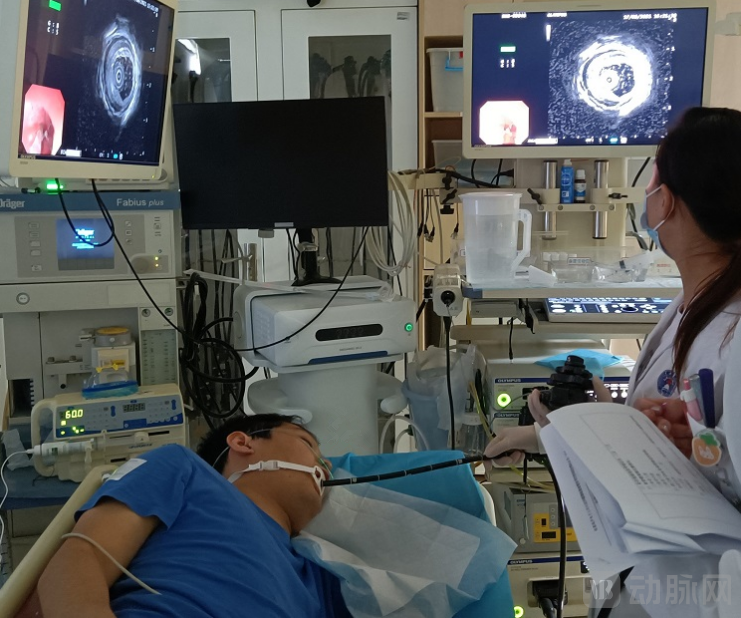
The discomfort associated with conventional gastroscopy deters many patients. Image provided by Huiwei Medical.
Conventional gastroscopy is currently the mainstream method for screening upper gastrointestinal diseases and represents the 1.0 era of gastroscopic examination. Due to its invasive nature and the discomfort associated with the procedure, many potential patients are deterred, refusing to undergo necessary gastroscopic evaluations. This has hindered the widespread adoption of gastroscopy to some extent and contributed to low early screening rates for upper gastrointestinal cancers.
To address this pain point, Chinese enterprises pioneered the launch of magnetically controlled capsule gastroscopy, ushering in the 2.0 era of non-invasive and painless gastric examination. However, during esophageal examination, given that the total length of the human esophagus is only 30–40 centimeters, the capsule endoscope passes through the esophagus relatively quickly after being swallowed by the patient. With limited and uncontrollable imaging angles, there is a high risk of missing lesions, resulting in relatively low diagnostic accuracy.
Moreover, due to variations in medical insurance policies across different regions, capsule endoscopy has not yet been fully covered by national health insurance. Each examination requires patients to pay thousands of yuan out-of-pocket, a cost that is prohibitive for most patients and further exacerbates the financial burden on many already struggling families.
For the diagnosis of submucosal tumors, both conventional gastroscopy and capsule endoscopy rely on optical imaging. While they allow visualization of mucosal color, morphology, erosion, and bleeding at the site of lesion elevation, they cannot determine deeper tissue characteristics such as the nature, origin, and depth of the lesion. Endoscopic ultrasound (EUS) can accurately assess the origin, depth, and nature of lesions, providing critical evidence for selecting treatment strategies. Studies have shown that EUS achieves a diagnostic accuracy of over 95% for submucosal protruding lesions and over 85% for early-stage esophageal, gastric, and colorectal cancers, surpassing that of conventional endoscopy.
However, the endoscopic ultrasound (EUS) market has long been monopolized by three major Japanese manufacturers. A complete EUS system costs millions of yuan, and each examination is priced at nearly 1,000 yuan. The high equipment and procedure costs have severely hindered the adoption and widespread use of EUS in primary care hospitals, with less than 10% of secondary hospitals in China equipped with EUS systems.
As a seasoned practitioner and serial entrepreneur in the medical device and medical imaging industries,Jiang Shennan, Founder of Huiwei MedicalKeenly identified these issues.
He explained to VCBeat that endoscopic ultrasound (EUS) is the most critical diagnostic modality for determining the nature and origin of submucosal tumors of the gastrointestinal tract, staging gastrointestinal cancers clinically, and assessing suitability for endoscopic minimally invasive resection. Based on product form, endoscopic ultrasound can be categorized into echoendoscopes (“large EUS”) and endoscopic ultrasound probes (“small EUS”).
Large-bore endoscopic ultrasound (EUS) is primarily used for surgically guided procedures and fine-needle aspiration biopsy. It takes over a year for endoscopists to fully master this technique, reflecting a steep learning curve. In contrast, small-bore EUS is mainly employed for diagnosing gastrointestinal lesions and can be mastered within one to two months. However, the lifespan of small-bore EUS probes is limited to approximately 50–100 uses. Their short service life, coupled with a high unit price of RMB 80,000–100,000, results in elevated per-examination costs. Additionally, the high cost of the main console has hindered widespread adoption.
“Our original intention in founding Huiwei Medical was to pioneer aA widely accessible, well-accepted, non-invasive, painless, highly efficient, and precise method for the early diagnosis of esophageal diseases and early screening of esophageal cancer”. Huiwei Medical is committed to becoming a provider of comprehensive solutions for the early screening, diagnosis, and treatment of gastrointestinal tumors, empowering primary care hospitals to help patients at the grassroots level achieve early diagnosis and treatment of gastrointestinal tumors with optimal quality and minimal cost.
After years of dedicated innovation, Huiwei Medical launches its flagship product“Capsule Endoscopic Ultrasound”, pioneered the launch ofThe Era of "Optics + Ultrasound" Gastroscopy 3.0: Non-invasive, Painless, Highly Precise, and Widely Accessible.
Innovative "Optical + Ultrasound" Dual-Modality Capsule Endoscopic Ultrasound,
Providing a Painless, Non-Invasive, Convenient, and Accessible Screening Solution for Esophageal Diseases
The capsule endoscopic ultrasound developed by Huiwei Medical combinesCapsule Endoscopy and High-Frequency Ultrasound Technology, utilizing a megapixel CMOS optical module and a 40 MHz high-resolution miniature ultrasound probe, it achieves an optical resolution of HD 720P and an ultrasound resolution of 80 μm. It can automatically perform “optical + ultrasound” scanning of the esophageal wall, simultaneously acquiring images of both the esophageal surface and deep tissues, thereby ensuring the accuracy of screening.
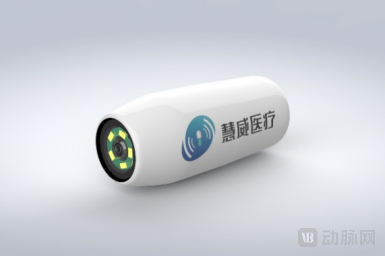
Capsule Ultrasound Electronic Upper Gastrointestinal Endoscope Developed by Huiwei Medical
For hospital physicians, the procedure can be mastered with minimal training, facilitating its widespread adoption in primary care hospitals. As the examination is non-invasive, painless, convenient, and efficient, it enhances patient compliance, thereby expanding the population undergoing screening to some extent, promoting post-diagnostic endoscopic follow-up, and ensuring that all indicated patients are screened.
For patients, endoscopic ultrasound examinations that previously required three hospital visits can now be completed in a single visit. This eliminates the need for multiple appointments and repeated anesthesia, thereby avoiding anesthesia-related risks and significantly enhancing the safety and comfort of medical care. It also reduces patients’ healthcare costs and time commitments, fully embodying the “patient-centered” philosophy of medical service delivery.
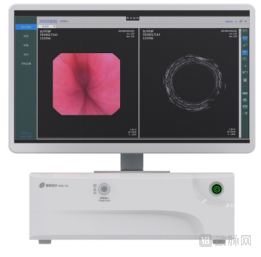
Huiwei Medical's Ultrasound Electronic Endoscope Image Processor
In addition, Huiwei Medical has also developed supportingUltrasonic Electronic Endoscope Image Processor.According to Jiang Shennan, founder of Huiwei Medical, higher ultrasound frequencies yield higher resolution, enabling clear visualization of the 7–9 layers of the gastrointestinal tract, which facilitates determination of the origin of submucosal tumors and staging of esophageal cancer.
Currently, the ultrasound electronic endoscope image processors from imported manufacturers support a maximum ultrasound frequency of 20 MHz. In contrast, Huiwei Medical’s self-developed ultrasound electronic endoscope image processor has achieved40 MHz High-Resolution UltrasoundIts clinical application in upper gastrointestinal examinations delivers performance on par with imported ultrasound electronic endoscopic image processors.
Furthermore, this product willDisplay and processing functions for ultrasound images and endoscopic optical images are integrated into a single image processing host., with simpler connectivity and easier maintenance, at less than half the price of imported products, making it better suited to China’s healthcare landscape and facilitating its adoption in primary care hospitals, thereby improving access to endoscopic ultrasound examinations.
During the interview, Jiang Shennan repeatedly emphasized"Patient-centered" service philosophy and the accessibility and inclusiveness of advanced medical technologies.He believes that being “patient-centered” is reflected in every aspect. For instance, it means providing affordable, advanced medical technologies to primary care hospitals nationwide and offering patients non-invasive, painless, and comfortable diagnostic solutions; it means reducing patients’ healthcare costs and wait times, improving healthcare efficiency, and lowering barriers to access, thereby leveraging technology to enhance the quality of primary care so that patients can receive high-quality diagnostics and treatment at nearby hospitals; and it means enabling patients to experience better medical services at lower costs. This is the unremitting goal and mission pursued by Huiwei Medical and Jiang Shennan.
“We have kept the equipment price and examination costs comparable to those of traditional endoscopes, making capsule-based ultrasound endoscopy affordable and accessible for primary healthcare institutions. As a result, it outperforms existing diagnostic methods in terms of procedural difficulty and patient compliance, enabling convenient early diagnosis of esophageal diseases and early screening for esophageal cancer,” said Jiang Shennan.
Jiang Shennan, founder of Huiwei Medical, graduated from Fudan University with a major in Biomedical Electronics. He later pursued further studies abroad and earned an MBA from McGill University. As a seasoned executive in the medical device and medical imaging industries, he previously served as General Manager for Greater China at a Nasdaq-listed company and has successful entrepreneurial experience in the healthcare sector.
During the establishment of “Renowned Physicians’ Image Interpretation,” a service providing multidisciplinary team (MDT) consultations with leading experts from top-tier domestic hospitals to grassroots patients, he conducted in-depth visits to dozens of county-level hospitals. This experience gave him a profound understanding of the operational realities of county-level hospitals and the healthcare needs of grassroots patients, thereby inspiring his commitment to improving the accessibility and inclusiveness of advanced medical technologies.
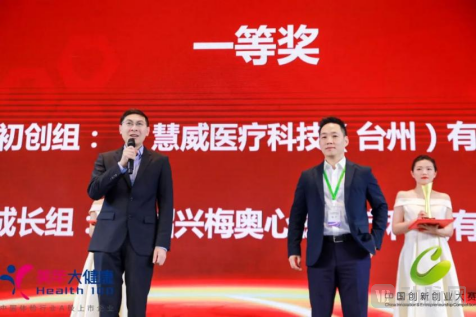
Huiwei Medical Wins Championship in the Startup Category of the 2020 Innovation and Entrepreneurship Competition; Jiang Shennan (left) Delivers a Speech
Guided by its original mission to “optimize clinical pathways and benefit patients,” and backed by leading-edge technologies characterized by relentless refinement and continuous innovation, Huiwei Medical has showcased its prowess in numerous innovation and entrepreneurship competitions, garnering multiple awards:
In July 2020, received the nomination award in the medical device category of the 3rd China Health Industry Innovation “Qipu Award”;
In November 2020, won the First Prize in the Startup Category of the 9th China Innovation and Entrepreneurship Competition;
In November 2021, won the First Prize in the 4th China Medical Device Innovation and Entrepreneurship Competition;
In December 2021, it won the Excellence Award at the inaugural National Disruptive Technology Innovation Competition hosted by the Ministry of Science and Technology...
Huiwei Medical has established an R&D center at the Wuxi IFS, and operates a 1,600-square-meter factory spanning an entire floor in the Xianju Medical Device Town, Taizhou City, where it has completed the construction of a 600-square-meter cleanroom workshop.
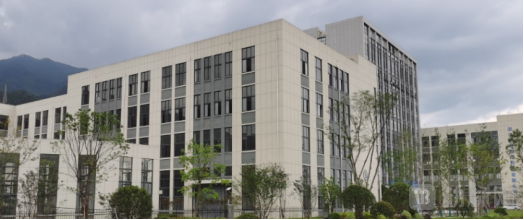
Actual Photos of Huiwei Medical Environment
Currently, Huiwei Medical's capsule ultrasound electronic upper gastrointestinal endoscope has recently submitted a Class III medical device registration application and is expected to be approved for market launch next year, potentially becomingThe first capsule ultrasound endoscope for clinical application.
Discussing Huiwei Medical’s future development direction, Jiang Shennan stated that the company will continue to expand the application scope of its capsule endoscopic ultrasound robot in gastrointestinal examinations. Meanwhile, it will focus on the intracavitary application of optical and ultrasound technologies to develop innovative medical devices such as endoscopic ultrasound micro-probe systems, endoscopic ultrasound systems, and single-use endoscopic ultrasound devices, aiming to become a global leading provider of solutions for the early screening, diagnosis, and treatment of gastrointestinal tumors. On another front, the company also hopes to collaborate with more hospitals and health checkup institutions to promote the widespread adoption of early esophageal cancer screening.
In terms of financing, Huiwei Medical secured investment fromBlue Bay VenturesThe company secured a RMB 10 million angel round led by an investor, and obtained additional funding of several million yuan earlier this year. Currently, its products have been submitted for regulatory registration approval, and the company is initiating a new round of financing.