

Mavi Medical Completes First-in-China Clinical Enrollment of the World’s First Third-Generation Nanosecond Pulsed Field Ablation (nsPFA) System for Cardiac Ablation

PULSECARE
Minimally Invasive Treatment Product Developer
Recently, the world’s first third-generation pulsed field ablation (PFA) device independently developed by PULSECARE (Pulsecare Medical Technology Co., Ltd.)—the Nanosecond Pulsed Field Ablation System (nsPFA)—completed its first clinical enrollment at Sun Yat-sen Memorial Hospital, Sun Yat-sen University. It was successfully applied to catheter ablation for paroxysmal atrial fibrillation under local anesthesia with sedation.Under the guidance of Professor Wang Jingfeng, Director of the Department of Cardiovascular Medicine at Sun Yat-sen Memorial Hospital, Sun Yat-sen University, and President-Elect of the Electrophysiology and Pacing Society of the Chinese Medical Association, the procedure was performed under the leadership of Professor Xie Shuanglun, Director of the Arrhythmia Specialty at the hospital.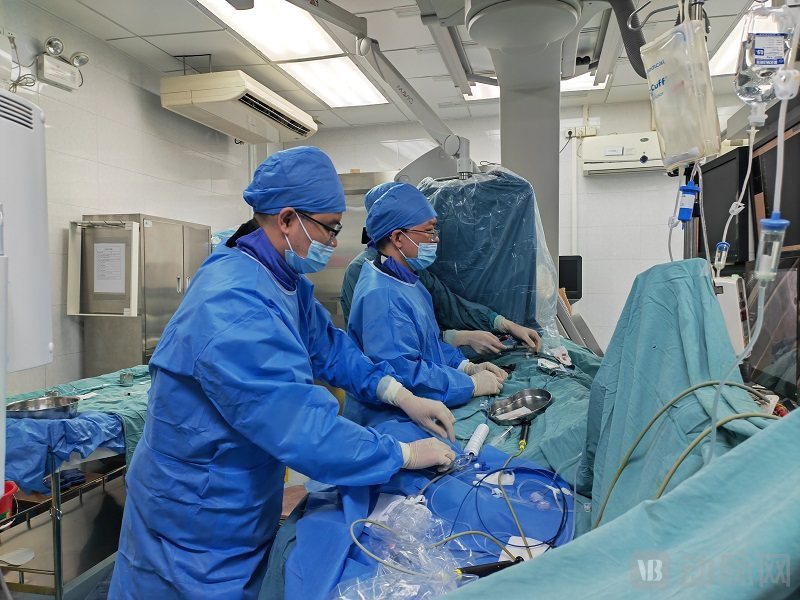
The Surgical Scene of the First Clinical Enrollment Case for Cardiac nsPFA
During the procedure, the nanosecond pulsed field ablation (nsPFA) system developed by PULSECARE, supported by a 3D electroanatomic mapping system, significantly reduced operational complexity and shortened procedure time. It also provided enhanced protection for tissues such as the esophagus and phrenic nerve, offering an innovative alternative treatment for patients with atrial fibrillation (AF). As the debut of its third-generation PFA technology—nsPFA—the system effectively addressed key limitations of existing PFA technologies, including high anesthesia requirements, muscle contractions, and patient pain, thanks to the high efficiency and low stimulatory nature of nanosecond pulses. This advancement makes PFA-based AF ablation procedures more efficient and safer. The successful completion of this surgery brings PULSECARE’s cardiac ablation products one step closer to final regulatory approval and market launch, marking another significant stride toward the clinical application and broader adoption of PFA technology for AF ablation.
As a company that has been in operation for just over a year, PULSECARE has already passed type testing for multiple innovative products. Notably, its pulsed field ablation system for cardiac atrial fibrillation and its multimodal ablation system for liver tumors have entered clinical trials. What capabilities does this enterprise possess, having secured tens of millions of RMB in angel financing from Tianfeng Capital, a specialized medical investment firm, right at its inception? How has it managed to efficiently develop two industry-first innovative products and rapidly advance its product pipeline?
Targeting the Multi-Billion-Dollar Tissue Ablation Therapy Market
PULSECARE Deploys a Portfolio of Multimodal Tissue Ablation Products
As an emerging tissue ablation technique in recent years, Pulsed Field Ablation (PFA) leverages the advantages of Irreversible Electroporation (IRE), including high efficiency (extremely short treatment time), high selectivity (protection of critical blood vessels and nerves), and the absence of thermal deposition effects. It provides a superior minimally invasive treatment option compared to physical ablation techniques such as radiofrequency, microwave, and cryoablation for patients with conditions including tumors and atrial fibrillation. In the field of cardiac atrial fibrillation ablation, PFA has garnered significant attention due to its favorable clinical outcomes.
The development of pulsed electric field technology in the medical field has reached its third generation.Specifically, the first generation is millisecond pulsed electric field technology, which is used in medical applications such as gene transfection, electroporation-based drug delivery, and electrochemotherapy; the second generation is microsecond pulsed electric field ablation technology (including unipolar and bipolar pulses), which is used in clinical applications such as tumor and atrial fibrillation ablation; the third generation is nanosecond pulsed electric field ablation technology (nsPFA), the latest generation of pulsed electric field technology with high technical barriers, which can be used in clinical applications including dermatology, oncology, cardiology, respiratory intervention, and endoscopic intervention.
Current pulsed field ablation (PFA) technologies for cardiac ablation, including Farapulse (a pioneer in the PFA field acquired by Boston Scientific), all utilize second-generation microsecond pulsed field ablation technology. During procedures, issues such as patient movement and muscle contraction may necessitate stringent anesthesia requirements, thereby increasing procedural complexity. Intraoperative blood electrolysis and gas formation may also elevate the risk of stroke. Postoperatively, patients may experience high one-year recurrence rates or problems such as pseudo-isolation.
The nanosecond pulsed field ablation (nsPFA) system with independent intellectual property rights, developed by PULSECARE and marking its first clinical enrollment, represents a third-generation PFA technology designed to address the aforementioned limitations of existing PFA ablation techniques.PULSECARE’s nsPFA product, built on the team’s over 20 years of accumulated expertise in high-voltage pulse research and its domestically leading all-solid-state high-voltage pulse core technology, isThe World’s First PFA Cardiac Ablation System Capable of Delivering Nanosecond-Level Pulses, which optimizes the distribution of the therapeutic electric field and reduces muscle contraction through nanosecond pulses, thereby improving procedural safety. This approach addresses current challenges associated with PFA, such as severe muscle contraction and high anesthesia requirements, enabling the performance of PFA-based atrial fibrillation ablation under local anesthesia with sedation.
Another global first-in-class innovative product advancing to the clinical stage simultaneously—the multimodal tumor ablation system—is the first comprehensive multimodal ablation technology platform based on PFA and RFA (radiofrequency ablation)., while effectively improving treatment efficiency, it addresses issues such as needle-track metastasis and tip heating associated with existing PFA tumor ablation products (“NanoKnife”). Furthermore, as a multimodal ablation technology product, it allows clinicians to select the ablation technique best suited to their specific needs, thereby making the surgical procedure more convenient and straightforward.
Dr. Tan Jianwen, founder of PULSECARE, emphasized that different tissue ablation technologies have their respective applicable indications. Through communication with clinicians, the company recognized that a single ablation technology could not adequately meet clinical needs. Leveraging its existing portfolio of tissue ablation technologies and integrating the distinctive advantages of various ablation modalities, PULSECARE has developed a range of multimodal ablation products.
In fact,Nanosecond Pulsed Field Ablation (nsPFA) products and multimodal tumor ablation products are only part of Pulsecare’s extensive portfolio of tissue ablation solutions. In addition to these two offerings, Pulsecare has strategically focused on deploying multiple innovative products designed for nerve ablation and prostate tissue ablation.
The strategic focus on expanding into the aforementioned disease areas is driven by the promising market prospects for tissue ablation in these related fields.
First, there is a vast patient population and significant demand. Focusing solely on patients with atrial fibrillation (AF), the study “Prevalence and Risks of Atrial Fibrillation in China: A Nationwide Cross-Sectional Epidemiological Study,” published in May 2022 in a Lancet subsidiary journal, reported a standardized prevalence of AF among adults in China of 1.6%. Based on data from China’s Sixth National Population Census, the estimated number of affected individuals could reach 20 million. Furthermore, the high incidence of cancer in China has also contributed to a substantial patient population.
Secondly, the market for tissue ablation therapy is gradually maturing. Taking liver cancer patients among oncology cases as an example, IQVIA statistics indicate that approximately 1.5 million liver cancer patients received treatment in China in 2018, of whom around 100,000 underwent ablation procedures. According to IQVIA’s projections, the compound annual growth rate (CAGR) of the thermal ablation market for liver cancer will be 9.1% over the ten-year period from 2018 to 2028, with the volume of ablation surgeries expected to reach 300,000 cases by 2028.
Furthermore, when employing energy sources of varying forms and modalities for tissue ablation, certain clinical challenges may arise, such as how to better preserve normal tissue while effectively ablating diseased tissue. Due to its unique non-thermal effects and efficacy, pulsed field ablation (PFA) can be widely applied to the pancreas, liver, kidney, prostate, and other solid tumors, thereby enabling the protection of normal tissue.By leveraging its multimodal ablation technology platform and applying pulsed field technologies such as second-generation PFA (High-Frequency Irreversible Electroporation, HFIRE) and third-generation PFA (nanosecond Pulsed Electric Fields, nsPEF), PULSECARE is poised to deliver superior therapeutic outcomes. In treatment markets such as atrial fibrillation ablation, its technology is well-positioned for a global first launch, thereby disrupting the current competitive landscape.
Successfully developed China’s first domestically produced “NanoKnife” and multiple ultrasound therapy products
Technological Innovation and Medical-Engineering Integration Ensure Product Pipeline Expansion
In fact, the ability to build a multimodal ablation technology platform is closely related to Pulsecare's current team of more than 30 people.
Currently, the core “seed” technologies mastered by the PULSECARE medical team are primarily in two areas: high-voltage pulse technology and ultrasound therapy technology.
First is high-voltage pulse technology.
Dr. Tan Jianwen, founder of PULSECARE, studied under Professor Zhou Bihua, a leading authority in the field of electromagnetic pulse research. He previously conducted research on electromagnetic pulses, pulsed power, and advanced physical therapy technologies at the Military Key Laboratory for Special Power Supplies of the PLA Chongqing Communication Institute, and has dedicated over 20 years to in-depth exploration of high-voltage pulse technology., is a senior expert spanning the fields of academic research and product development; furthermore, he/she previously served as the lead for the "Multimodal Imaging and Intelligent Precision Therapy" direction at the State Key Laboratory of Ultrasound Medicine Engineering, Chongqing Medical University, accumulating extensive experience in developing innovative products through medical-engineering integration. AndIts team has undertaken the sole National Key R&D Program project in the field of high-voltage pulse technology, titled “Development and Industrialization of High-Repetition-Rate High-Voltage Pulse Sources,” and possesses a series of core key technologies in high-voltage pulses.In the core technology field of all-solid-state high-voltage pulses, the team is at the forefront in China, strongly supporting the exploration of key common technologies for its PFA and pulse power-related medical industries. Notably, the team also developed the first domestically produced nanoknife system applied in clinical practice in China. Its series of high-voltage pulse modules have received high acclaim from customers such as State Grid Corporation of China and China Aerospace Science and Technology Corporation, while modular solutions have been launched for various medical applications.
Next is ultrasound therapy technology.
Dr. Tan Jianwen, founder of PULSECARE, previously served as Technical Director at the National Engineering Research Center for Ultrasound Medicine.In the field of ultrasound research, there is a 15-year foundation in ultrasound therapy research, having overseen multiple National Natural Science Foundation projects in this area and mastered internationally leading ultrasound therapy engineering technologies.

Dr. Tan Jianwen, Founder and CEO of PULSECARE
In fact, leveraging its industry strength and influence, PULSECARE has attracted a large number of expert teams to join.The team includes Li Jianyong, current Deputy General Manager of PULSECARE and former Deputy Chief Engineer of Chongqing Lilong Group, who led the R&D and industrialization of projects such as artificial hearts and smart instruments. Its clinical advisory team also features Professor Felix Wong, a Fellow of the Royal Colleges of Physicians from Hong Kong, China.
With over 15 years of research foundation in multi-energy treatment platforms, including pulsed electric fields, ultrasound, and radiofrequency, PULSECARE’s highly experienced technical team, combined with its background in integrating medicine and engineering, has further facilitated the successful translation of medical devices. Tan Jianwen added that, leveraging its core technological capabilities, PULSECARE will continue to expand outward. While laying out product solutions around its core technologies, the company will enter the fields of minimally invasive and non-invasive therapies and integrated diagnosis and treatment through continuous talent acquisition.
PULSECARE has adopted a dual R&D center strategy, with facilities established in both Chongqing and Shenzhen. This layout was designed to leverage the team’s foundational presence in Chongqing while capitalizing on Shenzhen’s robust supply chain and superior advantages in resource and information aggregation.
Currently, PULSECARE is collaborating with Dr. Khoo from City University of Hong Kong (an MIT Technology Review Innovator Under 35) on a science and technology cooperation project in the Guangdong-Hong Kong-Macao Greater Bay Area, exploring interdisciplinary, internationally cutting-edge technologies.
Although PULSECARE is a startup, it possesses profound original research capabilities in underlying technologies across multiple energy platforms. Furthermore, through the team’s early involvement in related industrialization projects, it has developed the ability to translate technology into products and ultimately into commercial value. Therefore,In addition to the application of pulsed electric field technology and other modal energy in medical ablation therapy, PULSECARE has begun to form some commercial explorations in the field of biology.For example, high-voltage pulse technology is applied to microbial cell wall disruption in wastewater treatment. Meanwhile, partial commercialization initiatives can rapidly generate positive revenue, thereby facilitating the efficient advancement of medical pipeline products and accelerating corporate growth.
Reaching the Global Stage Through Continuous Technological Innovation
Dr. Tan Jianwen noted that in the field of tissue ablation, no single physical ablation technology currently dominates the landscape. As the market experiences rapid growth, it also faces several critical challenges that need to be addressed. These include: how to provide clinicians with ablation devices that are faster and easier to master, thereby offering superior tissue ablation treatment solutions; how to achieve more effective ablation of primary tumors while minimizing the risk of tumor recurrence and metastasis; how to realize selective tissue ablation to better protect patients' healthy tissues; and how to develop comprehensive clinical solutions tailored to different indications by leveraging the advantages of various technologies.
Guan Jifeng, Founding Partner of Tianfeng Capital, the angel investor in PULSECARE, also pointed out, “Tissue ablation technology is a therapeutic area in urgent need of innovation, with a market potential worth hundreds of billions. Multimodal fusion represents the key future direction for the industry. Dr. Tan and his team at PULSECARE have demonstrated remarkable strength built on long-term accumulation, standing as an outstanding representative in this field. The company is poised to bring more breakthrough medical devices to market in the future.”
Currently, PULSECARE has developed the industry’s first cardiac nsPFA product and successfully completed the first clinical enrollment. However, to truly step onto the global stage, “in addition to possessing original R&D capabilities, it is essential to maintain continuous innovation and have the courage to address the obstacles and bottlenecks currently facing the industry through our own innovations and breakthroughs,” Dr. Tan continued. “Once you take the lead in resolving that core issue, you are, in effect, already at the center of the world stage. And this is precisely what PULSECARE is doing.”
About Tianfeng Capital
Tianfeng Capital is a venture capital fund focused on the healthcare sector. Founded in 2013 by a senior management team with extensive experience in China’s pharmaceutical industry, the firm is headquartered in Beijing and maintains regional offices in East China, South China, Central China, and Hong Kong. Tianfeng Capital adheres to an investor-centric approach grounded in mutual benefit and trust, creating value through proactive value-added services. It fosters innovation and growth in both its portfolio companies and prospective investments, aiming to build flagship enterprises across various healthcare subsectors.