

DesightAI: An Integrated, Omnichannel, and Intelligent Solution Pioneering Digital Transformation in Pharmaceutical Marketing
As early as 2010, the founding team of Jueceyi, primarily with backgrounds in IT services, began venturing into marketing management services for the pharmaceutical and healthcare industry, accumulating over a decade of practical industry experience.
As digital pharmaceutical marketing was just gaining momentum in 2015, Jueceyi, a digital marketing service solution founded by its founding team, emerged with the release of its first version, Jueceyi V1, positioning itself as a pioneer in China’s niche segment of digital pharmaceutical marketing.
Zhao Zhuwei, co-founder of Jueceyi, recalled: “When I was working in IT services, I primarily focused on IT marketing solutions, which exposed me to multiple industries and diverse marketing scenarios. Among them, the pharmaceutical industry left the deepest impression on me. First, the pharmaceutical sector is characterized by complex regulations and stringent compliance requirements, presenting a high barrier to entry. Second, the pharmaceutical field is relatively less affected by economic cycles, making it an industry with sustained long-term growth potential.”
The pharmaceutical industry, characterized by high barriers to entry and strong long-term growth prospects, aligns perfectly with Zhao Zhuwei’s vision for vertical-sector entrepreneurship. Driven by factors such as regulatory standardization and pharmaceutical company reforms, the digital marketing segment within the healthcare sector has experienced rapid development. Consequently, the DecisionEase team has fully committed itself to the wave of digital marketing transformation in the pharmaceutical industry.
DecisionEasy specializes in the digital transformation of marketing within the pharmaceutical and broader healthcare industry, providing pharmaceutical companies with a one-stop digital marketing platform. It currently serves over 150 pharmaceutical enterprises and has established partnerships with leading companies such as AstraZeneca, Bayer Group, Yangtze River Pharmaceutical Group, Jiangsu Hengrui Medicine Co., Ltd., Jiangsu Hansoh Pharmaceutical Group, and Grand Pharma (China) Co., Ltd., empowering more than 200,000 marketing professionals to achieve mobile marketing and on-the-go decision-making.
Recently, VCBeat interviewed Zhao Zhuwei, founder of Jueceyi, who provided a detailed overview of the current state and future trends in the digitalization of pharmaceutical marketing.
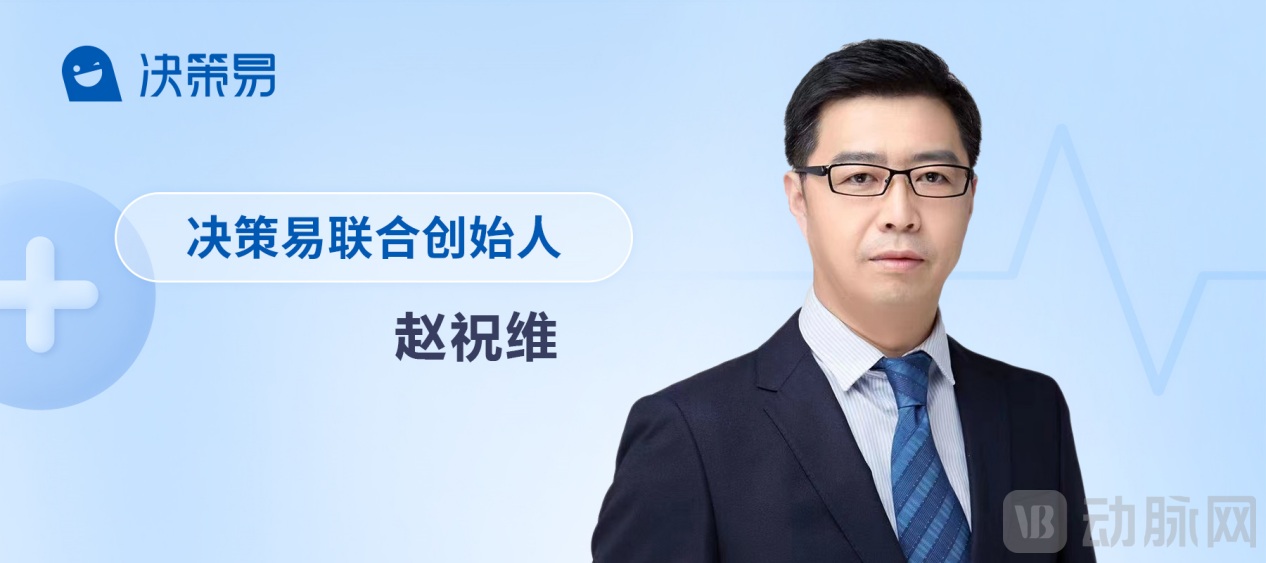
Zhao Zhuwei, Co-founder of Jueceyi
When it comes to the development of digitalization in pharmaceutical marketing in China, its origins can be traced back to 2010.
At that time, the growth of the global pharmaceutical market slowed down, accompanied by adjustments in internal organizational structures and budget allocations within companies. Changes in the external environment forced enterprises to transform their marketing strategies.
“During this period, we began exploring the digitalization of pharmaceutical marketing, largely in response to client demands. Our business focus was primarily on relatively traditional back-end operations, such as commercial channel management, order processing, product flow tracking, and expense management. Thanks to the accumulation of case studies from our collaborative clients and our continuous exploration, we developed our initial industry-specific solutions around 2015,” said Zhao Zhuwei in an interview.
Around 2015, the demand for refined marketing management within pharmaceutical companies increased. Pharmaceutical companies beganTransitioning from Extensive Management to Refined Marketing System Management, the demand for refined marketing management has also extended from the back end to the front end. Whether it involves the allocation of regional marketing resources, the setting of sales targets, the management of the sales process, or the assessment of sales outcomes, all are gradually becoming more standardized and refined.
After 2017, a series of major healthcare reform measures—including medical insurance cost containment, the two-invoice system, tiered diagnosis and treatment, volume-based procurement, and DRG/DIP payment reforms—were sequentially implemented and gradually took effect. This brought about profound changes to the operating environment for pharmaceutical companies, characterized by stringent compliance requirements, limited access to key stakeholders, and compressed profit margins for pharmaceutical products. Consequently, the demands on pharmaceutical companies’ operational capabilities have undergone significant shifts. Digitalization has emerged as a critical solution to overcome numerous bottlenecks in pharmaceutical marketing and management, evolving from a “preferable option” to an “imperative choice” for pharmaceutical enterprises.
Driven by the dual forces of policy support and pharmaceutical companies’ own needs, digital marketing has become a hot sector in the pharmaceutical market.According to VCBeat’s “2022 Report on the Digital Marketing Industry in Pharmaceuticals,” the pharmaceutical digital marketing industry is entering a golden growth period, with the market size expected to reach RMB 40.3 billion in 2022. The market is projected to further expand to RMB 111.0 billion by 2025 and RMB 356.8 billion by 2030, representing a compound annual growth rate (CAGR) of 33.9% from 2025 to 2030.
Zhao Zhuwei’s background as an IT consultant has accustomed him to viewing digital marketing in the pharmaceutical industry through a cross-industry lens. “Marketing operations in the pharmaceutical sector possess both drug-specific characteristics, such as those associated with prescription products, and consumer goods attributes, exemplified by over-the-counter (OTC) businesses. The consumer goods sector embarked on its digital transformation earlier, offering a wealth of referenceable experience. For instance, in pharmacy retail, we have drawn extensively from retail management practices in the consumer goods industry, including store visit management for product assortments, data collection, and consumer relationship management. Meanwhile, the prescription segment primarily leverages the value of big data to enhance market transparency regarding customers, fully realize the potential of Multichannel Marketing (MCM), and strengthen customer reach and influence.”
Zhao Zhuwei’s cross-industry experience has also given him a generalized understanding of the root causes behind the poor marketing management performance seen in most pharmaceutical companies. “Many pharmaceutical companies adopt a purely results-oriented approach to their marketing management systems, lacking data accumulation and regulatory mechanisms throughout the sales cycle. Instead, they review the sales process only after the drug sales cycle has ended, by which time sales opportunities have already been lost. Even if conclusions are drawn, there may be no opportunity for correction.”
Therefore, DecisionEase proposes“Performance-Driven, Efficiency-Focused”...approach, helping enterprises establish scientific metrics based on best-practice behavioral KPIs and execution process management, while integrating data to review sales outcomes. Furthermore, by establishing a self-assessment mechanism for the effectiveness of internal process KPIs, a closed-loop marketing management system is formed. This approach also leverages the advantages of Multichannel Campaign Management (MCM) to enhance outreach capabilities and enrich marketing tactics. In doing so, it effectively addresses the persistent challenges in pharmaceutical marketing management—such as the lack of effective management levers, suboptimal results, and imprecise performance management—thereby achieving compliant, digital, and intelligent marketing.
Currently, DecisionEasy has built a substantial team comprising both digital technology professionals and pharmaceutical experts, enabling the rapid integration of IT technologies with practical experience from pharmaceutical enterprises. Leveraging the team’s capabilities in mid-to-long-term product planning and design, as well as continuous product iteration, the company has developed comprehensive and practically implementable solutions.
Easy to Build Decision-MakingOne-Stop Digital Marketing Platform, includingSales Cloud, Flow Cloud, Marketing Cloud, Data Cloud, Performance Cloud, Commerce Cloud, Partner Cloud, Expense CloudEight Major Applications,OTC Sales Activation Solutions, Clinical SFE Solutions, Precision Investment Promotion Solutions, AI-Powered Intelligent Product Flow Management SolutionsFour Major Solutions: Capable of Flexible and Rapid Deployment Aligned with Pharmaceutical Companies’ Marketing Models.
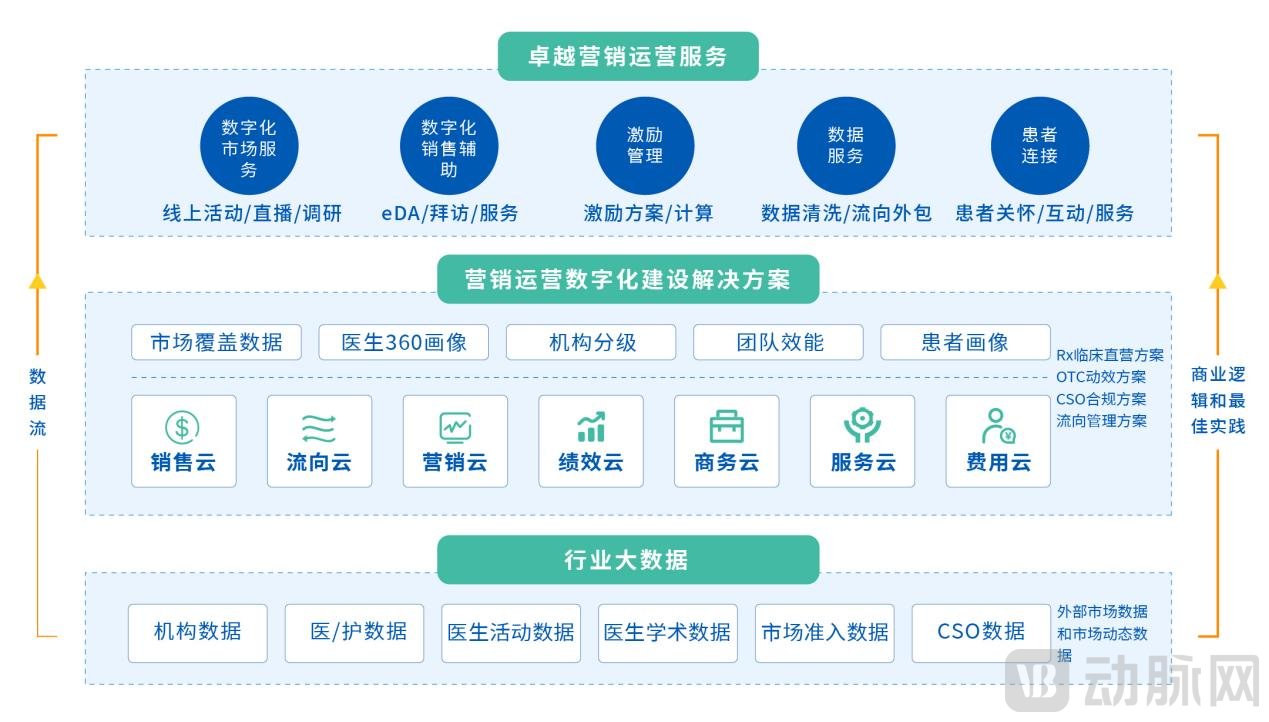
For example, the Marketing Cloud application provided by the Jueceyi platform enables enterprises to conduct private-domain operations, achieving integrated management of customer registration and identification, tag-based segmentation, multi-channel engagement, and retention and conversion. This efficiently consolidates digital marketing management and enhances the digital communication methods between sales teams and customers. Furthermore, by establishing multi-dimensional tags and refining customer profiles, it helps representatives better understand their clients, expand interaction topics, precisely identify customer preferences, and strengthen the enterprise’s digital marketing management capabilities.
An analysis of DecisionEasy’s pharmaceutical digitalization solution portfolio reveals several distinct advantages.
One is integration,For pharmaceutical companies, CSOs, and commercial contract sales organizations, regardless of whether the business needs originate from Marketing, Sales, SFE, or Commercial Departments, Jueceyi can provide corresponding solutions and products.
Second, omni-channel capabilities,Jueceyi has implemented an integrated online-offline promotion model that consolidates scenarios across both channels, bridges internal and external data, and selects more appropriate and precise promotional strategies based on comprehensive customer profiles.
Third, it is highly intelligent.By leveraging big data and proprietary business data, the platform provides clear visibility into various market metrics and offers sales recommendations based on embedded business logic. Furthermore, Decision Ease fully accounts for the continuous iteration and updating of best practices in business logic, providing highly configurable capabilities for adjusting such logic to accommodate changes in clients’ management rules.
Currently, Jueceyi has served over 150 pharmaceutical companies, including Bayer, Yangtze River Pharmaceutical Group, and Hengrui Medicine, with more than 200,000 pharmaceutical marketing professionals actively using its platform. Real-world case studies indicate that in regions where a pet clinic operator implemented Jueceyi’s solutions, business performance was 40% higher than in non-implementation areas, strongly validating the value of digital solutions for pharmaceutical marketing.
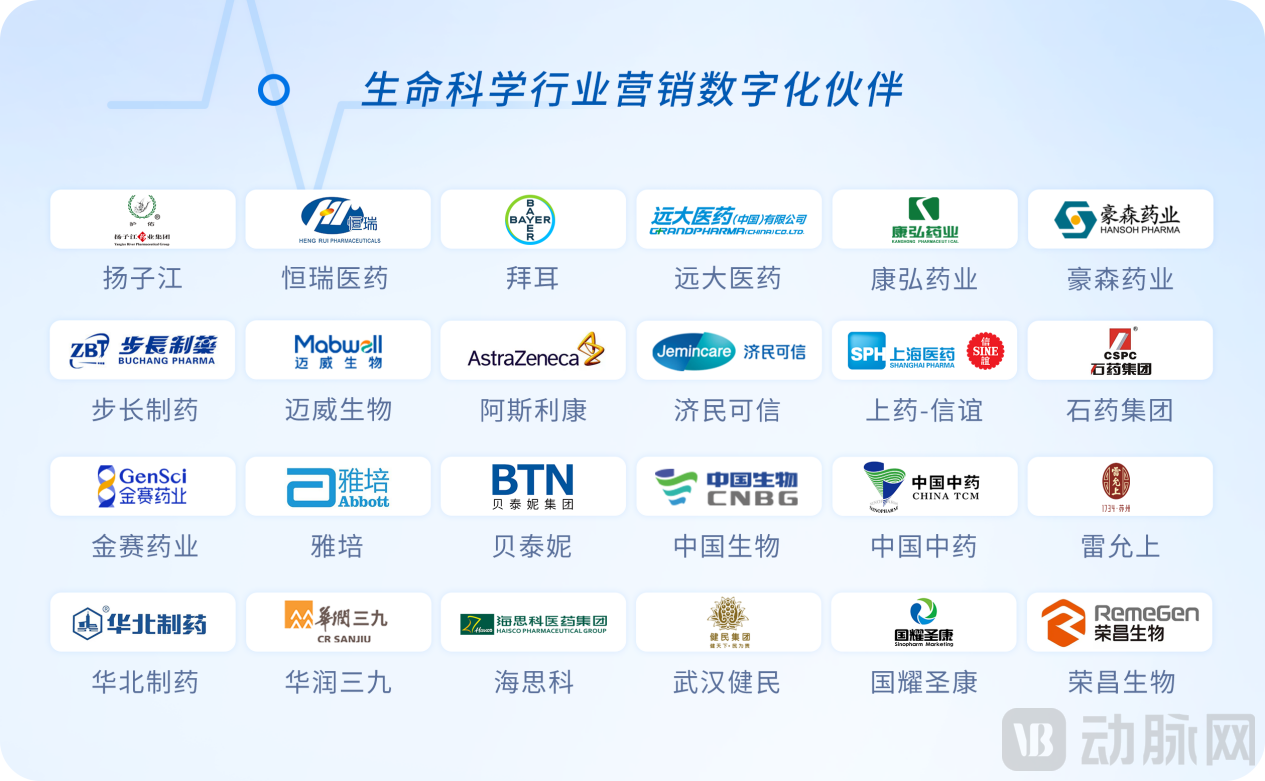
Selected Clients of Jueceyi
By 2022, China’s pharmaceutical digital marketing industry was characterized by a large number of enterprises and products, with a diverse array of solutions. Technology-driven companies represented by SaaS providers, platform-based enterprises exemplified by physician and patient platforms, and retail endpoints such as retail pharmacies and pharmaceutical e-commerce players all actively participated in the field of pharmaceutical digital marketing.
China's Digital Pharmaceutical Marketing Market Is Undergoing a Period of Intense Consolidation.Manufacturers of various types have proposed different solutions from multiple perspectives, all attempting to integrate upstream and downstream resources and reconstruct business scenarios. Over time, the true value of these solutions has gradually emerged, enabling pharmaceutical companies to make more rational judgments in their selection.
“Next, the industry will present two scenarios,First, existing non-competitive solutions will exit the market, while valuable products will remain. Second, new solutions will begin to emerge and gradually gain market validation.”
Zhao Zhuwei further explained, “As supply-side reforms in the industry enter their later stages, marketing innovations for pharmaceuticals and medical devices will move into a phase of implementation and deepening. New opportunities and solutions will focus on medical services and pharmaceutical care services, specifically on how to meet patients’ needs across the entire lifecycle of testing, medication, and rehabilitation. Actively participating in the restructuring of business scenarios within medical service settings will be a key focus of Jueceyi’s future strategy. In particular, as testing marks the beginning of treatment, achieving digital transformation of testing scenarios will rapidly drive innovation in full-cycle diagnosis and treatment.”
Furthermore, he revealed that Jueceyi will launch a new version of its product by the end of the year, incorporating new technologies in scenarios such as speech recognition, image recognition, and big data processing. Notably, regarding the intelligent assistant—a feature highly perceptible to customers—marketing personnel, sales operations staff, and frontline sales representatives can all leverage this tool to identify current organizational issues and receive targeted recommendations for resolution.
Meanwhile, leveraging its proprietary products and extensive experience in business services, the Jueceyi team has been continuously standardizing digital marketing scenarios and launching business outsourcing services, thereby facilitating its transformation from an IT service provider to a marketing business service provider.