

Future Medical Files IPO Prospectus Highlighting Customizable Inhaled Drug-Device Combination Platforms for Vaccines, Small Molecules, and Biologics
On October 25, 2022, Shanghai officially launched appointment registration for booster doses of the inhaled recombinant COVID-19 vaccine (adenovirus type 5 vector). With the approval of the inhaled COVID-19 vaccine for use, “inhaled formulations” have once again come into public view.
Inhalation formulations refer to pharmaceutical preparations that deliver drugs in aerosol form to the respiratory tract or lungs via specific devices, thereby exerting local or systemic effects. Inhalation formulations offer advantages such as convenient administration, rapid onset of action, and avoidance of hepatic first-pass metabolism. They are widely used in the treatment of respiratory diseases such as asthma and chronic obstructive pulmonary disease (COPD), and can also serve as an alternative non-injectable route for the delivery of biologics and proteins.
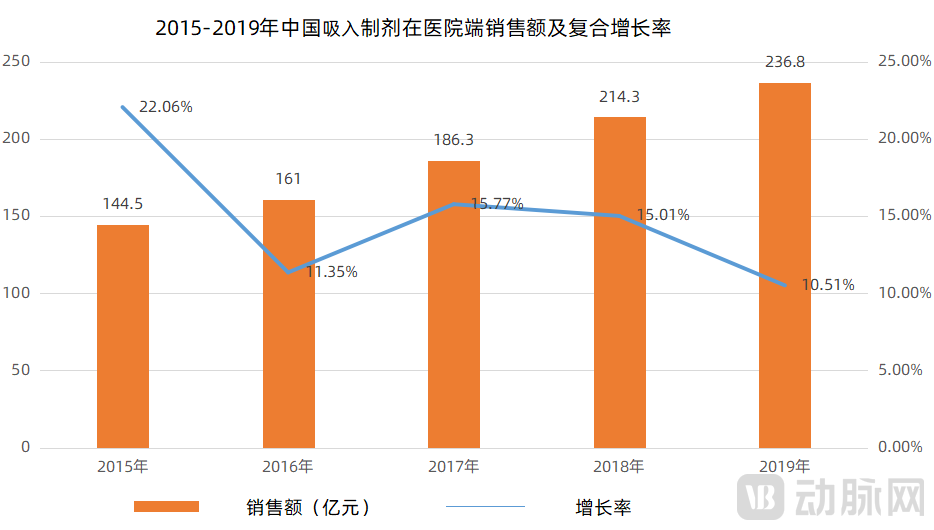
Data Source: “Research Report on Industry Development Monitoring and Investment Strategic Planning for China’s Inhalation Preparations Industry (2021-2026)”
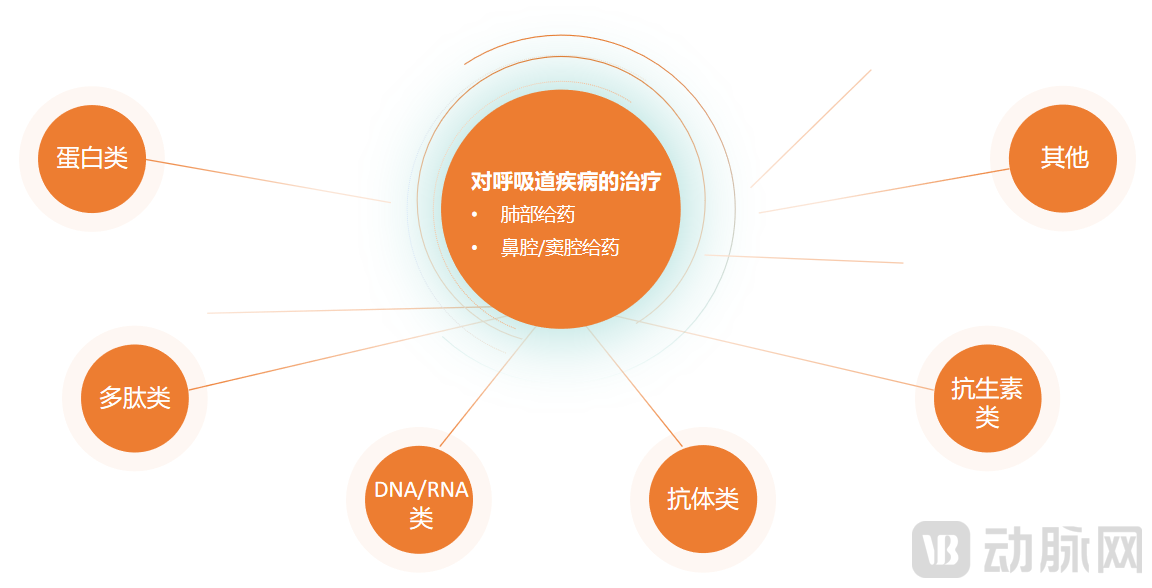
Novel drug delivery carriers, such as liposomes, exosomes, nanoparticles, and nanoemulsions, offer sustained release, low toxicity, and local targeting in pulmonary applications. They can enhance drug stability to a certain extent and are therefore utilized in the development of nebulized inhalation formulations, thereby enabling the aerosolized inhalation administration of protein-, peptide-, DNA/RNA-, and antibody-based therapeutics that are otherwise difficult to nebulize.
Nebulizers are medical devices for inhalation administration. According toJohn N PritchardPublished《Mesh nebulizers have become the first choice for new nebulized pharmaceutical drug developments》Research findings: In comparative experiments of clinical trial volumes conducted by pharmaceutical companies and clinicians using different types of nebulizers, mesh nebulizers had the highest overall adoption rate.
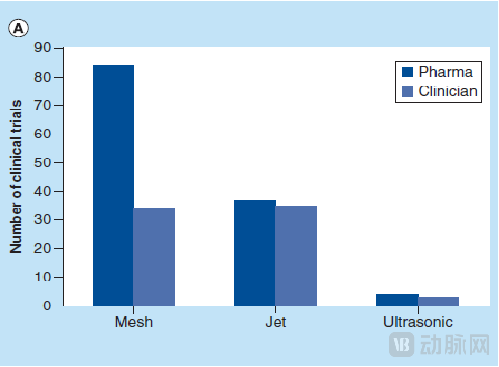
Comparison of Clinical Trial Volumes for Different Types of Nebulizers Conducted by Pharmaceutical Companies and Clinicians
When focusing on the differences among pharmaceutical companiesIn comparisons of clinical trial volumes across nebulizer types, mesh nebulizers account for the largest share. This further demonstrates that mesh nebulizers have become the preferred choice for pharmaceutical companies in clinical trials of inhaled drug delivery.
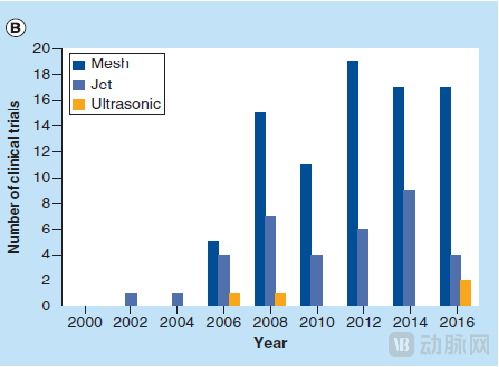
Comparison of Clinical Trial Volumes for Different Types of Nebulizers Conducted by Pharmaceutical Companies
Market research data more intuitively reflect this perspective. The "In-depth Market Research and Investment Strategy Recommendations Report on the Mesh Nebulizer Industry in China (2021-2025)," released by the New Thinking Industry Research Center, shows that in 2020, the market size of nebulizers in China was approximately RMB 2.23 billion. Although mesh nebulizers accounted for less than 16% of the market share, with a market size of about RMB 350 million, their growth rate was significantly higher than the 28% recorded for compression nebulizers, reaching 40% in 2020. This indicates thatThe market share of mesh nebulizers in China will continue to rise.
From the perspective of technological iteration, mesh nebulizers combine the features of jet (compressor) nebulizers and ultrasonic nebulizers. They offer advantages such as low dosage, minimal systemic adverse reactions, rapid nebulization rate, high pulmonary deposition, and preservation of drug bioactivity. By utilizing periodically varying voltage to vibrate the mesh, the medication is aerosolized as it passes through the micro-perforations. In addition to producing medical-grade aerosol particles, this technology addresses the noise issues associated with jet nebulizers. Furthermore, their portability, ability to deliver nebulization anytime and anywhere, and high efficiency align well with modern consumer preferences. Therefore,Smart, customizable nebulizers are poised to become a new direction for industry development.
November 2018,Qingdao Future Medical Technology Co., Ltd. (hereinafter referred to as "Future Medical")under its umbrellaBukele (Yirdoc) NebulizerHaving received FDA approval, it has become the world’s first FDA-cleared smart mesh nebulizer. Over the years, Future Medical has remained dedicated to technological innovation, achieving another breakthrough with the launch ofiAir Drug-Device Combination Product,Provide pharmaceutical companies with a one-stop platform and services for customized drug-device combination products.
Specifically, future healthcare solutions can adjust the components and control systems of nebulizers based on patient population characteristics—such as age, disease stage, and lung function—as well as pharmaceutical properties, including the active ingredients, formulation viscosity, and temperature-dependent stability of drug prescriptions. This approach aims to develop integrated drug-device combination products that optimize both drug delivery efficiency and total delivered dose.
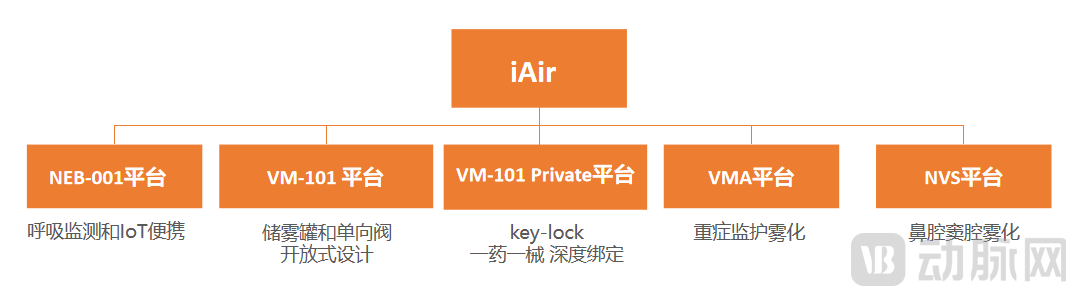
The iAir drug-device combination products encompass five specialized platforms: the Bukele (Yirdoc) NEB-001 platform, the Bukele (Yirdoc) VM-101 platform, the Bukele (Yirdoc) VM-101 Private platform, the Bukele (Yirdoc) VMA platform, and the Bukele (Yirdoc) NVS platform.to support the customization of integrated drug-device solutions across diverse solvents, various diseases, and the full spectrum of upper and lower respiratory tract applications, thereby accelerating pharmaceutical companies’ product development and market launch, while reducing clinical trial timelines and projected costs.
Mature application of IoT and digital technologies to achieve real-time feedback on respiratory data.Taking the NEB-001 platform as an example, this platform utilizes Bluetooth for real-time monitoring and data transmission, continuously recording data generated during patient nebulization, such as medication time, dosage, and the patient’s respiratory status (respiratory ratio).These data will also be transmitted in real time to the R&D departments of pharmaceutical companies, helping them promptly adjust clinical trial parameters, enhance the effectiveness of clinical trials, and reduce costs.。
The platform is also equipped with Bluetooth Low Energy (BLE) connectivity, enabling integration with companion online games. These games guide patients to perform deep breathing exercises and prolong inspiratory time, thereby enhancing pulmonary drug deposition and improving the efficacy of nebulization therapy. Additionally, this approach increases adherence to and engagement in nebulization therapy among pediatric patients.
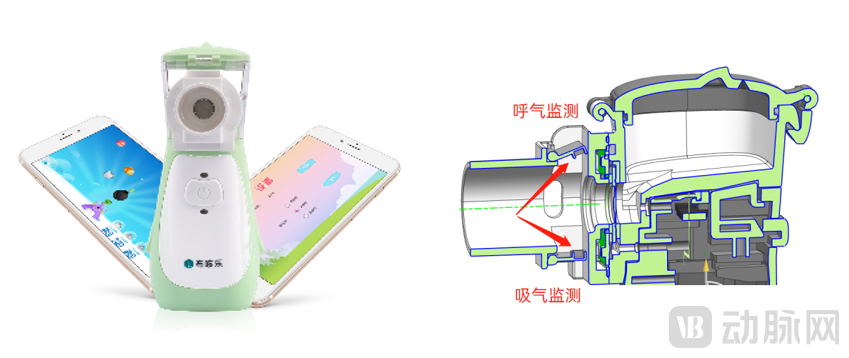
Figure: Bukele (Yirdoc) NEB-001 Platform
Enhance drug utilization with patented Intelligent Respiration Monitoring for Precise Drug Administration (I.A.D Technology).Future Medical has independently developed I.A.D. technology, driven by its proprietary atomization algorithm. The intelligent respiratory monitoring sensor at the nozzle head real-time monitors patients’ breathing patterns and precisely adjusts the nebulization process, enabling aerosol generation during inhalation and suspending it during exhalation. This approach enhances drug utilization efficiency—particularly for high-value, low-dose medications—thereby alleviating production pressures on pharmaceutical companies while maximizing therapeutic value for patients. Additionally, Future Medical’s SWDA (Sine Wave-Driven Atomization patented technology) helps minimize damage to biologics, preserving post-nebulization drug activity.
The unique design of the spacer and one-way valve increases pulmonary drug deposition and enhances therapeutic efficacy.Future HealthcareThe nebulizer features a unique design incorporating a spacer chamber and disposable one-way valves. For instance, the spacer chamber in the VM-101 platform can temporarily store medication, thereby reducing aerosol dispersion, nasal deposition, and facial irritation. The spiral inlet one-way valve within the spacer chamber, along with the exhalation one-way valves in the mask and mouthpiece, further minimize aerosol dispersion and enhance pulmonary drug deposition. Additionally, the disposable components for the VM-101 platform adopt an open design, allowing for separate use.
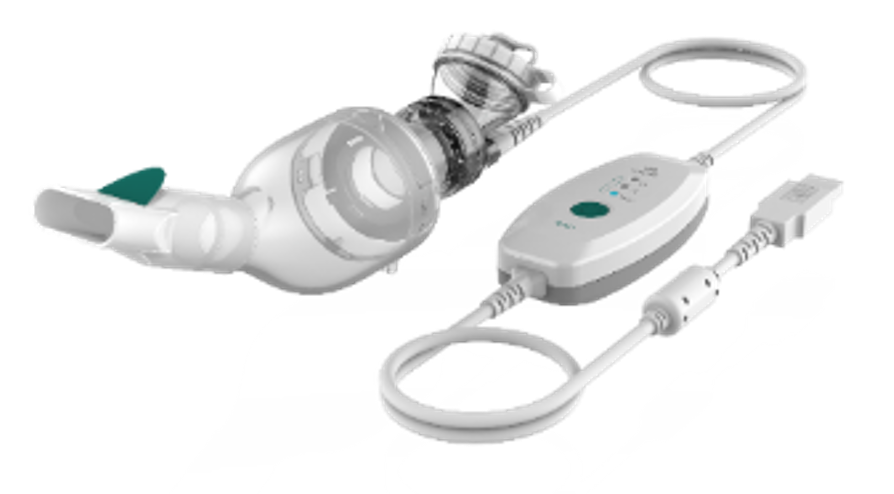
Figure: Bukele (Yirdoc) VM-101 Platform
It is worth mentioning that,Future healthcare allows for customization across aerosol particle size, nebulization consumable design, and software system development, achieving “one drug, one device; dedicated drug, dedicated device.”. For example,VM-101 privatePlatform'sKey-Lock TechnologyIt can meet the specific requirements of some pharmaceutical companies, such as directly inserting the medication into the nebulizer for use when administering certain drugs. This enhances patient compliance while the closed system also prevents contamination risks from other medications or airborne substances. Furthermore,VMAThe platform is used in conjunction with ventilators and nasal high-flow devices in intensive care scenarios,NVSThe platform is used for nasal and sinus nebulization.
Since its establishment in 2014, Future Medical has relied on a highly efficient and professional team specializing in the research and development of medical devices as well as regulatory compliance for registration.Established collaborations with over ten vaccine and pharmaceutical companies, both domestically and internationally, on combination drug-device products, covering novel inhaled drugs such as antibiotics, interferons, and recombinant human deoxyribonuclease; innovative biologics including antibodies, proteins, peptides, and nucleic acids; and inhaled formulations encompassing vaccines, small-molecule drugs, and large biological molecules. It has established a presence across indications such as asthma, chronic obstructive pulmonary disease (COPD), pulmonary fibrosis, respiratory syncytial virus (RSV) infection, pulmonary arterial hypertension, lung cancer, and neonatal respiratory distress syndrome, thereby accumulating extensive experience in collaborative project development and project management.
Future Medical has also established a specialized laboratory for nebulized inhalation, equipped with a full suite of instruments and models including the COPLEY breathing simulator, Next Generation Impactor (NGI), High-Performance Liquid Chromatography (HPLC) system, spectrophotometer, and laser particle size analyzer; meanwhile,Future Medical has established a full product lifecycle platform for pharmaceutical companies, encompassing product feasibility analysis, laboratory testing, animal studies, digital clinical trials, and post-marketing real-world studies., fully support partner pharmaceutical companies in the comprehensive development of inhalation formulations.
Pulmonary deposition rate is a key factor affecting drug efficacy, which in turn is influenced by factors such as the properties of drug particles, carriers, manufacturing equipment, and production processes. This imposes extremely high requirements on the compatibility between drugs and devices, equipment performance, and quality control.
As a specialized manufacturer in the medical field, Future Medical holds ISO 13485 quality management system certification and has established sterile and non-sterile production workshops, physicochemical laboratories, and Class 10,000 cleanrooms, enabling simultaneous production and testing of both sterile and non-sterile devices. Its product lines are equipped with digitalized and automated production systems, facilitating digitalization and automation of manufacturing and quality management processes, thereby enhancing product quality and production traceability.
Sustained investment in scientific research and innovation serves as the source for continuous advancements in future medical technologies and products. As of the end of October 2022, Future has applied for or obtained nearly 50 patents, covering areas such as respiratory monitoring, vaccine nebulization, game-guided nebulization, and intelligent drug delivery technologies. Notably,Future Medical secured a global patent for vaccine nebulization in just 56 days in 2021,Achieved digitalization and automation of the entire nebulized inhalation vaccination process, significantly enhancing the safety, efficacy, and quality control standards of nebulized inhalation, thereby effectively preventing safety and quality control issues arising from human error during the vaccination process.
Future Medical is also the world’s first manufacturer of intelligent mesh nebulizers to obtain FDA clearance, and has secured NMPA and CE certifications, expanding into markets in the United States, the European Union, the Middle East, and the Asia-Pacific region.
On November 25, 2021, China’s Center for Drug Evaluation (CDE) issued the Technical Requirements for Research on Inhalation Liquid Preparations of Chemical Drugs, providing guidelines for the development of nebulized inhalation preparations to further standardize and promote their research, development, and market approval.Enter2022After the Chinese New Year,In China, inhaled formulations such as tobramycin inhalation solution and inhalable vaccines have been successively approved for market launch, marking a leapfrog advancement in the field of inhaled pharmaceuticals.
Due to the high barriers in research and development, manufacturing, and regulatory approval, generic inhalation products are extremely difficult to develop. As a result, the global market for inhalation therapies has long been dominated by multinational pharmaceutical companies such as GSK, AstraZeneca (AZ), and Boehringer Ingelheim (BI). In fact, this monopoly extends beyond drugs alone, encompassing devices and combination drug-device products. The unique nature of inhalation therapies requires the combined use of medicinal products and inhalation devices, which also presents significant technical barriers. Consequently, the market for inhalation drug-device combination products has long been monopolized by international companies such as PARI and Aerogen.
Any ecosystem with increasingly homogeneous participants is destined to move toward monopoly. Conversely, as the number of participants grows, monopolistic tendencies gradually dissipate. Compared with the considerable distances involved in collaborating with foreign medical device companies, domestic pharmaceutical enterprises enjoy dual advantages in time and cost by choosing Chinese medical device firms that have grown locally. Moreover, having been deeply involved in the development of China’s biopharmaceutical industry, Chinese medical device companies possess a more precise understanding of patients’ healthcare needs and corresponding trends in technological applications, resulting in greater synergy and cooperation. At this stage, high-quality domestic nebulizer manufacturers such as Future Medical are well-positioned to stand out, leveraging their comprehensive technical systems, strong product capabilities and iterative innovation, as well as an extensive commercialization network.
Following the release of the "Guidelines for Bioequivalence Studies of Generic Orally Inhaled Drug Products" by the Center for Drug Evaluation (CDE) of the National Medical Products Administration in December 2020, orally inhaled formulations were included for the first time in the fourth round of China's National Centralized Volume-Based Procurement. The fifth round expanded this inclusion to three product varieties, signaling that the inhaled formulation industry may be entering a period of explosive growth and an era of accelerated domestic substitution.
Future Medical has also made preparations in this regard. In addition to the iAir drug-device combination product, it has established a comprehensive portfolio of precision mesh nebulization products, including devices and consumables for upper and lower respiratory tract mesh nebulization. This achieves full coverage of mesh nebulization applications across ICUs, ENT departments, general wards, nebulization rooms, and home care settings. Notably, its nebulization stations have been deployed in nearly 200 hospitals nationwide, including key national hospitals such as the Capital Institute of Pediatrics and Xi’an Children’s Hospital.
The road ahead is long, and time is an effective measure of value: By steadfastly adhering to its mission that “Bukele wishes for a world free from coughing,” Future Medical will surely emerge as true gold amidst the industry’s rigorous trials.Future Medical also hopes to collaborate with more improved and innovative pharmaceutical companies to jointly promote the development of pharmaceutical and medical device products.