

Veteran Chemiluminescence Enterprise Rejuvenated: China's First Class III Certificate Granted for Next-Generation Antigen Test for Vaginal Infections
Relying on legacy products to sustain revenue while new products remained delayed in launch—this was the challenge facing Beijing Taige Kexin Biological Technology Co., Ltd. (hereinafter referred to as “Taige Kexin”) in 2016, when Dr. Duan Hu returned to China after completing his studies abroad.
Beijing Taige Kexin Biological Technology Co., Ltd. was established in 2004 as one of the earliest domestic enterprises to engage in the chemiluminescence industry. The company obtained the first registration certificates for multiple chemiluminescence reagents in China, leading to strong demand outstripping supply and rapid sales growth during its early years. Leveraging her scientific research background and technical expertise, the company’s founder, Professor Liu Li, facilitated its rapid development.
“This prosperous state lasted until 2010. From 2010 to 2016, Professor Liu Li handed over the company’s operations to team management, which may have caused Taige Kexin to miss the technological iteration of chemiluminescence from semi-automatic to fully automatic systems, and from plate-based luminescence to magnetic microparticle luminescence. Additionally, the failure to leverage capital for instrument deployment to rapidly increase market share resulted in missed significant opportunities,” stated Dr. Duan Hu, CEO of Taige Kexin.
In 2016, after Dr. Duan Hu returned to China from overseas studies and took over Beijing Taige Kexin Biological Technology Co., Ltd., he established a dual-track development strategy for chemiluminescence and point-of-care testing (POCT). This strategy was formulated through extensive and detailed market research, comparative analysis of clinical guidelines in China versus those in Europe and the United States, and alignment with the company’s unique developmental characteristics. Meanwhile, the focus of new product R&D was concentrated on specialized fields in gynecology, obstetrics, and pediatrics that address specific clinical needs, marking a shift from merely emphasizing diagnostic technologies to prioritizing comprehensive clinical solutions. With the successive launch of independently developed new products, Beijing Taige Kexin has been revitalized under the leadership of Dr. Duan Hu.
Recently, the company has obtainedChina’s First Class III Registration Certificate for Next-Generation Antigen Reagents for Gynecological Reproductive Tract, with theFully Automated Gynecological Infection Analyzerthe launch of,sFlt-1/PlGF Preeclampsia Test KitWith its market launch, Taige Kexin has successfully secured a place in the field of maternal and child diagnostics.
In 2016, the domestic chemiluminescence market was already in a period of intense competition. Leading manufacturers had established a significant presence in the mainstream chemiluminescence market, making it difficult for trailing companies to catch up in the short term. Therefore, Dr. Duan Hu led his team in conducting extensive market research and customer visits. By further analyzing clinical needs, they identified that the diagnosis of gynecological and obstetric diseases represented a large and underserved market.
First, in the field of gynecology, there is substantial unmet demand for addressing gynecological infections. According to the results of the Seventh National Population Census, China’s female population totaled 689.49 million in 2021, accounting for 48.76% of the total population. Moreover, women at all age stages may face different types of reproductive tract infections, and specific diagnostic testing is required throughout their entire life cycle, including adolescence, pregnancy and childbirth, and old age.
Next is obstetrics. Against the backdrop of the full implementation of the “three-child” policy, with encouraging childbirth becoming the main theme, the number of newborns in China is expected to remain at a relatively ideal level, and the substantial market demand for diagnosis of pregnancy- and childbirth-related diseases will persist over the long term.
For example, in obstetrics, the trend toward later marriages and childbirth, coupled with an increased birth rate for second children, has led to a growing high-risk population of advanced maternal age pregnancies, pregnancy-related comorbidities, and complications. Consequently, significant attention has been directed toward the diagnosis of preeclampsia, one of the common complications of pregnancy, particularly emphasizing early diagnosis and prevention. Early risk assessment and evaluation of therapeutic efficacy for preeclampsia have become urgent clinical needs, aligning with the national initiative to establish centers for the treatment of critically ill pregnant and postpartum women. At this opportune moment, Beijing Taige Kexin Biological Technology Co., Ltd. launched its sFlt-1/PlGF test kit for preeclampsia screening.
“Based on our estimates,Annual testing demand in maternal and child healthcare diagnostics reaches hundreds of millions of visits. Although there are numerous diagnostic items for maternal and child health, with various manufacturers continuously launching new offerings, the corresponding testing market still holds significant potential, remaining largely a blue-ocean market in certain niche segments.“Dr. Duan Hu concluded.”
After establishing a specialized development strategy for gynecology and obstetrics, Taige Kexin initially targeted the largest niche segment within the field of gynecological infectious disease diagnostics: vaginitis testing.
Most vaginitis testing products currently on the market are based on microscopy combined with enzymatic chemical methods, which offer limited technological innovation. Meanwhile, there is significant room for improvement in the sensitivity and specificity of these testing protocols in clinical applications. In contrast, antigen- and nucleic acid-based technologies, which are widely used in European and American markets and offer higher specificity, have not yet gained widespread adoption in China’s vaginitis testing market. This gap has revealed an opportunity window for Dr. Duan Hu.
Upon further analysis of the Chinese clinical market, Dr. Duan Hu observed that vaginitis testing products from foreign companies are primarily based on nucleic acid technology. This technology entails high testing fees, expensive instrumentation, and complex operations. Since vaginitis is a common condition, patients exhibit low willingness to pay for such high-cost testing. Consequently, the adoption of nucleic acid-based vaginitis testing in China remains limited.
Furthermore, antigen testing for vaginitis is also widely adopted by manufacturers in Europe and the United States; however, most products from imported brands typically cover only a single pathogen, lacking solutions for multiple pathogens.
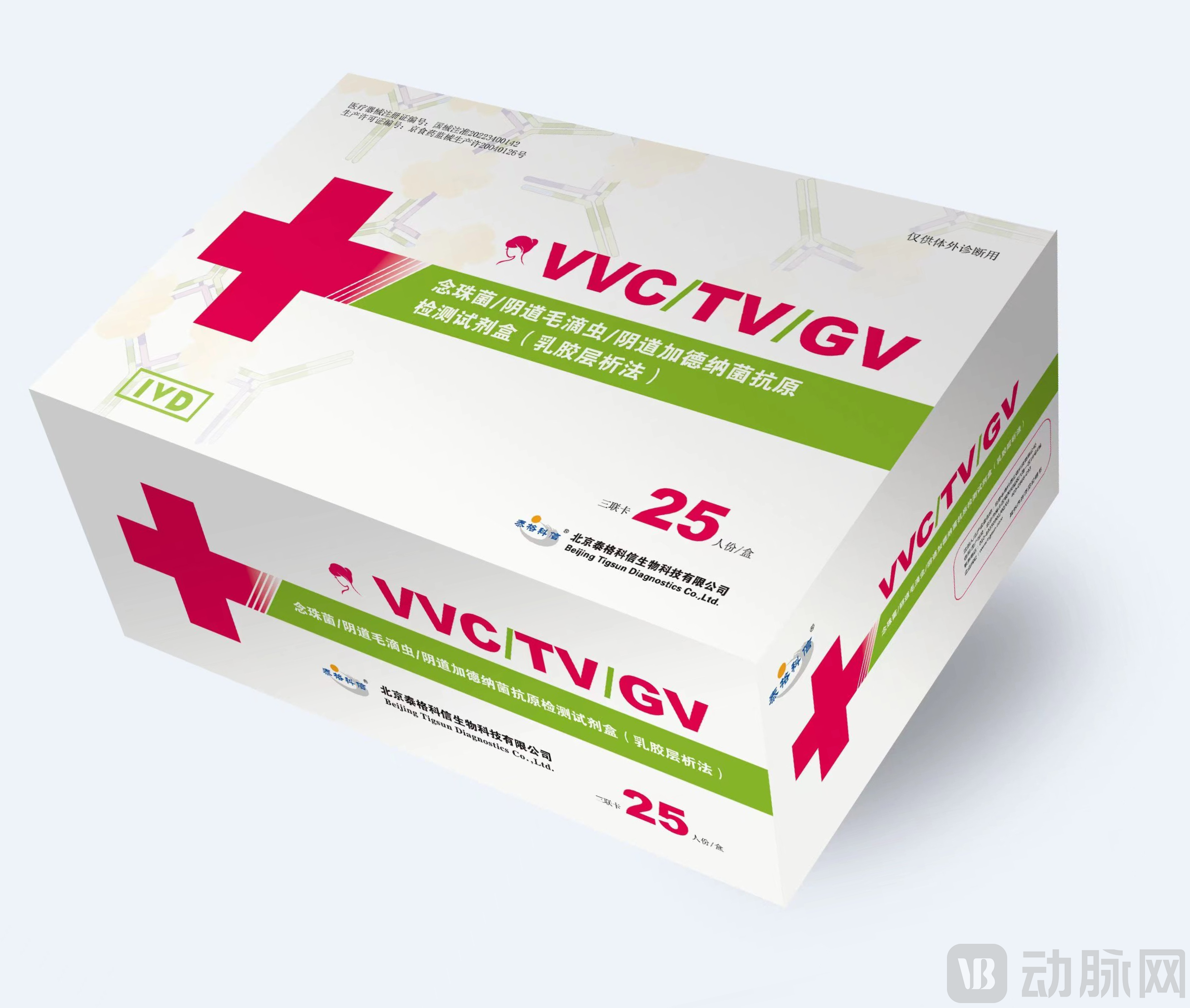
To address the gap in the vaginitis testing market, Taige Kexin has innovatively developed its first-generation antigen detection kit for three pathogens: Candida albicans, Trichomonas vaginalis, and Gardnerella vaginalis., the solution is better suited to the actual clinical practice in China. Since its market launch, the product has maintained a leading market share in China and has also gained recognition in Europe and the United States.
With the rising infection rates of emerging pathogens causing gynecological reproductive tract infections, Beijing Taige Kexin Biological Technology Co., Ltd. launched its second-generation reagent product in 2022 after six years of continuous research and development improvements—the “Candida, Trichomonas vaginalis, and Gardnerella vaginalis” Antigen Detection Kit. This isChina's First Class III-Certified Antigen Reagent for Lower Genital Tract Vaginitis in GynecologyThe product has expanded from detecting a single Candida species to covering multiple Candida species, Gardnerella vaginalis, and Trichomonas vaginalis, with further improved accuracy. By employing latex chromatography, which differs from traditional colloidal gold methods, it enables more comprehensive antigen detection of gynecological reproductive tract pathogens, enhances specificity, and avoids missed diagnoses.
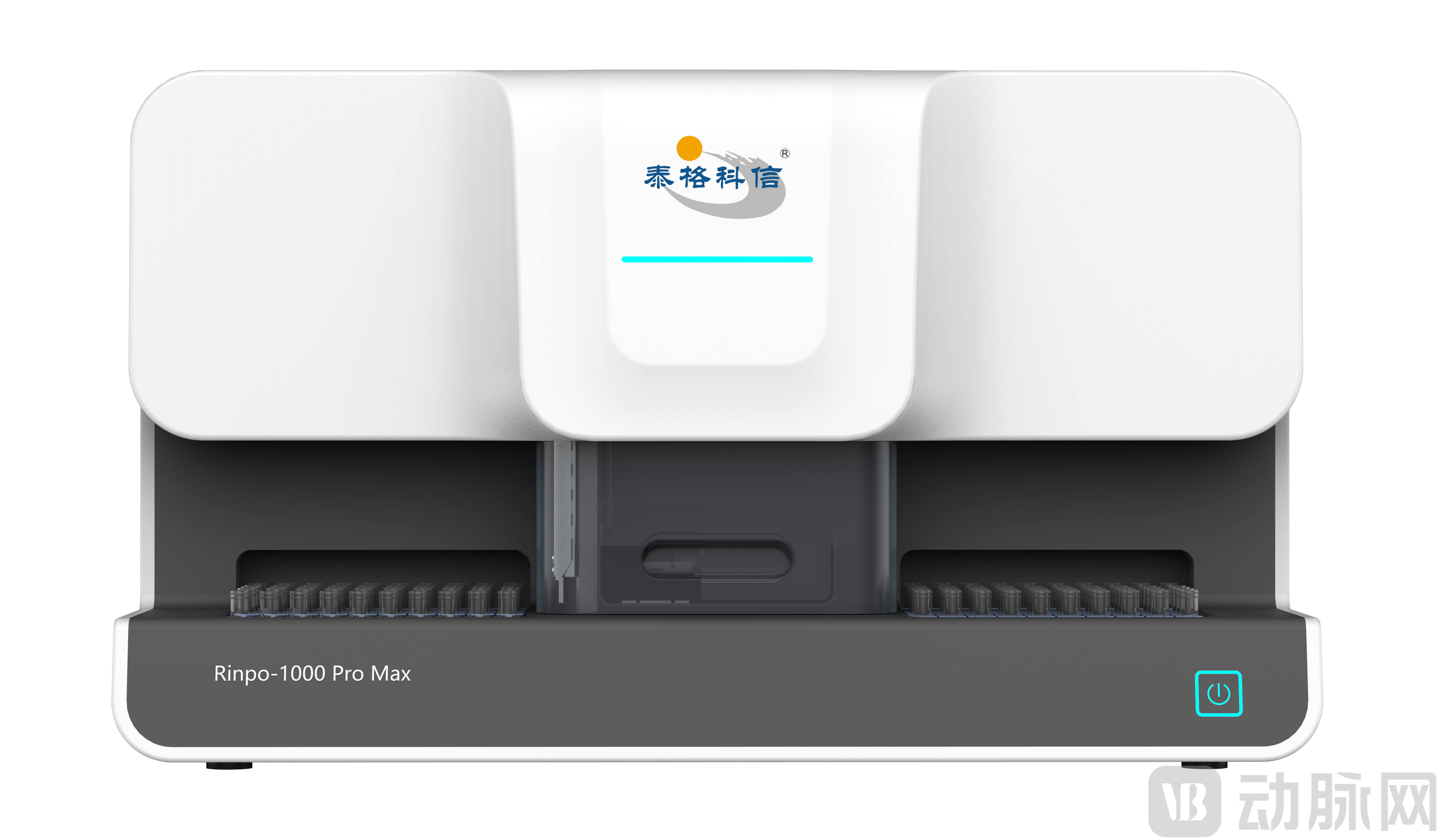
In addition, Taige Kexin also launched in 2022Fully Automated Gynecological Infection AnalyzerWhile the three traditional routine tests have already adopted highly automated solutions, gynecological infection testing, despite its large sample volume, has remained in the manual era due to the complexity of microbial flora and the difficulty of standardization, lacking an ideal automated solution. The fully automated gynecological infection analyzer from Taige Kexin has resolved multiple bottlenecks, such as the intelligent identification of pathogens, achieving fully automated microscopic morphological scanning and combined antigen detection. With more precise typing and smarter detection, as well as room-temperature storage and transportation capabilities, it brings gynecological infection testing into the automated era, enabling unattended operation with a “sample-in, result-out” workflow.
To date, Taige Kexin has obtained nearly 100 product registration certificates. Among these, the company plans to secure nearly 20 registration certificates this year for its chemiluminescence acridinium ester-based assay reagents. Additionally, more than ten Class II medical devices are expected to be launched in the first half of next year. “The company maintains strong momentum in new product R&D. It is projected that multiple products will receive approval annually in the coming years. Taige Kexin remains committed to a high-competitiveness differentiation strategy, launching a series of distinctive and exclusive chemiluminescence and POCT products in the women’s and children’s health sectors.”
Amid the increasingly fierce competition in China’s in vitro diagnostics (IVD) market, Dr. Duan Hu believes thatThe maternal and child health diagnostics market still holds substantial opportunities for domestic enterprises to explore.。
Technologies such as chemiluminescence have become highly mature, and in vitro diagnostic companies need to break through from two aspects.First is the degree of technological innovation; second is the difficulty of product substitution.Based on the current status of China's gynecological infection market, Taige Kexin’s technologies and products demonstrate considerable competitiveness.
Currently, Taige Kexin has achieved a series of breakthroughs in product research and development as well as market launch. In the future, Taige Kexin will continue to be guided by technological innovation, accelerate product development and commercialization, and provide specialized, systematic holistic solutions for the maternal and child health sector.
“In the field of maternal and child health, overseas markets have already seen the emergence of industry leaders such as Hologic and PerkinElmer, while China has yet to produce domestic companies capable of competing with these global giants. We hope that Taige Kexin can fill this gap and become a benchmark enterprise in China’s local maternal and child diagnostics market,” said Dr. Duan Hu.