

Nucleome Therapeutics Files for IPO: Decoding the Dark Genome to Unlock Novel Precision Therapies

Pfizer Ventures
Global Venture Capital Firms

British Patient Capital
Venture Capital Firm

Storm Ventures
Early-Stage Venture Capital Firms

Nucleome
Innovative Drug Developer

Johnson & Johnson Innovation
Venture Capital Firms

Oxford Sciences Innovation
Early-Stage Venture Capital Firms
In recent years, many biotechnology companies have generated substantial capital in the market by leveraging the combination of machine learning and drug discovery. However, one company has taken a different approach, distinguishing itself in the exploration of the dark matter of the human genome.
Nucleome Therapeutics is a UK-based company founded in 2019. Spun out from the University of Oxford, it aims to develop precision medicines by decoding the human “dark” genome.
VCBeat recently learned that the company has completed a $42.4 million Series A financing round. The round was led by new investor M Ventures, with participation from Johnson & Johnson Innovation, Pfizer Ventures, British Patient Capital, and Oxford Science Enterprises.
Nucleome Therapeutics’ official website revealed that as early as June 2020, Nucleome Therapeutics received non-equity assistance from the Creative Destruction Lab, with the specific amount undisclosed.
Nucleome Therapeutics was founded by gene regulation experts from the University of Oxford and has received investment support from Oxford Science Innovation.
Academic Founder Jim Hughes is Professor of Gene Regulation at the University of Oxford. He employs experimental, computational, and machine learning approaches to functionally elucidate the role of the non-coding genome in human disease.
Academic founder James Davies is an Associate Professor at the University of Oxford. He specializes in leveraging genomic assay and computational methods to elucidate genome function. Additionally, he is a critical care physician.
Like the first two academic founders, Danuta Jeziorska, CEO, Academic Founder, and Executive Director of Nucleome Therapeutics, possesses deep expertise in gene regulation, 3D genomics analysis, and bioinformatics. She holds a Ph.D. in Systems Biology and a B.Sc. in Biotechnology. Currently, Danuta serves as a member of the BIA Genomics Advisory Committee and holds an honorary position at the University of Oxford.
Furthermore, she is a seasoned biotechnology entrepreneur with over 16 years of experience in the field. In recognition of her achievements at Nucleome, the scientific journal Nature Biotechnology has honored Danuta with the title of “Distinguished Leader in Biotechnology.”
Prior to this round of financing, under the leadership of the three founders, the company had raised $5.8 million in seed funding and assembled a team of approximately 20 people.

The human genome (DNA) comprises 3 billion base pairs, of which 2% are protein-coding genes, totaling approximately 20,000. The therapeutic potential of these coding regions has been extensively exploited in the pharmaceutical industry. The remaining 98% consists of non-coding sequences, often referred to as the “dark” genome.
The “dark” genome plays a role in regulating and controlling gene expression. It functions like an instruction processor, turning genes on and off at the right time and level. This enables our genetic code to be translated into hundreds of cell types. Dysregulation of this processing mechanism may lead to evolutionary changes or human diseases.
In fact, most disease-associated genetic variants are located in the “dark” genome, including those linked to multiple sclerosis, lupus, and rheumatoid arthritis.
However, the “dark” genome remains largely unexplored. The goal of decoding the “dark” genome is to uncover how variants, genes, and cell types exert positive or negative effects on gene expression. This presents a significant opportunity for drug discovery and development.
Nucleome’s business logic is to leverage 3D genomics technology and machine learning to identify disease-associated genes, ultimately discovering druggable candidate genes.
Nucleome first employed machine learning and computational genomics tools to analyze over 3.5 million genetic variants, covering more than 20 distinct immune cell types. This research enabled Nucleome to identify which variants influence gene expression in the “dark” regions of the genome. To facilitate variant prioritization and data exploration, Nucleome developed its proprietary database, “Lantern,” which integrates perspectives from cell types, phenotypes, variants, and GWAS studies.
In May 2021, Nucleome published a novel 3D genome analysis method in Nature. This method is called Micro Capture-C (abbreviated as “MCC”).This technology enables teams to observe the folding of DNA within cells from a three-dimensional perspective, helping to unravel genetic variants in “dark” regions.
MCC begins with chemical cross-linking, followed by the use of micrococcal nuclease (MNase) to randomly cleave interacting DNA fragments (DNA cross-links). Subsequently, another type of enzyme is employed to religate the DNA. The DNA is then decross-linked and extracted. Because the interacting DNA fragments are ligated together (reflecting 3D rather than linear structures), genome-wide 3D interaction maps can be generated on a large scale. Nucleome uses this method to decipher the “dark” genome.
High Resolution
Chromosome Conformation Capture (3C) is used to detect the frequency of interactions between DNA sequences. This method has revolutionized the development of genetic testing over the past decade.
Disease-associated variants are typically single-base-pair changes within regulatory elements that are only 50–1,000 base pairs in size. Moreover, these variants are often surrounded by other functional elements and multiple genes. Therefore, detection of the “dark” genome requires precise localization at the DNA level. However, 3C-based methods have not yet achieved the base-pair resolution necessary to unravel the secrets of the “dark” genome.
Compared with currently available 3C methods, including Hi-C2, Micro-C3-5, Hi-C6, 4C7, and (NG) Capture-C8, MCC achieves higher resolution.
MCC can determine physical contacts between regulatory elements at the resolution of individual transcription factors. This is achieved through five advancements in the NG Capture-C8 method, which improves resolution by an average of 256- to 1000-fold.
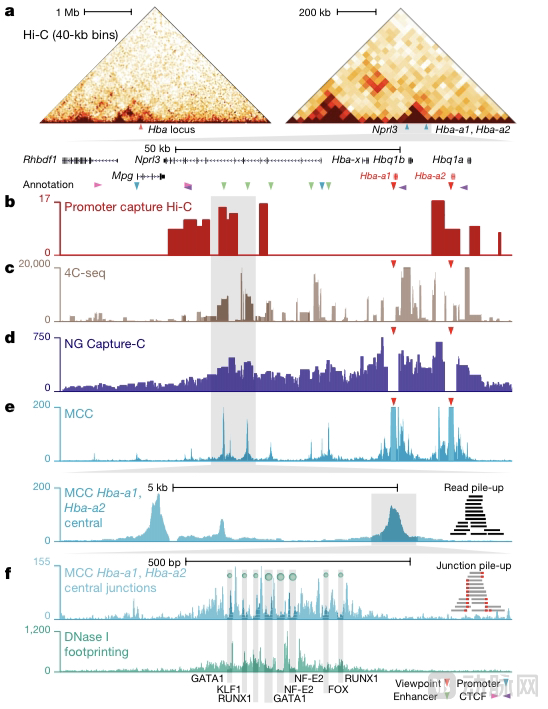
Comparison of MCC with Other 3C Technologies in Erythroid Cells: The Promoters of α-Globin Genes (Hba-a1 and Hba-a2) Demonstrate That MCC Provides Significantly Improved Resolution
Nucleome’s platform can precisely process native cells and patient-derived cells—determining large-scale 3D genomic structures within cells at an average resolution of 256 bp, and achieving unprecedented 1 bp precision with its proprietary MCC method. This represents the current state-of-the-art in single-base-pair resolution.
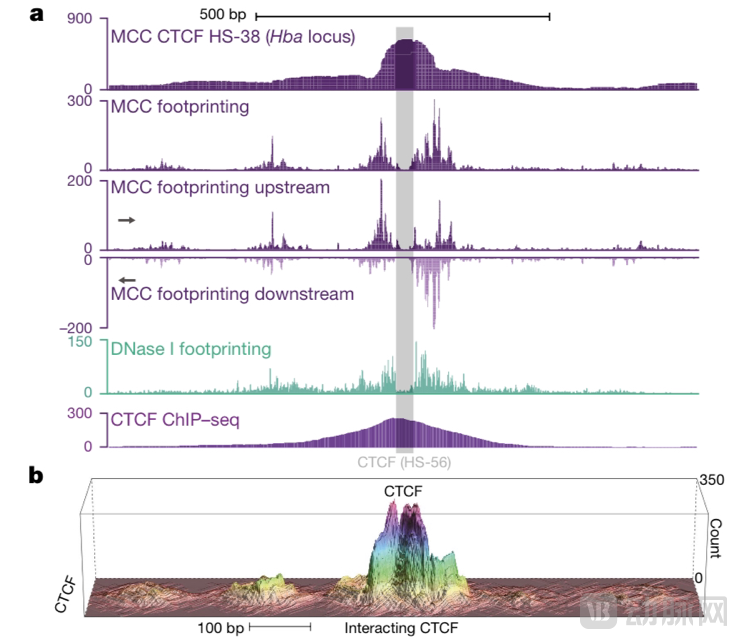
MCCLinked Single-Base-Pair Resolution Analysis
Since the onset of the COVID-19 pandemic, research teams worldwide have been searching the human genome for genetic signals that influence individual susceptibility to and severity of COVID-19. Previous studies have identified a segment of DNA on chromosome 3 that doubles the risk of death from COVID-19 in adults under the age of 65. However, scientists remain uncertain about how this genetic signal increases risk or the precise genetic changes it entails.
Sixty percent of individuals of South Asian ancestry and one-sixth of those of European ancestry carry this high-risk genetic signal. This explains the excess mortality observed in some UK communities and the impact of COVID-19 in India.
On November 5, 2021, James Davies, academic founder of Nucleome Therapeutics, published a paper in Nature Genetics identifying a gene that may double the risk of death from COVID-19.
Researchers used Nucleome’s platform to identify disease-causing genetic variants, the cell types involved, and effector genes. They identified the likely responsible gene as LZTFL1. Nucleome has elucidated the biological mechanisms of COVID-19 that are most significant in the current pandemic.
Professor James Davies stated, “The genetic signals associated with increased risk are located in what we refer to as the ‘dark matter’ of the genome. This ‘dark’ genome regulates cell-type-specific gene expression and remains largely uncharacterized. By employing Nucleome’s Micro-Capture-C technology, we were able to precisely map this gene. Elevated levels of LZTFL1 may impair the ability of airway and lung cells to effectively combat viral infections; however, importantly, it does not affect the immune system. Therefore, individuals carrying this variant may still benefit from vaccination.”
Nucleome Therapeutics is not the only company seeking to pioneer the dark genome space. CAMP4 Therapeutics, headquartered in Cambridge, Massachusetts, raised $100 million in a Series B financing round in July 2021 for its regulatory RNA platform, which is also dedicated to decoding the “dark” genome.
Meanwhile, another Cambridge-based company, Omega Therapeutics, is leveraging a similar approach to develop a new class of programmable mRNA epigenetic therapeutics. The company aims to reverse gene expression without the need for gene editing or gene therapy.
Nucleome Therapeutics, a rising star, has secured its place in the market for decoding the “dark” genome with its latest MCC technology. Yet, facing equally formidable competitors, Nucleome Therapeutics has not let up.
Nucleome Therapeutics will leverage its Series A financing to advance its autoimmune disease programs and expand its “dark” genome atlas. Additionally, the company will further develop its pioneering platform and seek partnerships with large pharmaceutical companies.
Dr. Bauke Anninga, Head of M Ventures, the lead investor in this round, commented: “Nucleome’s differentiated platform technology has the potential to fundamentally transform the way we discover and develop precision medicines. Unlocking the value of the largely unexplored regions of the genome can lead to the identification of high-value drug targets. Nucleome’s platform integrates three-dimensional genomic information into the vast amount of existing genomic data, revealing a new dimension of insights related to diseases and specific cell types.”
We look forward to Nucleome continuing to advance its drug discovery programs, bringing transformative therapies to patients in the future.