

Atom Fusion Files IPO Prospectus: Building a Digital Therapeutics-Powered Psychological Growth Community for College Students Through Six Innovative Mental Health Scenarios
“Mental health services currently available on the market remain stuck in the industrial age, but clinging to old tickets will never lead you to new continents.”
One afternoon in October, Wu Zhipeng, founder and CEO of Atomic Fusion, candidly made this somewhat startling remark.
Based on his resume, this founder does not appear to have deep ties to the mental health sector, but maintains strong connections with internet healthcare.
In 2012, Wu Zhipeng, as the project leader for Fujian Province at YiHui Technology, embarked on an exploration of internet-based healthcare products. By 2020, while China was vigorously advancing the development of internet hospitals, significant challenges—such as low user engagement and infrequent service utilization—had emerged as major obstacles to their growth. At that time, serving as the head of innovative business ventures at WeDoctor Group, Wu Zhipeng led his team in seeking solutions to these issues. This experience made him realize that digital health initiatives should not merely involve moving services online. In 2021, leveraging his insights into the internet healthcare sector, Wu Zhipeng founded Atom Fusion and entered the mental health services market.
We will set aside for now the question of why a veteran with years of experience in both traditional healthcare and internet-based medicine has chosen to embark on a new journey in the mental health services sector. Instead, let us first examine why this “newcomer” to the mental health services arena made the opening remark.
When VCBeat probed into the reasons, Wu Zhipeng mentioned a key term—supply chain structure.
In Wu Zhipeng’s view, the mental health services industry has undergone a lengthy period of exploration from the reform and opening-up era to the present—gradually transitioning from face-to-face offline counseling to internet-based online services. However, until now, the supply model of mental health services has largely merely replicated Western offline service models in an online setting, without undergoing fundamental transformation.
For example, due to the high costs of training and learning, the mental health services industry is experiencing significant brain drain and career transitions; the lack of service standards across the industry often leaves users in a dilemma, unable to make informed choices; meanwhile, the zero-sum game relationship between mental health providers and clients persists and remains pronounced, thereby capping the industry’s growth potential.
Not only that, according to Wu Zhipeng,Currently, mental health service providers not only misjudge user needs but also predominantly rely on connection methods such as search engines. “However, such connections are neither efficient nor do they address practical issues.”
This, evidently, presented an opportunity to the founding team of Atom Fusion.
When it comes to mental health services, most people likely think of psychological counseling for conditions such as depression and anxiety, or treatment scenarios for more severe mental disorders.
ButYuanzi Ronghe has chosen a large yet “niche” group within the mental health services market: college students.
Admittedly, in terms of quantity, according to the 2020 National Education Statistics released by the Ministry of Education, there were a total of 537,100 schools of various types and levels across China in 2020, with an enrollment of 289 million students. However, the hundreds of millions of college students do not constitute the primary target demographic for most mental health service providers.
The reason is neither that college students lack demand for psychological services, nor that the state, universities, and various sectors of society fail to attach importance to this issue.
For example, Article 16 of the Mental Health Law of the People's Republic of China, promulgated in 2012, stipulates that schools at all levels and of all types shall staff or engage mental health education teachers and counselors, and may establish mental health counseling rooms to provide mental health education to students;
The “Guidelines for Mental Health Education of Students in Higher Education Institutions” issued by the Ministry of Education in 2018 requires education authorities at all levels to integrate mental health education into the overall planning of school reform and development, as well as into the talent cultivation system, the ideological and political work system, and the supervision and evaluation indicator system.
Amid growing emphasis from multiple stakeholders, initiatives addressing college students’ mental health are being vigorously implemented. However, it is important to note that although prevention constitutes an integral component of college students’ mental health services, greater efforts across sectors have been directed toward intervention for psychological disorders—that is, implementing interventions for students who have already developed mental health problems.
In fact, this is also reflected in the strategic positioning of most mental health service providers.
“Mental health services can be segmented into three tiers. The highest tier focuses on the pharmacological treatment of mental disorders, primarily delivered by specialized psychiatric hospitals—a domain already deeply cultivated by major hospitals, enterprises, and institutions. The middle tier comprises counseling and intervention services for more commonly recognized psychological issues such as anxiety and depression. This segment has also attracted a large number of companies, including industry giants,” said Wu Zhipeng. “However, we have identified another highly promising blue-ocean market: mental health services for college students.”
Wu Zhipeng told VCBeat,On the school side, student psychological services are primarily procured as B2B systems, designed not to address students’ psychological needs but to meet the operational and management requirements of schools. On the market side, although relevant companies offer a variety of services—including psychological counseling, social interaction, meditation, breathing exercises, and Tarot readings—these offerings lack comprehensiveness and personalization. They can only satisfy single, isolated user needs rather than addressing users’ multifaceted requirements.
Moreover, in Wu Zhipeng’s view, such companies have a misperception of the psychological needs of college students—their needs are neither for professional assessment scales nor for licensed counselors,“The core need of the college student population should be to facilitate more efficient self-growth through personalized psychological content.”
Therefore,Atomic Fusion positions itself as a psychological growth community for college students.
“Psychological Growth” stems from Atom Fusion’s view that college students’ demand for psychological services is largely scenario-driven, such as how to become more confident, how to alleviate nervousness when facing strangers, and how to integrate and get along with those around them. “In summary, these scenario-based psychological needs are essentially a microcosm of psychological growth.”
As for the term “community,” Wu Zhipeng offered the following explanation during the interview: “Although community is a very old concept, it serves as the core vehicle for content creation. Leveraging the strong interactive and content-creation capabilities of communities, users can establish precise connections with one another through personalized content.”
In summary,Two keywords that cannot be overlooked in the brand positioning of Yuanzi Ronghe are “scenario” and “personalized content.”
As of now,Atom Fusion has developed solutions for six core scenarios, ranging from college freshmen’s adaptation to unfamiliar environments, exploration of relationships with their families of origin, and interpersonal relationship management, to addressing emotional needs, academic challenges, and career planning.
Among these, the key scenarios for atomic fusion layout are addressing freshmen’s adaptation to unfamiliar environments and assisting graduating seniors with career planning.
Specifically,To address challenges such as adapting to unfamiliar environments, career planning, and interpersonal relationships, Yuanzi Ronghe has developed a digital service solution based on cognitive behavioral therapy (CBT)-centered digital therapeutics, covering the five stages of “Discovery, Cognition, Intervention, Action, and Sharing.”
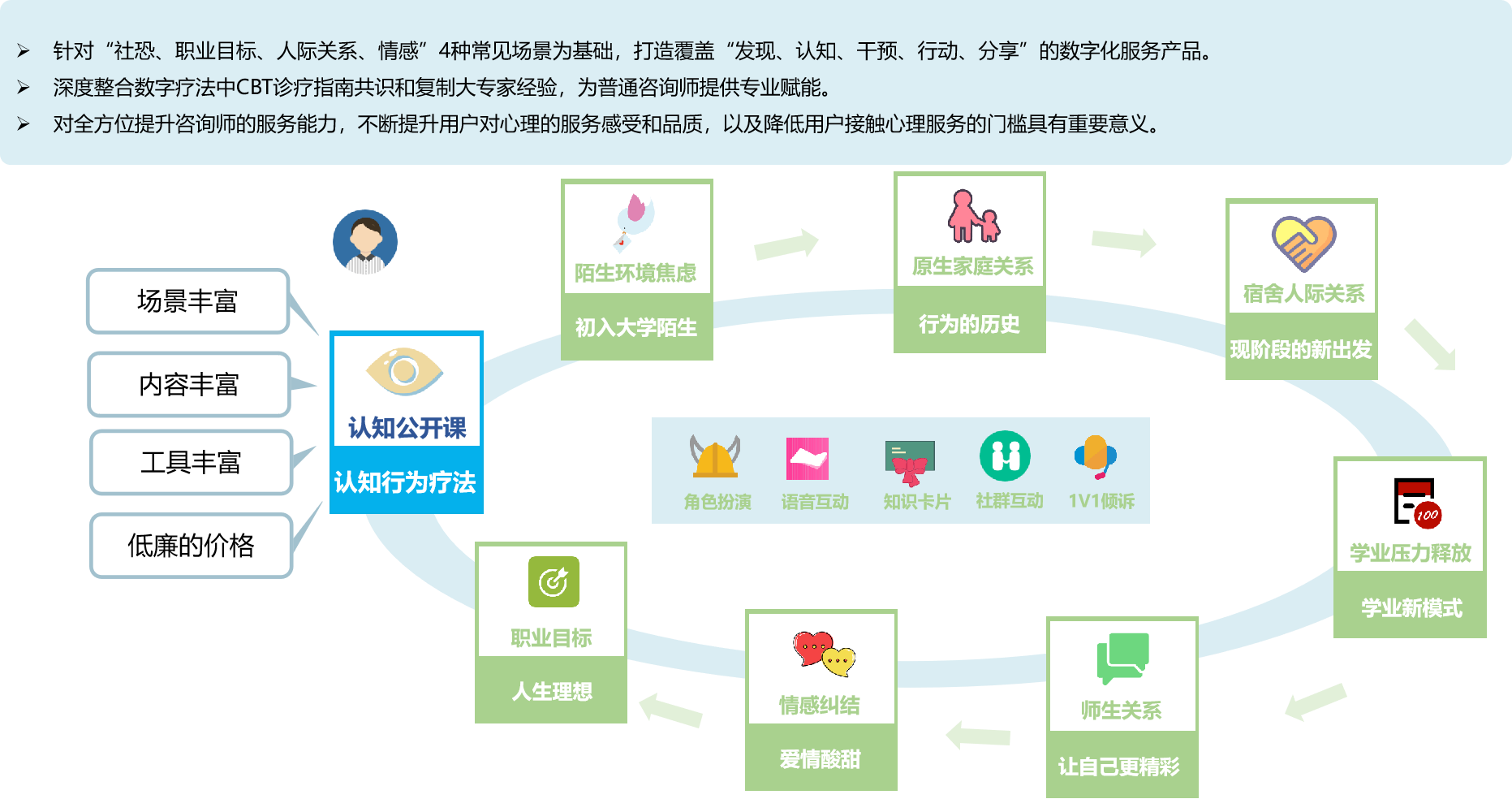
Starting from specific scenario-based problems, we combine and innovate various content formats—such as multi-user voice interactions, one-on-one consultations, role-playing, “tree hollow” confessions, astrology, games, assessments, and scales—to frame the user’s issues as “little demons.” Through a game-like progression of clearing levels, we atomically integrate these elements to help users identify and tame their inner “little demons.”
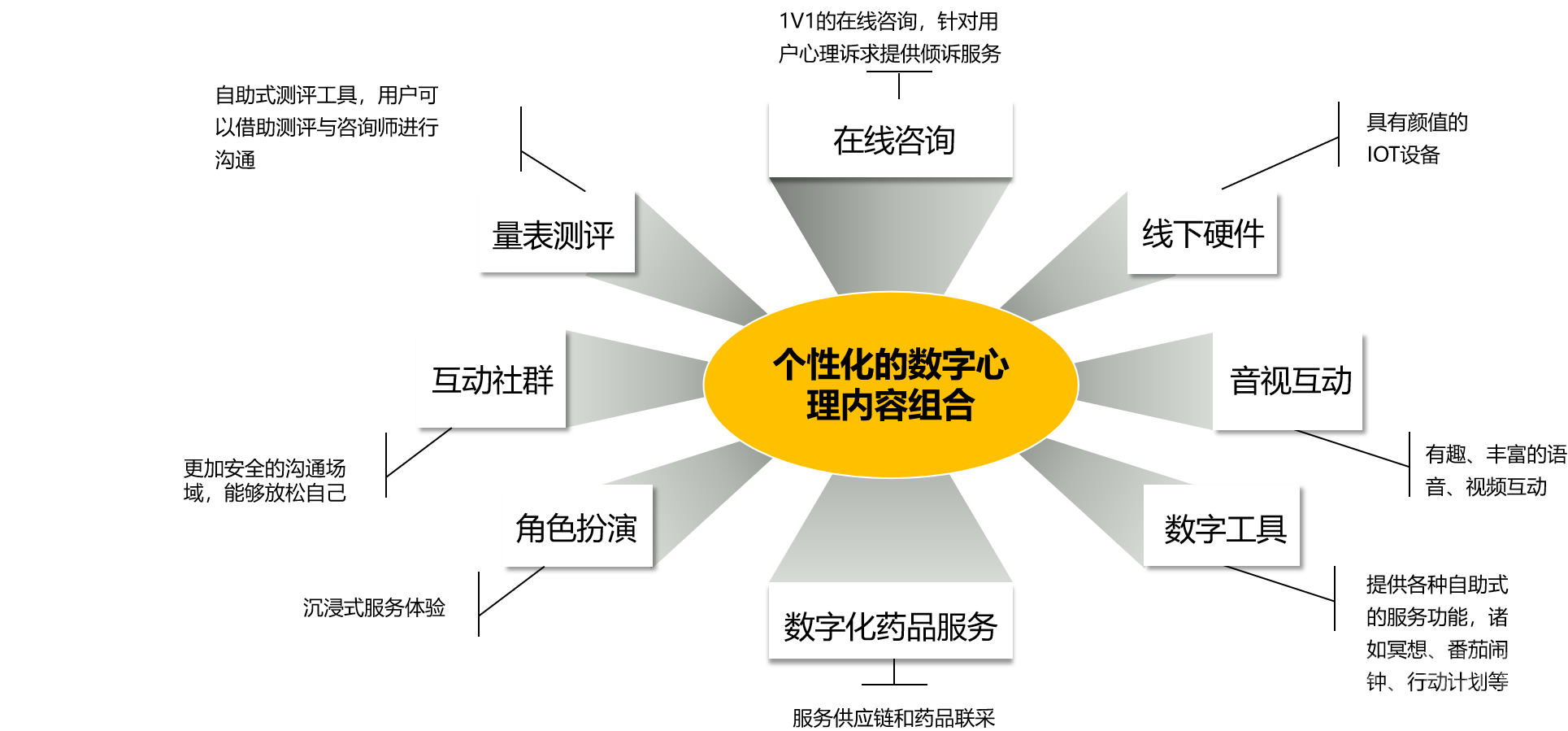
For example, to address issues related to adapting to new environments, users in the first stage will articulate their concerns through multi-user voice interactions and document them using a tool developed based on psychological principles. During the use of this tool, users can identify cognitive biases they may have.
The second stage involves multi-participant role-playing, where appropriate scenario simulations are used to compare against one’s own written content, thereby identifying discrepancies between ideal expectations and actual outcomes;
Level 3 may involve one-on-one counseling or psychological FM, allowing users to confirm identified cognitive distortions and discover the root causes of their issues on their own. (This level is designed primarily because many sources of anxiety in real life stem from cognitive-behavioral biases.)
In the fourth stage, users will engage in self-reflection and share their psychological changes and experiences to help more people.
In the interview,Wu Zhipeng further emphasized to VCBeat that although Atom Fusion provides users with personalized content based on various scenarios and multiple combination methods, the underlying logic of such personalization remains standardization. This standardization is reflected in the fact that Atom Fusion’s service solutions and content are strictly developed and implemented in accordance with industry standards for digital therapeutics and psychological services. “Standardization is indispensable for achieving personalized content.”
Overall, leveraging the Atom Fusion platform, users can implement a full-cycle scenario-based solution encompassing “Identifying the Little Devil” (Discovery), “Unmasking the Little Devil” (Cognition), “Taming the Little Devil” (Intervention), and “Sharing Insights” (Summary).
And,At every critical juncture, Atom Fusion provides tools that are relatively entertaining and self-service oriented. These tools not only facilitate user experience but also serve another group.
It is not difficult to find that,Atomic Fusion aims to build a multi-role collaborative psychological service ecosystem, meaning that collaboration involves more than just individual psychological counselors.
This stems from the discovery of atomic fusion,While a single counselor can provide guidance, they cannot fully address all of a client’s psychological needs at their root. Therefore, extensive collaboration with counselors from diverse professional backgrounds is essential. These cross-disciplinary counselors also possess rich experience in problem-solving. For instance, counselors who have transitioned from human resources (HR) can offer specific advice on workplace-related issues, a capability that traditional psychological counselors typically lack.
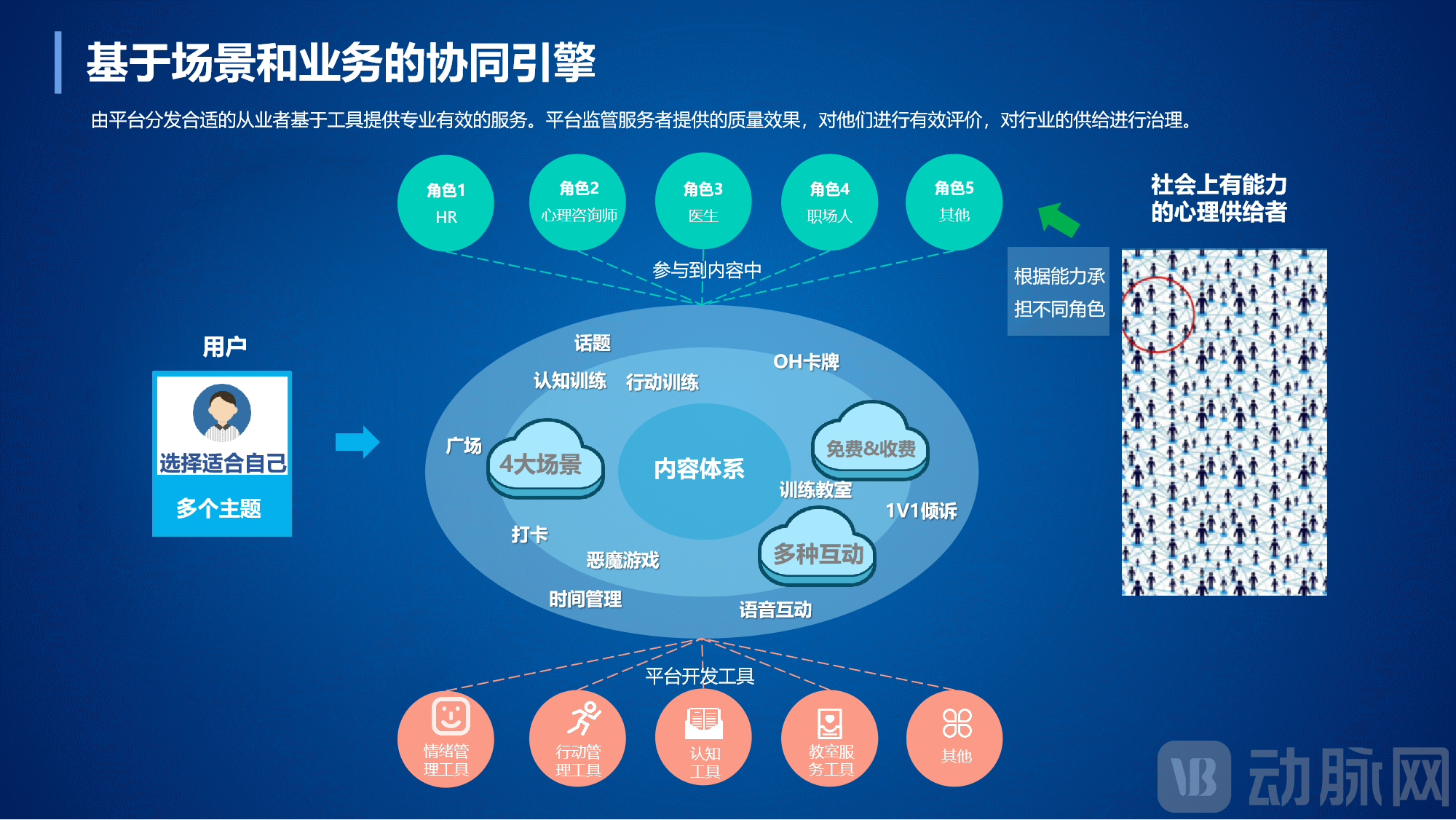
However, Wu Zhipeng emphasized that thisMulti-role collaboration is not chaotic. Atomic Fusion will have a built-in platform regulator role to effectively evaluate all service parties and ensure the quality of services provided.
andWhile users receive high-quality psychological services, the digital tools provided by Atomic Fusion also offer foundational capability support for practitioners with varying levels of expertise.
Thus, by attracting and engaging users through standardized, personalized, and gamified content, and further enhancing the precision of connections and the standardization of services via various digital tools, Atom Fusion is forging an innovative path in connectivity.
Because, from the perspective of Atom Fusion,The issues facing the mental health services industry are not isolated vertical challenges; rather, it faces challenges from all three ends of the supply-demand chain.
“Based on the experience of the past decade, neither the previous frenzy of subsidizing demand nor the current rush to focus exclusively on supply can address the most fundamental issues. While the industry has many gaps and weaknesses, the most pressing challenge is how to democratize professional knowledge by transforming it into psychological content tailored to users’ needs. Innovation in content-based connectivity is the key to solving this problem.”
In the future,Atomic Fusion will continuously innovate content and tools on the demand side, creating standardized services to achieve a digital restructuring of the psychological services industry. On this basis, it will build a collaborative system for psychological counselors. On the service side, it will construct practical and effective service models, enabling more participants to engage in user services within a safe and standardized framework. Ultimately, this will realize the corporate vision of promoting greater psychological well-being and better lives for more users.
When VCBeat asked Wu Zhipeng whether Atom Fusion would expand its user base to include professionals in the workplace or other groups in the future, he made the following remarks:“For the next one to three years, we will not temporarily expand to other user groups. We prefer to accompany college students through the critical growth stages of their nine-year journey, from freshman enrollment and graduation job hunting to workplace adaptation, because Atom Fusion aims to become a professional psychological growth community for college students.”