

Comprehensive Lung Health Care: 2023 Qingdao Respiratory Industry Conference and the 22nd Respiratory Week Successfully Concluded in Qingdao
On October 14, 2023, in Qingdao, Shandong Province, the “2023 Qingdao Respiratory Industry Conference and the 22nd Respiratory Week” (hereinafter referred to as the “Conference”) was successfully held in Qingdao. The event was hosted by the Qingdao Municipal People’s Government and co-organized by the Qingdao Municipal Science and Technology Bureau, the Qingdao Municipal Bureau of Industry and Information Technology, the Qingdao Municipal Health Commission, the Administrative Committee of Qingdao High-Tech Industrial Development Zone, and AstraZeneca Investment (China) Co., Ltd. Wang Bo, Member of the Standing Committee of the Qingdao Municipal Party Committee, Deputy Mayor of Qingdao, and Secretary of the Party Working Committee of Qingdao High-Tech Zone; Lai Minglong, General Manager of AstraZeneca China; Zhong Nanshan, Academician of the Chinese Academy of Engineering; Wang Chen, Academician of the Chinese Academy of Engineering; Gao Fu, Academician of the Chinese Academy of Sciences; Huang Yongjian, Fellow of the Hong Kong Academy of Medicine; and more than 70 leading experts in the field of respiratory medicine from across China, along with representatives from over 40 pharmaceutical and medical device companies and prominent figures from the investment community, participated in the event both online and offline. Together, they explored the application of innovative respiratory solutions in areas such as digital diagnosis and treatment, pharmaceuticals and medical devices, and interventional therapy, thereby promoting high-quality development in the field of respiratory medicine in China.
This conference, themed “Comprehensive Care for Lung Health,” aims to “Enable Lungs to Breathe Longer—Reduce Premature Mortality from Chronic Respiratory Diseases and Improve the Five-Year Survival Rate for Lung Cancer.” It seeks to deepen the integration of industry, technology, and capital, establish an integrated platform encompassing medical practice, government, industry, and research, provide solutions to unmet needs in public lung health management, and enhance standardized, full-course management of respiratory diseases.
At the conference, three major respiratory industry projects were launched in Qingdao, concretizing the respiratory industry ecosystem. Among them, the unveiling of the Qingdao Medical Research Achievement Transformation Base will further support Qingdao’s efforts to build a world-class biomedical industry chain; the launch of the Qingdao Respiratory Intervention Training Academy will rely on the Affiliated Hospital of Qingdao University’s principle of “appropriate technologies for grassroots coverage” and leverage the collective strength of ecological partners to enhance primary care diagnostic and treatment capabilities; and the official establishment of the Cough and Asthma Management Ecosystem at the Qingdao Smart Healthcare Innovation Center will jointly promote the development of cough and asthma management centers and standardize diagnosis and treatment in the field of chronic diseases.
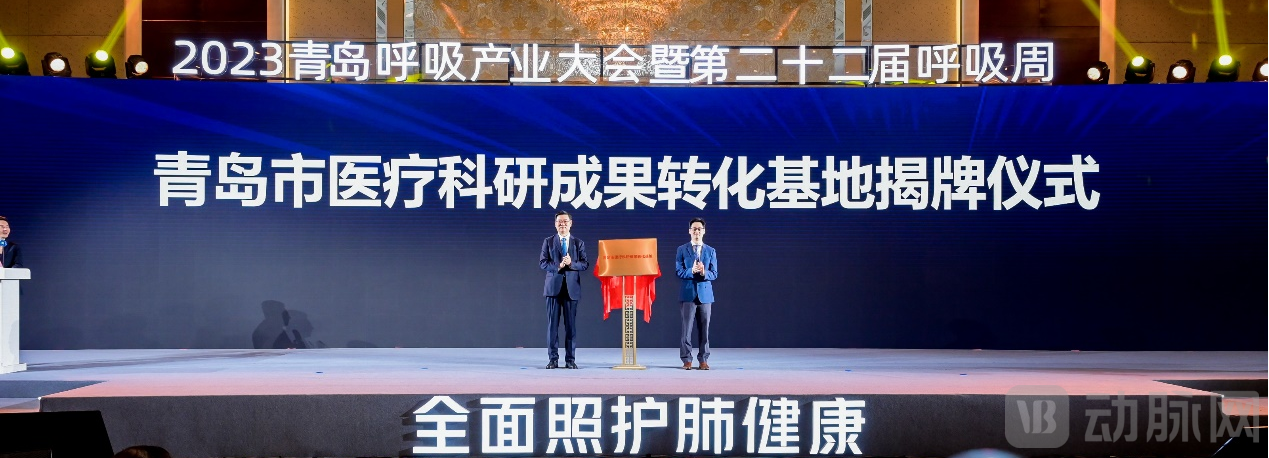 (Unveiling Ceremony of the Qingdao Medical Research Achievement Transformation Base)
 (Launch Ceremony of the Qingdao Respiratory Intervention Training Academy)
 (Qingdao Smart Medical Innovation Center Cough and Asthma Management Ecosystem Onboarding Ceremony)
Wang Bo, Member of the Standing Committee of the Qingdao Municipal Committee of the Communist Party of China, Deputy Mayor of Qingdao, and Secretary of the Party Working Committee of Qingdao High-Tech Industrial Development ZoneIn his remarks, he stated, “Qingdao is a major coastal city in China that has long been committed to promoting the high-quality development of healthcare and public health. The hosting of the 2023 Qingdao Respiratory Industry Conference and the 22nd Respiratory Week demonstrates Qingdao’s efforts to expand access to high-quality medical resources, strengthen medical research capabilities, enrich healthcare service scenarios, and cluster the development of the biopharmaceutical and medical device industries. Respiratory health is a key component of the Healthy China initiative. We look forward to experts and scholars offering their insights and recommendations for the advancement of Qingdao’s healthcare sector, and we expect AstraZeneca to leverage its strengths, deepen cooperation with Qingdao, and drive the growth of more enterprises.”
Lin Xiao, Vice President of AstraZeneca China, Head of the Respiratory, Inhaled and Biologics Business Unit, and Head of Hong Kong and MacauHe stated, “The Respiratory Health Conference has been successfully held for 22 editions. AstraZeneca has personally participated in and witnessed the breakthrough development of China’s respiratory field. Over its 30 years of establishing a strong presence in China, AstraZeneca has always adhered to its original aspiration of being ‘patient-centric,’ continuously addressing the unmet needs of patients with respiratory diseases in China, and collaborating with partners across various sectors to jointly build an ecosystem for the respiratory industry. Looking ahead, we will continue to deepen our expertise in the respiratory field and engage in more in-depth cooperation with the Qingdao Municipal Government, aiming to contribute to ‘Healthy China’ through the impact of ‘Healthy Shandong.’”
Comprehensive Coverage Across the Entire Pulmonary Field: Establishing Standardized, Full-Course Management for Respiratory Diseases
Centering on topics such as early screening, diagnosis, and treatment of respiratory diseases in China, pain points and solutions for whole-course management of respiratory diseases, and accelerating the implementation of innovative solutions, this conference features a main venue, the Pulmonary Health Summit Forum, and six parallel sessions: the Innovative Industry Ecosystem Forum, the COPD Forum, the Bronchial Asthma Forum, the Lung Cancer Forum, the Pediatric Respiratory Infection Forum, and the Primary Care Forum. The aim is to establish standardized whole-course management for respiratory diseases through comprehensive coverage across the entire pulmonary field.
Chronic respiratory diseases have long been recognized as one of the four major categories of chronic diseases globally, alongside cardiovascular and cerebrovascular diseases, cancer, and diabetes, posing a significant threat to public health. Currently, the total number of patients with respiratory diseases in China exceeds 100 million, among whom nearly 100 million are individuals aged 20 and above suffering from chronic obstructive pulmonary disease (COPD).1, approximately 45.7 million asthma patients aged 20 years and older2, approximately 8.7 million children and adolescents with asthma3, with approximately 781,000 new cases of lung cancer diagnosed annually in China4In stark contrast to the high incidence and mortality rates of these respiratory diseases, the low levels of awareness, medical consultation, diagnostic testing, and standardized treatment pose a heavy burden and severe challenges to the prevention and control of respiratory diseases in China.
Academician Zhong NanshanIn his online address, he stated, “I strongly anticipate that an increasing number of citizens will become aware of the hazards posed by respiratory diseases such as chronic obstructive pulmonary disease (COPD), asthma, respiratory tract infections, and lung cancer. It is crucial to shift the focus from disease treatment to people’s health, establish a nationwide, society-wide, and population-based collaborative system for the prevention and control of respiratory diseases, and jointly promote early screening, early diagnosis, and early treatment of these conditions.”
Professor Chen Rongchang, Director of the Institute of Respiratory Diseases, Shenzhen People's HospitalEmphasis: “Chronic obstructive pulmonary disease (COPD) has become an ‘invisible killer’ threatening the health of over 100 million people in China. It is characterized by ‘three highs and three lows,’ namely high prevalence, high disability rate, and high mortality, as well as low awareness, low diagnosis rate, and low control rate. Due to the lack of obvious symptoms in the early stages of COPD, many patients miss the optimal window for treatment, leading to disease progression and imposing a heavy burden on both individuals and society. Therefore, improving the prevention, control, and quality of diagnosis and treatment of COPD in China is of great significance for safeguarding public health and promoting socioeconomic development. We should make concerted efforts in strengthening public education, enhancing early diagnosis, standardizing treatment protocols, and advancing scientific research and innovation, thereby jointly promoting the high-quality development of COPD prevention and control in China.”
Professor Han Wei, Vice President of Qingdao Hospital, University of Rehabilitation SciencesIt was pointed out that “pulmonary function testing is a critical diagnostic method for respiratory diseases. It is recommended that residents aged 40 and above incorporate pulmonary function testing into their annual health examinations to enable early intervention, slow disease progression, and thereby improve prognosis.”5In Qingdao, under the leadership of the Qingdao Municipal People's Government and the Health Commission, COPD has been included as one of the diseases in the “Three Highs and One Chronic” health service package, a key municipal livelihood project. To date, screening has been completed for over 2 million individuals, and nearly 200,000 have undergone pulmonary function testing. In the future, we aim to achieve early screening, diagnosis, and treatment of COPD patients at the primary care level, thereby establishing a closed-loop management system for the diagnosis and treatment of COPD.
Comprehensive Care for Lung Health: Innovation Is the Cornerstone of Advancing Respiratory Disease Treatment
With the application of innovative respiratory solutions in areas such as digital diagnosis and treatment, pharmaceuticals and medical devices, and interventional therapy, the level of diagnosis and treatment for respiratory diseases in China has improved significantly. However, there remains substantial room for future development in the treatment of refractory respiratory conditions, including chronic obstructive pulmonary disease (COPD), asthma, lung cancer, and pediatric respiratory infections. Innovation is an enduring core principle and developmental trend in the healthcare sector. In the field of respiratory diseases, continuous innovation and breakthroughs in treatment regimens mean that patients always have hope for controlling their condition, improving their health status, and even achieving a cure, thereby ensuring comprehensive care for their lung health.
Currently, 76.8% of patients with severe asthma in China have eosinophilic asthma (EA), and these inflammatory effector cells have a highly negative impact on the prognosis of asthma patients.6Dean Shen Huahao, Director of the Institute of Respiratory Diseases, Zhejiang Universitystated: "Asthma is a year-round disease that occurs throughout the entire cycle of the year, so we must attach great importance to it. For instance, cough-variant asthma, which primarily presents with coughing, is prone to being missed or misdiagnosed."7. With continuous improvements in diagnostic and therapeutic capabilities, distinct diagnostic approaches are employed for mild, atypical, and severe asthma, encompassing medical history, objective examinations, pulmonary function tests, and biomarkers. Mild asthma can be managed with inhaled corticosteroids or a combination of inhaled corticosteroids and long-acting beta-agonists. In the treatment of severe asthma, the use of biologics represents a new milestone, effectively controlling the disease in some patients and reducing the risk of acute exacerbations.
Meanwhile, children are more physically sensitive than adults and are more prone to asthma; recurrent respiratory tract infections can trigger acute asthma exacerbations.Professor Hong Jianguo, Chief Physician of the Department of Pediatrics, Shanghai General Hospital, Shanghai Jiao Tong Universitystated: “Currently, the prevalence of childhood asthma in China is rising significantly”8, if childhood asthma remains uncontrolled over the long term, the impairment of lung function will progress from reversible to irreversible.9Therefore, it is necessary to comprehensively enhance children's respiratory immunity to reduce the frequency of respiratory infections. In addition, since asthma is a chronic disease requiring long-term management and standardized treatment, early identification of prodromal signs of acute exacerbations while maintaining inhaled therapy can mitigate subsequent adverse outcomes.”
Furthermore, patients with lung cancer also face the risk of comorbid chronic respiratory diseases, giving rise to the concept of “concurrent management of lung cancer and chronic lung disease.”Professor Gao Beili, Chief Physician, Department of Respiratory Medicine, Ruijin Hospital, Shanghai Jiao Tong University School of MedicineIntroduction: "Nearly 40% of lung cancer patients have comorbid respiratory diseases such as chronic obstructive pulmonary disease (COPD)."10, compared with patients suffering from lung cancer alone, those with comorbid chronic obstructive pulmonary disease (COPD) have poorer quality of life, shorter survival, and worse prognosis.11“Currently, the treatment of lung cancer is advancing rapidly. Targeted therapies, immunotherapies, and antibody-drug conjugates (ADCs) can all help stabilize the disease. At this stage, it is crucial to prioritize the management of chronic obstructive pulmonary disease (COPD), such as using antibiotics to control infections and inhalation medications to reduce acute exacerbations. Meanwhile, COPD is also a significant risk factor for lung cancer. Therefore, patients with COPD should undergo regular CT scans to facilitate earlier detection and improve the diagnostic rate of lung cancer.”
Yang Haiying, Vice President of AstraZeneca China and Head of Medical AffairsHe stated, “For the entire healthcare industry, innovation is an unwavering trend and the best promise to patients. AstraZeneca has always been committed to benefiting patients through scientific and technological innovation, conducting more than 40 clinical studies in the field of respiratory medicine worldwide. In China, we have consistently focused on addressing the unmet needs of patients with lung cancer, severe asthma, chronic obstructive pulmonary disease (COPD), and other acute respiratory diseases, across diagnosis, treatment, and comprehensive disease management. We aim to explore innovative research and develop more convenient scientific diagnostic and testing methods, enabling patients to receive timely medical care. Looking ahead, we will continue to prioritize lung health and provide patients with more comprehensive treatment.”
This material is provided by AstraZeneca for reference by healthcare professionals only and is not intended for promotional purposes.
Approval No.: CN-123183, Valid until 2023-10-31
1、Wang C, Xu J, Yang L, et al. Prevalence and risk factors of chronic obstructive pulmonary disease in China (the China Pulmonary Health [CPH] study): a national cross-sectional study[J]. The Lancet, 2018,391(10131):1706-1717.DOI:10.1016/S0140-6736(18)30841-9.
2、Huang K,et al.Lancet. 2019 Aug 3;394(10196)407-418.
3、Yi N, Liu TT, Zhou YC, et al. Disease burden of asthma among children and adolescents in China,1990-2019[J]. Chin J Epidemiol, 2023, 44(2):235-242. DOI: 10.3760/cma.j.cn112338-20220526-00469.
4. Peng Lunxi, Wu Yilong. Annual Progress in Lung Cancer in China 2017–2018[C]//The 21st National Congress of Clinical Oncology and the 2018 CSCO Academic Annual Meeting. Chinese Society of Clinical Oncology, Beijing Hope Run Special Fund for Clinical Oncology Research, 2018.
5. Qu Mu, Shi Weiwen (text and illustrations). Why Should Lung Function Tests Be Conducted Annually After Age 40? [J]. Health Care for the Middle-Aged and Elderly, 2021(1):2.
6、Zhang Q,et al. Clin Transl Med. 2022 Feb;12(2):e710.
7. Zhu Yuan. A Brief Discussion on Professor Xu Yanling’s Experience in Treating Cough Variant Asthma [D]. Liaoning University of Traditional Chinese Medicine, 2015.
8. Hong Jianguo. Current Status and Reflections on the Diagnosis and Treatment of Childhood Asthma in China[J]. Journal of Sichuan University (Medical Sciences), 2021, 52(5):4. DOI:10.12182/20210960201.
9. Shen Kunling, Deng Li, Li Yunzhu, et al. Expert consensus on the application of inhaled glucocorticoid therapy in pediatrics (2018 revised edition) [J]. Journal of Clinical Pediatrics, 2018, 36(2): 95-107.
10、Mouronte-Roibás C, et al. Cancer Lett. 2016Nov 28;382(2):240-244.
11、Ajimizu H, et al. Sci Rep. 2021 Dec 8;11(1):23677.